


Slow Feed Hay Net for Horses: Hole Size and Safety Guide
Choosing a slow feed hay net for horses is about more than picking the smallest mesh you can find. The right net should slow intake without frustrating your horse, fit the amount of hay you provide, withstand daily use, and hang in a way that reduces entanglement risk. This guide explains hole sizes, materials, setup, safety checks, and the practical differences among the slow-feed options available from Hooves and Paws.
Shop Slow Feed Hay Nets for Horses
What Does a Slow Feed Hay Net Do?
A slow-feed hay net holds forage in a mesh bag and makes a horse pull smaller bites through controlled openings. It can extend feeding time, reduce hay waste, and keep a horse occupied, but it should complement a feeding plan rather than replace veterinary or nutritional advice.
A traditional hay net keeps loose hay contained, while a slow-feed model uses smaller openings to limit how much hay a horse can pull out at once. That difference changes the pace of eating. Instead of taking large mouthfuls from a pile, the horse works through smaller portions over a longer period.
Longer access to forage can be useful for horses that finish meals quickly, become restless when a stall is empty, or waste hay by pawing and scattering it. A net can also keep hay off wet bedding or a muddy surface. The practical goal is not to make eating difficult. It is to provide a steady, manageable pace that suits the individual horse, the hay, and the feeding environment.
Observe the horse rather than assuming a smaller hole is always better. A calm horse that continues to eat, maintains good body condition, and has no damaged muzzle is giving you different feedback from a horse that becomes agitated, stops eating, or tries to paw and pull the net down.
How Do You Choose the Right Hole Size?
For many horses, 2-inch openings are a practical starting point. If a horse eats calmly and still finishes too quickly, consider a smaller opening such as 1.5 or 1.25 inches. One-inch mesh is a more restrictive choice that deserves close observation, especially for older horses or horses with dental limitations.
Hole size is the most visible specification on a slow feeder, but it is not the only factor. Hay stem length, softness, the horse's dental health, previous experience with nets, and the amount of hay in the bag all affect how easily the horse can eat.
| Opening size | Typical role | What to consider |
|---|---|---|
| About 2 to 2.5 inches | Beginner or moderate slow feeding | A familiar starting point for many horses and a useful step down from loose hay or a large-hole net. |
| About 1.75 to 2 inches | Everyday slow feeding | Often a balanced choice for reducing waste while keeping hay accessible. |
| About 1.5 to 1.25 inches | More controlled intake | Consider after the horse is comfortable with a larger opening and can access the forage without excessive frustration. |
| About 1 inch | Very restrictive slow feeding | Use extra care with forage type, dental status, body condition, and the horse's ability to eat calmly. |
Do not treat these ranges as a universal prescription. A senior horse with worn teeth may need larger openings or a different forage format. A horse that wears shoes should never have a net positioned where a hoof can reach it. If weight management, laminitis risk, or another health concern is driving the decision, involve your veterinarian or equine nutrition professional before making a major feeding change.
Which Slow Feed Options Should You Compare?
Hooves and Paws carries several approaches to slow feeding, including Shires nets, Weaver Leather nets, hay bags, and heavier-duty options from Mackey and Professional's Choice. The right choice depends on where you feed, how much hay you need to hold, how often the net will be moved, and whether the horse needs a softer or more protective design.
Explore the slow feed hay nets and hay bags collection to compare current options from Shires, Weaver Leather, Mackey, and Professional's Choice. Product availability and specifications can change, so check the individual listing before ordering.
- Shires Premium Haynet Slow Feeder: A heavy-duty poly-cord net with 2-inch holes for hay and haylage. It is a practical starting point when you want moderate restriction in a conventional hanging net.
- Shires Greedy Feeder Net: A more restrictive Shires option with 1.25-inch mesh holes. It may suit a horse that has already adapted to a larger opening and needs a slower pace.
- Weaver Leather 36-inch Slow Feed Hay Net: A larger net with openings listed in the 1.75 to 2-inch range. Consider capacity and the amount of hay you plan to provide when comparing its size with your routine.
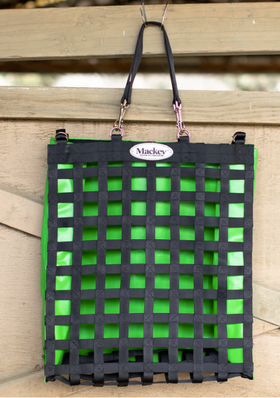
- Mackey Classic Slow Feeder Hay Bag: A nylon-mesh bag with 1.5-inch holes and a stated capacity of more than two flakes. A bag format can be useful when you want a different shape or feeding setup from a traditional net.
- Professional's Choice Slow Feed Hay Net: A heavy-duty rope design with 1-inch mesh openings. Because the opening is small, pay close attention to forage texture, dental comfort, and the horse's behavior.
- Professional's Choice Scratchless Hay Bag: A protective bag design intended for trailer and stall use. It is worth comparing when reducing exposed netting and choosing a more contained format are priorities.
These descriptions are a starting point, not a reason to choose by brand name alone. Review the current product page for dimensions, capacity, material, and use instructions. If you are comparing several choices, begin with the hole size and feeding location, then check construction and capacity. You can view the current slow-feed selection before deciding which format fits your horse's routine.
Shop This Post
Featured in this article
Shires Premium Haynet Slow Feeder - Heavy-Duty Poly Cord with 2-Inch Holes for Hay & Haylage
$10.99
Shop Now →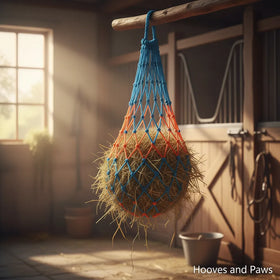
What Materials Make a Hay Net Durable?
Most slow-feed nets and bags use synthetic cord or mesh because these materials can resist moisture, repeated handling, and daily abrasion. The exact construction still matters. A product used in a stall may experience different wear from one carried to shows, placed in a trailer, or exposed to weather.
Poly cord
Poly cord is common in conventional hay nets. Look for a consistent weave, secure attachment points, and knots or joins that do not show obvious looseness. A heavy-duty cord can be a useful choice for frequent use, but inspect it regularly for fraying. A net that has stretched can create openings larger than the listed size.
Nylon mesh
Nylon mesh is used in many bag-style feeders and can provide a different balance of flexibility and containment. Check the seams, top closure, and straps, especially if the bag will be moved while full. A bag that holds more than one flake may be convenient, but a larger capacity also means more weight on the attachment point.
Soft or scratch-reducing construction
Some designs aim to reduce rough knots or exposed surfaces near the horse's muzzle. That can matter for a horse with sensitive skin or a habit of rubbing. Still, no material should be considered automatically safe. The horse's behavior, the net's placement, and the condition of the feeder all matter more than a single marketing label.
How Should You Set Up a Slow Feed Hay Net?
Hang the feeder from a strong, secure point, keep attachment hardware and loose cords out of reach, and inspect the net both full and empty. A full bag can sit higher than an empty bag, so the lowest position is the one that must pass your safety check.
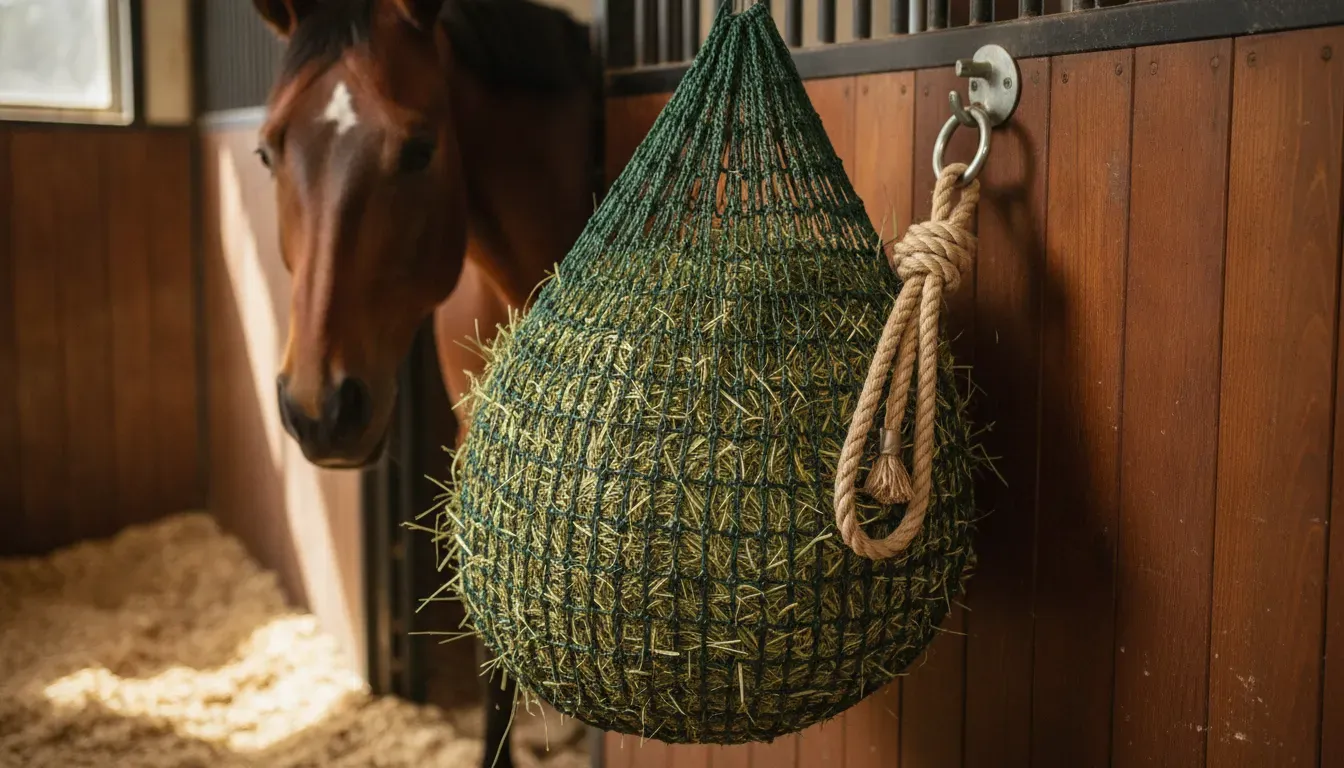
A good setup begins with the feeding location, not the product label. Choose a point that can support the loaded feeder and will not allow the horse to trap a hoof, shoe, halter, or leg in the net or its tie. Remove unnecessary slack from ropes and keep the feeder away from sharp edges, gates, latches, and other objects that can catch the mesh.
- Check the attachment point. Use a sturdy, purpose-appropriate tie point that will not pull loose when the horse tugs on the bag.
- Assess the empty height. The net may hang lower after the hay is gone. Check the lowest position, not only the height of a newly filled feeder.
- Keep feet out of the risk zone. Do not place a hanging net where a horse can paw at it or reach it with a hoof. This is particularly important for shod horses.
- Remove loose loops. Shorten or secure excess rope so there is no dangling loop that can catch a leg, shoe, or halter.
- Fill without overpacking. Follow the product's capacity guidance. Overfilling can stretch the openings, strain seams, and make access harder than intended.
- Observe the first meals. Watch how the horse pulls hay, whether the net shifts, and whether the animal shows rubbing, pawing, agitation, or difficulty eating.
- Inspect the feeder every day. Look for frayed cord, stretched mesh, damaged seams, broken closures, and changes in hole size. Retire a damaged feeder rather than trying to make an improvised repair.
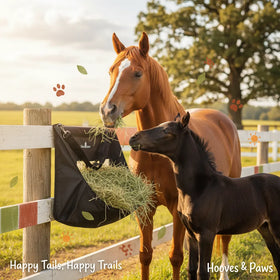
Trailer use deserves its own decision. A feeder that works well in a fixed stall may not be the best choice while a horse is traveling. Movement, limited space, and tie configuration change the risk profile. A more contained bag with a protective back may be preferable to a loose net, but follow the manufacturer's use instructions and your transport professional's guidance.
Are Slow Feed Hay Nets Safe for Shod Horses?
A slow-feed hay net can be used safely only when the installation prevents the horse from reaching it with a foot and the feeder remains in good condition. Shoes can increase the consequences of a foot becoming caught in cord or mesh. The safest answer is not a special hole size. It is a conservative setup with no reachable slack, no floor-level net, and regular observation.
Never place a hanging net on the ground for a shod horse. Do not assume a full net will stay at the same height after it empties. Check for loops at the top, sides, and tie point. If your horse paws, strikes, rubs aggressively, or repeatedly pulls the feeder down, change the setup and ask your veterinarian or equine professional for help before continuing.
Safety also includes the horse's mouth and teeth. If you see muzzle irritation, broken fibers, difficulty extracting hay, or an abrupt change in eating behavior, stop and reassess. A smaller hole is not an improvement if the horse cannot use it comfortably. When you need additional guidance, consult your veterinarian or a qualified equine nutrition professional.
How Can You Introduce a New Hay Net?
Transition gradually when possible. Start with a larger opening or a familiar feeding format, then adjust after the horse has demonstrated calm, consistent use. Put the feeder in a quiet area where you can monitor the first attempts. Avoid changing the net, forage type, feeding schedule, and turnout routine all at once, because it becomes harder to identify what caused a problem.
Before the first meal, let the horse investigate the empty feeder while it is secured safely. Add a normal amount of familiar hay and watch whether the horse understands how to pull it through the openings. Some horses adapt quickly. Others benefit from a larger opening first or a short supervised practice session.
Track three practical signals during the first week:
- How long the hay lasts compared with the previous setup.
- Whether the horse remains calm and continues to eat.
- Whether the feeder, muzzle, attachment point, and surrounding area remain in good condition.
If the horse leaves hay untouched, becomes distressed, develops rubbing, or loses condition unexpectedly, do not keep tightening the restriction. Review forage quality, dental comfort, the feeding plan, and the feeder choice with an equine professional.
What Other Factors Matter Besides Hole Size?
Hole size is easy to compare, but the best feeder is the one that works in the complete routine. Consider the following before ordering:
- Forage: Long-stem hay, soft hay, and haylage can behave differently in the same mesh.
- Capacity: Match the bag to the amount of hay provided at one time so the feeder is not overfilled or repeatedly left empty.
- Location: Stall, paddock, trailer, and temporary holding areas each need a different setup assessment.
- Horse behavior: Pawing, rubbing, pulling, and chewing the feeder increase wear and safety concerns.
- Dental status: Horses with dental limitations may need easier access and closer monitoring.
- Cleaning: Choose a design you can empty, brush, rinse, and dry as needed.
- Attachment hardware: A strong feeder can still be unsafe if the tie point, snap, or rope is weak.
- Replacement plan: Keep an inspection schedule and replace a feeder when wear changes its shape or creates loose strands.
When in doubt, choose the simpler setup you can inspect reliably. A moderately restrictive net that stays secure and is checked daily is usually more useful than an extremely small mesh that creates frustration or is difficult to fill and clean.
Find the Right Slow Feed Hay Net for Your Horse
Frequently Asked Questions
What is the best hole size for a slow feed hay net?
There is no single best size for every horse. About 2 inches is a practical starting point for many horses. If the horse eats calmly and still finishes too quickly, a smaller opening such as 1.5 or 1.25 inches may be appropriate. Consider dental health, forage, body condition, and professional guidance before using a 1-inch mesh.
How small should a slow feed hay net be for a horse?
Use the smallest opening that lets the horse eat calmly and comfortably while receiving the forage needed for the feeding plan. Do not select a very small mesh simply to extend the time. Watch for frustration, rubbing, untouched hay, or changes in body condition, and adjust with an equine professional if those signs appear.
Can a horse eat from a slow feed hay net overnight?
Some horses use a slow-feed net during extended periods, but the setup must be secure and the total forage plan must be appropriate. Check the feeder's capacity, attachment point, condition, and empty height. A horse that paws or pulls the net down may need a different format or supervised adjustment.
Are hay nets safe for horses with shoes?
They can be used only with a setup that keeps the net and loose cords out of hoof reach. Never place a net on the ground for a shod horse. Inspect it full and empty, secure extra rope, and monitor the horse closely. If the horse can reach, paw, or become caught in the feeder, change the setup before continuing.
What is the difference between a hay net and a hay bag?
A hay net is generally an open mesh feeder that holds hay while the horse pulls it through the openings. A hay bag may use a more contained shape or backing and can be useful in certain stall or trailer setups. Compare capacity, hole size, attachment method, and the manufacturer's intended use rather than choosing by name alone.
How do I know when a slow feed hay net needs to be replaced?
Replace it when the cord frays, seams split, closures fail, holes stretch, or loose strands and loops appear. Also replace a feeder if the horse has damaged it by chewing or pulling. A change in shape can create a new entanglement risk even when the feeder still holds hay.
Can a slow feed hay net reduce hay waste?
It can reduce waste by keeping hay contained and limiting how much is pulled out at once. The amount saved depends on the horse, hay, net design, feeding surface, and setup. Check the area around the feeder and compare actual hay use rather than assuming every model will reduce waste equally.
For current sizes and product details, review the Hooves and Paws slow feed hay nets collection. Hooves and Paws has served horse, dog, and cat owners since 1994, with curated products, personal service, free continental U.S. shipping with no minimum order, same-day shipping for orders placed before 2 PM PST, and a 365-day satisfaction guarantee.
Safety note: This guide provides general horse-care information, not a diagnosis or individualized feeding plan. Consult your veterinarian or qualified equine nutrition professional for health, dental, body-condition, or laminitis-related decisions.


