

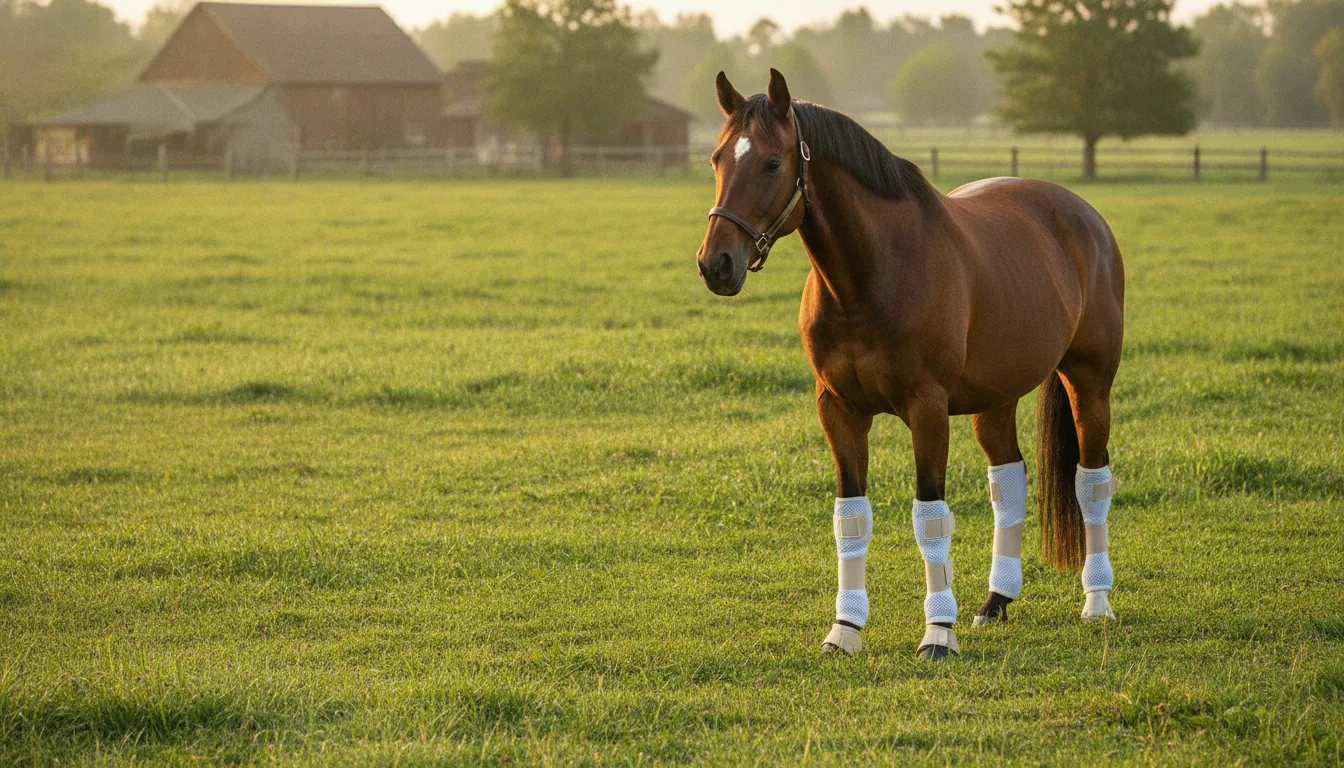
Turnout Socks for Horses: Mud and Fly Protection
Turnout socks for horses are lightweight leg coverings designed to help shield the lower legs from pasture conditions such as mud, wet grass, dust, and biting insects. The right pair can add a practical layer of protection during turnout, but only when the socks fit correctly, stay dry and clean, and are checked regularly.
Shop Horse Protection Essentials
Think of turnout socks as part of a daily leg-care routine, not a substitute for inspection or veterinary advice. Choosing the right coverage and building a consistent check-in routine helps you use them responsibly through wet, muddy, or fly-heavy seasons.
Turnout socks for horses are selected for coverage, fit, durability, and the conditions that make mud and flies a daily leg-care concern.
What are turnout socks for horses?
Quick Summary
Turnout socks are fitted horse leg coverings made for pasture use. Depending on the design, they may help limit contact with mud, moisture, flies, and minor environmental debris. They should be selected for the horse, the conditions, and the intended duration of wear.
Unlike traditional stable wraps, turnout socks are made for movement and outdoor use. Many designs use breathable mesh, ventilated fabric, neoprene, or other durable materials. Closures may include touch-close straps, pull-on construction, or shaped panels that follow the horse's leg. Some are intended mainly for fly coverage, while others are designed to create a barrier against wet ground and mud.
The word "sock" describes the shape, not one universal level of protection. A fly turnout sock may be light and airy, while a mud sock may offer more coverage and a closer barrier around the pastern. Always read the product's intended-use information and size guide rather than assuming that every turnout sock performs the same job.
Turnout socks can be useful for horses that spend time in pasture during insect season or wet weather. They can also help riders keep a more consistent visual check on the lower legs because removing the socks becomes a natural point for inspection. That benefit disappears if the socks are left on without checking underneath.
Which conditions can turnout socks help manage?
Key Takeaway
Choose a turnout sock based on the condition you are trying to manage. Fly-focused socks prioritize airflow and insect coverage, while mud-focused designs prioritize coverage, secure fit, and keeping moisture and debris away from the lower leg.
Start by identifying the main pasture challenge. A horse turned out on dry grass in midsummer may need a different design from one turned out in a wet paddock after repeated rain. The table below is a starting point, not a replacement for the product instructions.
| Pasture condition | Useful design priorities | What to monitor |
|---|---|---|
| Flies and biting insects | Breathable fabric, secure edges, comfortable coverage | Heat, rubbing, slipping, and insect access at the top or bottom edge |
| Wet grass and light mud | Coverage around the lower leg, close fit, easy cleaning | Moisture trapped against the skin and mud collecting at seams |
| Deep or sticky mud | Durable material, stable closures, a design made for muddy turnout | Pulling, twisting, trapped grit, and whether the sock remains in position |
| Dust, sand, or dry debris | Smooth construction, breathable material, comfortable edges | Fine particles under the sock and signs of rubbing |
| Sun exposure | Coverage and any stated UV-related feature from the manufacturer | Heat buildup, fading, and whether the horse tolerates the material |
Do not assume that a turnout sock prevents a skin condition or treats an existing problem. The common phrase "mud fever" can refer to pastern dermatitis, which has different possible causes and may need professional assessment. If you see swelling, heat, open skin, discharge, persistent crusting, lameness, or a change that concerns you, remove the socks and contact your veterinarian.
How do you choose the right fit?
Quick Summary
A good turnout-sock fit is secure without being tight, smooth without pinching, and appropriate for the horse's leg shape. Measure as directed, compare the result with the manufacturer's size chart, and test the fit during a short supervised period before longer turnout.
Fit is the most important selection decision. A sock that is too loose can twist, slide, or catch debris. One that is too tight can rub, restrict comfortable movement, or create pressure points. Even a correctly sized sock may fit differently on the front and hind legs, so follow the product's instructions for leg placement.
- Measure the correct area. Use the manufacturer's directions instead of relying only on breed, height, or a familiar blanket size.
- Account for leg shape. A fine-boned leg, a fuller pastern, and a feathered lower leg can require different fit considerations.
- Check the edges. The top and bottom should lie flat without folding, cutting in, or leaving a gap that collects mud.
- Check the closure. Straps should secure the sock without over-tightening. Fasteners should be fully engaged and positioned as directed.
- Watch movement. Walk the horse and observe whether the sock twists, bunches, slips, or changes position.
When possible, fit a new pair before turnout and observe the horse in a safe area. Look at the leg after a short wear period, then again after removal. This staged approach is especially useful for a horse with sensitive skin or a history of rubbing from equipment.
If the product comes in separate sizes such as Pony, Cob, or Full, do not size up automatically for extra room. Extra material can create folds and movement. A size chart, the product's construction, and the horse's actual measurements are more reliable than a guess.
How should you install turnout socks before turnout?
Key Takeaway
Install turnout socks on clean, dry legs. Smooth the material, secure each closure according to the instructions, and walk the horse briefly before turnout. Never cover a leg without first checking for heat, swelling, wetness, grit, or open areas.
Preparation matters as much as the sock itself. Dirt and grit under a fitted covering can rub with every step. Moisture held against the skin can also make it harder to notice a developing problem. Before fitting, handle each leg calmly and inspect it from the hoof upward.
- Start with a clean, dry leg. Remove visible mud and allow wet areas to dry. Do not trap clumps, sand, or manure beneath the sock.
- Inspect before covering. Compare the leg with the other legs and note unusual heat, swelling, tenderness, scabs, sores, or discharge.
- Orient the sock correctly. Identify the front, back, top, and bottom according to the product directions.
- Place it smoothly. Avoid folds, wrinkles, and twisted seams. Make sure the material sits where the design intends.
- Secure every closure. Fasteners should be flat and fully closed, with enough adjustment for a stable fit but no unnecessary pressure.
- Walk and recheck. Observe a few steps, then confirm that the sock has not shifted before the horse goes out.
Do not use turnout socks to cover an undiagnosed injury or active skin irritation. Covering a problem can hide changes and make the area harder to manage. If a product's instructions conflict with a veterinarian's direction, follow the veterinarian's guidance and the product's safety information.
What should you inspect during and after turnout?
Quick Summary
Inspect the sock's position during use and inspect the horse's skin after removal. Look for slipping, twisting, wetness, trapped mud, heat, swelling, rubbing, or new marks. Stop using the pair until you understand any concerning change.
Inspection is not optional, particularly during a horse's first few uses of a new design. A sock can begin in the correct position and shift after rolling, running, or walking through mud. Check the horse soon after turnout starts when conditions or the product are unfamiliar.
- Is the sock still level and secure?
- Has any edge folded, rolled, or moved into a pressure point?
- Is mud packed inside the lower edge or around a closure?
- Does the horse appear uncomfortable, distracted, or unwilling to move normally?
- After removal, is the skin dry, calm, and free of new rub marks?
- Are the leg and pastern comparable with the horse's normal appearance?
Remove the socks when the horse comes in unless the manufacturer or your veterinarian provides a different routine. Brush away debris, examine the skin in good light, and record anything unusual. A simple photo or note can help you compare the same area over time without relying on memory.
Stop use and seek professional advice for persistent swelling, heat, pain, lameness, broken skin, discharge, or worsening crusting. Turnout socks are equipment. They are not a diagnosis, medication, or guarantee against skin trouble.
How do you clean and care for turnout socks?
Key Takeaway
Clean turnout socks according to the care label, remove mud before it dries into seams, and dry the pair completely before storage or reuse. Rotate between clean pairs when conditions are wet or the horse needs frequent turnout.
Clean equipment is easier to inspect and more comfortable for the horse. Follow the product's care instructions because fabrics, fasteners, and coatings differ. If the label permits washing, close touch-close fasteners before washing so they do not catch on the fabric.
- Shake or brush off loose dirt outdoors.
- Rinse away mud before it hardens, taking care around seams and closures.
- Use only the detergent and water temperature recommended by the manufacturer.
- Air-dry completely before putting the socks back on the horse.
- Inspect stitching, binding, straps, and fasteners after cleaning.
- Store dry and away from sharp hardware that could damage the material.
Replace a pair when the material has a tear, the edge has become rough, a closure no longer holds, or the sock can no longer stay in its intended position. A small repair may not restore the level of support or coverage the product was designed to provide. Keep a clean spare pair available if turnout conditions make frequent changes necessary.
For more options, browse horse boots and leg protection for designs intended for different equine activities. If insects are the primary concern, the fly-season protection collection can help you compare additional coverage for the rest of the horse.
Turnout socks versus other leg protection
Quick Summary
Turnout socks are designed for pasture coverage and environmental exposure. Stable wraps, sport boots, bell boots, and other leg protection serve different purposes. Choose the equipment that matches the activity, then follow its specific fitting and wear instructions.
It is easy to compare all horse leg equipment as if the products were interchangeable. They are not. Turnout socks generally focus on coverage during outdoor wear. Sport boots may be designed around exercise and impact protection. Stable wraps are used in controlled conditions and require a different fitting routine. Bell boots protect around the hoof and heel area rather than covering the same part of the leg.
Consider the horse's activity, the surface, the weather, the duration of wear, and the product's intended use. A turnout sock may be appropriate for pasture insects but not for a fast exercise session. A sport boot may be suitable for work but not designed for extended wet turnout. When in doubt, use the manufacturer's instructions and ask an equine professional who knows the horse.
Hooves and Paws has served horse owners and animal families since 1994, with a curated selection of equestrian supplies and personal service. Use the horse protection essentials collection to shop related equipment, and check product details before choosing a size or intended use.
Shop Horse Protection Essentials Today
Frequently Asked Questions
Can turnout socks prevent mud fever?
Turnout socks may help limit contact with wet mud and debris, but they cannot guarantee prevention of mud fever or pastern dermatitis. Fit, inspection, dry skin, pasture conditions, and the horse's individual needs all matter. Ask your veterinarian about persistent or worsening skin changes.
Can horses wear turnout socks all day?
Wear time depends on the product, the horse, and the conditions. Follow the manufacturer's instructions and check the socks and skin during and after use. Introduce a new pair gradually rather than assuming it is suitable for long turnout immediately.
Should a horse's legs be dry before fitting turnout socks?
In general, fit turnout socks only after removing mud and allowing the legs to dry, unless a veterinarian or product instruction directs otherwise. Trapped moisture, grit, or manure can increase rubbing and make changes harder to notice.
How tight should turnout socks be?
They should be secure enough to stay in the intended position without pinching, folding, or restricting comfortable movement. Use the manufacturer's size chart and closure instructions, then walk the horse and recheck the fit before turnout.
Can turnout socks be used on front and hind legs?
Some designs are made for both front and hind legs, while others are shaped for a specific placement. Check the product description and fitting directions. Never assume that a front-leg fit is correct for a hind leg simply because the size is the same.
When should I stop using turnout socks?
Stop use if the sock slips, twists, causes rubbing, traps heavy mud, becomes damaged, or is associated with heat, swelling, pain, broken skin, or another concerning change. Remove the equipment and contact your veterinarian when the horse's condition needs assessment.
With the right fit and a consistent inspection routine, turnout socks can be a useful part of practical horse care. Choose coverage for the conditions, keep the material clean and dry, and make the horse's comfort the final measure of whether the product belongs in the turnout routine.


