

Shank & Curb Bits
Filtrar y ordenar
10 productos

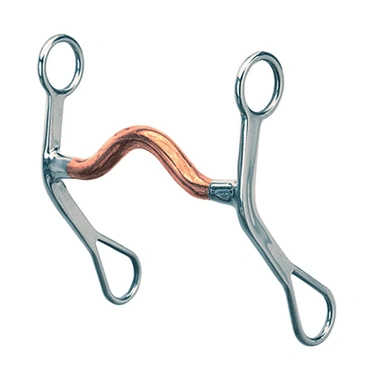

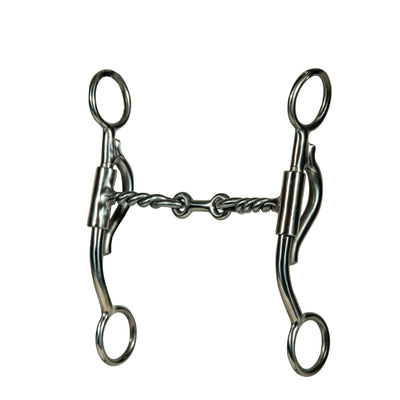

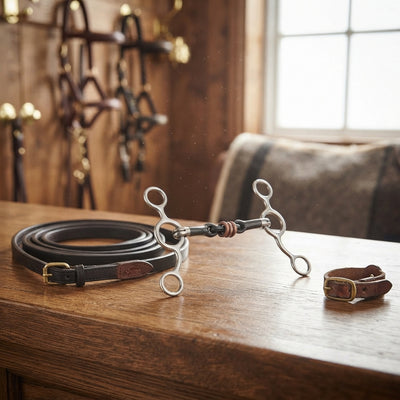

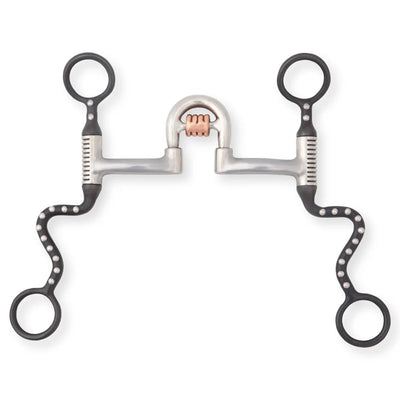

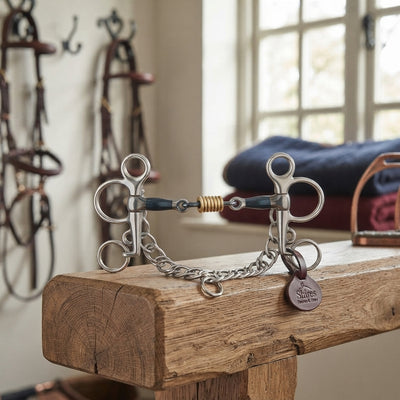

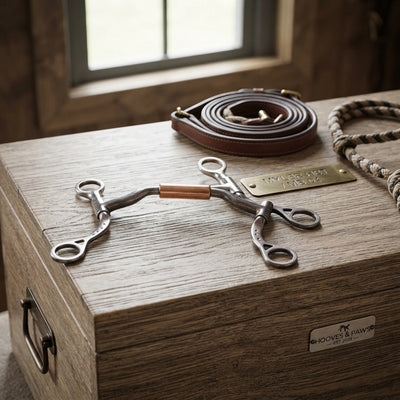

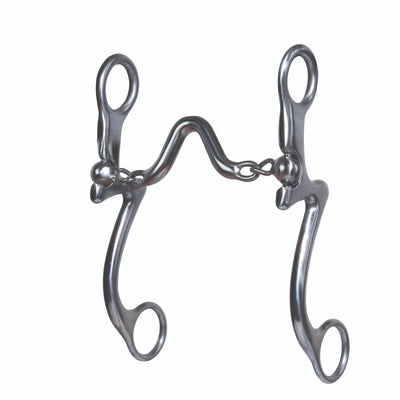
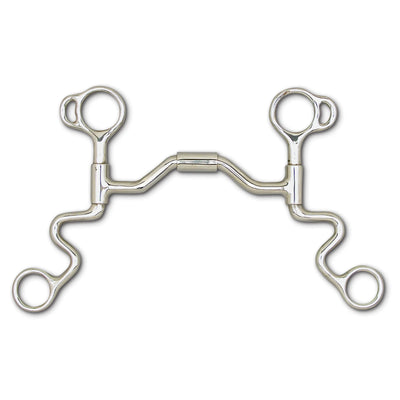

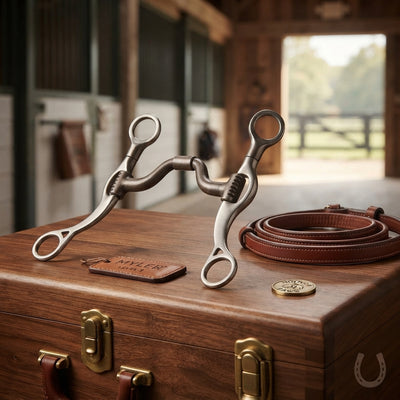

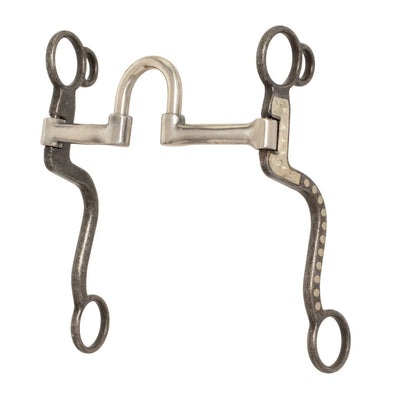
A seven-inch shank does not multiply your rein by seven. Leverage comes from the ratio between the purchase above the mouthpiece and the shank below it, which is why two bits of the same length can feel nothing alike. This page is western leverage bits, and the numbers below are the ones show rules and physics both care about.
What Riders Are Actually Asking
How much leverage does a shank bit really apply?
Measure two things: the purchase, from the mouthpiece up to the headstall ring, and the lower shank, from the mouthpiece down to the rein ring. Divide the lower by the upper and you have a rough multiplier on the mouth and curb groove. A bit with a 2 inch purchase and a 5 inch lower shank works out around two and a half to one, not seven to one, even though the whole cheek measures seven inches. Lengthening the purchase instead moves pressure onto the poll and takes it off the mouth.
How tight should the curb strap be?
Two fingers laid flat between the strap and the chin groove is the traditional check, and the working version is rotation: the shank should swing back roughly 45 degrees before the strap comes into play. Too loose and the shank rotates past that, rolling the mouthpiece down across the tongue before any signal reaches the chin at all. A curb strap is not optional either. AQHA requires one with a curb bit, and western dressage rules specify a minimum width of half an inch, lying flat against the jaw.
Is the Tom Thumb as bad as people say?
Riders argue about this one endlessly, and the honest position is that the mechanism is real while the measurement is not. A jointed mouthpiece hung on shanks does two things at once under rein pressure: the shanks rotate and the joint closes, and a single rein drags the far side of the mouthpiece into the opposite bar. That is neither what a snaffle does nor what a solid curb does. What does not exist is published pressure data comparing it with other curbs, so you are working from mechanics and a very large pile of rider report.
What measurements do the show rules use?
For AQHA and most breed and 4-H classes the shank may not exceed 8.5 inches, measured as set out in the judges' guide. Mouthpiece bars must be 5/16 to 3/4 inch in diameter, taken 1 inch in from the cheek, which means a bit that tapers thinner toward the center still passes. A port may be no higher than 3.5 inches, and nothing may protrude below the bar by more than 1/8 inch. Snaffle rings, where a class allows a snaffle, are capped at 4 inches across.
When is a horse ready to move from a snaffle to a curb?
Age is the wrong test, even though the rulebook uses it. Under AQHA rules a junior horse, five and under, may show two-handed in a snaffle or a bosal, while a senior horse goes in a curb ridden one-handed. Readiness is really about whether the horse neck reins off a light hand and carries himself without being held together. Two hands on a leverage bit is where most trouble begins, because pulling one shank on its own twists the mouthpiece sideways across the mouth.
How to Choose the Right Curb Bit
- Measure the ratio, not the length: Purchase and lower shank together give you the multiplier. Overall cheek length on its own tells you very little.
- Loose jaw or fixed cheek: A swivel shank gives a moment of warning before the mouthpiece engages. A fixed cheek transmits straight through, which suits a horse who ignores a soft cue.
- Treat port height as a tongue decision: A low port gives tongue relief without touching anything else. Ports above roughly two inches start to reach the palate when the shank rotates.
- Weight is a signal, not a severity: A weighted shank falls away the moment you release. Some horses read that drop faster than they read a light bit.
- Match the strap to the bit: A flat leather curb strap is milder than a chain of the same length. Swapping one for the other changes the bit more than riders expect.
What This Page Is Not For
Leverage bits only. Snaffles, gag and elevator bits, hackamores and bitless options each have their own page, and so do curb straps, curb chains and bit hobbles, which are listed as accessories rather than here. Nothing on this page substitutes for your own association's current rulebook, and 4-H and breed rules do not always agree.
Brands Riders Trust
Professional's Choice builds the Equisential range and the pre-signal weighted shanks that dominate the reining and barrel end of what we ship. Weaver Leather covers the S-shank and plain stainless curb at a working price. Shires makes the Tom Thumb and the Pelham for riders crossing over from English. Toklat carries the western S-shank, and Myler's HBT shank pairs their comfort mouthpieces with a short lever.
Two-day shipping from American warehouses, and a 365-day guarantee covering a bit that turns out to be more than your horse needed. Happy Tails, Happy Trails.
