


Choosing the best cat litter boxes starts with your cat’s size, movement, habits, and the space you can keep clean. A box that is easy to enter, roomy enough to turn around in, and simple to scoop is often a more practical choice than one with extra features your cat may not use.
Call to ask about pet-care supplies
What should you look for in the best cat litter boxes?
Quick Summary
Start with a box your cat can enter and turn around in without crowding. Consider the cat’s age and mobility, your cleaning routine, litter preferences, and the space available. A simple, appropriately sized box is a sensible baseline.
Think of litter-box selection as matching a daily-use item to one individual cat. A large, active cat may need more room than a small cat. A kitten or senior cat may do better with an easier entry. A cat that dislikes enclosed spaces may avoid a covered model, even if it looks neater to people.
Before shopping, note your cat’s approximate body length from nose to the base of the tail, how easily the cat steps over a raised edge, and whether the current box is used consistently. A useful sizing rule of thumb is to look for a box roughly one and a half times the cat’s body length, then check that the cat can comfortably turn around inside it. Treat that as a starting point, not a guarantee of preference.
A 2025 study of cats’ litter preferences reported a preference for boxes measuring at least 50 cm and for clumping clay litter. That finding is one helpful data point, not a universal prescription for every cat or home. You can read the study on litter-box size and litter type preferences for its specific findings.
- Room to move: Check the usable interior dimensions, not only the outside measurements. Your cat should be able to enter, turn, dig, and cover waste.
- Comfortable access: A lower entry can help a kitten or a cat that has difficulty stepping over a tall side. Make sure the rest of the box still contains litter effectively.
- Stable construction: A box should sit flat and feel secure when the cat steps in and out.
- Manageable cleaning: Choose a shape and material you can scoop and wash regularly without awkward corners.
- A suitable location: Measure the intended spot and leave enough room for the cat to approach and exit without being trapped.
How do open, covered, and high-sided boxes compare?
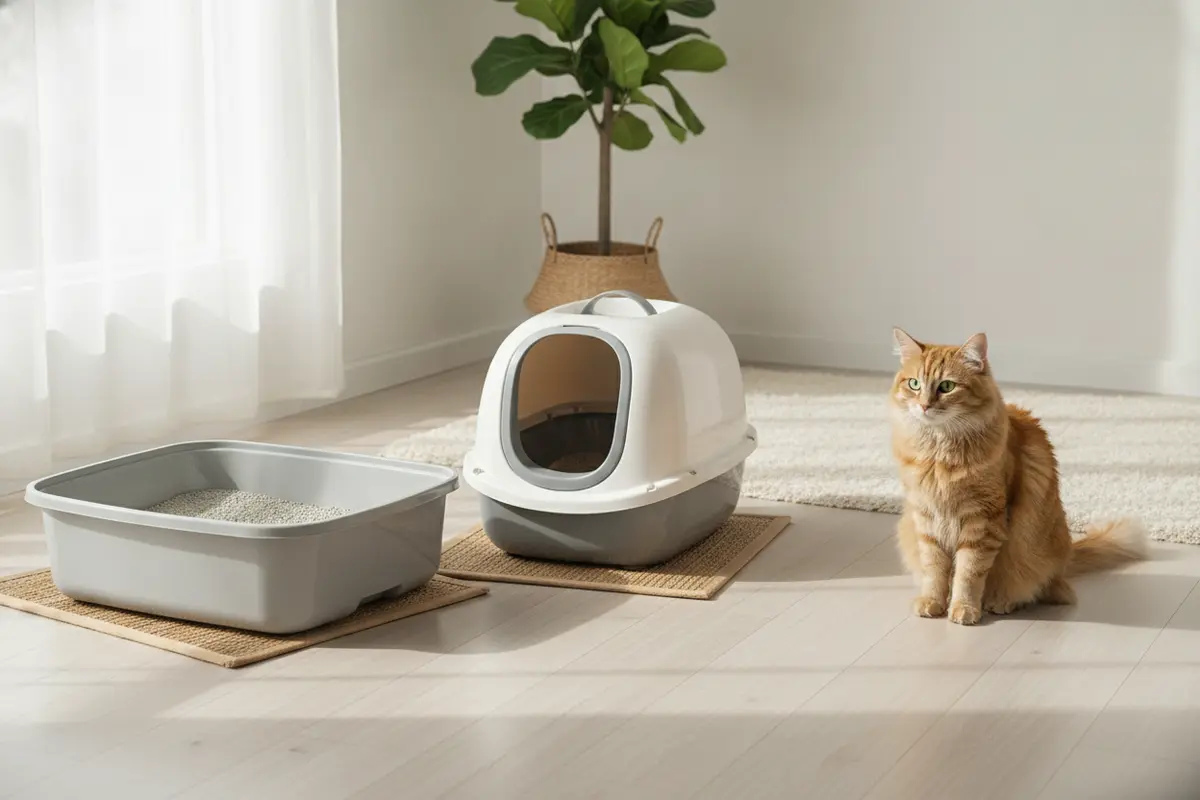
Each style solves a different household problem. An open pan is easy to inspect and scoop. A covered box can contain some scattered litter, but its enclosed interior may feel cramped to a larger cat. High sides may help with cats that kick litter outward, while a high entrance can be inconvenient for cats with limited mobility.
| Box style | May suit | Check before choosing | Cleaning considerations |
|---|---|---|---|
| Open pan | Cats that like an unobstructed entry and owners who want a clear view of the box | Whether the sides are tall enough for your cat’s digging habits | Easy to inspect and scoop; litter may scatter beyond the pan |
| Covered box | Homes where a lid fits the available location and the cat accepts an enclosed space | Interior length, entry size, ventilation, and whether the cat enters willingly | Lift or remove the cover for full access; keep up with scooping |
| High-sided pan | Cats that scatter litter over the sides | Entry height and the cat’s ability to step in and out comfortably | Can contain more kicked litter; inspect corners and seams |
| Low-entry pan | Kittens or cats that need an easier step over the edge | Whether the lower side allows enough litter containment for this cat | Access is convenient, but surrounding areas may need more frequent tidying |
For another independent overview, Consumer Reports’ cat litter box guide discusses box options and notes that its market research found the large size to be the most popular. Use reviews as a way to build a shortlist, then compare the dimensions and features with your cat’s needs.
Which box details matter for kittens, senior cats, and large cats?
Life stage and body size can change what “easy to use” means. A young kitten may need a low step-in point. A senior cat may also benefit from easier access, especially if a tall rim makes entry awkward. For either cat, avoid choosing a box based on appearance alone: check the entry height and the usable floor area.
For a large cat, prioritize interior length and width. A box can look generously sized from the outside but lose room to sloped walls, a thick rim, or a hood. If you are considering a covered style, compare the inside measurements and observe whether your cat has enough room to turn around. A roomy open pan may be more practical if the covered model feels cramped.
For cats that dig enthusiastically, try a taller-sided pan while keeping an easy entrance. A high-sided design is not automatically a good choice for every cat; access still matters. If the cat hesitates at the step or has trouble entering, revisit the design rather than expecting the cat to adapt.
For a household with more than one cat, consider whether each cat can reach a box without being blocked by another. Keep boxes in accessible locations rather than placing all of them in one busy corner. Cats differ, so watch how they use the setup and adjust if one cat avoids a particular box.
Where should you place a litter box?
Key Takeaway
Choose a quiet, reachable place where a cat can approach and leave without being cornered. Keep the box away from disruptive household traffic and make sure the route stays open.
A good location balances privacy and access. A quiet corner may work, but avoid a spot that is difficult to reach or that traps the cat between a wall and a noisy appliance. Do not place the box where a door can block it or where people regularly step over the cat. If the home has multiple floors, consider whether the cat can reach a box on the level it spends time on.
Keep food and water separate from the litter area. Make sure the floor is stable and the box does not wobble. A mat outside the entry can catch some loose litter, but it should not make the approach difficult. If you move a box, pay attention to whether the cat finds and uses the new location.
In a home with dogs or other animals, pick a location where the cat can use the box without being watched, chased, or interrupted. A covered box is not a substitute for a calm, accessible location. For households caring for several kinds of animals, browse the multi-animal Fall Bundles for other household supply ideas; if a dog also needs play gear, view interactive dog toys. The litter box itself should still be selected for the cat’s comfort.
How can you evaluate a litter-box setup at home?
Quick Summary
Observe the cat using the existing setup before replacing it. Check entry, turning room, footing, privacy, and ease of scooping. Make one adjustment at a time so you can tell what helps.
A short, structured observation can make the shopping decision clearer. Watch from a respectful distance rather than hovering over the cat. Notice whether the cat approaches directly, pauses at the entrance, steps in smoothly, turns around, and exits without catching a paw on the edge. Also note whether litter is kicked out in one predictable direction or scattered broadly. These clues can help separate a size or access issue from a location or cleanup issue.
Use a simple checklist for several days if you are unsure what needs to change. Write down the box location, style, approximate measurements, litter type, how often you scoop, and any changes in how the cat approaches or uses it. The goal is not to diagnose a health issue from a notebook. It is to avoid making several unrelated changes based on one messy morning.
- Entry: Does the cat step over the rim without hesitation or visible difficulty?
- Movement: Can the cat turn around without pressing against the sides or hood?
- Digging: Does the pan contain the litter the cat moves, or does the shape create a cleanup problem?
- Exit: Is the path clear, and does the box remain stable as the cat leaves?
- Maintenance: Can you reach the far corners and remove waste without disassembling an awkward setup every time?
Imagine two common situations. If a cat enters readily but scatters litter over a low side, a higher wall on the digging side may address the practical problem, provided the entry remains easy. If a cat circles a covered box but uses an open pan nearby, the enclosed space may be the mismatch. Buying a larger hooded model might not solve that preference; comparing a roomy open style may be more useful.
Keep the notes neutral. A cat avoiding a box does not prove that the box is too small, and a tidy room does not necessarily mean the cat likes the setup. Use observed behavior alongside the physical dimensions and your cleaning needs. If the behavior changes suddenly or seems connected to discomfort, consult a veterinarian instead of relying on product changes alone.
How should you choose a location in a busy or multi-level home?
Walk the route a cat would take from its usual resting places to the proposed box. Consider whether a closed door, a narrow passage, or a loud machine could make the route inconvenient. A location that is technically available may not be practically accessible if family traffic regularly interrupts the cat or another animal blocks the path.
In a multi-level home, think about where the cat spends time and whether stairs are easy for that individual. A young, agile cat and a cat with limited mobility may not use the same route equally well. A box tucked far away may be easy for people to ignore but harder for a cat to reach promptly. Choose placements that are reachable and calm, then check that each box can be cleaned without moving furniture or storing supplies in the walking path.
For more than one cat, pay attention to access and choice. One cat should not have to pass another cat’s preferred resting spot or squeeze into a dead-end location to reach a box. Avoid putting all available boxes side by side if the arrangement creates a single congested point. The best layout depends on the home, so observe how each cat uses the spaces rather than assuming that a single arrangement will work everywhere.
Before moving a box, decide what problem the move is meant to solve. If the issue is noise, select a quieter but still accessible spot. If the issue is litter tracking, changing the pan or adding an easy-to-cross mat may be less disruptive than moving the box across the home. When a move is needed, keep the new route clear and monitor whether the cat finds the new location comfortably.
How do you keep the box clean and easy to maintain?
Cleaning should be simple enough to fit into your routine. Scoop waste regularly, remove soiled litter, and wash the pan as needed according to the material and product instructions. A smooth, intact surface is generally easier to clean than a box with deep seams or hard-to-reach corners.
- Set a routine. Choose a consistent time to scoop and check the litter level.
- Inspect the pan. Look for cracks, rough areas, or residue that makes washing difficult.
- Refresh the litter thoughtfully. Follow the litter label and avoid abrupt changes when your cat is using the current setup reliably.
- Clean the surrounding area. Sweep or vacuum scattered litter and keep the route to the box unobstructed.
- Watch for changes. Notice whether the cat continues to enter and use the box comfortably.
Make maintenance convenient before you settle on a location. Check whether you can lift a lid, reach the far end, and carry waste away without awkward handling. A covered model that looks discreet may take longer to open and clean than an open pan. That trade-off may be worthwhile for a particular household, but it should be considered before purchase rather than discovered during a rushed daily cleanup.
Use the cleaner and washing method recommended for the box material, and follow instructions on litter products. Avoid relying on strong fragrance to cover odor. A scent added for the household may not suit every cat, and it does not replace routine scooping and washing. Store scoops and cleaning supplies where they are easy for an adult to reach but do not block the cat’s access.
When trying a different litter or box style, change one thing at a time where practical. This makes it easier to tell whether the cat accepts the new setup. If the cat stops using the box or shows a sudden change in bathroom habits, do not assume the box is the only cause. Contact a veterinarian for advice about a significant or persistent change.
For a cat household that also shops for general pet-care supplies, view pet supplements and wellness products. These are separate from litter-box supplies, so choose products for their stated use and ask a veterinarian about health concerns.
How can you introduce a new box or change the setup?
Key Takeaway
Keep the familiar option available while you assess a new box whenever practical. Avoid changing the box, litter, and location all at once, because that makes it harder to identify the cat’s response.
A new box can be a noticeable change in a cat’s routine. If there is room, place the new option near the established setup first, while keeping the old box available. This lets you see whether the cat approaches and uses the new style without immediately removing a familiar option. Do not force the cat into the box or make it stay there to inspect it.
When possible, hold other details steady during the transition. Keep the litter type and general placement familiar if the box itself is what you are testing. If the litter needs to change too, make that a separate, measured decision rather than switching the pan, litter, and location in one day. A simple note of the date and change can help you interpret what happens afterward.
Look for practical signs of acceptance: the cat approaches without repeated hesitation, enters and turns comfortably, and returns to the box as part of its routine. An initial sniff or inspection is not the same as regular use. Give yourself time to observe without treating one visit as conclusive. If the cat consistently avoids the new option, reconsider its size, entry, cover, stability, position, and litter rather than blaming the cat for being difficult.
If the current box is damaged or unsafe to use, do not keep it in service simply to preserve familiarity. Instead, choose the closest practical replacement in terms of access and location, then monitor the cat closely. If there is a sudden or persistent change in bathroom habits, or the cat seems uncomfortable, contact a veterinarian promptly for guidance.
What should you check before buying?
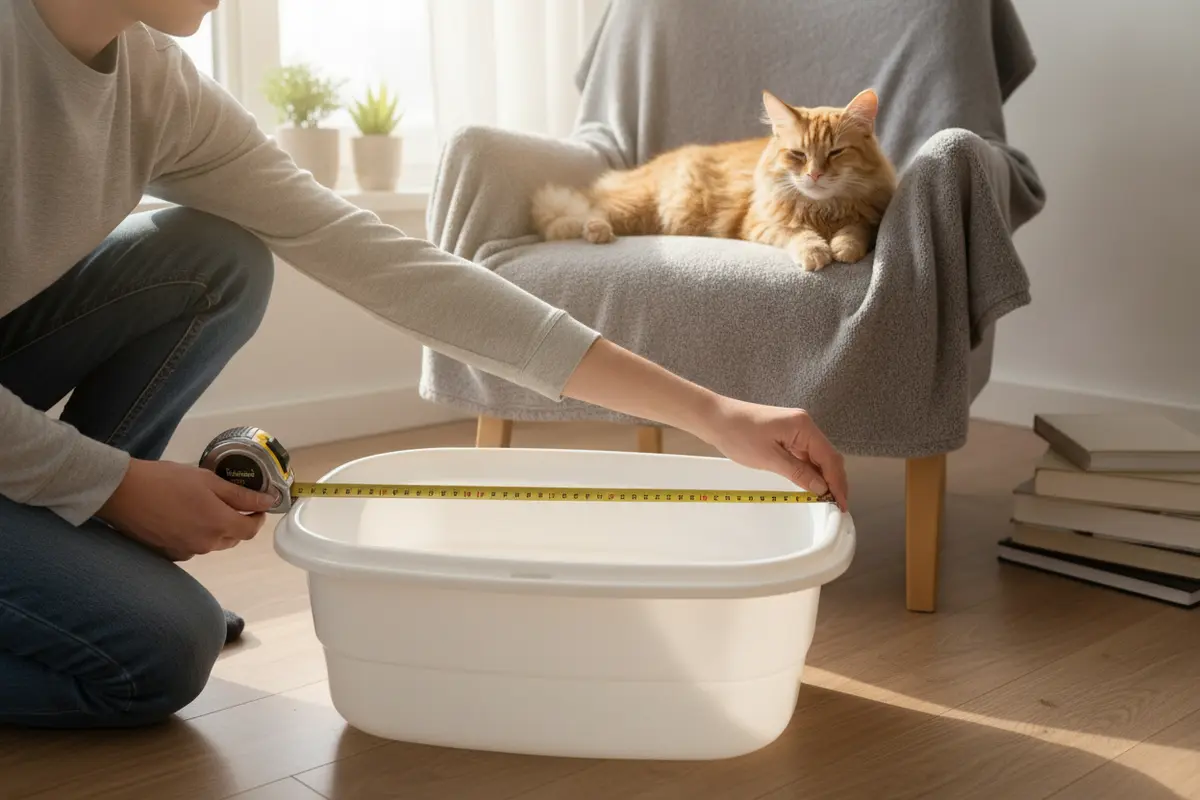
Before ordering, compare the product dimensions with both your cat and the planned location. Check whether a listed measurement refers to the outside or inside of the box. For a covered model, look at the door opening and interior height as well as the overall length. If the product includes a liner, scoop, or other accessory, consider whether it fits your routine rather than treating included extras as necessary.
- Measure the available floor space, including room to open a lid or remove a cover.
- Compare usable interior dimensions with your cat’s body size.
- Check the entry height against your cat’s ability to step over it.
- Consider the material and shape when judging how easy the box is to clean.
- Read current product details and reviews for information about assembly, fit, and day-to-day use.
Consumer Reports’ best cat litter boxes overview can be one source for comparing available models. For general household shopping, check current sales and deals, then confirm that any item you choose is actually designed for your cat and intended setup.
How can you compare product details before choosing?
Product pages often use broad labels such as “large,” “covered,” or “easy clean.” Those words can help you find options, but they do not tell you whether the box will fit your cat or your room. Compare the actual dimensions, opening, shape, and care instructions. A little measuring before you order can prevent the common mismatch of buying a box that fits the corner but not the cat.
Write down the maximum length and width available at the intended location, then measure the cat’s current box and note what works or fails. If the current pan gives enough room but lets litter scatter, prioritize sides or placement. If the cat has trouble stepping over the edge, prioritize access even if a taller wall would make cleanup easier. This keeps the choice tied to a real need instead of a list of features.
For a covered design, check the inside dimensions and doorway separately. A generous outer measurement may include the hood, while the usable floor area is narrower. Look for whether the top can be lifted or removed for cleaning and whether the entrance leaves enough space to pass through without crouching awkwardly. If details are missing, do not assume a product label answers the question; look for a manufacturer measurement or choose an option with clearer specifications.
Reviews can be useful for spotting practical concerns such as assembly, stability, or whether a removable top is awkward to handle. Read them as individual experiences, not a guarantee that the same product will suit every cat. Check the date and model details where available, since similarly named versions may have different dimensions. Make the final comparison against your cat’s movement and the care routine you can sustain.
Common selection mistakes to avoid
Choosing a box that only fits the room. A compact box may fit a narrow corner but leave too little room for the cat to turn. Measure the cat and the spot before deciding.
Assuming a lid is always better. A cover may help contain scattered litter, but it reduces open space and is not preferred by every cat. Consider whether the cat can enter and move comfortably.
Ignoring the entry height. A high rim can be difficult for some cats to step over. Match the entry to the individual cat, even when the pan’s interior size seems ideal.
Changing everything at once. Replacing the box, moving its location, and switching litter simultaneously makes it harder to identify what the cat accepts. Make gradual, trackable changes when possible.
Buying based on a feature label alone. Terms such as “large” or “easy clean” do not replace checking measurements, openings, and surfaces. Read the product details and decide based on the actual fit.
Overlooking the cleaning path. A box can fit its space but be difficult to open or reach. Check whether you can clean all the corners, remove the cover, and carry supplies to the area without shifting furniture every time.
Treating one preference as universal. A style that works for a friend’s cat or receives positive reviews may not suit yours. Use outside information to compare options, then evaluate your own cat’s access and comfort.
Shop current pet and animal-supply deals today
Frequently Asked Questions
How large should a cat litter box be?
Look for enough interior space for your cat to enter, turn around, dig, and cover waste. A common rule of thumb is a box around one and a half times the cat’s body length, but compare actual measurements and observe your cat’s comfort.
Are covered litter boxes better than open boxes?
Neither style is best for every cat. Covered boxes can contain some litter, but may feel enclosed or cramped. Open pans are easy to inspect and access. Choose the style your cat uses comfortably and that you can clean consistently.
Is a high-sided litter box a good choice?
It may help contain litter kicked over the sides, provided the cat can still enter and exit easily. Check the entry height and do not choose a tall-sided pan if the cat struggles to step over it.
How many litter boxes does a home need?
Consider the number of cats, the layout of the home, and whether each cat can reach a box without obstruction or conflict. Provide accessible options in appropriate locations, and ask your veterinarian for guidance if you are managing a specific behavior or health concern.
How often should you clean a litter box?
Scoop regularly and keep the box clean according to your routine, litter directions, and the cat’s use. Check the pan itself for residue or damage and wash it as needed. A clean, easy-to-maintain setup is more practical for daily care.
Should I change litter if my cat avoids the box?
First check whether the box is clean, accessible, and located in a calm place. If you try a different litter, introduce the change thoughtfully rather than switching several parts of the setup at once. A sudden or persistent change in litter-box habits is a reason to contact a veterinarian.
What if my cat has trouble getting into the box?
Review the entry height and try a more accessible design if appropriate. If the difficulty is new, persistent, or accompanied by another change in behavior, consult a veterinarian rather than assuming that a new box alone will resolve it.
The best fit is the box your cat can reach, use comfortably, and keep clean as part of your everyday routine. Measure first, compare the actual features, and adjust the setup based on what your cat shows you.


