


Finding the best helmet for horse jumping is not only a style decision. A jumping helmet needs recognized protection, a stable fit, and enough comfort that you will wear it correctly for every schooling session and show. The best choice is the one that matches your head shape, stays secure when you move, and meets the current rules for the riding you plan to do.
Shop riding helmets for jumping today
Jumping adds speed, height, and changing takeoff and landing forces to an already unpredictable sport. That makes it important to compare helmets by safety certification and fit before considering finish, visor shape, ventilation, or price. This guide explains what to check, what a safety rating can and cannot tell you, and how to make a careful decision without relying on a single "best" label.
What makes the best helmet for horse jumping?
Start with four essentials: certification, fit, retention, and condition. A helmet that looks advanced but shifts on the head is not a good choice. A comfortable helmet without the required certification is not an appropriate shortcut. A certified helmet that has already absorbed a hard impact should be replaced, even if the shell looks normal.
- Certification: Check the product's current safety marking and the standard named by the manufacturer. Do not rely on a generic claim such as "tested" without identifying the applicable standard.
- Fit: The helmet should sit level, feel evenly snug, and stay in place when you nod, turn, or bend forward.
- Retention: The harness and chinstrap should be adjusted according to the manufacturer's instructions, with enough security to prevent the helmet from rocking or lifting.
- Condition: Avoid used helmets with an unknown history. Replace a helmet after a significant impact or when the manufacturer says its service life has ended.
These fundamentals matter more than a fashionable finish or a highly specific feature. Once they are satisfied, you can compare the details that make one helmet more comfortable for your horse-jumping routine than another.
Which safety standards should a jumping helmet meet?
Equestrian helmet standards establish minimum performance requirements through controlled testing. In the United States, many riding helmets identify ASTM F1163 and an SEI certification. The exact standard and certification status should be checked on the product listing, label, or manufacturer documentation rather than assumed from the helmet's appearance.
Competition rules can be more specific than everyday schooling needs. The FEI accepted testing standards for protective headgear lists the combinations accepted for FEI athletes and shows that requirements can change by effective period. If you compete, check the current rules for your discipline and show before buying. A helmet that is suitable for local schooling may not satisfy the rulebook for a particular event.
Certification is a starting point, not a ranking from safest to least safe. It means the helmet met the requirements of a specific test standard. It does not mean every certified model fits every rider, nor does it mean the helmet is concussion-proof. Use the standard as a filter, then evaluate fit and independent evidence.
Do independent helmet ratings identify the safest option?
The Virginia Tech Equestrian Helmet Ratings use a sports-specific STAR protocol that includes impact tests and measures both linear and rotational head acceleration. Within that testing system, a lower STAR score reflects better measured performance and more stars indicate greater reduction in estimated concussion risk for the tested impacts.
That information is useful when two helmets both meet the minimum standard and are available in a size and shape that works for you. However, the Virginia Tech list is not a universal ranking of every helmet on the market. Test methods are sport-specific, product availability changes, and a rating cannot predict the outcome of every fall. Do not choose an ill-fitting helmet simply because it received a higher independent rating.
A practical comparison order is:
- Confirm that the helmet is appropriate for your riding and competition requirements.
- Confirm that the model is available in a size and head shape that can fit you.
- Compare independent test results when the models are otherwise suitable.
- Try the helmet on and complete the movement and retention checks below.
Shop This Post

Featured in this article
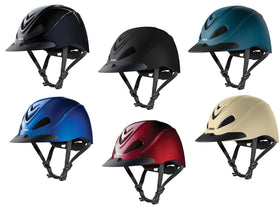
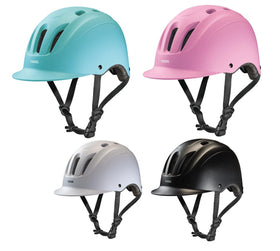
Troxel Dakota Western Riding Helmet - Matte Duratec, ASTM/SEI Certified, SureFit Pro - Multiple Sizes
$104.99
Shop Now →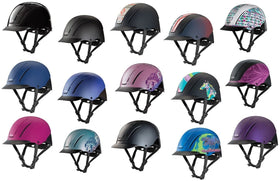
How should a horse jumping helmet fit?
Fit is where many helmet purchases succeed or fail. Head circumference is only the first measurement. Two riders with the same circumference can have different front-to-back and side-to-side shapes, so the same size can feel secure on one rider and unstable on another.
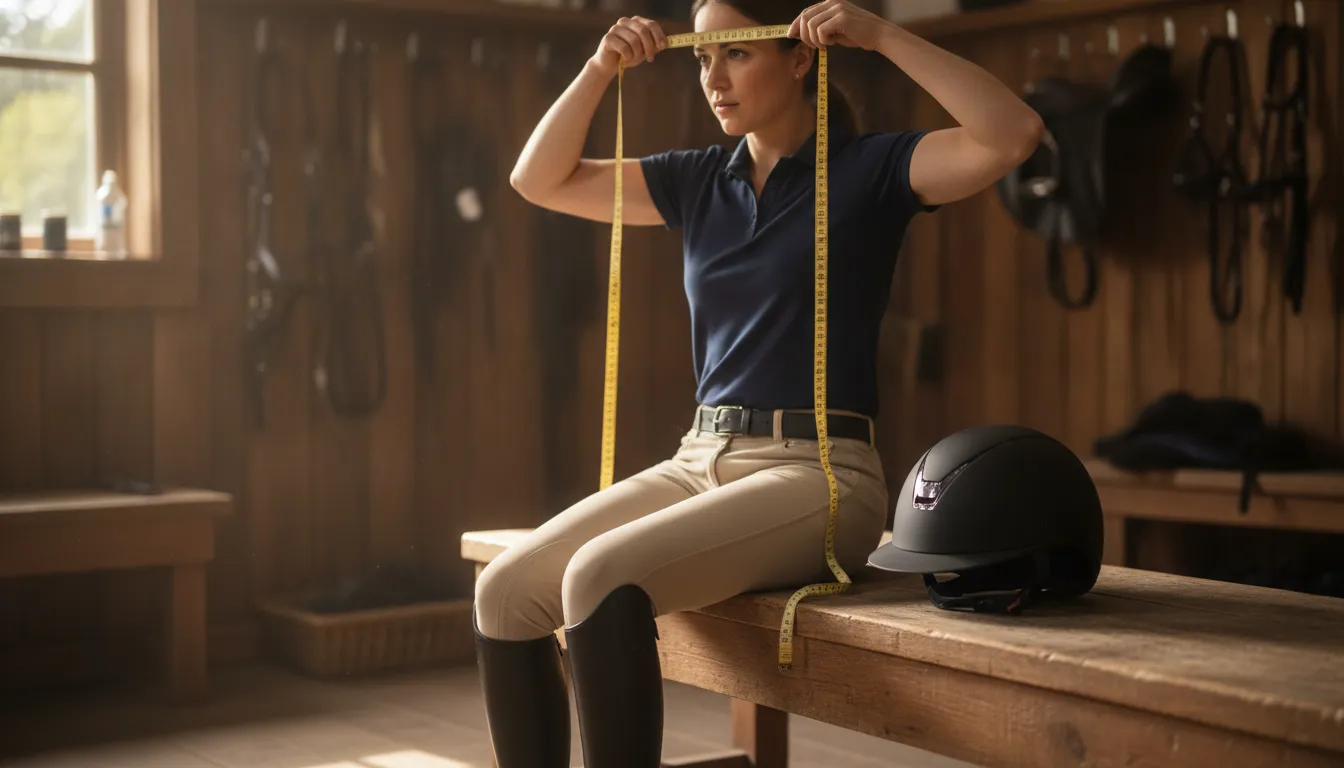
Measure before you shop
Use a soft measuring tape around your head, roughly one inch above the eyebrows and across the widest area at the back. Keep the tape level and comfortably snug. Take the measurement more than once, then compare it with the size chart for the specific helmet. A medium in one brand is not automatically the same as a medium in another.
Check the position
Place the helmet straight on your head rather than tipped back. The front should provide appropriate forehead coverage while leaving your line of sight clear. The harness should sit correctly around the ears and under the jaw. Follow the manufacturer's instructions for the exact chinstrap position and adjustment.
Test stability before you ride
- Fasten and adjust the harness while standing naturally.
- Open your mouth and move your head gently from side to side. The helmet should remain stable without painful pressure.
- Bend forward and look down. The helmet should not slide toward your eyes.
- Ask another rider or an experienced fitter to check whether the helmet rocks, lifts, or sits unevenly.
- Keep the helmet on for several minutes. A hot spot or increasing pressure is a reason to try another shape, size, or model.
Do not buy a helmet that is deliberately loose because you expect to grow into it, or because a thicker winter hat will be worn underneath. Extra space reduces stability. For children, measure regularly and replace the helmet when the fit changes, not only when the shell looks worn.
Which head shape and retention details matter?
Helmet brands and models can suit different head geometries. Some riders need more room from front to back, while others need a rounder internal profile. Signs that the shape is wrong include a persistent headache, a gap at the sides, pressure at the forehead, or a helmet that rocks even after the harness is adjusted.
A dial or rear cradle can make small fit adjustments easier, and removable liners can help with cleaning and seasonal comfort. These features are helpful, but they are not substitutes for trying on the model. Liners also compress and wear over time, so follow the manufacturer guidance for replacement parts and compatible accessories.
The retention system deserves the same attention as the shell. Look for a harness that can be adjusted evenly and stays comfortable under the jaw. Check that the buckle is easy to operate but secure when fastened. During a jumping lesson, you should not need to touch the helmet to keep it in place.
Should a jumping helmet have ventilation or rotational-impact features?
Jumping can be physically demanding, especially in a warm arena or during a long schooling day. Vents and internal air channels may help with heat and sweat management. A removable, washable liner can also make regular helmet care easier. Compare the airflow pattern and liner design, not just the number of visible vents.
Some helmets use a system intended to address rotational motion during an impact. If a manufacturer makes this claim, read the technical explanation and confirm what certification applies to the exact model. Do not treat a feature name as proof that a helmet will prevent a concussion or protect against every type of fall.
Comfort features have a safety benefit when they support consistent use. A helmet that is too hot, irritating, or distracting may be worn incorrectly or removed between exercises. Choose the lightest and coolest option that still provides the required protection and a dependable fit.
For more options, browse Hooves and Paws riding helmets and safety gear, then compare the product's certification details and size chart before adding it to your cart.
What should show jumpers consider beyond the helmet shell?
Show jumping can involve both schooling and competition, and the practical requirements may differ. Some events or organizations specify accepted standards, colors, harness details, or approved headgear. Always verify the rulebook for the event you are entering instead of relying on advice from an older article or another discipline.
Consider how the helmet works with your hair and other equipment. A thick braid, bun, or ponytail can change the fit. Try the hairstyle you normally ride in. Make sure the brim does not interfere with your sightline as you approach a fence and that the harness remains comfortable when you are looking up and down the course.
For schooling, durability and cleanability may matter more than a polished show finish. For competition, a low-profile design or a particular color may fit the ring's expectations. In both settings, the shell, fit, and retention system come first.
When should you replace a horse riding helmet?
Replace a helmet immediately after a fall or other impact that may have involved the head, even if there is no visible crack. Contact the manufacturer if you need model-specific guidance. The same rule applies to a helmet with a cracked shell, crushed liner, broken harness, damaged buckle, or missing component.
Age and use also matter. Foam, adhesives, fabrics, and adjustment parts can change with heat, sweat, cleaning products, and repeated wear. Follow the model's care and service-life instructions. Do not use a helmet that has been stored in a hot vehicle, exposed to harsh chemicals, or modified with unapproved holes, stickers, or accessories.
Do not buy a secondhand jumping helmet unless you can verify its complete history, model, age, storage, and impact record. A new helmet from a trustworthy retailer makes it easier to confirm the product information and start with a known condition.
A practical pre-purchase checklist
| Check | What to confirm |
|---|---|
| Safety standard | The exact certification and standard are listed for the model, and they suit your planned riding or competition. |
| Measurement | Your head circumference matches the brand's current size chart. |
| Head shape | The shell rests evenly without side gaps, forehead pressure, or rocking. |
| Harness | The chinstrap and ear pieces adjust comfortably and keep the helmet stable. |
| Visibility | The brim does not block your view of the approach, fence, or landing. |
| Condition | The helmet is new or has a fully documented history, with no impact or storage concerns. |
| Care | You understand how to clean, store, and replace the liner or other approved parts. |
| Competition | You checked the current rulebook for the show or organization where you will compete. |
A short fitting session is worth more than an online guess. If the first model creates a pressure point or moves during the stability test, try a different shape. The goal is not to find the most expensive helmet or the one with the longest feature list. It is to find a certified, well-fitting helmet that you will wear correctly every time you jump.
Shop a properly fitted riding helmet before your next jumping session
Frequently Asked Questions
What is the best helmet for horse jumping?
The best helmet for horse jumping is a model with an appropriate current certification, a secure fit for your head shape, a reliable harness, and compatibility with your riding or competition rules. Independent ratings can help compare tested models, but fit and certification come first.
Are ASTM and SEI important for jumping helmets?
They can be important safety credentials for helmets sold for riding in the United States. Check the exact standard and certification listed for the model, then confirm the requirements of your show or governing organization. Rules can specify accepted combinations that change over time.
How tight should a horse jumping helmet be?
A jumping helmet should feel evenly snug without causing pain or a concentrated pressure point. It should stay level and stable when you nod, turn, and bend forward with the harness fastened. If it rocks or slides, try another size or shell shape rather than simply tightening the strap.
Can I use a regular riding helmet for jumping?
You may be able to use a riding helmet for jumping when it has the required certification, fits correctly, remains in good condition, and meets the rules for your activity. Do not assume that a helmet is suitable because it is labeled for riding. Check the standard and event requirements.
Do jumping helmets prevent concussions?
No helmet can guarantee that a rider will avoid a concussion or other injury. A certified, properly fitted helmet is an important part of risk reduction, but safe training, course decisions, supervision, and appropriate riding habits also matter.
How often should I replace my jumping helmet?
Replace it after a significant impact, visible damage, or a change in fit. Also follow the manufacturer's service-life and care guidance because materials and adjustment parts can wear with age and use. When the history of a used helmet is unknown, choose a new helmet instead.
Hooves and Paws has served horse owners and their animal families since 1994, with a carefully selected range of equestrian safety equipment and practical service. If you are unsure which size or style suits your riding, review the product details and contact the team before ordering.


