


The best interactive cat toys for a bored cat are the ones that move like prey and let your cat finish with a catch: wand toys, concealed-motion and robotic toys, treat puzzles, ball tracks and simple catnip kickers. Rotate a few, play together every day, and follow each maker's safety and supervision notes before you leave any toy out.
That sudden burst of energy at 3 a.m., the ambush on your ankles, the shredded toilet paper: these aren't random quirks. They're signs of a hunter with nothing to hunt. Your cat is built to stalk, chase and pounce, and when those instincts have no outlet, boredom and mischief tend to follow. The fix is the right kind of stimulation. This guide walks through nine interactive cat toys and toy types for bored cats, what each one is good for, what its maker says about it, and how to use toys to turn pent-up energy into healthy play.
Key Takeaways
- Match the toy to the hunter: The most engaging toys copy the unpredictable movement of prey. Watch whether your cat prefers to chase, pounce, kick or solve puzzles, and pick a toy that suits that style.
- Read the maker's safety notes: Look for sturdy construction, and check whether the maker says to supervise. Cornell University's Feline Health Center advises avoiding toys with small pieces or strand-like parts, such as feathers and string, that may separate and be swallowed.
- Rotate to keep toys new: Cornell's Feline Health Center notes that rotating toys can help keep a cat from getting bored with them. Keep a few in a drawer and swap them in and out.
Why Bored Cats Need Interactive Play
Play isn't a luxury for an indoor cat. The American Association of Feline Practitioners (AAFP) and the International Society of Feline Medicine (ISFM) list "provide opportunity for play and predatory behavior" as one of five pillars of a healthy feline environment in their 2013 Feline Environmental Needs Guidelines. The same guidelines note that cats experience stress when their environmental needs go unmet, and that meeting those needs helps prevent stress and unwanted behavior.
The AAFP's Feline Behavior Guidelines also put it simply: cats are hunters and will go after prey even if they're not hungry. A cat with a full bowl still has all the wiring for a hunt. Without something to chase, many cats find their own targets, which is how your feet, the curtains and the houseplants end up on the menu.
Cornell's Feline Health Center says toys encourage exercise and cognitive enrichment. That's the real job of an interactive toy: it gives your cat something to think about and something to do with their body, in a way that suits their instincts and your furniture.
What Counts as an Interactive Toy?
An interactive toy is any toy that responds to your cat or asks your cat to do something. Unlike a catnip mouse that just sits there, it moves, makes a sound, changes when touched, or hides a treat your cat has to work out how to reach. Some need you on the other end, like a wand. Some run on a motor, like a concealed-motion toy. Others, like puzzle feeders, need nothing but your cat's curiosity. The more of the hunt a toy covers, from spotting to catching, the more satisfying it tends to be.
Why Indoor Cats Need It Most
Indoors, a cat can only hunt what you give them. Dr. Liz Stelow, chief of the Behavior Service at the UC Davis veterinary hospital, puts it plainly in a UC Davis School of Veterinary Medicine article: "The environment we provide for our indoor cats is all they get." She says indoor cats should have vertical spaces to explore and chances to look out the window, and that owners should be playing with their cats much more than they do. The Ohio State University's Indoor Pet Initiative describes cat play as "pretend hunting" for birds, bugs or mice, and that's exactly the job the toys below are built for.
Signs Your Cat Is Bored
Cats are subtle, but a cat without enough to do often lets you know. These signs don't always mean boredom, and some can point to a health problem, so if a change is sudden or severe, or your cat is overgrooming or not eating, call your vet first.
- Making their own fun. Knocked-over mugs, unrolled toilet paper and shredded curtains can be a sign your cat is looking for something to do.
- Ambushing people or pets. Pouncing on ankles or other pets can be play looking for an outlet. Redirect it to a wand or kicker rather than hands and feet, as the AAFP's guidelines advise.
- Meowing for attention. The ASPCA lists soliciting attention among the reasons cats meow, and notes that cats left alone for long periods each day may be more likely to meow for attention. It also says a cat who meows a lot should be checked thoroughly by a vet, because many illnesses can cause it.
- Ignoring old toys. A favorite toy left untouched under the sofa may simply have lost its novelty. Rotating toys can bring it back to life.
- Restlessness or low energy. Some under-stimulated cats seem restless, while others seem dull. Either is worth noting, and a marked change in energy is a reason to call your vet.
9 Interactive Toys for Bored Cats
Finding the right toy can feel like a treasure hunt, but when you see your cat's eyes lock onto a target, it's worth the search. Below are nine toys and toy types, grouped by the kind of hunter they suit. For named products, we describe what the maker says. We don't carry the electronic, puzzle or track toys on this list; the catnip kickers and wand-and-treat toys we stock are linked where they're discussed, and you can see everything we have for cats in our Toys and Scratch Posts collection.
Electronic Toys That Move on Their Own
Electronic toys can keep a cat busy while you're cooking dinner or answering email. They use motors, lights or vibration to make a lure move without you. Some cats pounce right away; others sit back and watch for a while before they commit. Watching still gives a cat something to track. The important thing with any motorized toy is to read the maker's instructions about batteries, attachments and supervision before you leave it running.
1. For the Stalker: SmartyKat Hot Pursuit
If your cat is a master of stealth, a concealed-motion toy plays right to that strength. SmartyKat says the feathered wand in its Hot Pursuit "flits and zips underneath a rustling fabric, unpredictably changing directions," and that two speed controls let you set the pace for your cat. The maker also describes moving lights and a teasing feather tail. Movement under a cover is a lot like prey rustling through grass, which is why stalkers tend to crouch, wiggle and spring at it. SmartyKat's page asks owners to read all packaging instructions, warnings and cautions, and notes that the packaging contains small parts to discard after opening. Because the lure is a feather, check it for wear, since Cornell warns against feathers and string that can separate and be swallowed.
2. For the Bug-Chaser: HEXBUG nano Robotic Cat Toy
For cats who go wild over the smallest insect, HEXBUG makes a version of its nano bug sold as a cat toy. HEXBUG says it "scampers and scurries around using vibration technology" with a soft, furry tail dragging behind, and that it can work its way out of corners and flip from its back onto its feet. The maker also says it only works on hard surfaces. Pay close attention to its safety notes: HEXBUG says pets should be supervised when playing with this or any other toy, that no pet should be allowed to eat it, and that the toy should be taken away if any part becomes loose or damaged. It runs on a button cell battery, and HEXBUG warns that a swallowed button or coin cell can cause internal chemical burns in as little as two hours. This is a toy for play while you're in the room, put away afterward.
Puzzle Toys That Reward a Curious Mind
Turn snack time into a brain game with a treat puzzle. These toys ask your cat to bat, nudge or slide pieces to reach food or treats. In a 2016 review in the Journal of Feline Medicine and Surgery, Dantas and colleagues describe food puzzles as a form of environmental enrichment and report benefits they observed in their own patients, including weight loss and less aggression toward people and other cats. They also say the research is still new and that more is needed, so think of a puzzle as one helpful part of your cat's day rather than a cure-all.
3. For the Problem-Solver: Trixie Activity Fun Board
If your cat is a little genius who needs a mental workout, a board-style puzzle is a good place to start. Trixie describes its Cat Activity Fun Board as a board game with five different play modules, where you hide snacks and treats in differently shaped dips and raised sections. The maker lists it as plastic, about 30 by 40 cm, with rubber feet to keep it from sliding, and says it is for cats from 3 months of age. Start with treats in the easiest sections so your cat succeeds quickly, then move them to harder spots as your cat learns. Count any treats you use as part of your cat's daily food.
4. For the Swatter: Catit Senses 2.0 Super Circuit
For the cat who loves to bat, swat and chase, a circuit track is hard to beat. Catit says the Senses 2.0 Super Circuit includes two straight parts, two elevated curved parts, six flat curved parts, two end parts and one circuit ball, and that its circuits can be built into many different play layouts. Its track sections have peek-a-boo covers with openings, so a cat has to reach in to send the ball flying. The maker lists the materials as BPA-free. Because the ball stays inside the track, you won't be fishing it out from under the couch, and you can change the layout when your cat starts to lose interest.
Classic Wand Toys for Bonding
Never underestimate a simple wand toy. The magic is in how you use it. Make the lure twitch, skitter, hide behind a chair leg and then dart away, and you're copying the way real prey moves. The AAFP's Feline Behavior Guidelines recommend interactive toys, such as a fishing pole-type toy with fabric or feathers at the end, instead of letting a kitten play directly with hands or feet. That's good advice at any age: a wand keeps teeth and claws on the toy, not on you. Keep the lure more exciting than the wand itself, so your cat stays focused on the "prey."
5. The Ribbon Wand: Cat Charmer Rainbow Edition
Some cats ignore feathers but can't resist a long, trailing ribbon. Cat Dancer Products makes the Cat Charmer with a polycarbonate wand and very colorful fabric, and the maker lists the Rainbow Edition at 65 inches long including the fabric. Cat Dancer Products says it is made in the USA at its solar-powered factory in Wisconsin and describes it as colorfast and nontoxic. Swept along the floor, the fabric slithers like a tail disappearing around a corner, which tends to bring out a stalk-and-pounce response. Because it's a long strip of fabric, it's a play-together toy: Cornell advises against strand-like parts that can be swallowed, so put it away when the session ends.
6. For Realistic Movement: Wire Wands and Wand-and-Treat Toys
A thin, springy wire gives a lure a bouncy, unpredictable motion that a stiff stick can't match. With a flick of your wrist you can make the lure hover like a moth or skitter across the floor like a beetle. Our Cat Dancer review looks at the best-known wire wand in detail. If you'd like a wand from our shelves, Giddy Kitty Cat Toys and Treats includes mouse and dragonfly wand toys and spring toys, with O-shaped Purrsuits treats sized to fit onto them, so your cat can "catch" the prey and get a reward at the same moment. As the listing says, supervise play and replace toys that become worn.
Two-in-One Fun: Ball Tracks
7. For Solo Batting: Ball-and-Track Toys
Ball tracks are a staple for cats who like to swat. One or more levels of track hold balls inside, so your cat can bat them around and around without losing them. Some designs add a scratch pad in the middle, and many cats will flop onto it for a scratch or a nap after a round of batting. Look for a non-slip base and a sturdy build, and check whether the maker says to supervise. One well-known example, the Petstages Tower of Tracks, comes with a maker's note to always supervise your cat with a toy of any kind and to remove it if parts separate.
Simple, Low-Tech Favorites
You don't always need batteries to capture a cat's attention. Sometimes the simplest toys are the most effective because they're light, easy to bat and quick to send skidding across the floor. These classics are good for short solo games and for testing what your cat likes before you spend money on a gadget. Keep them where you can check them, and replace any that start to come apart.
8. Plastic Spring Coils
There's something irresistible about a simple plastic spring. A gentle tap sends one bouncing off in a direction even your cat can't predict, which makes it a good stand-in for a scurrying bug. Many cats carry them around like prizes. They're small, though, so check them for cracks and keep an eye on cats who chew. If you'd like springs with a reward built in, the spring toys in the Giddy Kitty range are designed to hold the O-shaped treats.
9. Catnip Kickers and Catnip Toys
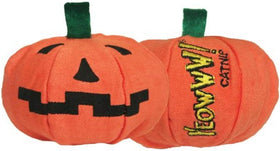
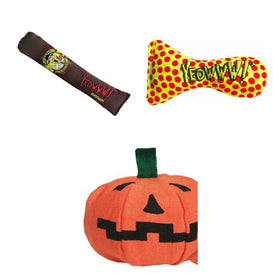
For cats who grab, hug and bunny-kick their prey, a kicker is the toy that finishes the hunt. Ducky World describes its Yeowww! Cigar as 7 inches long and fully loaded with organically grown catnip. We carry the Ducky World Yeowww! 7-inch Organic Catnip Kicker, sized for a full grab-and-kick. For a smaller toy to carry and bat, the maker says its Stinkies sardines are made in the USA from cotton twill and filled with Yeowww! organically grown catnip; we stock the Ducky World Yeowww! Stinkies Catnip Toy. The Barn Cat Catnip Bundle puts the kicker, a Stinkie and a seasonal Yeowww! pumpkin together. Not every cat reacts to catnip in the same way. The ASPCA notes that catnip makes some cats sedated and others stimulated, and that eating it can cause vomiting and diarrhea, so offer it in moderation.
Shop This Post

Featured in this article
Ducky World Yeowww! 7" Organic Catnip Kicker for Barn Cats
$12.11
Shop Now →
What Makes a Toy Hard for a Cat to Resist?
Ever wonder why one toy becomes an instant favorite while another gathers dust under the sofa? It usually isn't random. The toys that win tap into the hunting sequence: watch, stalk, chase, pounce and catch. A bored housecat still has all that programming, just nowhere to use it. The best toys give it somewhere to go.
A great toy also challenges your cat, mentally and physically. It asks them to solve something, judge a distance, or time a leap. When you shop, think less about what looks cute to you and more about what will switch on your cat's hunter brain. It comes down to three things: how it moves, how well it's made, and how you use it.
It Moves Like Prey
Cats respond to movement. A lure that flutters, skitters across the floor or darts out of sight sets off a chase in a way a toy lying still can't. The Merck Veterinary Manual suggests dangling or pulling toys so your cat can chase and pounce on them. Prey rarely runs straight at a cat, so move the toy across or away from your cat's line of sight, pause, then move again. That stop-start rhythm is what keeps a stalker interested.
It's Safe and Built to Last
A good toy is one your cat can really sink their claws and teeth into. That's why construction matters. Cornell's Feline Health Center advises avoiding toys with small pieces or strand-like parts that may separate, especially when chewed, and avoiding anything with an electrical cord your cat can chew. For battery toys, check that the compartment closes securely. And read the maker's notes: several toy makers on this list say to supervise play, and that's worth taking at their word.
It Keeps Them Guessing
Have you noticed your cat losing interest in a once-beloved toy? It's normal. The answer is novelty. Instead of leaving every toy out, keep most of them in a closed bin and bring out two or three at a time. Cornell's Feline Health Center notes that rotating toys can be a great way to prevent boredom with them. When an "old" toy comes back after a break, many cats treat it like a new one. Watching which toys get the biggest reaction also tells you what to look for next.
Timers and Motion Sensors
You can't play with your cat around the clock, and that's where timers and motion sensors help. Some electronic toys start moving when your cat walks past or touches them, and some switch themselves off after a set time to save batteries and give your cat a rest. Not every toy has these features, so check the maker's page rather than assuming. If you're shopping for this kind of toy, our guide to automatic cat toys compares what several makers say about timers, shut-offs and supervision.
How to Choose the Right Interactive Toy for Your Cat
Finding the right toy isn't just about what looks fun to you; it's about what makes your cat tick. Every cat has their own personality, energy level and favorite kind of prey. A quiet, watchful cat might prefer a slow puzzle, while a little whirlwind of fur needs something to chase at full speed.
Start by watching how your cat plays now. Do they stalk, pounce, kick or bat? Are they motivated by treats, sounds or quick movements? Those answers narrow the choice. It also helps to think about three questions: should the toy run on batteries or on you, is it for solo play or for time together, and does your cat need a workout or a puzzle?
Does It Need Batteries or You?
The choice between an electronic toy and a manual one often comes down to who leads the game. Electronic toys can fill a gap when you're busy, but many come with makers' notes to supervise, and some need hard floors to run well. Manual toys like wands put you in charge of the action, and they're the best way to bond. They also let you end the game the way your cat needs it to end: with a catch.
Solo Play or Bonding Time?
A happy cat needs both. Solo toys give your cat something to do between your play sessions, and a kicker or a ball track is easy to leave out. The AAFP and ISFM guidelines also list positive, consistent and predictable interaction with people as one of a cat's core needs. Scheduled play with a wand gives your cat exactly that, and it's something no gadget can replace.
For the Athlete or the Thinker?
Does your cat need to burn off energy or flex their mental muscles? Chase toys, like wands, springs and robotic bugs, get a cat running, leaping and pouncing. Puzzle toys offer a different kind of challenge. The AAFP's Feline Behavior Guidelines suggest food puzzles and food toys, and note that making feeding time more active increases exercise, which decreases boredom and helps with weight management. Many cats do best with a little of each.
Ball Toys: Track, Loose or Treat Ball?
Balls are one of the easiest interactive toys to start with, and they come in a few styles. A ball track keeps the ball inside a ring or tower, so your cat can swat it around without losing it under the sofa; that's toy number 7 on our list. A loose ball is the simplest of all: the UC Davis Clinical Animal Behavior Service lists balls you roll on the floor among good toys for kittens, and a ball rolled away from your cat turns into a quick chase. A treat ball holds treats your cat has to roll and bat to get at, which suits cats who are motivated by food. On our shelves, the Purrkleball treat ball in the Giddy Kitty Cat Toys and Treats range is sold on its own or with a bag of Giddy Kitty treats. Count treats from a ball as part of your cat's daily food, and check any ball for cracks before each session.
Motorized balls that roll on their own are another option, and many need a hard floor to move well; HEXBUG, for example, says its nano cat toy works only on hard surfaces. Our automatic cat toys guide, linked above and in Related Reading, covers what to check before you leave a moving toy running.
Tips for More Engaging Playtime
Once you've found a few toys your cat loves, a couple of simple changes can make each session more satisfying. A good session looks like a real hunt, with a challenge in the middle and a clear finish at the end.
End the Hunt with a Catch and a Snack
In the wild, a hunt ends with prey caught and eaten. You can copy that shape at home. After a round of chasing and pouncing, slow the lure down and let your cat make a final catch. Don't snatch the toy away; let them hold it, bite it and kick it. Then offer a small meal or a few treats. Some owners time play just before dinner for this reason. The Giddy Kitty wand toys make this easy, since the treats slide onto the toy itself. If you use a laser pointer, this step matters even more, because a dot can never be caught.
Level Up Your Puzzle Feeders
Puzzle feeders are one of the best tools against feline boredom. Dantas and colleagues recommend starting so that getting food from the puzzle is about as easy as eating from a bowl, then making it harder once your cat succeeds, for example by reducing the number or size of the openings. They also advise watching your cat closely at first, since missing several meals can be dangerous, particularly for overweight cats, and keeping some food in a bowl during the switch. If you have a speedy eater, see our guide to cat puzzle feeders for fast eaters.
Use Small Treats for a Bigger Challenge
To make a puzzle more tempting, try small, strong-smelling treats your cat loves. Small, irregular pieces tuck into the nooks of a puzzle and take more work to fish out. Count treats as part of your cat's daily food, and if your cat is on a special diet or needs to lose weight, ask your vet what to use and how much.
How Often to Play, and When
Daily is the habit to aim for. The AAFP and ISFM guidelines list consistent and predictable interaction with people among a cat's core needs, so a regular play time, such as just before a meal, gives your cat something to count on. None of the veterinary sources we read set a number of minutes. The Merck Veterinary Manual suggests playing with several different toys until your cat's interest wanes, so let your cat decide how long each session runs, and keep sessions short enough that you can repeat them every day.
Timing matters too. The Ohio State University's Indoor Pet Initiative notes that cats don't have a daily sleep-wake cycle and may want to sleep or play at any hour of the day or night. If your cat is busiest in the evening, an evening session that ends with a catch and a meal fits the way your cat already lives. If your cat's night-time activity changes suddenly, check with your vet.
What to Look for When Buying an Interactive Toy
Picking the right interactive toy can feel like a big decision. You want something that will hold your cat's attention, but it also needs to be safe, practical and not drive you crazy with noise. Here's a short checklist to run through before you buy.
Is It Safe and the Right Size?
Your cat's safety comes first. Look for solid construction and avoid toys with small glued-on parts that could be chewed off. Check how feathers, ribbons and tails are attached, since Cornell advises against strand-like parts that can separate and be swallowed. Check the maker's age guidance too: Trixie gives 3 months as the minimum age for its Fun Board, for instance. A toy that suits a big adult cat may also be too heavy for a small kitten to move.
Check the Power Source
For electronic toys, the power source affects both convenience and safety. Some use AA batteries, some are rechargeable, and some, like the HEXBUG nano cat toy, use small button cells. Make sure the battery compartment can't be pried open, keep spare and used batteries out of reach, and keep charging cables away from chewers. Check the maker's stated run time if it gives one, and read owner reviews for a sense of how long a charge or a set of batteries lasts in real life.
How Loud Is It?
Some interactive toys are loud. Constant whirring or chirping can be a dealbreaker if you work from home, and a loud, jerky motor can frighten a timid cat into avoiding the toy altogether. Reviews from other owners are the best guide here, since makers rarely list noise levels. For a shy cat, start any electronic toy on its slowest setting and let your cat come to it.
How Easy Is It to Clean?
Cat toys collect dust, fur and drool. Hard, smooth toys are usually easiest to wipe down; Petstages, for example, says to wipe its Tower of Tracks clean with a damp cloth, and our Giddy Kitty listing notes that those toys wipe clean. For fabric toys, check whether parts come off for washing. A toy that's easy to keep clean is one you'll be happy to bring out every day.
Beyond Toys: Enriching Your Cat's Environment
Interactive toys are a great start, but a truly stimulating home looks at your cat's whole environment. The AAFP and ISFM guidelines make a handy checklist: a safe place, separate resources for eating, drinking, toileting, scratching, playing and resting, chances to play and hunt, predictable time with people, and respect for a cat's sense of smell. A few small changes can cover more of those needs than a toy can on its own.
Create Vertical Spaces and Viewing Spots
Many cats like to watch the world from up high. A shelf, a perch or a cat tree gives your cat a place to rest, keep an eye on the room and get away from a dog or a toddler. It also adds usable space without taking up much floor. From a single sturdy perch to a multi-level tree, giving your cat somewhere high to go is one of the simplest upgrades you can make.
Window Perches and Wall Shelves
A window is an ever-changing show of birds, people, leaves and cars. A sturdy window perch gives your cat a front-row seat. If you open a window for fresh air, make sure the screen is secure first. Wall-mounted shelves or a tree near the window can create a "cat highway" that lets your cat cross a room without touching the floor, which adds climbing and exploring to the day.
"Cat TV" and Bird Feeders
Many owners set up a bird feeder outside a main window to give their cat a live nature show. The fluttering and hopping give your cat something to track from the other side of the glass. If a feeder isn't practical, some cats enjoy videos made for cats, with birds, squirrels or fish on the screen. Watch how your cat reacts, and turn it off if your cat seems frustrated rather than interested.
DIY and Natural Enrichment Ideas
Enrichment doesn't have to be expensive. Some of the most engaging activities can be built from things you already have, and they're a good way to find out what your cat enjoys before you buy anything.
Build a Box Fort or a Fishing Box
Never underestimate a cardboard box. To a cat, it's a hiding spot, a den and an ambush point in one. Connect a few boxes into a fort, and cut doorways and windows for extra adventure. For another easy project, fill a shallow box with crumpled paper and hide a few treats or a favorite toy inside for your cat to fish out. Skip tape, string and anything small enough to swallow.
Safe Plants for Sniffing
Bringing a bit of the outdoors in can add new smells and textures, but check every plant first, because many common houseplants are toxic to cats. The ASPCA keeps a list of toxic and non-toxic plants for cats; it lists the spider plant as non-toxic to cats, for example. It also lists catnip as toxic to cats, noting that it can cause vomiting and diarrhea, so treat catnip as an occasional treat rather than a snack. If your cat chews a plant and you're not sure it's safe, call your vet.
Match the Toy to Your Cat's Personality
Not all cats play the same way. The kitten who treats your curtains like a climbing wall needs a different outlet than the senior who prefers to supervise from the sofa. Picking a toy that suits your cat's personality is the secret to keeping them engaged.
For the High-Energy Zoomer
If your cat seems to run on endless energy, give them a hunt with real effort in it. Wands and ribbon toys let you send your cat leaping and sprinting, and you can slow things down at the end so the session finishes calmly. Springs and robotic bugs are good for short bursts between sessions. A few minutes of play every day burns energy and builds your bond.
For the Calm Senior
Older or more laid-back cats may not chase a feather down the hall, but their minds still need exercise. Puzzle feeders shine here, because they turn a meal into a gentle game. Wand play can still work, too: drag the lure slowly along the floor within easy reach. The Merck Veterinary Manual advises a vet visit when you notice behavior changes in an older cat, and if your cat is overweight or stiff, ask your vet how much activity is right before you add more.
For the Shy Cat
A shy cat needs to feel safe before they can let loose. The best toys for them let them join in on their own terms. A cardboard box or a paper bag with the handles cut off can be a fort for hiding and launching surprise ambushes. A wand moved slowly at a distance lets a cautious cat watch first and pounce when ready. A small kicker they can drag into a hiding spot can be a big confidence boost. A fabric tunnel works the same way, giving a cautious cat somewhere to hide and an ambush point to launch from.
For the Kitten
Kittens will pounce on almost anything that moves, so this is the time to teach them what's a toy and what isn't. The UC Davis Clinical Animal Behavior Service suggests toys such as feathers on a string, toy mice, balls you roll on the floor or rolled-up paper, recommends rotating a variety of toys to find your kitten's favorites and keep their interest, and advises against using hands or fingers as toys. Check each maker's age guidance before you buy: Trixie lists its Fun Board for cats from 3 months, and Petstages lists its Tower of Tracks for cats 12 weeks and older. Feathers on a string are a play-together toy, since Cornell warns that strand-like parts can be swallowed, so put them away when the game ends.
Why Some Toys Get Ignored
We've all bought a toy we were excited about, only to have our cat sniff it once and walk away. Before you give up on it, try a few fixes.
Your Cat Prefers the Wand to the Lure
Some cats get more interested in the moving stick or the machine than in the toy at the end. Move the lure farther from your hand, keep the wand low and still, and let the lure do the moving. With electronic toys, a cover that hides the motor can help.
Your Cat Watches but Doesn't Pounce
Some cats prefer to watch a toy for a while before they commit. That's still engagement, and many cats pounce once they've worked out the pattern. You can help by stopping the toy just in front of your cat, or by switching to a slower setting.
The Toy Has Been Out Too Long
A toy that's always lying around becomes part of the furniture. Put it away for a week or two and bring it back for a dedicated play session. Rotating toys keeps their novelty, and it also gives you a chance to check each one for wear.
Related Reading
- Automatic, electronic and smart cat toys
- Motorized cat chase toys
- Cat Dancer interactive cat toy review
- Cat puzzle feeders for fast eaters
Frequently Asked Questions
My cat ignores the new toy I bought. How can I get them to play?
Many cats are wary of something new. Introduce the toy at a quiet time when your cat is relaxed, and make it act like prey: wiggle it, hide it behind furniture, then let it peek out and dart away. Keep the first sessions short and end before your cat loses interest. If a toy still doesn't click, try a different style, such as a kicker instead of a wand, or a puzzle instead of a chaser. If your cat isn't interested in toys at all, the Ohio State University's Indoor Pet Initiative notes that some cats prefer to be brushed or petted. A sudden loss of interest in play, or any change such as not eating, is a reason to call your vet.
How often and how long should I play with my cat?
Aim for play every day, at a regular time. None of the veterinary sources we read set an exact number of minutes. The Merck Veterinary Manual suggests playing with several different toys until your cat's interest wanes, so let your cat set the length. Regular short sessions are easier to keep up than occasional long ones. Watch your cat's body language, and if your cat is older, overweight or has a health condition, ask your vet how much activity is right.
Are laser pointers a good toy for bored cats?
Laser pointers get cats running, but your cat can never catch the dot. In a 2021 survey of 618 cat owners published in the journal Animals, Kogan and Grigg found that owners who used laser pointers more often were more likely to report repetitive behaviors such as chasing lights or shadows. The authors say this is a correlation and doesn't prove lasers cause those behaviors. Dr. Lori Teller, a clinical professor at the Texas A&M School of Veterinary Medicine & Biomedical Sciences, also warns not to let your cat stare directly at the light source, as it can damage their eyes. If you use one, end each session with a physical toy your cat can catch, or a treat.
How do I know when it's time to throw a toy away?
Check your cat's toys regularly. Toss a toy if you see cracked plastic, loose or frayed string, exposed stuffing, a damaged battery cover, or any part that has come loose or could be chewed off. HEXBUG and Petstages both tell owners to remove a toy if parts become loose or separate, and that's a good rule for every toy in the box.
How often should I rotate my cat's toys?
There's no fixed schedule in the veterinary sources we read. Cornell's Feline Health Center says rotating toys can help prevent boredom with them, and the UC Davis Clinical Animal Behavior Service recommends rotating a variety of toys to keep a cat's interest. A simple routine is to leave two or three toys out and swap them every week or two, checking each one for wear as it goes back in the box.


