


Choosing a cat nail trimmer is easier when the tool fits your cat, your grip, and the pace your cat can tolerate. The goal is not to finish every paw as quickly as possible. It is to make small, controlled trims while keeping your cat relaxed and leaving the quick, the sensitive inner part of the claw, untouched.
Shop cat grooming and paw-care tools
The best cat nail trimmer is a small, sharp. Easy-to-control tool that gives you a clear view of each claw and lets you make a precise cut without rushing. Scissor-style and guillotine-style clippers can both be used safely when handled correctly. So your choice should reflect your cat's claw size, your comfort, and how well you can maintain a calm hold.
Start by comparing the tool's fit, visibility, and cutting control, then build your technique around your cat's comfort. Those details matter more than choosing one style as universally best.
What makes a cat nail trimmer a good choice?
A good cat nail trimmer is made for an animal-sized claw and gives you a clean, controlled cut without forcing your cat's paw into an awkward position. Look for a tool that matches the size of the claw, has sharp cutting edges, and feels steady in your hand. Texas A&M advises choosing an animal nail trimmer made for the appropriate claw size, rather than selecting a tool based on appearance alone.
A suitable trimmer should fit a cat's smaller claws, cut with controlled pressure. Provide a clear view of the cutting area, and remain comfortable for you to hold during a calm, brief session.
Fit and cutting control matter
Small scissor-style clippers are a common preference because they are designed around a cat's smaller nails. VCA notes that both scissor-style and guillotine-style clippers can be used safely with cats. So the best choice depends partly on which design gives you better control and visibility. The blades should meet cleanly rather than crush or drag across the claw. A non-slip grip is also useful because a sudden paw movement can make a precise cut harder.
Visibility is just as important as sharpness. Choose a design that lets you see the tip of the claw and position the tool without covering the area you are trimming. If the handle, guard, or your hand blocks your view, pause and adjust rather than cutting by feel.
Choose calm handling over speed
The tool should support short, low-pressure sessions. Let your cat settle, handle one paw gently, and stop if the cat becomes distressed. Keep cat clippers separate from human nail clippers to reduce the risk of spreading infection, as VCA recommends. For a broader routine, see this gentle cat grooming routine, or explore cat grooming and paw-care tools when you are ready to shop.
Sources: VCA Hospitals nail-trimming guidance and Texas A&M animal nail-care guidance.
Cat Nail Trimmer Types: Scissor, Guillotine, and Grinder
The right tool depends on your cat's claw size, your visibility and control, and how comfortable your cat is with grooming. Scissor-style and guillotine-style clippers are both recognized options for cats, while grinding trimmers offer a different approach that gradually wears down the nail. No single cat nail trimmer is the best fit for every household.
Small scissor-style clippers offer direct control for many cats. Guillotine clippers can work for some users but require careful positioning. Grinders may suit cats that tolerate the sound and vibration. Choose an animal trimmer that matches the claw size, keep its blade or grinding surface in good condition, and stop if your cat becomes distressed.
| Tool type | How it works | Potential advantages | Considerations |
|---|---|---|---|
| Scissor-style | Two blades close around the claw for a controlled cut. | Small cat-specific models can provide a clear view and familiar hand control. | Use a sharp blade and select a size suited to the claw. Dull blades can crush or split nails. |
| Guillotine-style | The claw passes through an opening as a blade moves across it. | Some owners may find the single cutting action straightforward. | Positioning matters, and the opening must suit the claw. Some guidance favors small scissor-style clippers instead. |
| Grinder | A rotating abrasive surface gradually shortens and smooths the nail. | Can allow gradual removal rather than one larger cut. | Noise, vibration, and handling time may bother some cats. Introduce the tool slowly and monitor comfort. |
Whichever style you consider, look for an animal-specific tool that matches your cat's claw size. Texas A&M lists scissor clippers, guillotine clippers, and grinding trimmers as possible options, while HumanePro recommends small scissor-style cat clippers and advises avoiding guillotine-style models. These recommendations are not contradictory so much as a reminder to weigh your cat's tolerance and your own control.
Keep cat and human clippers separate, and inspect the cutting edge before each session. For a focused selection of cat grooming and paw-care tools, compare the available options by size and handling features rather than choosing by style alone.
Shop This Post

Featured in this article
Musher's Secret Paw Protection Wax - All-Season 100% Natural Dog Paw Balm for Snow, Ice, Salt & Hot Pavement
$30.99
Shop Now →


How do you choose the right size and features?
Choose a cat nail trimmer that gives you a clear view of the claw and controlled movement. Small, cat-sized scissor-style clippers are a practical starting point because their blades can fit a cat's narrower nails. The tool should feel secure in your hand, with a grip that lets you make one deliberate cut rather than squeezing repeatedly. Veterinary guidance notes that sharp blades matter: dull blades can crush or split the nail.
Visibility is especially important when you are learning to identify the quick, the sensitive inner part of the nail. With light-colored claws, the quick may appear as a pink area near the base. Leave a safe margin rather than trying to shorten the nail as much as possible. If the claws are dark, choose a tool that still lets you make small, controlled cuts while checking the cut surface between them. Read more about a gentle cat grooming routine if your cat is still becoming comfortable with paw handling.
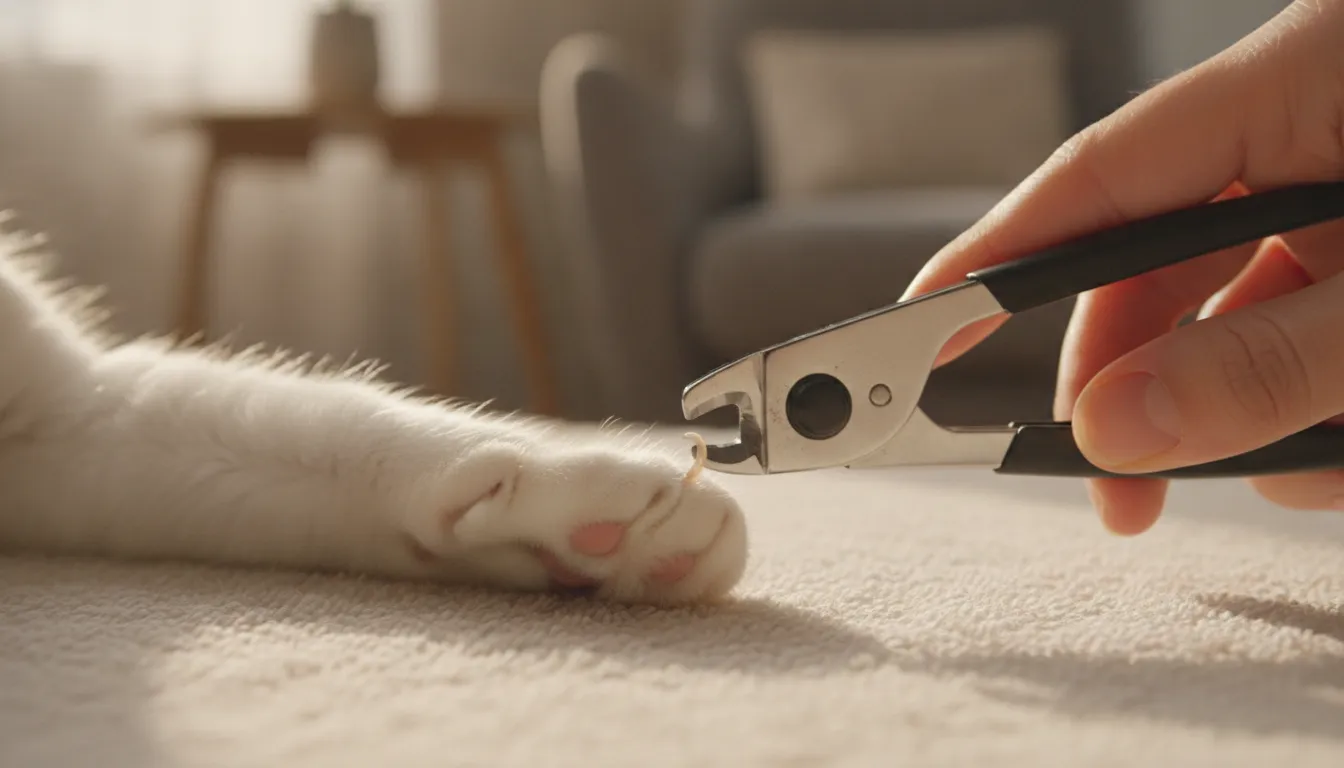
Prioritize a small, sharp blade, a steady grip, and an unobstructed view of each claw. The best tool is one your cat tolerates and you can control calmly.
Do not use the same clippers for people and cats. VCA Hospitals recommends separate tools to minimize the risk of spreading infection. Label or store the cat tool separately, and keep it clean and dry between uses. If your cat resists the tool, that is useful information, not a reason to force the trim. A short session with one or two nails may be safer than choosing a feature that encourages faster handling. For related routine options, explore cat grooming and paw-care tools when selecting supplies.
Safe preparation and handling before the first trim
A calm setup matters as much as the cat nail trimmer itself. Introduce each part of the routine gradually, and let your cat's body language set the pace. Texas A&M recommends beginning with gentle foot handling, then allowing the pet to investigate the trimming tool before attempting a nail. Read the Texas A&M animal nail-care guidance for additional handling context.
Build comfort in small stages: touch the paws, introduce the tool, reward cooperation, trim briefly, and stop if your cat becomes upset.
- Touch the paws first. Choose a quiet moment when your cat is relaxed. Briefly touch one paw, then release it and offer calm praise or a favorite treat. Repeat over several sessions until gentle paw contact is ordinary rather than surprising. You do not need to complete a trim during practice.
- Show the tool. Place the cat nail trimmer nearby so your cat can see and smell it. Avoid moving it quickly toward the paw. Texas A&M recommends letting a pet investigate the tool before progressing, which helps make the object familiar.
- Reward cooperation. Use petting, praise, or a small food reward after each calm interaction. Positive associations can make future handling easier. Keep the experience quiet and avoid turning a reward into pressure to continue.
- Trim briefly. When your cat accepts the process, trim one nail, or only a few, then reward and finish. HumanePro notes that calmly trimming one or two nails is better than forcing a complete session. Keep the blade sharp, since dull blades can crush or split the nail. HumanePro's safe claw-trimming fact sheet covers pacing and tool preparation.
- Stop if your cat becomes upset. Do not forcefully restrain a struggling cat or continue through escalating stress. Stop, give your cat time to settle, and try another day. If handling presents a meaningful injury risk to either of you, ask a veterinarian or professional groomer for help.
How do you trim a cat's nails without cutting the quick?
Start with a calm cat, good lighting, and a sharp cat nail trimmer. Hold the paw gently, then press the toe lightly between your thumb and forefinger to extend the retractile claw. This makes the full nail easier to inspect before you cut.
Find the quick before trimming. On a light-colored claw, it appears as the pink area containing blood vessels and nerves. Leave about 2 millimeters between your cut and the quick.
Position the trimmer perpendicular to the nail, with the cutting blade closest to you. This angle gives you better control and follows the guidance from Washington State University's cat nail-trimming instructions. Remove only the sharp tip, rather than trying to shorten the claw as much as possible in one cut.
What if the claw is dark?
The quick may be harder to see through a dark claw. Make several very small cuts instead of one deep cut, pausing to inspect the freshly exposed tip after each one. Stop well before you reach the center of the nail or if your cat becomes uncomfortable. A short, calm session is safer than forcing every claw at once.
Do not forget the dew claws
Inspect the dew claws on the inner side of each front paw. Because they do not touch the ground, walking does not wear them down. They can continue growing toward the skin, so include them in your regular check without twisting the paw or trimming if your cat is resisting.
After clipping, a nail file can smooth a rough edge. Keep styptic powder nearby in case a nail is cut too short and bleeds. If bleeding does not stop promptly, the claw appears embedded, or either you or your cat could be injured. Stop the session and contact a veterinarian or qualified groomer for help.
Care, cleaning, and a simple trimming schedule
A cat nail trimmer works best when it stays clean, sharp, and easy to control. Use separate clippers for cat and human nail care, which can help reduce the risk of spreading infection. Wipe the tool after use and check the blade regularly. A dull blade can crush or split the nail rather than making a clean cut, so replace or service the tool when it no longer cuts smoothly. VCA's nail-trimming guidance also recommends keeping cat and human clippers separate.
After clipping, a nail file can smooth a rough edge. Keep a small amount of styptic powder nearby in case a nail is cut too short and bleeds. If that happens, apply the powder as directed and pause the session. Do not force a cat through a full trim. One or two calm nails are more useful than escalating a stressful struggle.
Check most cats' nails every two to four weeks, then adjust the timing based on claw growth, activity, age, and comfort. Inspect the back claws and dew claws even when the front claws look fine.
For many indoor cats, checking every two to four weeks is a practical starting point. Indoor cats, senior cats, and cats whose claws snag on fabric may need trims more often. Outdoor activity can wear down some nails naturally, but it does not replace an inspection. Older cats may be less active and less likely to use a scratcher, so regular checks are especially important. HumanePro documents these frequency differences in its safe cat-claw trimming guidance.
Remember that the front claws retract, while back claws can wear through walking and still need checking. Dew claws do not touch the ground, so they are not worn down by walking and can grow into the skin. Keep a consistent routine for every paw, and support normal claw conditioning with cat claw conditioning and scratchers.
When should a professional handle nail trimming?
Home trimming is not the right choice for every cat or every situation. Stop and arrange help when the nails are severely overgrown, the claw appears embedded in a paw pad, or you are unsure how to position the tool safely. Severely overgrown nails can curve into the paw pad and contribute to infection. So this is a reason to contact a veterinarian rather than trying to correct the problem with a rushed trim. VCA explains what overgrowth can look like.
Your cat's response matters, too. If your cat fights restraint, the process creates a realistic risk of injury to the cat or to you, or repeated attempts cause escalating distress, stop the session. The ASPCA recommends using a professional groomer or veterinarian when resistance could result in harm. A calm, controlled appointment is safer than forcing the trim at home. Read the ASPCA's cat grooming guidance.
Professional help is also appropriate when you have not learned the technique. Washington State University recommends that owners first learn nail trimming from a veterinarian or veterinary technician. While Texas A&M advises consulting a groomer or veterinary professional when the proper method is uncertain. Review WSU's nail-trimming safety guidance and Texas A&M's animal nail-care advice.
These boundaries are not a diagnosis. If you notice pain, bleeding, swelling, or a claw that may be growing into the paw, ask a veterinarian what to do next. Once your cat is comfortable and you know the safe technique, the right tools can make routine maintenance more manageable.
Shop cat grooming and paw-care tools today
Frequently Asked Questions
How often should I trim my cat's nails?
Check the nails every two to four weeks, then adjust the schedule for your cat's activity, age, and surfaces. Indoor and older cats, or cats whose claws snag fabric, may need more frequent trims. HumanePro recommends checking every two to four weeks.
What type of trimmer is safest for a cat?
Choose an animal nail trimmer sized for the claw, with a sharp blade and a grip you can control. Small scissor-style clippers are a practical choice for many cats, while scissor, guillotine, and grinding tools each have different handling requirements. Do not use the same clippers for people and pets.
How can I avoid cutting the quick?
Gently expose the claw and take only a small amount at a time. In light claws, the quick appears as a pink area containing blood vessels and nerves, so leave about two millimeters of space. For dark claws, make several small cuts rather than one deep cut. Washington State University explains this technique.
What should I do if my cat becomes upset?
Stop the session and try again later. Trimming one or two nails calmly is better than forcing a full trim. Introduce paw handling and the tool gradually, using praise or treats to build a positive association.
Do I need to trim my cat's dew claws?
Yes, inspect them during routine nail checks. Dew claws do not touch the ground, so walking does not wear them down. They can continue growing and may curve into the skin, which is a reason to seek professional help if you are unsure how to handle them.
When should a professional trim my cat's nails?
Ask a groomer or veterinary professional for help if your cat strongly resists, you are unsure about the technique, or the nails are severely overgrown or embedded. If restraint could injure you or your cat, the ASPCA recommends professional grooming or veterinary care.
Ready to Choose Your Cat Nail Trimmer?
The right grooming tool can make routine nail care more manageable for you and more comfortable for your cat. Shop cat grooming and paw-care tools from Hooves and Paws, a family-owned retailer with focused pet and equestrian expertise.
If you would prefer help comparing options, call Hooves and Paws at (760) 247-5523 and ask about choosing a tool that fits your cat's size, handling needs, and comfort level.


