

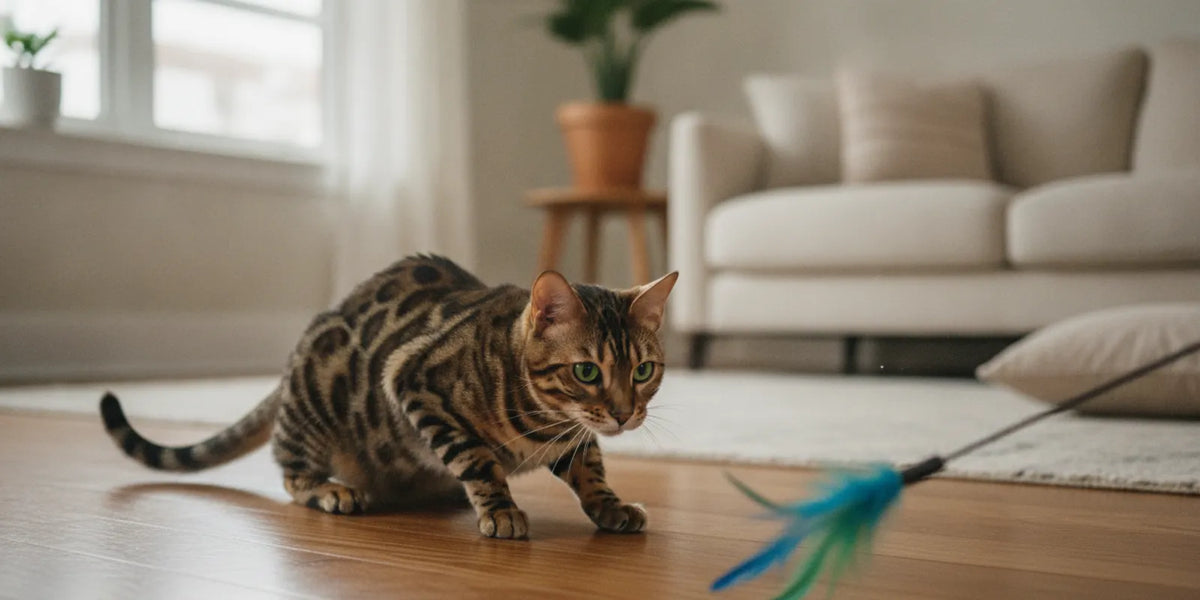
Choosing cat toys for Bengal cats works best when you start with the cat in front of you, not a breed stereotype. One cat may chase a teaser across the room; another may prefer batting a ball or investigating a food puzzle. A small, varied selection can help you discover what your cat enjoys and make play safer and more engaging at home.
Shop cat toys and scratch posts
What makes a toy engaging for a Bengal cat?
Use your cat’s behavior as your guide. Notice whether it watches, stalks, chases, catches, bats, carries, or investigates, then choose toys that invite those actions in a safe setting.
Bengals are often described as active and curious, but individual preferences vary. Observe your cat during ordinary moments. Does it follow movement under a door, pounce on a soft ball, paw at a cardboard box, or sniff a new object before approaching? These behaviors offer useful clues about what to try. They do not guarantee that a particular toy will be a hit.
Many cats enjoy play that lets them watch, approach, pursue, and catch. A wand toy gives a person control over direction and speed. A ball offers an object to bat or carry. A puzzle feeder invites a different kind of investigation. No single toy needs to provide every experience, and an elaborate design is not automatically more interesting than a simple one.
Begin by identifying the action your cat chooses on its own. If it races after moving objects, try a chase toy in a clear space. If it nudges objects with a paw, offer a suitable batting toy. If it spends time sniffing, pawing, or exploring containers, consider a puzzle made for cats. Rotate among different activities rather than buying several toys that all move in the same way.
- For chasing: Try a wand or teaser moved along the floor in short, changing paths, or a lightweight ball rolled across an open area.
- For batting: Offer a sturdy toy that stays in place or can be nudged with a paw. Check it for loose parts before each session.
- For investigating: Consider a cat-appropriate food puzzle, following its directions and keeping the usual feeding plan in mind.
- For independent play: Choose a simple toy designed for that use, without parts your cat can chew off or swallow.
Introduce one unfamiliar toy at a time. Set it down in a familiar place and let the cat approach, sniff, or ignore it. Some cats respond to crinkle sounds or varied textures; others prefer quiet toys. Offering variety is a way to learn what suits this cat, not a reason to expect every item to become a favorite.
How do common toy types compare?
Think about the play behavior you want to invite, how much supervision the toy needs, and how it fits your home. This comparison can help you put together a practical starter mix instead of buying multiple versions of the same thing. Follow each product’s directions, since construction and intended use vary.
| Toy type | Play it may invite | How to introduce it | Use and safety check |
|---|---|---|---|
| Wand or teaser | Watching, stalking, chasing, catching | Move it near the floor, vary direction, and pause to let the cat follow | Supervise closely and store out of reach after play, especially if it has a cord or detachable parts |
| Ball or lightweight batting toy | Batting, chasing, carrying | Roll it through a clear area and observe whether the cat bats or follows | Check size, seams, and attachments; remove it if damaged or small parts come loose |
| Food puzzle | Sniffing, pawing, foraging | Start with an easy setup and a suitable portion of the cat’s usual food | Keep it clean, follow directions, and make sure meals remain accessible |
| Simple independent-use toy | Exploring or batting without a person guiding movement | Place it in a familiar area and let the cat choose whether to engage | Use only as directed; inspect for wear and remove loose or damaged pieces |
For interactive play, draw a wand along the floor, around a corner, or behind a safe visual barrier. Brief pauses give the cat time to watch and approach. Let it catch the toy sometimes rather than keeping it out of reach throughout the session. Keep the route clear, and do not encourage repeated leaps onto slippery or unstable surfaces.
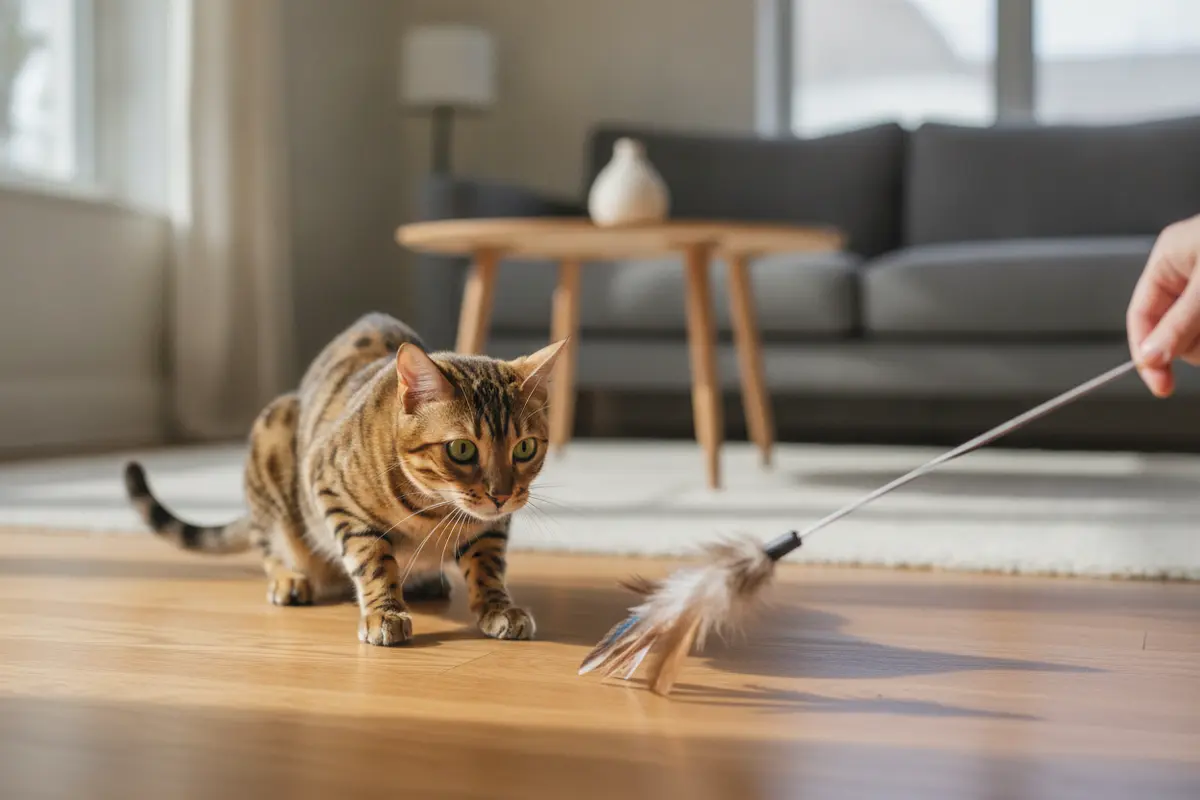
If your cat watches a toy but does not pursue it, slow down and keep it near the floor. A fast or high movement may not suit the cat, the space, or the moment. If it chases briefly and then wanders away, pause or try a shorter session another time. Keep hands out of the chase path and direct play toward the toy, not your fingers.
For suitable toys and scratch posts, browse the cat and pet toy collection and check the intended use and product directions before choosing. Think about the type of play you observed, the space available, and whether someone can supervise the toy when needed.
Shop This Post

Featured in this article
Ducky World Yeowww! 7" Organic Catnip Kicker for Barn Cats
$12.11
Shop Now →
How can you make playtime safer?
Read the directions, supervise toys with strings or detachable pieces, inspect toys regularly, and put interactive items away after use.
Safety depends on the toy, its condition, and how your cat uses it. Read the product instructions, including any warnings about supervision or cleaning. Do not leave string, ribbon, elastic, or wand toys where a cat can reach them unsupervised. Put them away after play, even if your cat has used them safely before.
Inspect toys before and after sessions. Look for torn fabric, loose stitching, cracked plastic, exposed filling, frayed cords, or attachments that are coming free. Remove a damaged item rather than leaving it out or relying on a quick repair for continued play. Avoid toys small enough to be swallowed. If you suspect your cat swallowed part of a toy, contact a veterinarian promptly and share what material and approximate size are involved if you know.
Prepare the room before an active session. Move breakable objects, pick up small items, and keep the play route away from stairs, hot surfaces, and unstable furniture. Choose a floor area with enough room to move without forcing sharp turns around clutter. In a small home, a short, clear path is enough for low-to-the-ground movement; a large room is not a requirement for every type of play.
Children can take part when an adult shows them how to move a toy gently, keep hands clear, and put the toy away afterward. In a home with multiple cats, watch whether one cat blocks access, guards a puzzle, or takes over the game. Separate sessions or more space between play areas may make it easier to see what each cat enjoys.
Food puzzles should fit the cat’s experience and feeding routine. Start with an easy arrangement and a portion that fits the normal meal plan. Keep the puzzle clean according to its directions. It should add interest, not make the task so difficult that the cat gives up or lacks access to food. Ask a veterinarian if a puzzle or food-based play may conflict with a dietary or health plan.
For general animal-care information, see the ASPCA’s public resources. General information does not replace advice from your veterinarian about a particular cat, a possible ingestion, or a sudden change in behavior.
Before play
Scan the floor for objects that could be knocked over or swallowed. Check that the route is open and stable. Look closely at the points where fabric, feathers, bells, or cords attach. If a toy is already damaged, set it aside and choose a different one before starting.
After play
Put away toys intended for supervised use and inspect them as you store them. Clean food toys according to their care instructions and let them dry as directed. Do not leave a cord dangling from a drawer or shelf where a cat can reach it. These small steps make it easier to spot wear before the next session.
Build a simple toy rotation
Leaving every toy on the floor does not ensure that a cat stays interested, and it can make inspection harder. Keep a few safe favorites accessible, then store other toys clean and dry until you offer them again. A rotation can be modest: one supervised chase option, one batting toy, and a puzzle or investigation choice if it suits the cat.
- Choose one or two toys that fit the behaviors you have observed.
- Offer a supervised interactive session when you can focus on the cat and the toy.
- Let the cat catch the moving toy before you end the session and put it away.
- Leave out only items designed for independent use, following their instructions.
- Inspect toys for wear, clean reusable items as directed, and rotate one or two choices at a time.
A brief observation log can make your next choice easier. For a week, note the toy, how you presented it, and what happened. “Followed the teaser when it moved slowly along the floor” is more useful than “likes wand toys,” because it records the conditions that seemed to work. You can also note whether the cat lost interest, returned later, or preferred to watch from a distance.
If an item is ignored, put it away for a while rather than repeatedly presenting it. Reintroduce it later in a different safe setting, or change one feature such as movement or location. This makes it easier to learn whether the toy itself, its presentation, or the timing affected the response. There is no need to keep buying replacements until one gets attention.
There is no universal session length or daily schedule that suits every cat and household. Offer regular opportunities when your routine allows, and let the cat’s attention and comfort guide the pace. A short period of willing play is more useful than extending an activity after the cat disengages. Stop if the cat appears uncomfortable, becomes distressed, or is moving in a way that looks unsafe.
Choose toys that fit your home and routine
Before buying, ask where play will happen, who can supervise, and where the toy will be stored. A small home can support chase play if you clear a short route and keep movement near the floor. If a household cannot reliably put a supervision-only toy away, select a different activity for everyday access rather than leaving that item within reach.
For independent play, read the directions instead of assuming every toy can be left out. Check for small parts, cords, and warnings. In a shared home, set a simple rule: interactive toys come out when an attentive person is available and go away afterward. Keep food puzzles clean and store them in a predictable place so they can be checked and used as intended.
Consider the cat’s age, mobility, and comfort as well as its energy. A toy that invites intense movement is not automatically suitable for every cat. If the cat is hesitant, begin with slow movement at floor level or set a toy down and allow time to investigate. If mobility changes or activity becomes uncomfortable, stop prompting strenuous play and ask a veterinarian for guidance.
Prioritize clear instructions, sound construction, and an activity that matches observed behavior. A plain ball may work better for one cat than a complicated toy, while another may spend longer investigating a puzzle. The goal is not to assemble the biggest collection. It is to offer safe choices the cat can engage with willingly and that a person can maintain.
Common toy-selection mistakes to avoid
Buying several toys that invite the same action may add little variety. If your cat already enjoys chasing a ball, another similar rolling toy may not tell you much more about its preferences. Consider a different activity, such as supervised movement with a teaser or a simple investigation toy, if it is appropriate for the cat. Introduce a new option one at a time so you can observe the response.
Do not assume a toy marketed for a breed suits every cat of that breed. Breed descriptions may suggest what to try, but they cannot predict an individual animal’s preferences, mobility, or comfort. Watch your own cat and adapt. Some cats enjoy movement; others engage for a shorter time or prefer quieter exploration.
Leaving every toy out can make wear harder to notice and is not appropriate for items that need supervision. Separate interactive toys from independent-use options, and follow product instructions. Do not use your hands as prey or pull sharply when a cat catches a toy. Guide play with the toy, give the cat a chance to catch it, and end calmly.
If your cat persistently chews or eats non-food objects, ask a veterinarian rather than trying to solve the behavior by adding toys. If play behavior changes suddenly, or movement appears uncomfortable, pause the activity and seek professional advice. A toy should support willing play, not replace attention to a health or behavior concern.
Make a repeatable plan from what you observe
Different household situations call for different choices. If your cat tends to be active while you are busy, keep an appropriate independent-use toy available and reserve a wand for supervised play. In a small room, clear a short route and use floor-based movement. If the cat is cautious, leave the new toy still at a comfortable distance before animating it.
Try a sample three-day rotation as an observation exercise, not a prescription. On the first day, offer a supervised teaser and allow the cat to catch it before putting it away. On the next, place a familiar ball in a clear area and note whether the cat bats, carries, follows, or ignores it. On another day, offer an easy food puzzle with a portion that fits the regular feeding plan. Change one part of the plan at a time so the response is easier to interpret.
For example, imagine a cat that watches a wand but rarely chases it. Before replacing the toy, try moving it slowly along the floor and pausing beside a chair leg. If the cat then stalks and pounces, the movement pattern or setting may have mattered. If it still shows little interest but eagerly bats a ball, shift the mix toward batting. Let the observed behavior guide the next choice instead of assuming every Bengal wants the same activity.
If a puzzle is abandoned, make the task easier if its design allows. Remove barriers or make the food easier to discover, while following the product directions. If the puzzle remains frustrating, choose another enrichment option and keep meals accessible. Food-based play should fit the feeding routine, and any health-related feeding guidance takes priority over a toy’s design.
Record the toy, setting, movement or setup, and whether the cat returned to it. Patterns may emerge: perhaps the cat prefers ground-level movement, or explores more when the room is quiet. Revisit the plan as the cat ages or its mobility changes. If a familiar play pattern changes suddenly, or the cat seems uncomfortable, stop and ask a veterinarian for guidance.
A useful plan stays flexible. You might keep a safe batting toy available, bring out a wand for a short supervised session, and offer a puzzle on a day when you can set it up and clean it. After a week or two, review what drew attention, whether the cat caught the moving toy, and whether the puzzle was manageable. Keep, rotate, or set aside items based on those observations.
For cats that lose interest quickly, change one feature at a time. Move a familiar toy more slowly, place it in a different safe area, or try a different texture. If the cat chooses not to participate, respect that response. Play should remain an invitation, not a demand. A few thoughtfully selected options and a regular check for wear are more useful than a large collection that does not fit the cat or household.
When you are ready to compare options, view toys and scratch posts and choose based on the activity, supervision, and space available to you. Check product details and instructions so the toy’s intended use fits your routine.
Shop toys and scratch posts today
Frequently Asked Questions
Do Bengal cats need special toys?
There is no single toy requirement for every Bengal. Start with the individual cat’s observed play style and offer safe choices for chasing, batting, and investigation. Choose toys based on how your cat uses them, not only on a breed label.
Are interactive toys better than toys for solo play?
They serve different purposes. Interactive toys let you guide movement and observe the cat, while appropriate independent-use toys provide other ways to explore. Choose according to your routine and supervise any toy that requires it.
How often should I play with my Bengal cat?
There is no schedule that suits every cat or household. Offer regular opportunities when you can, and adjust the pace to the cat’s interest, energy, and comfort. Stop when the cat disengages or seems uncomfortable.
Can I leave a wand toy out while I am away?
No. Put away wand toys and items with strings, cords, or detachable pieces after supervised play. Leave out only toys designed for independent use, and inspect them regularly according to their directions.
What should I do if my cat ignores a new toy?
Try presenting it differently or at another time without forcing interaction. You can put it away and reintroduce it later, or observe which kind of play the cat chooses instead.
Are food puzzles suitable for every Bengal?
Not necessarily. Choose a puzzle suited to the cat’s experience and make sure it does not interfere with normal access to food. Ask your veterinarian if puzzle feeding may conflict with a dietary or health plan.
By watching your cat, choosing toys for its observed play style, and checking each item regularly, you can build a safer play routine that fits both your Bengal and your home.


