


A good grooming session starts before the brush reaches the coat. Choosing a curry brush horse owners can use comfortably helps loosen dirt, dust, and loose hair near the skin. It makes the rest of your routine more effective and comfortable for your horse. It also gives you an early chance to notice tenderness, swelling, or changes in the coat that deserve closer attention.
Curry Brush Horse: How to Choose and Use It
Shop quality curry brushes and horse grooming supplies to build a grooming kit your horse will thank you for.
A curry brush horse owners can rely on should match the horse's coat, skin sensitivity, and the job at hand. Use it with controlled circular motions on fleshy areas to lift debris, then follow with the appropriate body brush to remove what comes to the surface. Rubber and plastic options are generally gentle choices for loosening dirt and massaging the coat.
From material and shape to pressure, placement, seasonal use, and cleaning, small choices affect both results and comfort. Start by understanding what this essential grooming tool does and why it belongs near the beginning of a full grooming routine.
What Is a Curry Brush for Horses?
A curry brush is a flexible grooming tool with raised teeth, nubs, or ridges designed to loosen dirt, dust, dried sweat, and shedding hair from a horse's coat.
Used correctly, it is usually the first tool in a grooming routine because it brings debris to the surface before a stiffer brush sweeps it away.
It is not meant to polish the coat on its own. Its job is to prepare the coat for the brushes that follow.
A curry brush loosens dirt, dust, and loose hair while helping distribute natural skin oils through the coat. Start with a suitable rubber or plastic curry on the muscular parts of the body, then follow with a stiff brush.
What does a curry brush do?
Work the curry in small, controlled circles over the neck, shoulder, barrel, and hindquarters. That motion helps lift dirt and deep-seated debris rather than flattening it back into the hair. It also provides a gentle massage and can stimulate circulation when used with steady pressure. Penn State Extension advises that regular grooming, including a rubber curry, removes dirt and debris from the coat.
As the curry loosens material, it also spreads the horse's natural oils through the coat. That can contribute to a healthy-looking shine, but the shine is a byproduct of thorough grooming, not a reason to scrub harder. A curry brush for horses should feel productive without making the horse brace, pin their ears, or move away.
Why is it the first grooming tool?
Starting with a curry makes the rest of the session more effective. Once dirt and loose hair are lifted, a dandy brush flicks them away.
A soft brush removes finer dust and leaves the coat smooth. Using the curry first also helps you notice changes in the coat or skin as you work.
If your horse has sensitive skin, choose a softer rubber curry and reduce the pressure. Always avoid the face, legs, spine, and other bony areas.
Think of the curry as both a cleaning tool and the opening conversation of a grooming session. Begin at the neck and shoulder, watch your horse's body language, and adjust your touch to the horse in front of you. For a broader look at building a complete kit, see these essential horse grooming brushes and this horse grooming kit guide.
Rubber, Plastic, or Metal: Choosing the Right Curry Brush Material
The best curry brush material depends on your horse's coat, the condition of the hair, and how much pressure the horse comfortably accepts. Rubber and plastic are the practical everyday choices because both can massage the coat and loosen dirt without irritating the skin when used appropriately. Rubber and plastic curry combs are commonly preferred for this balance of effectiveness and comfort.
| Material | Strengths | Best use | Important caution |
|---|---|---|---|
| Rubber | Flexible, gentle, and effective at loosening dirt and loose hair | Regular grooming, sensitive horses, shedding, and breaking up mud | Use lighter pressure if the horse has sensitive skin |
| Plastic | Durable, easy to clean, and effective for routine grooming | Everyday use when you prefer a firmer, structured brush | It is stiffer than traditional rubber, so monitor pressure and comfort |
| Metal | Effective at loosening stubborn, dried mud | Carefully breaking up heavy mud on appropriate fleshy areas | Use extreme caution because it can damage the coat or skin |
When rubber is the most versatile choice
Rubber is often the safest starting point for a general-purpose curry brush. Its flexibility follows the horse's body more comfortably than a rigid tool, and it helps loosen debris while providing a useful massage. It is also a strong choice during shedding season and for breaking up mud chunks. For a horse with sensitive skin, choose a softer rubber curry or reduce pressure, since excessive force on a thin-skinned horse can cause small abrasions.
Where plastic and metal fit
Plastic suits riders who value durability and quick cleanup, but its greater stiffness calls for a controlled hand. Metal can help loosen dried mud that rubber cannot easily break apart.
Metal should never be the default curry brush for routine grooming. Work carefully, keep it away from bony or sensitive areas, and stop if your horse shows discomfort.
Many owners keep more than one type on hand to adapt to changing coat, weather, and needs. Explore curry brushes and grooming tools to build a kit suited to your horse.
Key Takeaway
Choose flexible rubber for the most forgiving everyday option, plastic when you want a durable and easy-to-clean tool, and metal only for carefully controlled work on stubborn dried mud.
Shop This Post

Featured in this article
Professional's Choice Pony Paints - 4.4oz Non-Toxic Washable Horse Coat Paint
$22.71
Shop Now →


How to Use a Curry Brush on Your Horse
Used correctly, a curry brush loosens dirt close to the skin so the rest of your grooming routine can remove it. The goal is steady, purposeful contact, not vigorous scrubbing. A controlled circular motion lifts embedded dirt and stimulates circulation, while the repeated touch helps your horse become more comfortable with handling. Penn State Extension notes that grooming removes dirt and dandruff and keeps skin healthy.
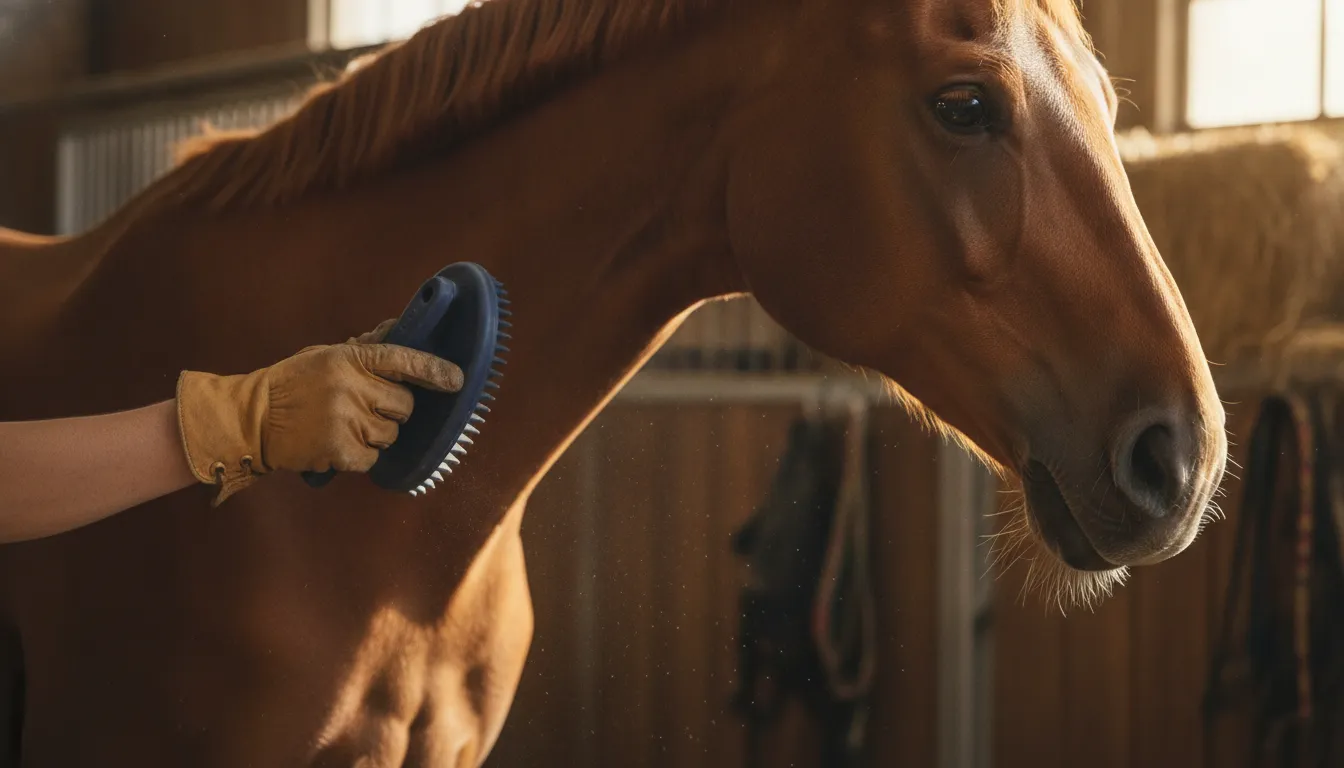
- Stand in a safe position and begin at the neck and shoulder. Start where your horse can see or sense you, then work gradually back across the body so you can read your horse's response.
- Use small, controlled circles. Keep your wrist relaxed and maintain a steady rhythm rather than making vigorous or erratic movements. Work through the neck, shoulder, barrel, back, and hindquarters.
- Adjust pressure to your horse. Every horse has different skin sensitivity, coat density, and tolerance. Use lighter pressure on a thin-coated or sensitive horse, and consider a softer rubber curry brush when needed. Watch for pinned ears, tail swishing, muscle tension, or stepping away, and pause to reassess if your horse shows distress.
- Keep the brush moving as you progress. Work in sections instead of repeatedly scrubbing one spot. Tap or wipe accumulated dirt from the curry brush during the session so you continue lifting debris rather than redistributing it across the coat.
- Follow with the appropriate brush. Once the curry has brought dirt and loose hair to the surface, use a stiff brush to sweep it away, followed by a softer brush for finishing. Before saddling, pay particular attention to the back and girth area so trapped debris does not contribute to rubbing or sores.
Use a curry brush with calm, consistent circles from the neck and shoulders backward, changing pressure to suit your horse's comfort. Grooming should leave the coat cleaner while reinforcing trust, never create soreness or anxiety.
A curry session can be practical and relational at the same time. Allowing your horse to settle into a predictable pattern helps make grooming a positive part of daily care. For tools suited to your horse's coat and routine, explore curry brushes and grooming tools.
Where You Should Not Use a Curry Brush
A curry brush is useful across broad, muscular areas of the body. It is not an all-purpose brush for every part of your horse. The face, lower legs, joints, and other bony areas have less cushion between the skin and underlying structures. Firm pressure there can be uncomfortable or painful. Leave those areas to a soft brush, a grooming cloth, or your hands.
Keep the face and head off-limits
Avoid using a curry brush on the horse's head, including the cheeks, jaw, muzzle, and around the eyes and ears. These areas are sensitive and require a slower, more careful approach. Use a soft face brush or a clean, damp cloth instead. Work around the eyes without rubbing directly over them, and keep loose dirt away from the nostrils and mouth.
Use caution around legs, joints, and the spine
Do not curry directly over the legs, knees, hocks, fetlocks, or other prominent joints. The spine and hip points also deserve special care, since even a flexible rubber curry can feel too sharp over a bony ridge. If you need to remove dust from these areas, use a soft brush with light strokes that follow the coat.
Your horse's reaction should guide your pressure. For a thin-skinned or sensitive horse, choose a softer rubber curry and use a lighter touch. Excessive force with a stiff curry can cause small abrasions, particularly when the coat is short or the skin is already irritated. If the horse pins its ears, swishes its tail sharply, moves away, or flinches repeatedly, stop and reassess the tool, pressure, and skin.
Key Takeaway
Use a curry brush on fleshy areas where it can loosen dirt comfortably. Skip the face, legs, joints, spine, and other bony areas. For sensitive horses, select soft rubber and reduce pressure.
The Curry Brush's Role in a Full Grooming Routine
A curry brush works best as the opening move in a complete grooming routine, not as a stand-alone tool. Its flexible teeth or nubs loosen dirt, dust, dead hair, and other debris so the brushes that follow can remove them from the coat.
Starting with the curry makes each later step more effective and keeps the rest of your grooming kit cleaner. Curry combs are typically the first brush used, followed by a stiff dandy brush and then a softer finishing brush.
A curry brush loosens debris, the stiff brush sweeps it away, and the soft brush finishes the coat. Following this order gives you a cleaner horse and a more comfortable grooming experience.
Loosen first, then sweep the coat clean
Use the curry brush over the fleshy parts of the neck, shoulder, barrel, and hindquarters with steady, controlled circles. The goal is to bring dirt and loose hair to the surface, not to scrub as hard as possible. Once the curry has done its work, use a stiff dandy brush in short, purposeful strokes to flick the loosened material away. This prevents you from simply moving dirt from one part of the horse to another.
Finish with a soft brush to remove fine dust and leave the hair lying smoothly, using it around areas where you need a gentler touch. Grooming is practical care and a chance to build trust, helping the horse become more comfortable with handling over time. Review this horse grooming brushes guide when building or updating your kit.
Groom thoroughly before tacking up
Before placing a saddle or pad, give particular attention to the back, withers, girth area, and any other place where equipment will sit.
Dirt or debris trapped beneath the saddle can rub against the skin and contribute to sores. A curry brush loosens that material, while the dandy and soft brushes remove it so the tack rests against a clean coat.
Run your hand over the saddle area afterward to check for remaining grit, lumps, or tenderness before you tack up.
Using Your Curry Brush Through Every Season
A curry brush earns its place in your grooming kit long after spring shedding ends. Coat and grooming needs change with the weather, so thoughtful currying helps loosen material against your horse's skin and keeps the rest of your routine effective.
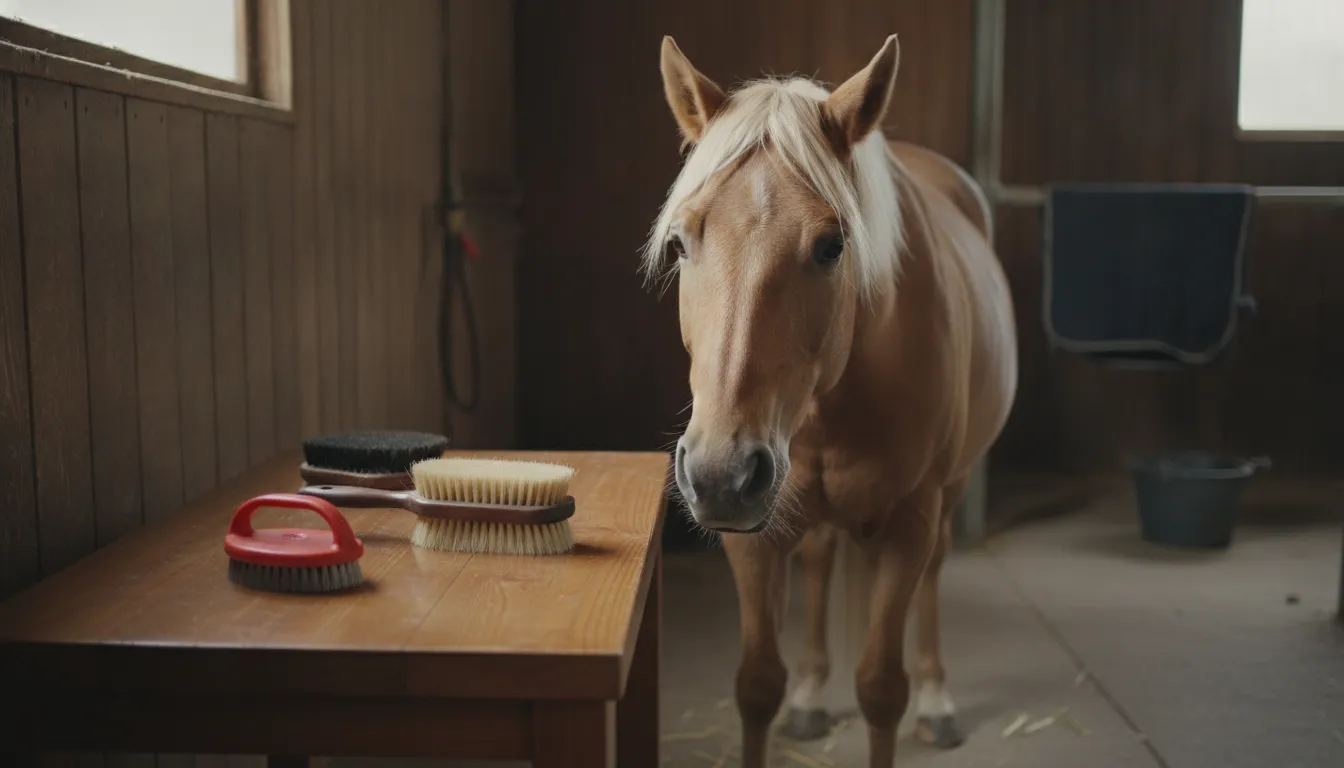
Spring shedding: lift the winter undercoat
As temperatures rise, many horses shed the dense undercoat that helped keep them warm through winter. A curry brush helps lift that loose, heavy hair so it is easier to remove with a stiff brush or shedding tool. Work in controlled circles over the neck, shoulder, barrel, and hindquarters, adjusting pressure as your horse responds, and pause often to knock loose hair and dirt from the brush.
Winter grooming under blankets
Blankets protect a horse from cold weather, but long hair, sweat, and dirt can accumulate underneath them. During winter, currying helps loosen that buildup and gives you a chance to check the coat before replacing the blanket. Keep sessions gentle, particularly when the coat is dry or the horse has areas of tenderness.
Breaking up stubborn mud
Wet weather creates a different challenge. Once mud has dried into chunks, a rubber curry brush helps break it apart before you follow with a dandy brush. If the mud is still wet, avoid grinding it deeper into the coat; let it dry when practical, then loosen it with steady circular movements. Stop if your horse shows discomfort, and take extra care around thin-skinned or bony areas.
Key Takeaway
Use your curry brush year-round, but match the tool and pressure to the season. Lift the winter undercoat in spring, loosen blanket-season buildup in winter, and use rubber to break up stubborn dried mud.
How to Clean and Care for Your Curry Brush
A clean curry brush works more effectively and feels better for your horse. During a grooming session, pause often to knock loose hair and dirt out of the brush. If the teeth or nubs become packed with debris, the tool can start moving that dirt back across the coat instead of lifting it away. Frequent cleaning is especially helpful when working through a dusty coat or a heavy layer of shedding hair.
Clean your curry brush throughout grooming, then wash it in warm, soapy water and let it dry fully before storing it.
Clean the brush during grooming
After working over one area, brush or tap the curry against a suitable grooming surface to release the collected dirt and hair. Keep the tool close at hand so cleaning becomes part of your normal rhythm, and avoid striking it against anything that could damage the rubber, plastic, handle, or teeth. Also check the curry for cracked material, sharp edges, loose parts, or worn teeth that could irritate your horse's skin.
Wash and dry it after use
Regularly wash your curry brush in warm, soapy water to remove oil, sweat, and dirt buildup. Work the water through the teeth or textured surface, rinse away all soap residue, and use a soft household brush in narrow spaces if needed. Allow the curry to air-dry completely before placing it in a closed grooming tote. For more ways to build a dependable kit, explore our horse grooming supplies.
Grooming as a Health Check: What to Look For
A regular grooming session does more than leave your horse's coat clean. It gives you a consistent chance to run your hands and eyes over the skin and respond before a minor concern becomes harder to manage. As you work through the coat with a curry brush, look for new cuts, swelling, heat, scabs, unusual hair loss, or areas your horse does not want you to touch.
Use grooming as a routine skin and comfort check. Inspect the coat, mane, and tail for injuries, parasites, ticks, and changes in skin condition, while paying attention to your horse's reactions.
Inspect the skin while you loosen dirt
Part the hair when needed, especially around the mane, tail, shoulders, girth area, and other places where debris or moisture may collect. Regular grooming provides an opportunity to spot signs of injury, parasites, or skin conditions such as rain rot. Removing dead skin and debris also helps maintain a cleaner skin environment.
These observations support good daily care, but they do not replace veterinary advice when a lesion, rash, or wound is spreading, painful, or slow to improve. Sources from Penn State Extension emphasize both skin inspection and attention to conditions associated with moisture and debris.
Grooming is also a practical time to check for ticks. Examine the mane and tail closely, then scan the rest of the coat with your fingers and eyes. If you find a tick or a suspicious skin change, follow appropriate horse-care guidance and contact your veterinarian when you are unsure how to proceed.
Let your horse's reactions guide your technique
Body language can reveal that a spot is tender or that your pressure is too strong. A horse that suddenly swishes its tail, pins its ears, tightens its muscles, shifts away, or repeatedly tries to stop your hand may be communicating discomfort. Pause, soften your pressure, change the tool, and compare the response in a nearby area. A controlled, comfortable session is more useful than forcing a deep clean.
If distress continues in one location, inspect it carefully rather than brushing harder. There may be sensitive skin, an injury, or another underlying issue that needs attention. Calm, regular handling can build trust, but comfort and safety should always come before finishing the routine. When in doubt, consult a qualified veterinarian or experienced equine professional.
Shop Curry Brushes and Grooming Tools Today
Frequently Asked Questions About a Curry Brush Horse
What is a curry brush for horses?
A curry brush is a grooming tool that loosens dirt, dust, dried sweat, and loose hair from the coat. It also helps bring natural oils toward the surface, preparing the coat for the brushes that follow.
How do you use a curry brush on a horse?
Start at the neck and shoulder, then work across fleshy areas with steady, controlled circles. Use only enough pressure to lift debris, watch your horse's response, and avoid the face, legs, spine, joints, and other bony or sensitive areas.
When should you use a curry brush?
Use it at the beginning of a grooming session, before a stiff dandy brush or soft finishing brush. It is especially useful for loosening shedding hair, winter dirt under blankets, and manageable mud before the rest of your grooming routine.
What are curry brushes for horses made of?
Most are made from rubber, plastic, or metal. Soft rubber is useful for sensitive skin. Plastic is durable and easy to clean. Metal can help with dried mud, but requires exceptional care to prevent coat or skin damage.
Can a curry brush be used safely on every horse?
Most horses tolerate a suitable curry brush on the neck, shoulders, barrel, flank, and hindquarters, but sensitivity varies. Reduce pressure or switch to a softer rubber brush when needed. If your horse shows distress, stop and check for pain, skin irritation, or another underlying issue.
Ready to Build a More Effective Grooming Routine?
The right curry brush can make the first step of grooming more comfortable and productive. Choose tools that suit your horse's coat, skin, and daily needs, then keep them clean so they are ready for the next session. Shop quality curry brushes and horse grooming supplies to find practical grooming tools for your horse.


