


A good pet carrier gives a dog or cat a contained, familiar place for a trip while making it easier for you to move and supervise them. To choose one, match its size and design to your animal, the kind of travel you take, and the carrier rules of your destination or transportation provider. Then introduce it gradually at home, secure it as directed, and check your pet throughout the journey.
Call for help with travel-supply questions
What should a pet carrier do?
A carrier should contain your pet safely during transport and give you a practical way to carry or position them. It is not a substitute for a properly fitted vehicle restraint, and it should not be treated as a place to leave an animal unattended for long periods. A carrier also cannot guarantee that a pet will feel calm. Familiarity, fit, ventilation, trip length, and your animal’s individual needs all matter.
Start with the trip rather than choosing by appearance. A carrier for a short drive to an appointment may have different priorities from one intended for a long road journey or a trip involving airline rules. If you are unsure about your pet’s travel needs, ask your veterinarian for guidance. If you are using a bus, train, airline, or other service, confirm its current carrier requirements directly before buying or setting out.
Choose for your pet’s actual size and travel situation. A well-made carrier is only a good choice when your pet can fit comfortably and you can secure and monitor it as needed.
How do you choose the right size?
Measure your pet before shopping. For a dog or cat, note the length from the nose to the base of the tail and the height from the floor to the top of the head while standing. Check the carrier maker’s measuring instructions too, because products can define size and capacity differently. A weight limit alone is not enough to establish a comfortable fit.
Your pet should have enough room to stand naturally, turn around, and lie down in a normal resting position. The carrier should not be so tight that the animal is pressed against its sides, but a carrier that is much too large may be difficult to carry and position securely. Compare the measured dimensions with the usable interior dimensions, not just the outside measurements. Account for any fixed interior features that reduce the space available.
For a growing puppy or kitten, check fit regularly rather than assuming today’s size will work for the whole season. For a senior, injured, or mobility-limited animal, consider how easily they can enter and turn around. Do not force an animal into a carrier that is too small or difficult to access. When a pet falls between sizes, ask the manufacturer or a knowledgeable animal-care professional about the model’s fit and intended use.
Use a simple fit check once the carrier is assembled. Place it on a stable, level surface and invite your pet inside rather than pushing them through the opening. Watch them stand, turn, and lie down. Check whether their ears, head, tail, or coat catch on a doorway or touch a surface in a way that limits movement. Then close the door briefly while staying close and observe whether the pet can settle in a natural posture. This home check helps you catch a poor match before travel, but it does not replace any sizing rule set by a transport provider.
For example, a compact cat who curls up in a small bed may still need more clearance to turn around in a carrier. A long-bodied dog may fit the listed weight range but need a longer floor area to lie down comfortably. A carrier’s outside dimensions can also be misleading when thick walls, pockets, or a molded door reduce usable space. Measure the interior and compare the product maker’s guidance against your pet’s body, not just the number on a product label.
Which carrier style fits your trip?
Carrier styles vary in structure and function. The table below is a starting point, not a substitute for checking the specific product’s instructions or the rules for your mode of travel.
| Carrier style | Potential fit | What to check |
|---|---|---|
| Rigid-sided carrier | Trips where a firm shell and defined shape are useful | Door and latch security, ventilation openings, interior size, and how it can be secured |
| Soft-sided carrier | Situations where a lighter, flexible design is helpful | Sturdy seams, zippers or closures, mesh condition, and whether the carrier keeps its shape around your pet |
| Wheeled carrier | Moving a carrier across suitable, smooth surfaces | Wheel stability, handle strength, balance, and whether the pet remains level and secure |
| Backpack or sling style | Short periods of carrying when the design suits the animal | Weight limits, support, ventilation, closure security, and whether your pet can maintain a comfortable position |
These descriptions do not establish that a particular style is approved for a flight, vehicle, or public transit system. Requirements may set limits for dimensions, construction, placement, or how an animal is contained. Check the carrier’s exact product details against the provider’s current instructions. Never assume that a carrier advertised for travel will automatically meet every carrier policy.
Think through how the carrier works during ordinary handling, too. A top opening can make it easier to lower a cat into the carrier, while a front doorway may suit an animal that is comfortable walking in. Multiple access points can help with loading, but each closure is another part to inspect. A soft carrier may be easy to lift and store, yet it must retain its shape and keep mesh panels clear when carried. A rigid carrier can offer a stable form, but its size and empty weight may be harder for one person to manage.
Before deciding, picture the full route: getting from the house to the vehicle, loading, traveling, and entering the destination. A carrier that works for a short, direct drive may be awkward on stairs or in a crowded waiting area. Consider whether you can keep it level, open it safely, and carry it without blocking your view or losing control of a leash. A small practice walk from room to room can reveal handle strain or a swinging carrier that is not obvious while it sits empty.
Shop This Post

Featured in this article
Doggie Design Alpine All Weather Dog Parka - Waterproof Fleece Lined Reflective - Multiple Sizes
$25.00
Shop Now →


What safety details should you inspect?
Look closely at the whole carrier, not just the main shell. Test doors, zippers, clips, handles, seams, and attachment points before each trip. Closures should fasten as intended and stay shut when gently tested. Do not rely on a damaged zipper, cracked shell, frayed strap, or loose handle. Replace or repair a compromised carrier according to the maker’s guidance before using it again.
- Ventilation: Openings should not be blocked by bedding or the way the carrier is packed. Keep the carrier in a position that allows air to circulate.
- Visibility and access: Choose an opening you can use without awkwardly pulling your pet. A familiar animal may still need help entering or exiting.
- Stable placement: Follow the carrier maker’s instructions for carrying and positioning. Prevent it from sliding, tipping, or being crushed by other items.
- Interior comfort: Use a clean, absorbent layer that fits flat and does not bunch up. Avoid loose items that can obstruct your pet or block ventilation.
- Identification: Keep your contact information available, and make sure your pet’s identification is current. Follow the travel provider’s rules for labels or attached documents.
- Supervision: Check on your pet when it is safe and practical to do so. Do not leave a pet in a parked vehicle or an unsuitable environment.
For road travel, a loose carrier can shift if the vehicle stops suddenly. Follow your vehicle and carrier instructions for secure placement, and do not put a carrier where it interferes with the driver or vehicle safety equipment. If the carrier cannot be secured as directed, pause and find a safer travel arrangement rather than improvising with a handle or strap.
Rules can also depend on where you live and how an animal is being transported. One local-government guide to animal-cruelty laws describes requirements for an animal to be able to stand, turn around, and lie down in a carrier or crate: read the guide to prevention of animal cruelty laws. This is a local example, not a complete statement of rules for every state or trip. Check the requirements that apply to your location and travel provider.
Inspect every closure and carrying point, keep ventilation unobstructed, and secure the carrier as its maker directs. If a part is damaged or the setup cannot be secured, do not improvise for the trip.
How can you help your pet get used to a carrier?
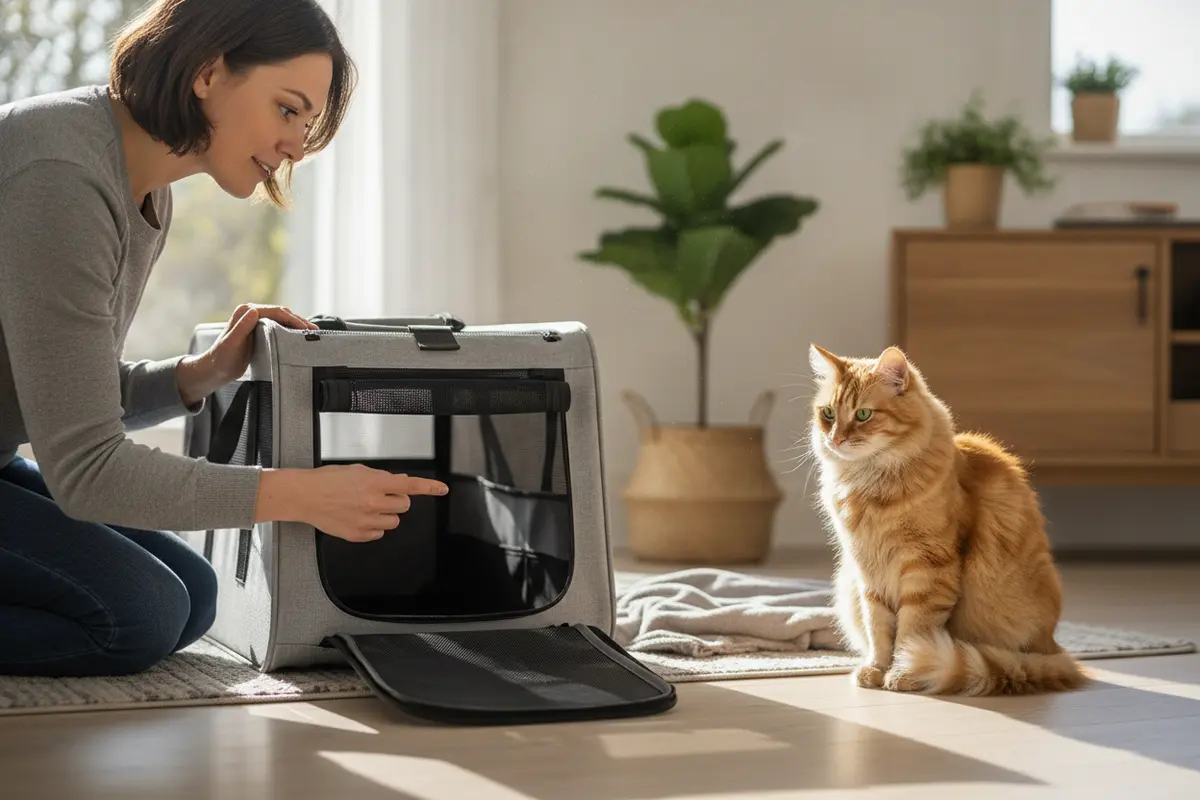
Make the carrier familiar before the day you need it. Put it in a quiet area of your home with the door open, if the design allows. Let your pet explore at their own pace. You can place a familiar, washable bedding layer inside and offer praise or a suitable reward near the carrier. Never force a frightened animal inside as a shortcut to training.
- Let your pet investigate. Keep the carrier open and stable. Give your animal time to sniff and enter voluntarily.
- Build a positive association. Offer attention or a small appropriate reward near the carrier, then gradually inside it if your pet is comfortable. A favorite toy can be part of practice when it is safe for your animal and will not block space or ventilation. Browse plush dog toys or dog treats and chews for familiar items, and supervise your pet with toys and food.
- Practice brief closures. When your pet calmly enters, close the door for a short period while staying nearby. Open it before your pet becomes distressed, then increase the time gradually as appropriate.
- Add movement slowly. Lift or move the carrier only after your pet is comfortable with the earlier steps. Keep movements gentle and brief.
- Rehearse the actual setup. Before a trip, practice the placement and fastening method you plan to use. Keep the first practice sessions calm and manageable.
Progress depends on the animal. Some pets may need more time or a different approach. If your pet panics, struggles, or becomes increasingly distressed, stop the session and seek advice from your veterinarian or a qualified behavior professional. Avoid sedating or medicating an animal for travel unless a veterinarian has specifically advised you about that pet.
Keep practice sessions short enough that your pet can succeed. If your cat sniffs the carrier but will not enter, leave it in a familiar room and reward calm investigation without closing the door. If your dog steps in and immediately backs out, let them repeat that choice rather than holding the door shut. After a few calm entries, you might feed a regular meal near the carrier, then move the dish just inside if your pet is comfortable. Do not withhold food or force interaction to speed up the process.
Once your pet can relax inside with the door closed briefly, practice picking the carrier up and setting it down. Keep the first lift low and short, then gradually add a few steps around the room. If the pet becomes tense, vocal, or frantic, return to an easier stage at the next session. The aim is a predictable routine, not a rushed test on departure day. For pets with a history of severe fear or motion sickness, ask a veterinarian for individualized advice before planning a long journey.
Prepare for the trip, then check the carrier
Before leaving, confirm the destination’s requirements and check the weather, route, and expected duration. Pack water and any supplies your pet needs, but do not crowd the carrier. For a longer journey, plan appropriate opportunities to check and care for your animal. Ask your veterinarian about food, water, medication, or rest planning when your pet has a health condition or the trip is unusual.
Do a short pre-trip inspection: confirm the carrier is clean and dry, all closures work, the bedding lies flat, and ventilation is clear. Make sure your pet can enter without being forced and that the carrier is appropriate for their current size. Take familiar supplies for breaks at your destination. If your dog enjoys play after arrival, a familiar dog flying disc may be an option for a suitable, supervised setting, not something to leave loose inside a carrier.
On arrival, open the carrier in a secure, enclosed area before letting your pet out. Keep a leash or other appropriate restraint ready for a dog, and take care that a cat cannot bolt through an open door. Give your pet time to settle and check for signs that they need water, a quiet rest, or help. If the trip is part of a household move with horses too, a dog or cat carrier is not equine transport equipment. Browse horse supplies separately, and consult experienced equine transport professionals about horse travel needs.
Make a trip checklist that matches the actual journey instead of packing every item you own. Start with required documents or labels, current identification, a leash or other handling gear, absorbent bedding, water, and any supplies your veterinarian says your pet needs. Keep essentials reachable rather than buried under luggage. For a long drive, decide in advance where you can stop safely and how you will keep the animal secure while opening a door. Never open a carrier in an unsecured parking area just to make a quick check.
Allow extra time for loading. Check the route’s access conditions, such as stairs, narrow doorways, or a long walk between parking and the destination. If you will be traveling with more than one animal, plan how to handle each one separately so that one open carrier does not become an escape opportunity while you manage another. When a pet’s behavior or health makes travel uncertain, ask a veterinarian before departure rather than relying on a new product or an untested method on the day.
Match the carrier to your pet and route
A dog and a cat may both travel in carriers, but the details of fit and handling are individual. Consider your pet’s body shape, temperament, and ability to step through the opening. A nervous cat may do better with a carrier that opens in a way you can manage calmly, while a dog that resists lifting may need an entry style that does not require being hoisted through a narrow door. These are selection considerations, not guarantees that a certain design will suit every animal.
Think about how you will carry the loaded carrier. Check the handle or shoulder strap while the carrier is empty, then review the maker’s weight guidance for the pet and carrier together. A design that is comfortable to carry across a room may be awkward on a longer walk. Wheels can help on suitable surfaces, but do not make a carrier appropriate for every route. Be ready to carry or stabilize it as directed if a path is uneven or crowded.
For a car trip, prioritize secure placement and the instructions for the carrier and vehicle. For air or public transport, check the operator’s current rules before selecting a model. For a walk to a nearby destination, consider weight, grip, and how you will keep the carrier level. In every case, make sure the pet remains inside when doors or zippers are opened, and choose a quiet, secure spot for any planned break.
Think of route planning as a series of handoffs. At home, position the carrier where you can close it without chasing your pet. At the vehicle, confirm the carrier is stable before moving away from it. At your destination, identify an enclosed room or another secure area before opening the door. If a provider requires a specific location or type of carrier, verify those directions ahead of time and keep a backup plan for a mismatch. A carrier that is comfortable in the living room is not automatically practical in every crowded or unfamiliar setting.
Cleaning and storing a carrier
Follow the manufacturer’s cleaning instructions, especially for fabric, mesh, and any removable padding. Remove bedding and debris, wash or wipe the surfaces as directed, and let every part dry fully before storing it. Strong scents or cleaning residues may bother some animals, so use products appropriate to the carrier material and rinse or air it as instructed.
After cleaning, inspect seams, mesh, latches, doors, straps, and handles. Store the carrier somewhere dry and accessible so it can be checked before the next trip. If a carrier has been in an accident, has structural damage, or no longer closes reliably, do not assume it remains safe because it looks acceptable from the outside. Contact the maker for guidance or replace it.
Make cleaning part of the return-home routine. Remove used bedding and shake out debris in an appropriate place. If there has been a spill, clean the affected area promptly according to the product instructions and check that liquid has not collected inside seams or beneath a removable pad. Let mesh and fabric dry completely before closing or folding the carrier for storage. Damp storage can leave odors and may make it harder to notice wear during the next inspection.
Before putting the carrier away, test the fasteners one more time and note any part that needs attention. Keep accessories such as a removable pad with the carrier so you can find them together, but do not store loose items inside if they could deform a door or snag mesh. If the carrier is collapsible, fold it only as the maker directs. A quick check every time you prepare for a trip is still important, even when the carrier was clean and intact after its last use.
Shop travel-ready animal supplies today
Frequently Asked Questions
How much room should a pet carrier have?
Your pet should be able to stand naturally, turn around, and lie down in a normal position. Use the maker’s measuring guidance and compare your pet’s measurements with the carrier’s usable interior, not only its exterior or listed weight range.
Is a soft-sided or hard-sided carrier better?
Neither style is best for every pet or trip. Compare the structure, closures, ventilation, interior space, carrying method, and travel provider’s rules. Choose a design your pet fits and that you can secure and supervise as needed.
Can I use the same pet carrier for a dog and a cat?
Only if the carrier is the right size and design for the individual animal, and each pet is comfortable using it. Do not place multiple animals together unless the carrier maker and a veterinarian confirm that arrangement is suitable. A carrier that fits one pet may not fit another.
Can I put food or toys inside the carrier?
A small familiar item may help during practice if it is safe for your pet and does not obstruct movement or ventilation. Food can spill or create a mess, and toys may be chewed or swallowed. Consider your pet’s habits, trip length, and the carrier instructions, and supervise when possible.
Can I use any carrier for airline travel?
No. Carrier size and construction rules vary by airline and may change. Check the airline’s current requirements for your specific trip before purchasing a carrier, and confirm how and where your pet may travel.
What if my pet is afraid of the carrier?
Introduce it gradually at home and let your pet approach voluntarily. Keep sessions short and positive. If fear continues or worsens, ask your veterinarian or a qualified behavior professional for help rather than forcing the pet inside.
How often should I inspect a pet carrier?
Check it before each trip, even if it was used recently. Look at closures, seams, mesh, handles, straps, and the interior. Stop using it if an important part is damaged or it no longer closes securely, and follow the manufacturer’s repair or replacement guidance.
Should I leave my pet in a carrier when I arrive?
A carrier is for transport and should not be treated as a place to leave an animal unattended for a long time. At arrival, choose a secure area, open the carrier carefully, and give your pet appropriate space and supervision. Ask your veterinarian about care plans for unusually long trips or animals with special needs.
A careful fit check, gradual practice, and a secure setup can make a carrier easier to use and help you prepare thoughtfully for your pet’s next trip.


