


Dog dental care does not have to become a stressful wrestling match or an all-or-nothing project. A few calm minutes of plaque removal, the right dog-safe products, and regular veterinary checks can help protect your dog's comfort and make problems easier to catch early. The goal is not a perfectly white smile. It is a repeatable routine that fits your dog's tolerance and supports professional care when it is needed.
What Does Dog Dental Care Actually Prevent?
Daily home care helps remove plaque before it hardens into tartar, but it cannot clean below the gumline or replace a veterinary dental exam.
Dental plaque is a sticky film that builds up on teeth. If it is not removed, it can harden into tartar, irritate the gums, and contribute to periodontal disease. The American Veterinary Medical Association explains that dental disease can be painful and that much of the problem can develop below the gumline, where owners cannot see it.
That is why home care and professional care have different jobs. Brushing, wiping, and appropriate products help reduce plaque between appointments. A veterinarian can examine the mouth, assess the gums and tooth roots, and recommend treatment when disease is already present. Home care is prevention and maintenance, not a way to scrape away established calculus or diagnose a painful mouth.
Good dog dental care also supports everyday comfort. Dogs with mouth pain may chew differently, drop food, drool, resist having the face touched, or show a change in mood. A dog that still eats is not necessarily pain-free, so small changes deserve attention.
For a veterinary overview of warning signs, annual checks, and professional dentistry, read the American Veterinary Medical Association's pet dental care guidance.
Build a Daily Dog Dental Care Routine
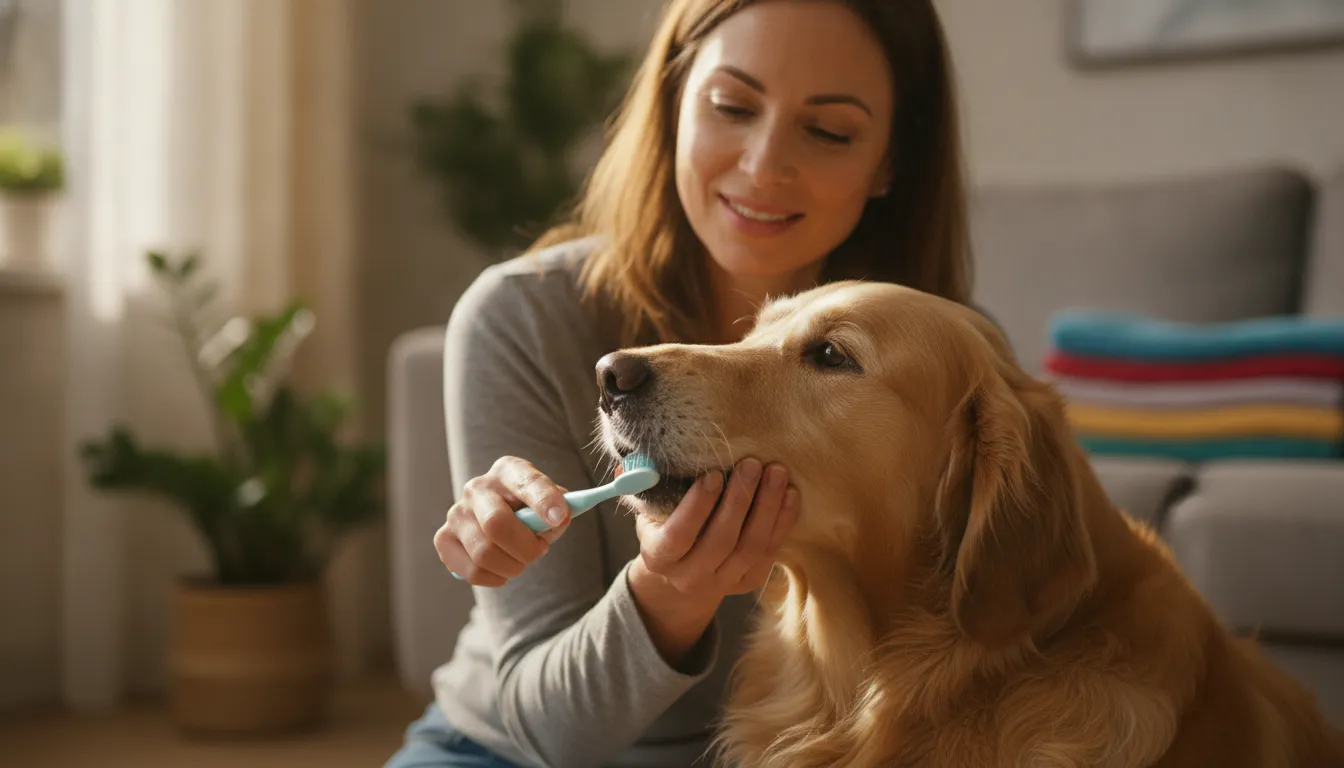
The most useful routine is short, gentle, and consistent: introduce the equipment slowly, brush the outer tooth surfaces with dog toothpaste, and reward cooperation without forcing the mouth open.
Daily brushing is the most direct way to remove plaque at home. If your dog cannot tolerate a full brushing session yet, start with a smaller goal. A calm five-second session repeated consistently is more productive than an occasional struggle that makes both of you avoid the toothbrush.
- Make the supplies familiar. Let your dog sniff a dog toothbrush and taste a small amount of dog-specific toothpaste from your finger. Never use human toothpaste, which may contain ingredients that are unsafe for dogs.
- Touch the muzzle first. Stroke the cheeks and lift the lip for a moment, then reward your dog. Do not pry the mouth open or reach toward a sore area.
- Brush the outside surfaces. When your dog is comfortable, use a soft brush at the gumline, especially on the cheek side of the upper back teeth. Small circles or gentle back-and-forth strokes are enough.
- Keep the session brief. Aim for about one minute at first, then build toward a more complete brushing. End while your dog is still calm so the next session starts on a positive note.
- Repeat regularly. Daily is ideal because plaque reforms quickly. If daily brushing is not realistic, brush as often as your dog will calmly accept and use other veterinarian-approved options as supporting tools.
Do not punish, pin, or force a dog through mouth handling. If your dog suddenly resists a routine that used to be comfortable, stop and call your veterinarian. New resistance can be a behavior signal, but it can also indicate oral pain.
Shop This Post

Featured in this article
Zymox Otic Dog Ear Treatment with 0.5% Hydrocortisone for Yeast & Bacterial Infections - 1.25 oz
$22.49
Shop Now →
Which Products Help With Dog Dental Care?
Choose products according to their job. A toothbrush removes plaque through contact, while wipes, water additives, chews, toys, and dental diets may support a routine but should not be treated as interchangeable with brushing or veterinary care.
There is no single best product for every dog. The right choice depends on your dog's size, chewing style, mouth sensitivity, and willingness to cooperate. Ask your veterinarian what fits your dog's health history, then introduce one change at a time so you can tell what your dog tolerates.
| Product type | What it can do | What to check |
|---|---|---|
| Dog toothbrush and toothpaste | Provides direct plaque removal from accessible tooth surfaces | Use dog-specific toothpaste and a soft brush; never substitute human toothpaste |
| Dental wipes | Offer a lower-equipment option for wiping accessible surfaces | Use only as directed and stop if the gums look painful or bleed unexpectedly |
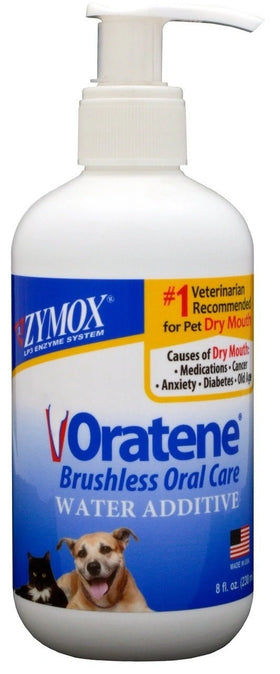
| Water additives | May support breath and plaque management as an adjunct | Follow the label, maintain fresh water, and do not use one as a replacement for brushing |
| Dental chews or treats | Can provide controlled chewing and may help reduce plaque when appropriate | Choose the correct size, supervise, and ask about products carrying the VOHC seal |
| Dental toys | May encourage chewing and add variety to a home routine | Look for some flexibility, inspect often, and remove damaged or overly hard toys |
The Veterinary Oral Health Council maintains a list of products that have earned its seal for specific claims. A seal is useful evidence, but it does not make a product right for every dog. Check the product category, size guidance, calorie impact, and your veterinarian's advice. The VOHC accepted products list can be a starting point for a more informed conversation.
Build a manageable routine with dog health products selected for your dog's needs.
- View dog health essentials for dental-support options and everyday wellness supplies.
- Look for dog-safe grooming and care tools that make regular handling easier.
- Choose products that match your dog's size and chewing habits, then follow the label directions.
How Do You Choose Safer Chews and Toys?
Hardness is not the same as dental safety. A chew or toy should be appropriate for the dog's size and chewing style, have some give, and be removed when it splinters, cracks, or becomes small enough to swallow.
Many owners reach for the toughest chew because it seems durable. That can be the wrong tradeoff. Veterinary dental guidance warns that excessively hard items can fracture teeth or injure soft tissue. Antlers, bones, hooves, very hard nylon items, and other rigid chews deserve particular caution.
A practical screening check is whether the item has enough give to yield under pressure. If you cannot make a shallow mark with a fingernail or the object feels harder than your dog's teeth, ask your veterinarian before offering it. This is not a substitute for professional advice, especially for dogs with a history of fractured teeth, aggressive chewing, or oral disease.
- Match the size. A toy should be large enough that your dog cannot swallow it whole, but not so large that the dog cannot use it safely.
- Supervise new items. Watch how your dog chews rather than relying on a package claim such as indestructible.
- Inspect after use. Discard pieces that break off, develop sharp edges, or become small enough to lodge in the throat.
- Protect the rest of the routine. Chewing does not replace brushing, wipes, veterinary exams, or treatment for a painful mouth.
For a balanced explanation of hard chews, brushing, water additives, and anesthesia, see the Cummings School of Veterinary Medicine's pet dental health guidance. When a product label promises to remove tartar or treat disease, treat that as a reason to check the evidence and ask your veterinarian, not as a reason to skip an exam.
Which Signs Mean Your Dog Needs a Veterinary Exam?
Bad breath that persists, bleeding, swelling, loose or broken teeth, difficulty chewing, drooling, food dropping, or a sudden change in mouth handling should prompt a veterinary call rather than more vigorous home brushing.
Routine home care is for a comfortable mouth. If your dog appears painful, do not try to scrape tartar or force a brush into the mouth. Call your veterinarian if you notice:
- Persistent or newly stronger bad breath
- Red, swollen, or bleeding gums
- Brown or yellow tartar buildup, discolored teeth, or a loose or broken tooth
- Drooling, pawing at the mouth, facial swelling, or a change in facial symmetry
- Chewing on one side, dropping food, refusing hard food, or reduced appetite
- Sudden resistance to having the muzzle or face touched
Seek prompt veterinary guidance for facial swelling, significant bleeding, severe pain, inability to eat or drink, or a suspected fractured tooth. A painful dog may bite even when normally gentle, so avoid opening the mouth by force. If your veterinarian finds disease, follow the treatment plan before restarting a home routine.
Add Dog Dental Essentials to Your Routine
What Happens During a Professional Dog Dental Cleaning?
A veterinary dental visit may include an oral exam, cleaning above and below the gumline, polishing, dental radiographs, and treatment recommendations. The exact plan depends on your dog's health and what the veterinarian finds.
Professional dentistry addresses areas that home tools cannot safely reach. The veterinarian may recommend an anesthetized procedure so each tooth and the tissues below the gumline can be examined, cleaned, and treated without unnecessary stress or pain. Dental radiographs may reveal problems that are hidden beneath healthy-looking gums.
Anesthesia-free scraping is not an equivalent substitute. It may make visible tooth surfaces look cleaner while leaving disease below the gumline unaddressed, and it can create stress or injury. Ask your veterinary team what pre-anesthetic testing, monitoring, radiographs, cleaning, polishing, and follow-up care are included in the recommended plan.
The right interval between professional visits is individual. Your veterinarian may consider age, breed, past dental findings, home care, chewing behavior, and other health conditions. At minimum, have your dog's teeth and gums checked at regular wellness visits, and do not wait for a scheduled appointment when warning signs appear.
The American Animal Hospital Association product guidance reinforces an important expectation: brushing helps remove plaque, but it does not remove established calculus or eliminate the need for veterinary dental care.
A Manageable Weekly Plan for Busy Dog Owners
The best dog dental care plan is the one you can repeat. Pair brief daily handling with regular brushing, safe product use, weekly observation, and veterinary checks instead of trying to fix everything in one session.
| When | Habit | Purpose |
|---|---|---|
| Daily | Brush with dog toothpaste, or complete the calm training step your dog can manage | Remove plaque and build cooperation |
| Several times weekly | Use a veterinarian-approved supporting product if appropriate | Add consistency when a full brushing is not yet possible |
| Weekly | Check breath, gums, chewing, toys, and product condition | Notice changes before they become easy to miss |
| At wellness visits | Ask for an oral exam and discuss the next professional-care step | Find disease that home inspection cannot see |
Keep the supplies together, choose a predictable time, and reward calm cooperation. A routine that takes one minute and happens most days is a stronger foundation than an elaborate plan that only happens once a month. If your dog has a medical condition, a recent dental procedure, or a painful mouth, let your veterinary team set the pace.
Shop Dog Dental Care Essentials Today
Frequently Asked Questions
How often should I brush my dog's teeth?
Daily brushing is the ideal goal because plaque returns quickly, but brushing several times a week is more useful than giving up when daily brushing is not yet realistic. Start slowly, use dog toothpaste, and ask your veterinarian for help if your dog appears painful or cannot tolerate mouth handling.
Can I use human toothpaste on my dog?
No. Use toothpaste made for dogs and follow the product directions. Human toothpaste may contain ingredients that dogs should not swallow, and foaming formulas are not designed for canine use. Your veterinarian can recommend a suitable product for your dog's needs.
Do dental chews replace brushing?
No. Dental chews may support plaque management for some dogs, but they do not replace brushing or veterinary care. Select the correct size, supervise chewing, avoid excessively hard items, and consider products with the Veterinary Oral Health Council seal when your veterinarian agrees they are appropriate.
Do water additives clean a dog's teeth?
Water additives can be an adjunct to a broader routine, but they should not be treated as a complete cleaning method. Follow the label, provide fresh water, and continue brushing or using another veterinarian-approved approach that your dog tolerates.
Is bad breath normal for dogs?
Persistent or newly changed bad breath is not something to dismiss as normal dog breath. It can be associated with dental disease or another health problem. Schedule a veterinary exam, especially if the odor appears with bleeding gums, drooling, chewing changes, swelling, or appetite changes.
Does a dog need anesthesia for a dental cleaning?
A veterinarian may recommend anesthesia so the team can examine every tooth, clean below the gumline, take radiographs when needed, and treat problems safely. Ask about the proposed procedure, monitoring, and pre-anesthetic evaluation. Anesthesia-free scraping is not an equivalent substitute for comprehensive veterinary dentistry.


