


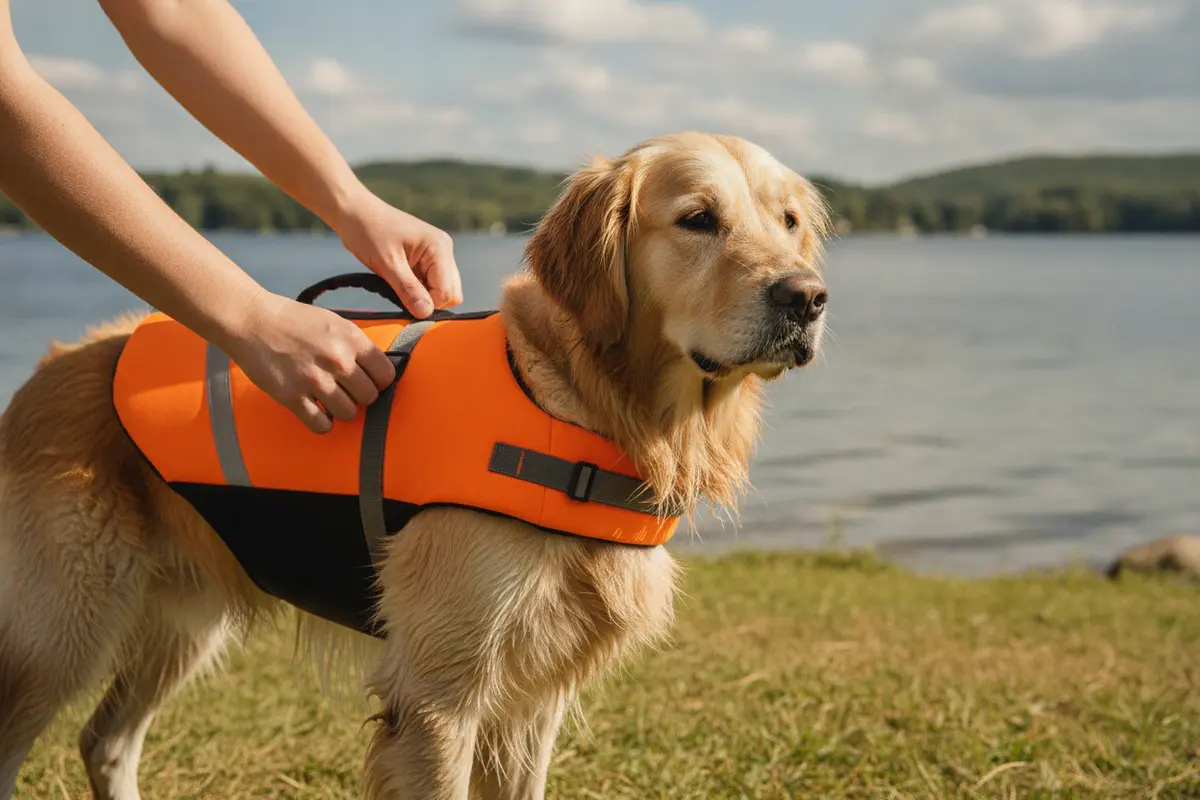
A dog life vest can add visible flotation support during boating, swimming, or time near the water, but it does not make a dog safe without supervision. Choose a vest that fits the dog’s body, stays secure when wet, and can be grasped easily if you need to help your dog. Then introduce it gradually on dry land before relying on it near water.
Call to ask about available pet gear
When does a dog need a life vest?
Consider a flotation vest whenever your dog will be on a boat, dock, paddleboard, or near water where an unexpected fall could be difficult to manage. It can also be useful during supervised swimming, especially when the dog is new to the activity or the water conditions may change. A vest is an added layer of support, not a substitute for watching the dog or choosing a safe place to swim.
Some dogs are confident swimmers; others tire quickly, dislike water, or have body shapes and physical limitations that make swimming harder. Age, fitness, health, coat, and experience can all affect how an individual dog responds. Do not assume that a breed’s reputation or a few successful swims means your dog will cope in every setting. If you are unsure whether swimming is appropriate for your dog, ask your veterinarian before starting.
On a boat, a vest may make it easier to keep track of a dog in the water and to assist with a recovery. A well-placed grab handle can offer a practical point to hold, but lifting a wet dog can be awkward and the handle is not a guarantee of safe recovery. Think through how you would help your dog back aboard before departure. Keep the dog supervised at all times, and do not let the vest create a false sense of security.
The U.S. Coast Guard’s 2018 Life Jacket Wear Rate Observation Study Report concerns human life-jacket use, not canine vest fit or performance. It is not evidence that any particular dog vest works; dog owners should use a product made for dogs and assess its fit on the individual animal.
What should you look for in a dog life vest?
Start with how the dog and vest will be used. A vest for relaxed supervised swimming may have different priorities from one used on a boat, where visibility, secure fastenings, and a handle may matter more. Product descriptions can help you compare construction, but the dog’s fit and comfort still need to be checked in person.
- Secure fit: Look for adjustable straps and closures that can be tightened without pinching. The vest should stay in position when the dog walks, sits, and turns.
- Grab handle: A sturdy handle on top can give an adult a place to hold while assisting the dog. Check that it is attached securely and easy to reach; do not treat it as a lifting guarantee.
- Visibility: Bright colors and reflective details can make a dog easier to spot in some conditions. Reflective material needs light to reflect, so it does not replace active supervision or adequate lighting.
- Coverage and movement: The vest should not block normal leg movement or rub at the neck, chest, or underarms. Check that the dog can breathe comfortably and move without the fabric shifting into a restrictive position.
- Fasteners: Buckles, hook-and-loop closures, and straps should be straightforward to secure and release. Inspect each one before use, particularly after exposure to sand or salt water.
- Materials and care: Read the maker’s care instructions. Quick-drying fabric and materials that rinse clean can make regular care easier, but construction and fit are more important than a marketing label.
Many dog vests include flotation material distributed around the body. Design and buoyancy vary, so avoid judging a vest by thickness alone or assuming that more material automatically means a better choice. Follow the manufacturer’s instructions and test the vest in calm, shallow water while staying within arm’s reach. No vest should be treated as a flotation device for a person or as equipment that guarantees a dog can keep its head above water.
How do you choose the right vest size?
Use the sizing chart for the specific vest rather than choosing by breed name, weight alone, or the size worn in another brand. Manufacturers may measure differently. Depending on the chart, you may need the dog’s chest girth, neck measurement, back length, or weight. Use a soft tape measure and record the measurements while the dog is standing naturally.
- Measure the chest: Wrap the tape around the broadest part of the rib cage, just behind the front legs. Keep the tape snug but not tight.
- Measure the neck if requested: Follow the chart’s directions for where the neck measurement begins and ends. Do not guess based on a collar size.
- Check back length or weight: Use these only as the chart specifies. If measurements fall between sizes, read the maker’s advice about choosing a size and consider the dog’s shape.
- Try the vest on dry land: Fasten every strap as directed and check that the vest stays centered. The dog should be able to walk, sit, and turn without obvious restriction.
- Recheck the fit after adjustment: Make sure straps are not dangling, buckles are closed, and the vest does not ride up toward the face or twist around the body.
Do not force a vest onto a dog if it is too tight, interferes with breathing, presses into the armpits, or prevents ordinary movement. A loose vest can shift or come off, while an excessively tight one can cause discomfort. Follow the product’s fitting directions, and choose another size or design if you cannot get a stable, comfortable fit.
Shop This Post

Featured in this article
Doggie Design Alpine All Weather Dog Parka - Waterproof Fleece Lined Reflective - Multiple Sizes
$25.00
Shop Now →

How should a dog life vest fit?
A properly adjusted vest should sit in the position intended by its maker and remain there as the dog moves. It should feel secure without squeezing the chest or neck. Check the fit while the dog is standing, walking, sitting, and bending to look down. Watch for fabric bunching, straps sliding, or edges rubbing against the skin.
Run your fingers beneath the straps to check for pinching, but do not rely on a universal finger-width rule; construction and fitting instructions differ. Buckles should lie flat and not press into the dog. Ensure the material does not obstruct the dog’s mouth, eyes, or normal breathing. Trim or secure loose strap ends according to the maker’s instructions rather than tying knots that could interfere with release.
After entering water, the vest may settle differently as it becomes wet. Keep the dog close in calm, shallow water and watch whether the vest shifts, turns, or rises toward the head. If the fit changes or the dog appears distressed, help the dog out of the water and adjust or stop the session. Do not test fit for the first time from a boat or in deep water.
What types of dog life vests can you compare?
Product labels and construction vary. Compare a vest’s intended use and actual fit rather than relying on a category name alone. The table below is a decision aid, not a ranking; confirm the details on the particular product and follow its instructions.
| Design or feature | What it may offer | What to check |
|---|---|---|
| Full-coverage vest | More fabric and flotation material around the torso | Whether it stays centered and allows normal movement without rubbing |
| Lightweight swimming vest | A less bulky design for supervised water activity | That the dog remains supported as intended and the vest does not shift |
| Top grab handle | A reachable holding point when helping the dog | Attachment strength, handle placement, and a realistic plan for recovery |
| Bright or reflective details | Can make the dog easier to notice in suitable light | Visibility in the actual setting; reflective details need light and are not supervision |
| Multiple adjustment points | More opportunity to tailor the fit to the dog’s shape | That every strap can be secured and does not loosen or rub during movement |
How do you introduce the vest before swimming?
Give your dog time to become familiar with the vest away from water. A rushed first attempt can make the equipment and setting stressful. Keep each step brief, use calm encouragement, and stop if the dog shows clear discomfort. Do not punish or force the dog to wear it.
- Let the dog investigate: Place the vest nearby and allow the dog to sniff it. Offer a treat or praise for calm interest if that suits your dog.
- Practice putting it on: Begin with a short fitting on dry land. Reward relaxed behavior, then remove the vest. Repeat in short sessions rather than leaving it on for a long first try.
- Practice movement: Once the dog accepts the vest, allow a short walk and a few ordinary movements. Check for rubbing, shifting, or restricted motion.
- Approach water gradually: Choose a calm, shallow place with a safe exit. Let the dog explore at its own pace while wearing the vest and keep a close hand on the dog or leash as appropriate for the setting.
- Keep the first water session brief: Stay close enough to help. End while the dog is still calm, and do not push the dog into deeper water to test the vest.
Some dogs will not enjoy swimming, even after gradual introduction. That is a valid reason to keep them out of the water. A vest is not a way to make an unwilling or frightened dog swim. If the dog struggles, pants heavily, tries to escape, or cannot move normally, leave the water and reassess.
What safety checks should you make around water?
Plan the setting before the dog enters the water. Look for a gradual entry and exit, hazards underfoot, boat traffic, current, waves, and conditions that could change. The safest choice may be to keep the dog on shore. Follow local rules for dogs and boating, and keep the dog on board or ashore when conditions are beyond your control.
- Keep the dog under direct adult supervision. Never leave a dog alone in or near water, even while wearing a vest.
- Use a dog-specific vest that fits and is secured according to its instructions. A human life jacket is not a substitute.
- Keep the dog away from boat propellers and other moving equipment. Plan where the dog will stay during boarding, travel, and disembarking.
- Do not rely on a leash attached to a vest as a way to restrain a swimming dog. A leash can tangle or snag; choose a safe control plan for the setting.
- Watch for signs of fatigue, stress, shivering, or difficulty moving. Bring the dog out of the water and dry and warm it as appropriate.
- Check the vest after contact with rocks, branches, sharp edges, or other objects that could damage fabric, seams, or fasteners.
A handle can help you take hold of a dog, but first consider the dog’s size, your position, and how you will bring the dog to safety. Do not assume that you can lift a large, wet dog by one handle without difficulty. On a boat, practice the plan on land and make sure the boarding point is clear. If you cannot safely recover the dog, rethink whether it should be on the watercraft.
How do you care for and inspect a dog life vest?
Rinse or clean the vest as directed after use, particularly if it has been in salt water, a lake, or muddy water. Let it dry completely before storing it in a clean, ventilated place. Do not use heat or cleaning products unless the manufacturer permits them; harsh treatment can affect fabric, closures, or flotation components.
Before each outing, inspect the shell, seams, straps, buckles, closures, and handle. Look for fraying, tears, separated seams, cracked hardware, corrosion, persistent odors, or material that has become misshapen. Check that adjustable parts still hold their position. If any part is damaged or the vest no longer fits correctly, do not use it in water until it has been repaired in a way approved by the manufacturer or replaced.
Recheck sizing as the dog grows or changes shape. Puppies can outgrow a vest quickly, and a fit that worked last season may not be right now. Keep the product’s care instructions and sizing information available. A vest’s appearance alone cannot tell you whether its buoyancy or construction remains suitable, so follow the maker’s inspection and replacement guidance.
What should you consider when buying?
Set the intended use first: boating, supervised swimming, or occasional visits to the shore. Then compare size availability, adjustment range, ease of fastening, visibility, handle construction, and care directions. Check whether the maker provides clear fitting instructions and a sizing chart. If you cannot determine whether the dog is between sizes, seek clarification before use instead of guessing.
Fit and condition matter more than buying extra features that will not be used. A vest with a handle is not automatically right for every dog, and bright trim cannot compensate for poor visibility conditions. Likewise, a low price does not make a vest a good choice if the fasteners do not hold or the design rubs. Choose an item you can fit securely, inspect regularly, and use within its stated purpose.
For water days, you may also plan familiar toys for breaks on dry ground. Hooves and Paws lists interactive fetch toys for dogs, including the Weaver Leather Terrain D.O.G. flying disc. Keep toys and play separate from the dog’s entry, exit, and boat-recovery areas so they do not distract from supervision.
If you shop secondhand for general pet gear, be selective about what you buy. A used flotation vest with unknown wear, missing care history, or damaged closures is difficult to assess; safety-critical equipment should be in sound condition and fit correctly. Hooves and Paws also has a gently used pet supplies collection, but inspect any item carefully and do not use a questionable vest around water. Households that also keep horses can browse stable supplies and accessories for other barn needs; those products are not substitutes for dog water-safety equipment.
How does the setting change your safety plan?
A vest is only one part of choosing a suitable place for water activity. A fenced pool, quiet shoreline, and moving river each create different risks. Before letting the dog near the water, look for a clear route back to dry ground and a place where you can stay close. Avoid areas where the dog may be pushed away from shore, caught in vegetation, or exposed to fast-moving equipment. If you cannot control the environment, choose a land-based activity instead.
On a boat, establish a secure place for the dog before leaving the dock. Keep the dog away from edges when people are boarding, and consider how the dog will respond to engine noise, waves, and movement. A dog that is comfortable on land may be unsettled aboard a moving boat. Let the dog get accustomed to the vessel while it is stationary, and do not rely on a vest to prevent the dog from falling overboard.
At a pool or shoreline, identify the exit before play begins. A dog may not know how to find steps or a ramp after entering the water. Show the dog the exit calmly, and keep the first visits short. At a public beach, account for other people, dogs, and local rules. A vest should not be used to encourage close contact with wildlife or to bring a dog into water with hazards you have not assessed.
Weather and water conditions can change during an outing. Wind, waves, temperature, and visibility may make a previously manageable setting harder. Reassess rather than continuing because the dog is already wearing a vest. End the session when the dog is tired, conditions worsen, or you are no longer able to supervise closely.
What should you do if the vest does not seem to work well?
Pay attention to the dog, not only the product description. If the vest rides up, twists, slips, or appears to interfere with movement, help the dog out of the water and inspect the adjustment. Refit it on land and check the sizing chart. If the problem continues, try a different size or design rather than tightening straps beyond the maker’s directions.
Signs that the dog may be uncomfortable include repeated attempts to scratch or bite at the vest, freezing, struggling to walk, or trying to remove it. In the water, distress may look like frantic movement, unusual difficulty keeping the head above the surface, or trouble reaching the exit. Bring the dog out promptly, remove the vest when safe, and let the dog rest. If the dog seems unwell or has trouble recovering, contact a veterinarian.
Do not make an improvised alteration that changes the vest’s fit or construction. Cutting fabric, adding weights, or attaching extra flotation can change how the garment sits and may create new hazards. Contact the maker with questions about fit, repair, and intended use. If a secure and comfortable fit cannot be achieved, do not use that vest in water.
Frequently Asked Questions
Can every dog swim while wearing a life vest?
No. A vest does not mean every dog can or should swim. Dogs vary in comfort, ability, health, and stamina. Introduce the vest and water gradually, supervise closely, and leave the dog out of the water if it seems frightened or uncomfortable. Ask your veterinarian if health or mobility could affect swimming.
Can I leave my dog unattended in a vest near a pool or lake?
No. Stay with your dog and watch continuously. A vest does not prevent every accident, entanglement, or change in conditions, and it cannot replace a safe barrier or supervision.
Should a dog life vest have a leash attachment?
A leash attachment may be included, but that does not mean it is safe to tether a dog while swimming or aboard a boat. A leash can snag or tangle. Follow the maker’s instructions and plan how to control the dog in each setting without creating a new hazard.
How often should I replace a dog life vest?
There is no universal replacement schedule for every vest. Follow the manufacturer’s guidance and inspect it before use. Replace or stop using it if the fabric, seams, handle, straps, buckles, or closures are damaged, or if the dog has outgrown it or it no longer fits securely.
Ready to choose water-day gear?
Before your next outing, measure your dog, compare the product’s sizing chart, and practice wearing the vest on land. If you would like to ask about available pet gear, call Hooves and Paws.
A well-chosen vest can be a useful part of a water-safety plan, but close supervision, a suitable setting, and a secure fit remain essential every time your dog is near water.


