


Dog poop bags are a small everyday item, but the right choice makes cleanup easier to manage on neighborhood walks, hikes, and trips away from home. The best bag for your routine should be easy to carry, simple to open, large enough for your dog’s waste, and suitable for the disposal options where you walk.
What should dog poop bags do?
Key Takeaway
A useful waste bag should be ready when you need it, open without a struggle, contain waste without leaking, and tie securely for the trip to an approved bin.
Start with the job, not the packaging claims. You need to pick up your dog’s waste hygienically, keep it contained while you finish the walk, and dispose of it in a way that follows local rules. A bag can be marketed as extra-thick, scented, compostable, or earth-friendly, but none of those labels replaces the practical checks: Does it fit your dog’s typical cleanup? Can you separate one bag from the roll? Does the seam hold when you tie it?
Think about when and where you walk. A short trip around the block may call for a compact roll that clips to a leash. A long trail outing may call for several spare bags, a secure carrier, and a plan for carrying waste until you reach a trash can. If other people in your household walk the dog, choose a setup they will also remember to bring.
Bag choice is personal because dogs, routes, and habits differ. Keep a small reserve at home, and check the supply before leaving rather than discovering an empty dispenser halfway through the walk. A simple routine matters more than buying a large variety of bags before you know what works.
It helps to judge a bag as part of a complete cleanup sequence: retrieve one while keeping hold of the leash, open it, pick up waste, turn the bag over your hand, close it, and carry it to an appropriate bin. A product that seems fine in a package may be frustrating if the opening sticks or there is too little material left to tie. If you walk in rain or cold, test whether you can handle the bag comfortably with the gloves you normally wear.
How do you choose a bag size and thickness?
Look for a bag that gives you enough room to pick up waste, turn the bag inside out over your hand, and tie it without stretching the plastic or crowding your fingers. The right size depends on your dog’s size and the amount of waste you usually clean up. If you are uncertain, try a modest pack first and judge it during ordinary walks before stocking up.
Thickness is another practical factor. A bag that feels too flimsy may be difficult to handle confidently, while a bulkier bag can take up more room in a pocket or dispenser. Rather than relying only on a printed thickness number or a product description, check the bag in use: look for intact seams, a material that does not tear during normal handling, and enough room for a secure knot. Follow the manufacturer’s directions, and do not use a damaged or punctured bag.
Consider roll dimensions as well as individual bag dimensions. A roll that does not fit your leash dispenser is inconvenient even if each bag is a good size. Confirm the carrier’s opening and roll capacity, especially if you are replacing a refill. If you carry bags loose, a small pouch or pocket with a consistent location can make them easier to find quickly.
When comparing sizes, assess the bag with your hands rather than focusing on a vague label such as “large.” Check that the opening is wide enough for a comfortable hand entry and that the bag extends far enough past your wrist to turn inside out without touching the waste. Then see whether the top still leaves enough material to tie. A bag that is technically large enough but awkward to turn or knot can make every cleanup harder.
Think through the trade-off between capacity and portability. A larger bag may feel easier to handle, but a roll of larger bags can be bulkier in a pocket-size dispenser. If you are buying for several dogs or for a dog whose cleanup varies, test the bag during the largest routine pickup you expect. Choose for a comfortable margin, not for an exceptional situation you rarely encounter.
Which bag features are worth comparing?
Packaging uses several features to distinguish one option from another. Compare them against your routine instead of assuming the most features mean the best fit.
| Feature | What to check | May suit | Possible trade-off |
|---|---|---|---|
| Bag size | Enough room to pick up and tie without strain | Any walk, matched to your dog and routine | Larger bags can take up more space |
| Material thickness | Comfortable handling and intact seams | People who prefer a sturdier feel | Thicker material may make rolls bulkier |
| Scented or unscented | Whether the fragrance is pleasant to your household | Walkers who prefer a scented option or no added scent | Fragrance is a preference, not a substitute for containment |
| Roll or individual bags | Fit with your carrier and storage habits | Rolls for dispensers; loose bags for pockets or pouches | Refill rolls need a compatible carrier if you use one |
| Material and disposal label | Exact instructions and local disposal rules | Owners with access to a compatible collection option | Terms such as compostable do not mean every bin accepts the bag |
A scent can be pleasant to one person and distracting to another. If you have not used scented bags before, try a small quantity before making them your regular supply. Unscented bags keep the decision straightforward for households that do not want added fragrance.
Some bags are sold with a dispenser or designed as refills. A dispenser can keep bags attached to a leash, but check that it stays secured and does not swing in a way that bothers you or your dog. If the dispenser is awkward to refill, a simple pouch or pocket may be more practical. The best carrying method is the one you will bring on every outing.
When checking a dispenser, compare the roll width and diameter with the carrier’s available space. Make sure the opening allows a bag to pull through without tearing, and see whether the dispenser has a closure that keeps the roll from slipping out. A refill that nearly fits can still jam, especially when the roll is almost full. If you prefer carrying a few loose bags, separate them at home and store them flat in a small pouch to avoid fumbling with a roll outdoors.
Product recommendation: if your routine benefits from a dedicated carrying option, take a look at this dog bandana as an accessory for walks, and consider how it fits alongside your practical cleanup supplies. It is not a waste-bag substitute, so keep bags accessible and choose a separate carrier or pocket that works for them.
Shop This Post

Featured in this article
Doggie Design Alpine All Weather Dog Parka - Waterproof Fleece Lined Reflective - Multiple Sizes
$25.00
Shop Now →
Are compostable or biodegradable bags the right choice?
Quick Summary
Read the full disposal instructions and check which waste streams accept the bag. A label alone does not establish that a bag can go into a home compost bin, a public organics bin, or the environment.
Words such as biodegradable and compostable can sound interchangeable, but they do not tell you by themselves how or where a particular bag should be discarded. Check the package for specific conditions and disposal guidance. Then check the rules for the place you are walking and the waste service that handles your rubbish.
Do not assume that a bag labeled compostable belongs in a home compost pile. Dog waste and the bag may be excluded from home composting, and a municipal or commercial organics program may have its own acceptance rules. If the package does not clearly explain a suitable disposal route, use the local waste instructions rather than guessing. Never leave a tied bag on a trail, hang it from a fence, or put it in a recycling bin unless the local program explicitly accepts it.
For a trail or park visit, plan ahead. A University of Utah recreation-management document describes providing dog-waste bags and depositing collected waste in trash receptacles. That is one example of a site-specific approach, not a universal rule, so check posted signs and local guidance before your trip: Green Canyon Recreation Management Plan.
When no bin is available, keep the sealed bag with you until you find an approved disposal point. Bring an outer pouch or a carrier designed for temporarily holding a used bag if that makes the trip more comfortable. Do not leave waste behind because carrying it is inconvenient.
It is useful to distinguish the bag’s material claim from the disposal route. A label may describe how a material breaks down under particular conditions, while your local collection service may accept only certain items in its organics stream. Neither the word on the package nor the color of the bag tells you which bin to use. Read the product directions, look for local program guidance, and follow signs at parks and trailheads. If instructions conflict or are unclear, choose the disposal option your local waste authority specifies.
Also avoid flushing dog waste or its bag unless an authoritative local instruction explicitly says that is an accepted method. Plumbing and wastewater systems differ, and a bag is not made suitable for flushing simply because it is described as degradable. A tied bag carried to an approved receptacle is a straightforward fallback when you are unsure.
How can you make cleanup easier on walks?
Build a repeatable system with three parts: bags on hand, a way to carry used bags when needed, and a final disposal plan. Put the supplies where they are easy to see before leaving. You might keep a refill near the leash, store spare rolls with walking gear, or add a few bags to a day-trip pack. Replace a roll when it is nearly empty, not after it runs out.
- Check the supply. Before the walk, make sure the dispenser or pouch has enough bags for the outing and an extra or two.
- Know how to open one. If the bags cling together, separate a few at home so you understand how the perforation and opening work.
- Carry a spare. A backup bag can help if one tears or a second cleanup is needed.
- Plan for the route. Notice whether the route has bins and where the nearest appropriate disposal point is.
- Secure the used bag. Tie it closed and carry it until you reach an allowed receptacle.
For a longer walk, the carrying setup matters. A leash-mounted dispenser may be convenient for fresh bags, but it may not have a separate place for a used one. A small washable pouch or dedicated carrier can keep used bags apart from clean supplies. Choose a design that closes securely and can be cleaned according to its care instructions.
Make the routine work for every walker in the household. If one person carries bags on the leash and another uses a coat pocket, keep spare rolls in a shared place and agree on how to restock. Consistency prevents the familiar problem of finding an empty dispenser at the door.
Try this simple preparation routine at home. Refill the dispenser, pull the first bag far enough through the opening to grasp easily, and put one spare in the pocket or pack you use most. Place a separate used-bag carrier near your leash if your usual route has few bins. Before a longer trip, check the route map or park information for disposal facilities, but still bring enough capacity to carry the bag out if a receptacle is closed or full.
After returning, dispose of the used bag according to local rules, then check the dispenser and restock it while the walk is still fresh in your mind. If the bag tore, note whether it snagged on the dispenser, split at a seam, or was too small to tie comfortably. That observation helps you decide whether the issue was the refill, the carrier, or the way the bag was handled. Change one part of the setup at a time so you can tell what actually improves the routine.
Choose a walk setup that fits your routine
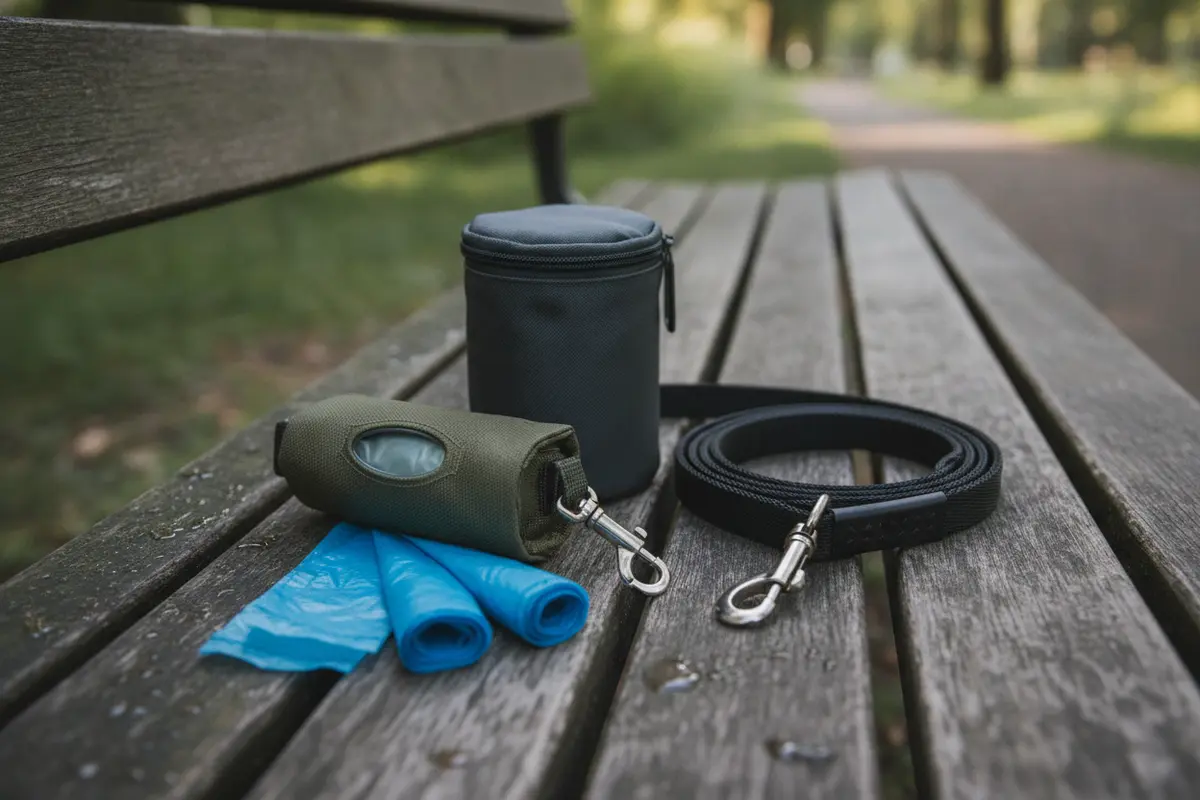
Dog poop bags are one part of a comfortable outing, alongside a leash, water for longer trips, and whatever other items suit the route and your dog. For a neighborhood walk, a compact arrangement may be enough. For a longer outing, consider where you will keep clean bags, how you will carry a used bag, and whether the route has disposal facilities.
If you are gathering practical gear for outings, you can browse the full store for a broad selection, or explore walking-friendly dog accessories such as this dog bandana. A dog’s play gear, such as a durable flying disc, is a separate choice from cleanup supplies, but may be useful for owners planning active outings. Select equipment based on the activity and your dog’s needs, and keep cleanup bags accessible throughout.
Set up your kit to match the walk rather than bringing every item each time. A short block walk might need a leash, an attached dispenser, and a spare bag in a pocket. A full day outside may call for extra rolls, a secure carrier for used bags, water, and a plan for carrying supplies back to the car. Keep dog play equipment separate from cleanup items, so fresh bags remain clean and easy to reach.
Keep a small supply of bags where you prepare to leave, and inspect a dispenser or pouch when you return. If a bag tears, the roll does not fit, or the knot is difficult to secure, adjust the size or carrying method rather than relying on the same inconvenient setup. A quick check now can prevent an avoidable scramble on the next walk.
Common dog poop bag mistakes to avoid
- Leaving home with only one bag. Bring enough for the length of the outing, plus a backup.
- Choosing a bag by its label alone. Check its actual fit, handling, and disposal instructions.
- Assuming every bag fits every dispenser. Compare roll width, core size, and dispenser opening before buying refills.
- Leaving a used bag behind. Carry it to a permitted bin, even when the route has no nearby receptacle.
- Putting bags in the wrong waste stream. Follow local requirements and the directions for the specific product.
- Storing all supplies in one place far from the leash. Keep a reserve where it is easy to restock before walks.
It is also easy to buy a large pack based on a feature that turns out not to matter to your household. Start with a small quantity when testing a new size, scent, or material. Pay attention to what makes cleanup easier for the person holding the leash, then repeat that choice when you restock.
Another avoidable problem is relying on a bag without checking its opening or perforation first. If the first bag is difficult to separate, practice with a few at home and adjust how you pull them from the roll. Do not wait until the dog has finished before discovering that the dispenser is jammed. Similarly, test a new carrier on a short walk before depending on it for a longer trip, and confirm that a used bag can be secured without contacting the clean supply.
Do not treat storage as an afterthought. Keep rolls in a dry place and follow any package guidance about storage conditions. If a bag looks damaged, has a torn seam, or has been exposed to conditions the manufacturer warns against, replace it instead of counting on it during a walk. A small, visible backup supply near the leash makes it easier for everyone in the household to remember restocking.
For a dog that tends to pull or move suddenly, organize supplies before the walk so you do not need to search through a bag while managing the leash. Choose a dispenser that is easy for you to reach and secure it so it does not interfere with handling the leash. Practice retrieving a bag at home if the attachment is new. Good preparation reduces fumbling and helps keep attention on the dog and surroundings.
Shop dog-walking essentials today
Frequently Asked Questions
How many dog poop bags should I bring on a walk?
Bring enough for the expected length of the outing and carry at least one spare. A longer trip or a route with limited access to supplies calls for extra bags. Check the roll before you leave so you are not relying on the last bag.
Are scented dog poop bags better than unscented bags?
Neither option is right for every walker. Scented bags add fragrance, which some people prefer and others do not. Try a small pack if you are unsure, and choose based on comfort and ease of use rather than assuming scent changes how the bag should be handled.
Can I put dog poop bags in a compost bin?
Only if the bag’s directions and the composting program specifically allow it. A compostable label does not mean the bag is accepted in every home or municipal compost system. Follow local guidance, and use the disposal route the program specifies.
Can dog poop bags go in a recycling bin?
Do not put them in recycling unless your local program explicitly accepts that exact type of bag. Follow the package directions and local waste rules. If you are unsure, use the appropriate general-waste option rather than contaminating a recycling stream.
What should I do with a used bag when there is no trash can nearby?
Tie the bag closed and carry it until you reach a permitted receptacle. A secure outer pouch can help keep it separate from clean supplies during a longer walk. Check signs and local rules about disposal at parks, trails, and other public areas.
How do I know whether a bag is large enough?
Choose one that leaves enough material to pick up waste and tie the bag without stretching it to its limit. Consider your dog’s typical cleanup and how comfortably you can handle the bag. If it feels cramped or difficult to close, try a larger size.
How do I know whether a refill fits my dispenser?
Check the dispenser’s opening and internal space, then compare them with the roll dimensions listed on the refill package. The roll should turn freely and feed through the opening without tearing or jamming. If you cannot confirm compatibility, test one roll before buying several.
Should I carry a used-bag holder on every walk?
It is especially useful on routes without convenient bins or on outings where you may need to carry a bag for a while. Choose a holder that closes securely and can be cleaned as directed. Even with a holder, plan to take the bag to an approved receptacle rather than leaving it behind.
A dependable cleanup routine starts with bags that fit your dog, your carrying setup, and the places you walk, plus a clear plan to dispose of each used bag responsibly.


