

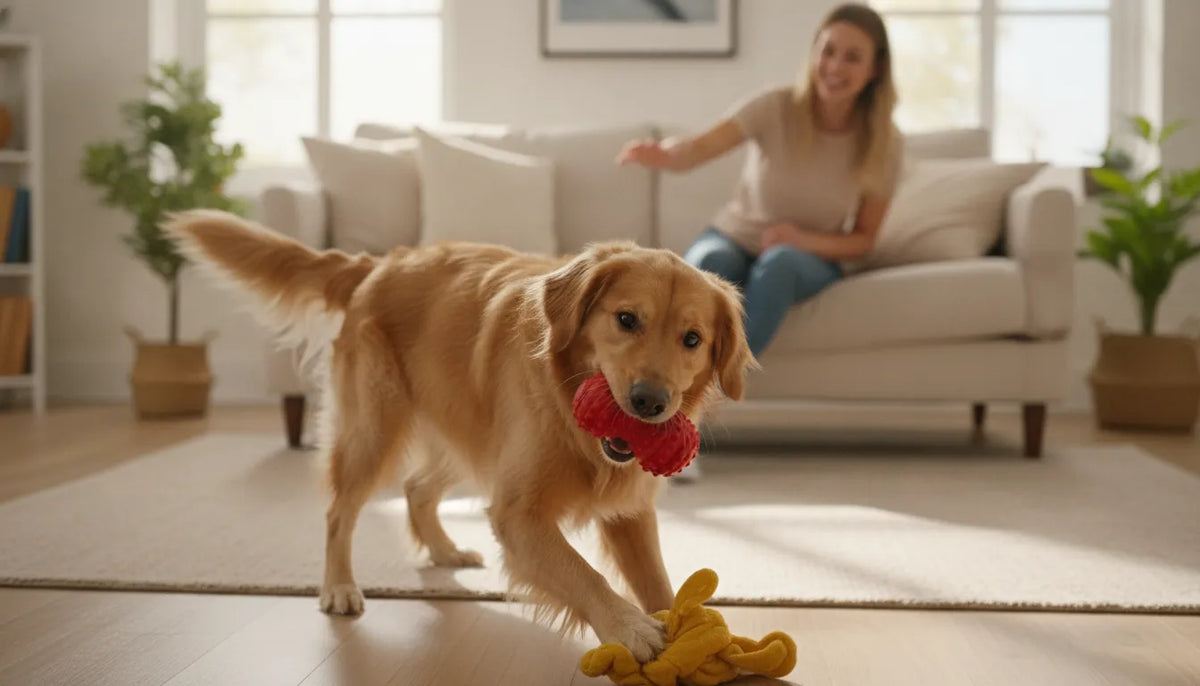
Dog toys are most useful when they fit your dog's size, age, chewing style, and favorite way to play. The best option is not simply the toughest toy on the shelf. It should also suit the way your dog uses it. A thoughtful mix can support active play, quiet engagement, and supervised enrichment.
Shop now for play and enrichment
Dog toys work best when matched to the individual dog. Choose chew toys for appropriate chewing. Use fetch or tug toys for interactive play. Plush options suit dogs who handle them gently. Puzzle or treat-dispensing toys support supervised mental engagement. Check dimensions and product guidance. Watch how your dog plays, and replace any toy that becomes damaged or unsafe.
That starts with understanding what each major toy category is designed to do, and how its strengths may fit your dog's daily routine.
What Are the Main Types of Dog Toys?
Dog toys generally fall into five useful categories: chew, fetch, tug, plush or squeaky, and puzzle or treat-dispensing. Each supports a different kind of play. The best choice depends on your dog's size, age, chewing style, and preferences. A toy that suits a gentle fetch player may not suit a determined chewer. Use every toy with appropriate supervision.
Key Takeaway: Choose dog toys by play purpose first, then check the product's size, materials, and instructions against your dog's individual habits. Variety can support both physical activity and mental engagement.
| Toy type | Useful for | What to consider |
|---|---|---|
| Chew | Quiet chewing and focused engagement | Match the toy to chewing style and follow safety instructions |
| Fetch | Retrieving, movement, and outdoor games | Choose a suitable size and supervise use, especially with balls |
| Tug | Interactive play with an owner | Use clear play boundaries and inspect the toy regularly |
| Plush or squeaky | Gentle play, carrying, and comfort | Not every plush toy suits dogs that tear or remove parts |
| Puzzle or treat-dispensing | Foraging, problem-solving, and food-based enrichment | Use as directed and choose a difficulty your dog can manage |
Chew toys are designed for dogs that enjoy sustained oral activity. Rubber chews are a common example of this category, while food-stuffed designs can add an enrichment element. VCA notes that the wrong chew toy may contribute to tooth damage, choking, or an intestinal obstruction. Hardness, size, and supervision matter. Read the manufacturer's guidance rather than assuming that a toy is appropriate for every dog.
Fetch and tug toys are especially useful for shared play. Balls and throw toys encourage a dog to chase and retrieve, while tug toys create a direct game between dog and person. The American Kennel Club provides separate guidance on selecting toys for individual dogs and on tennis-ball considerations. These resources are useful when a ball is part of your routine: learn more about choosing dog toys.
Plush and squeaky toys can suit dogs who enjoy carrying, cuddling, or short bursts of play. They are not automatically a good fit for a dog who quickly tears fabric or seeks the squeaker. Remove a toy if pieces become loose or damaged. Puzzle and treat-dispensing toys turn part of a dog's meal or snack into a searching activity. VCA describes enrichment and foraging toys as tools that can support activity and behavior management, but the toy should still be selected for the individual dog.
For a practical starting point, browse the dog toys collection at Hooves and Paws. Review each product's specifications, dimensions, brand information, and customer reviews, then select options that fit your dog's play style rather than choosing by appearance alone.
A balanced toy basket might include one supervised chew option, a fetch or tug toy for shared activity, and a puzzle or treat-dispensing choice for quieter engagement. Rotate options based on your dog's interest, and inspect every toy before and after play. For additional guidance on safe engagement and enrichment, see VCA's overview of enrichment and activity toys.
How Do You Match Dog Toys to Size, Age, and Chewing Style?
The best choice starts with the individual dog, not the label on the package. Use this quick selection process to narrow the field, then follow the toy maker's size guidance and supervise the first few play sessions.
- Start with your dog's current size. Choose a toy that is large enough for the dog to handle without swallowing it, but not so oversized that carrying, gripping, or playing becomes awkward. Compare the product dimensions with your dog's mouth and body size, and read the manufacturer's sizing notes. A small dog may need a lighter, smaller toy, while a larger dog may need a different scale and shape. Size alone is not a guarantee of safety, so watch how your dog actually uses the toy.
- Account for age and experience. Puppies are still learning how to investigate objects and may be working through teething. AKC offers separate guidance on selecting puppy and teething toys, including the importance of matching the toy to the puppy's stage and play habits: read the AKC puppy toy guidance. Select age-appropriate options, introduce them gradually, and remove any toy that begins to break apart. Adult dogs often benefit from a mix of toys for chewing, fetching, tug, and food-based engagement. For seniors, favor manageable shapes and textures that suit their established play preferences, and observe whether a toy remains comfortable to pick up and use. If play causes concern or your dog appears unwell, ask a veterinarian rather than treating a toy as a solution.
- Assess chewing style honestly. Is your dog a gentle mouther, a recreational chewer, or a determined shredder? A plush toy may work for a dog that carries and cuddles it. But it may not be a good unsupervised choice for a dog that quickly removes seams or stuffing. For stronger chewers, review the construction, intended use, and size instructions. Do not rely on a broad word such as "tough." VCA cautions that the wrong chew toy can contribute to tooth damage, choking, or gut obstruction. Read its chew-toy selection guidance before choosing a dedicated chew.
- Match the toy to the way your dog plays. A dog who loves chasing may prefer a fetch toy, while a dog who enjoys working for food may engage more with a treat-dispensing or puzzle option. A dog who seeks interaction may prefer a supervised tug game. For ball play, AKC provides specific considerations in its guide to tennis-ball safety. Choose the purpose first, then select a size and design that fit your dog's habits.
- Test, supervise, and reassess. Introduce new dog toys while you can observe the play. Check for loose pieces, cracks, tears, or rapid wear before and after use, and follow the product instructions. Hooves and Paws recommends treating suitability as individual and checking toys regularly. If the toy no longer fits your dog's size, age, or chewing pattern, replace it rather than hoping supervision will compensate.
Choose by size, life stage, chewing intensity, and play purpose together. The right match can change as your dog grows or develops new habits, so selection is an ongoing process, not a one-time decision.
Shop This Post

Featured in this article
Ducky World Yeowww! 7" Organic Catnip Kicker for Barn Cats
$12.11
Shop Now →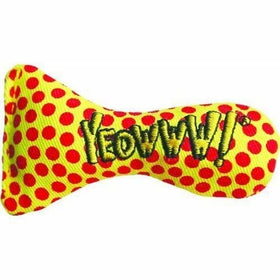
Which Dog Toys Help With Enrichment and Daily Activity?
The most useful choices give your dog a reason to move, investigate, solve a small problem, or interact with you. A balanced play routine can include foraging, food puzzles, fetch, tug, and short periods of supervised independent play. The right mix depends on your dog's size, age, chewing style, and preferences, so observe what keeps your dog engaged without creating frustration.
Use food puzzles and foraging activities to encourage problem-solving, fetch and tug for interactive movement, and a small rotation of supervised choices to keep daily play varied. Inspect every toy and follow its product instructions.
Foraging and food puzzles make ordinary meals more engaging
Foraging toys invite a dog to search, sniff, nudge, or work toward a food reward. A treat-dispensing toy can turn part of a routine meal into an activity. A food-stuffed toy may extend engagement when prepared and used according to the product directions. Start with an easy challenge so your dog learns how the toy works. If the puzzle is too difficult, your dog may lose interest or begin chewing the toy instead of solving it.
VCA describes enrichment and foraging toys as part of behavior management and activity planning, making them useful options when a dog needs more than passive entertainment. They are not a substitute for exercise, training, attention, or veterinary care, but they can add purposeful work to a busy day. Learn more about enrichment and foraging activities.
Fetch and tug turn playtime into shared activity
Fetch is a straightforward way to combine movement with a clear game structure. Use a toy that suits the setting, whether your dog is playing indoors, in a yard, or at a park. Balls and floating throw toys are commonly used for outdoor fetch, but inspect the toy before and after play. AKC also publishes dedicated guidance on tennis-ball safety, so consider your dog's individual play habits rather than assuming every ball is suitable.
Tug can provide physical activity and social interaction when both dog and person follow consistent rules. Invite the dog to take the toy, pause when you ask for a release, and restart only when the game is calm. Keep sessions brief if your dog becomes overly excited. Never leave a tug or interactive toy available for unsupervised chewing unless the manufacturer specifically indicates that use.
Rotate choices instead of leaving every toy out
A small active selection can make familiar toys feel fresh. Offer one option for foraging, one for movement, and one for interactive play, then rotate based on your dog's interest. Keep the rest clean and stored safely. Watch which toys your dog returns to, which activities cause frustration, and which ones encourage calm concentration. That information is more useful than choosing toys by category alone.
For practical options across play and enrichment styles, browse dog toys for play and enrichment, then review each product's dimensions, intended use, and care instructions before adding it to your routine.
How Can You Use and Care for Dog Toys Safely?
Safe play starts with matching the toy to your dog's size, age, chewing style, and supervision needs. Stay nearby during play, especially when introducing a new toy or offering a chew, tug, or treat-dispensing design. Watch how your dog uses it rather than assuming a toy is suitable because it is labeled for a particular size or breed. The American Kennel Club's guidance on selecting dog toys also emphasizes choosing based on the individual dog.
Supervise play and inspect toys regularly
Before each play session, look for torn seams, cracked surfaces, loose parts, sharp edges, or pieces that could be pulled away and swallowed. Check balls and other throw toys for changes in shape or damage, and examine plush toys for exposed stuffing, detached eyes, or loose squeakers. A toy that was appropriate when new may become unsafe after repeated chewing, washing, or outdoor use.
Pay attention to your dog's play pattern. A gentle fetcher may use a toy differently from a determined chewer, and a dog that guards or destroys toys may need closer supervision. Avoid leaving high-risk toys available unattended simply because they have been safe during interactive play. When in doubt, put the toy away and choose another option that better fits the dog's current behavior.
Clean toys according to their materials and instructions
Follow the manufacturer's cleaning and care directions rather than applying the same method to every toy. Wash removable fabric components as directed, rinse away cleaning residue, and allow toys to dry fully before returning them to your dog. For food-stuffed or treat-dispensing toys, clean crevices carefully so leftover food does not remain trapped. If a toy cannot be cleaned effectively after contamination, discard it.
Do not modify a toy by cutting openings, removing safety features, or adding materials that the manufacturer did not recommend. Keep toys stored in a clean, dry place between uses. Rotating a manageable number of toys can make inspection and cleaning easier while helping you notice when one needs replacement.
Know when a toy-related problem needs veterinary attention
The wrong chew toy can crack teeth, cause a gut obstruction, or create a choking hazard, according to VCA Animal Hospitals. Tennis balls and other fetch toys also deserve thoughtful selection and supervision, as discussed by the AKC's tennis-ball safety guidance. If your dog swallows part of a toy, chokes, has trouble breathing, vomits, seems painful, or shows unusual lethargy, contact a veterinarian promptly. Do not wait for symptoms to worsen, and never treat a toy as a substitute for professional veterinary care.
When Should You Replace a Dog Toy?
There is no universal replacement schedule for dog toys. A toy's useful life depends on your dog's size, chewing style, play intensity, and how often the toy is used. Instead of replacing every toy after a fixed number of days, inspect it before and after play, then remove it when its condition or fit changes.
Replace a dog toy when it is torn, shedding pieces, contaminated beyond practical cleaning, too small, misshapen, or no longer appropriate for your dog's current play style. Supervise play and follow the product instructions.
Look for damage that can create a hazard
Small tears can become larger openings during the next chewing session. Check seams, rubber surfaces, handles, stitching, and edges for rips, cracks, punctures, or loose threads. If stuffing, foam, rubber, fabric, or other fragments are coming off, retire the toy rather than trimming it and assuming it is safe.
Loose eyes, buttons, squeakers, caps, ropes, or other attached pieces also warrant removal. A squeaker that has become accessible is not a minor cosmetic defect. It is a sign that the toy's interior can now be reached. If your dog has swallowed part of a toy, contact a veterinarian promptly for guidance, especially if you notice choking, vomiting, discomfort, unusual tiredness, or difficulty passing stool. The wrong chew toy can contribute to choking, tooth damage, or gastrointestinal obstruction, as VCA explains in its chew-toy guidance.
Check size, shape, and cleanliness
Replace a toy if repeated chewing has changed its size or shape enough that your dog could swallow it, get a jaw caught, or struggle to use it normally. Reassess fit as your dog grows or as a puppy moves into a different stage. A toy that was suitable earlier may no longer be the right choice for the dog's current size or chewing habits.
Retire toys with deep grooves, porous damage, or contamination that cannot be cleaned thoroughly according to the manufacturer's instructions. Mold, persistent odor, embedded food, and heavily soiled seams are practical reasons to stop using a toy. Wash and dry reusable toys as directed, and replace them when cleaning no longer restores a reasonably hygienic surface.
Finally, pay attention to changes in play. If a toy is ignored because it no longer fits your dog's interests, keep it out of the active rotation or replace it with a better-matched option. Inspect every toy again before returning it to play, and when in doubt, choose removal over extending its use.
How Can You Build a Better Dog Toy Rotation?
A toy rotation keeps play interesting without requiring a crowded toy basket. Instead of leaving every item available at once, keep a small group out and store the rest clean and dry. Change the selection based on your dog's interests, the activity you want to encourage, and the amount of supervision you can provide.
Organize by purpose
Build a balanced active set rather than choosing several toys that all serve the same purpose. You might keep one toy for chewing, one for fetch, one for interactive food enrichment, and one soft toy for calm play if that option suits your dog. A tug toy can support a shared game when you are present. A puzzle or treat-dispensing toy can add a thinking task, provided the toy is appropriate for the dog and used as directed.
Watch what your dog actually does with each item. If a toy is ignored, try offering it at a different time or pairing it with a familiar activity. If your dog immediately carries one toy away, that preference can guide future choices. The goal is not to force every type of play. It is to give your dog safe, varied opportunities to move, explore, chew, and interact.
Quick Summary: Keep a few suitable toys available, rotate the rest, and use your dog's observed preferences to shape the next selection. Inspect every toy before returning it to play.
Refresh novelty thoughtfully
When you rotate, remove toys that are wet, dirty, damaged, or no longer a good fit. Wash or clean each item according to its material and the manufacturer's directions, then let it dry fully before storage. Keep small detachable pieces away from dogs that might swallow them. If a toy changes shape, develops a tear, or releases stuffing or fragments, remove it rather than putting it back into the rotation.
Rotation can also help you notice changes in play. A dog that once enjoyed fetch may prefer a slower puzzle activity on a quiet day. A new dog may need time to investigate an unfamiliar texture. For more ideas on keeping dogs engaged through changing routines, explore these tips to prevent winter boredom.
Keep a simple note of which toys are used, washed, or retired. This makes shopping more deliberate and helps you replace a purpose, not just an object. If a toy is meant for supervised interaction, return it to storage when the game ends.
Shop dog toys for safe, varied play today.
Frequently Asked Questions About Dog Toys
What are the best dog toys for everyday play?
The best choice depends on your dog's size, age, chewing style, and favorite activities. A balanced set may include a suitable chew, a fetch or tug option for interactive play, and a puzzle or treat-dispensing toy for enrichment. Start with the manufacturer's size guidance and supervise the first sessions.
What toys will keep a dog busy for longer?
Food-dispensing and puzzle toys can add time and problem-solving to play, while a durable chew may suit a dog that prefers chewing. Use only fillings and amounts that fit the product directions, and choose a design your dog can use safely. No toy keeps every dog engaged for the same amount of time.
Are squeaky toys safe for dogs?
Squeaky toys can be appropriate for some dogs when used with supervision. Inspect the toy frequently because a torn cover, loose squeaker, or exposed stuffing changes the risk. Remove it immediately if your dog begins pulling out or swallowing pieces.
How do I choose the right dog toy size?
Use the manufacturer's size recommendations and compare them with your dog's mouth size, body size, age, and play style. Avoid options that can be swallowed or that place excessive pressure on the teeth. When unsure, choose a different size or ask your veterinarian for individualized guidance.
How often should dog toys be cleaned?
Clean toys whenever they become visibly dirty, wet, or contaminated, and follow the care instructions for the material. Plush toys may need a different method from rubber or hard toys. Allow washed toys to dry completely, and retire any item that cannot be cleaned effectively.
When should I throw away a dog toy?
Retire a toy when it has tears, loose parts, exposed stuffing, sharp edges, major changes in shape, or fragments that could be swallowed. Also replace a toy when it is no longer the right size or activity match. If your dog may have swallowed a piece or shows signs of distress, contact a veterinarian promptly.
Shop Dog Toys for Everyday Play and Enrichment
The right toy is the one that fits your dog's size, age, chewing style, and preferred way to play. Begin with a clear purpose, read the product details, and keep supervision and regular inspection part of the routine. Hooves and Paws brings together curated pet supplies for owners who want practical choices and personal service.


