


A dog training clicker gives you a consistent sound to mark the moment your dog does something you want to encourage. Used with a reward, it can make practice easier to understand for dogs and people alike. This guide explains how to choose and introduce a clicker, use clear timing, and build short sessions that fit everyday life.
What Does a Dog Training Clicker Do?
A clicker is a small tool that makes a brief, distinct sound. In training, that sound acts as a marker. It tells your dog, in a consistent way, which action earned a reward. The marker does not replace the reward. At the beginning, each click should be followed by something your dog values, often a small treat or a short game.
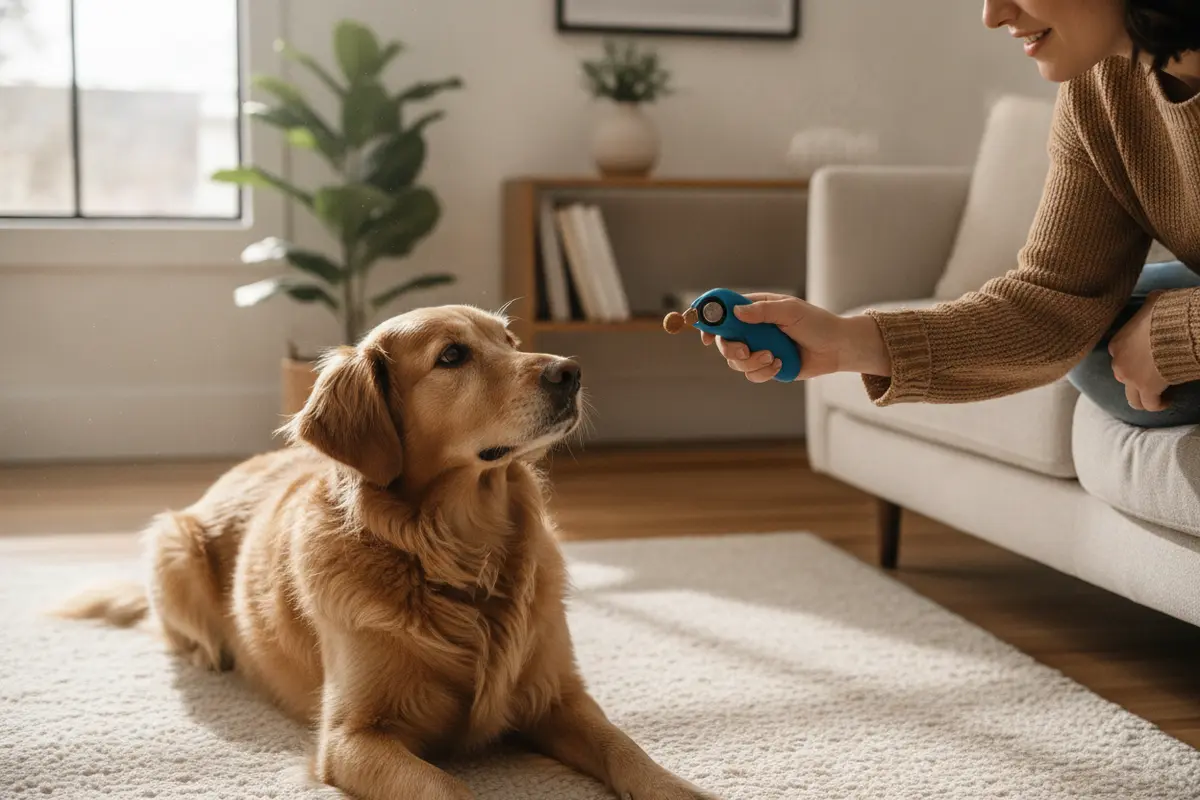
Think of the click as a snapshot of the right moment. If your dog sits, you click as the dog’s bottom reaches the floor, then deliver a reward. The click helps bridge the short gap between the behavior and your hand reaching for the treat. A spoken marker such as “yes” can also work, but a clicker has a distinct sound that can be easier to keep consistent across repetitions.
Clicker training is one way to use positive reinforcement. A Virginia Tech veterinary guide describes reward-based training and clicker use as tools for teaching dogs skills and behaviors. The practical idea is straightforward: mark a behavior you want, then reward it so your dog has a reason to offer it again. Academic projects have also examined clicker training with service dogs, including work on training efficiency and behavior acquisition. These studies do not mean every dog will learn at the same pace. Read the Penn State thesis on clicker training for service dogs and the CUNY study of clicker training and behavior acquisition. Read Virginia Tech’s dog training tips for additional context.
The click identifies the behavior. The reward gives your dog a reason to repeat it. Keep the two connected, especially while your dog is learning what the sound means.
How Do You Choose a Clicker?
The best clicker is the one you can use comfortably and consistently. Many are simple handheld devices with a button or metal tab. Others are attached to a wrist coil, finger loop, or strap. Before choosing, consider where you train, how the device feels in your hand, and whether you can operate it without looking down.
| Option | Useful when | What to check |
|---|---|---|
| Handheld button clicker | You want a simple, easy-to-carry marker for home or class. | Can you press it with one hand while keeping your other hand available for the leash or reward? |
| Clicker with wrist strap | You move around or need to avoid dropping the tool. | Does the strap stay comfortable and out of the way during practice? |
| Finger-mounted clicker | You prefer keeping the device close to your hand. | Can you operate it smoothly without changing your grip or startling your dog? |
| Verbal marker | You have no clicker available or need both hands free. | Can everyone training the dog say the marker in a similar, brief way? |
Sound matters, too. Some clickers are sharper or louder than others. If your dog is sensitive to sudden sounds, start at a distance and choose a softer-sounding option or muffle the click by keeping it in a pocket. Watch your dog’s response rather than assuming every dog will react the same way.
Do not choose based only on the number of features. A clicker that is too awkward to press can disrupt timing. If you plan to train outdoors, a secure attachment and a design that is easy to locate in a pocket can be more useful than extra functions. Keep the clicker dry and in good working order, and make sure the button or tab moves freely.
Shop This Post

Featured in this article
Zymox Otic Pet Ear Care with 0.5% Hydrocortisone - Enzymatic Ear Solution for Dogs & Cats - 1.25 oz
$22.49
Shop Now →
How Do You Introduce the Clicker?
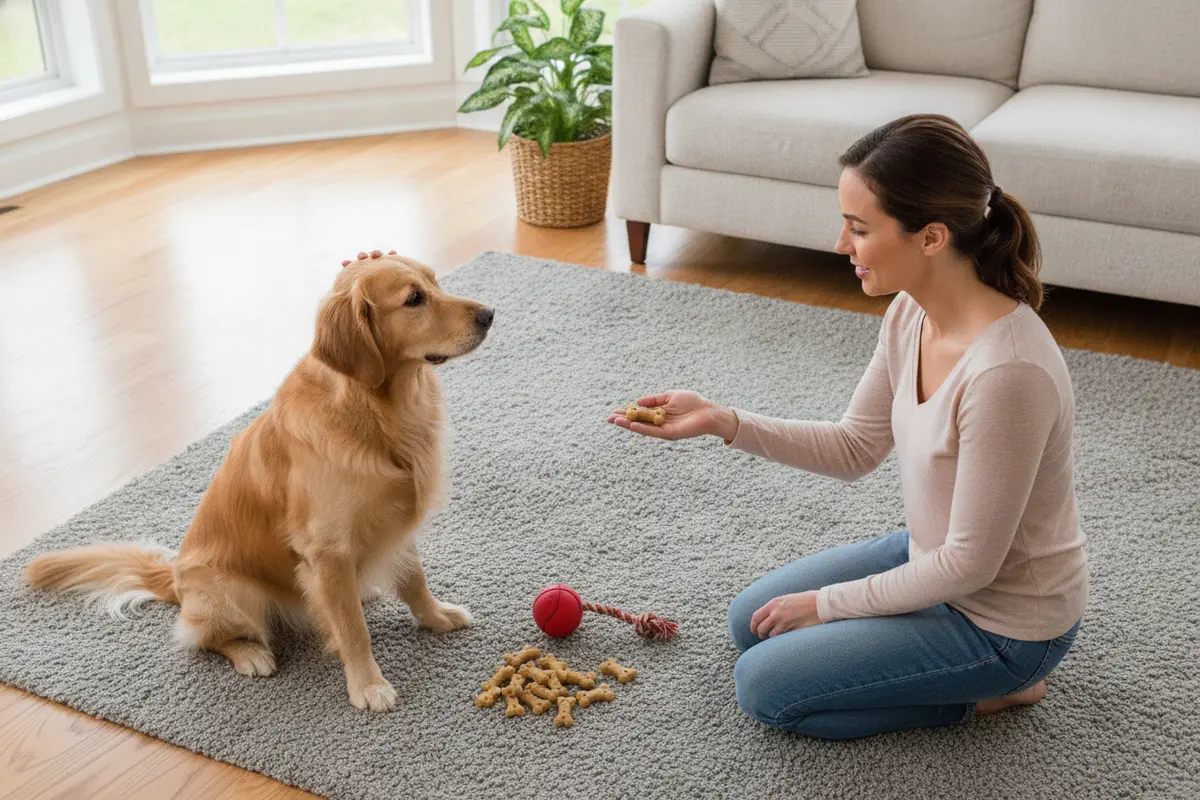
Before asking for a new behavior, teach your dog that the sound predicts a reward. This is often called charging or pairing the clicker. Choose a quiet place with few distractions. Have several tiny treats ready so you can reward promptly without breaking the flow.
- Stand or sit near your dog in a relaxed setting. You do not need to ask for a sit or any other behavior yet.
- Make one click, then immediately give a small treat. Keep the treat delivery calm and predictable.
- Pause briefly, then repeat. Make a handful of pairings, with a moment between each one.
- Take a short break. Repeat another brief set later if your dog remains comfortable and interested.
- Notice whether your dog begins to look toward you or anticipate a reward after the sound. Do not test this by clicking repeatedly without paying the reward.
The point is not to see how many clicks you can fit into a session. You are building a dependable connection between the sound and something positive. If the click worries your dog, stop, increase the distance, make the sound quieter, or switch to a spoken marker. Do not keep clicking in the hope that your dog will simply get used to it.
Timing the Click: Mark the Moment
Good timing is more important than a complicated cue. Click at the instant your dog performs the behavior you want. Then deliver the reward. If you wait until the dog has moved on, the marker may point to the wrong action. For example, when teaching a sit, click as the dog settles into the sit, not after the dog stands back up to approach the treat.
At first, make the behavior easy to recognize. Reward a brief pause, a glance toward you, or one step onto a mat rather than waiting for a long chain of perfect actions. As your dog understands the game, you can gradually ask for a little more duration, distance, or difficulty. Change one thing at a time when possible, so you can tell what your dog is learning.
Keep the clicker and reward ready before you begin. You might hold the clicker in one hand and keep treats in a pouch or nearby container. Avoid reaching for a treat before the behavior happens if that movement becomes a cue that your dog follows instead of responding to your signal. Your setup should let you mark first and reward immediately after.
A simple example: rewarding a calm check-in
In a low-distraction room, wait for your dog to look toward you. The moment the dog makes eye contact, click and give a treat. Repeat a few times. Once your dog is offering the check-in reliably, say a cue such as “look” just before the behavior, then mark and reward. If your dog is not offering the behavior, make the situation easier or reward a smaller step, such as turning toward you.
Click only once for each marked behavior. Rapid clicking can make it unclear which moment earned the reward. If you click by mistake, calmly give a reward anyway. That keeps the click’s meaning reliable while you focus on improving your timing on the next repetition.
Build a Reward Plan That Fits Your Dog
Food rewards are convenient for many short training sessions because they can be delivered quickly. Use small pieces that your dog can eat without a long pause. If you are using regular food, account for training rewards as part of the dog’s daily feeding plan. For dogs with dietary restrictions, allergies, or a veterinary-directed diet, check which rewards are appropriate with your veterinarian.
Food is not the only possible reward. Some dogs enjoy a brief game with a toy, a chance to sniff, or enthusiastic social attention. The right choice depends on the individual dog and the setting. A dog who is highly interested in a toy may work happily for a short play break, while another may prefer a small treat in a busy environment.
For a food-based routine, you can browse dog treats and chews and consider what is practical for training: a size that is easy to give, a texture your dog can eat promptly, and ingredients that suit your dog. Keep portions modest and adjust how much you offer. Product labels and your veterinarian can help you make choices that fit your dog’s needs.
If your dog loves play, a toy can be a useful reward after a click or at the end of a short practice set. A durable flying disc for interactive play may suit dogs who enjoy chasing and returning a toy, while a soft squeaky dog toy can suit a different play style. Choose toys with your dog’s size, chewing habits, and play style in mind, supervise play, and remove a damaged toy.
A product is not automatically a training reward just because it is marketed for dogs. Watch what your dog values, and use the reward that helps your dog stay engaged without becoming overexcited. If a toy makes it hard for your dog to settle, reserve it for a play break rather than using it during a quiet-focus exercise.
Start With Short, Clear Practice
Plan a specific, small goal before each session. “Practice the mat behavior” is easier to manage than “work on obedience.” A short session can include a few successful repetitions and a pause. Stop while your dog is still engaged, rather than continuing until attention fades or frustration builds.
Use a progression that keeps the task achievable:
- Make the first step easy. Reward an approximation of the behavior, such as looking at a mat before stepping onto it.
- Repeat in a calm place. Give your dog a chance to understand the pattern before adding distractions.
- Add a cue thoughtfully. Once the dog offers the behavior reliably, say the cue before the action, then click the completed behavior.
- Raise the challenge gradually. Add a little more time, distance, or environmental activity, not all three at once.
- Return to an easier version when needed. If success drops, make the exercise simpler and rebuild confidence.
When training around other people or animals, start at a distance where your dog can still pay attention to you. A quiet indoor skill may be much harder outside. Practice in a fenced or otherwise secure space when appropriate, and use a leash where needed. A clicker is a teaching tool, not a substitute for safe handling or supervision.
Common Clicker Training Mistakes to Avoid
Clicking after the behavior has ended
A delayed click can mark the wrong moment. Prepare your clicker before the repetition and focus on the action you want to reinforce. If your timing is uncertain, choose a simpler behavior that is easier to see.
Forgetting the reward
During early learning, pair every click with a reward. The marker predicts that something good follows. If the click is frequently left unrewarded, it may lose its usefulness. Keep rewards within reach and pause the session if you run out.
Repeating a cue over and over
Repeatedly saying “sit, sit, sit” can turn the cue into background noise and make it harder to identify what worked. Say the cue once, give your dog a moment to respond, and help the dog succeed by reducing the difficulty if needed.
Making sessions too long or difficult
Many repetitions in a distracting place can overwhelm a beginner. Use a calm setting, reduce competing activity, and end after a few useful successes. If your dog disengages, sniffs intensely, or seems uneasy, pause and reassess rather than insisting on more work.
Using the clicker to call the dog
The click is a marker, not necessarily a recall cue. Do not use it casually to get your dog’s attention from far away if you have taught it to mark a behavior. For recall, teach and practice a separate cue and reward coming to you reliably.
Make Clicker Practice Part of Everyday Life
Once your dog understands the marker, you can use it to teach useful household behaviors in small steps. You might mark four paws on the floor when greeting a visitor, calm waiting while a leash is clipped, or stepping onto a mat while you prepare a meal. These are examples of training goals, not instant fixes. Begin in manageable conditions and reward the behavior you want to see more often.
Everyone who trains the dog should agree on the marker and the behavior being rewarded. One person can keep a simple plan: cue, expected action, marker moment, and reward. Consistency does not require identical voices or equipment, but mixed signals can make the task harder. If the clicker is not handy, a consistent brief word can be a practical backup.
Record a few notes after practice. Write down what you asked, what the dog did, and what seemed to help. If the dog struggled, note the distraction or step that was too hard. This makes it easier to choose an achievable next session instead of repeating the same frustrating setup.
As a dog becomes more fluent, you can vary rewards and use them thoughtfully, but do not rush to remove reinforcement. Keep paying behaviors you want to maintain, especially in challenging situations. A qualified, reward-based trainer can help if you are unsure how to progress or if training concerns are affecting safety or daily life.
Shop dog training rewards today
Frequently Asked Questions
Can you use a clicker to train an older dog?
Yes. A clicker can mark a behavior at any age, as long as the dog is comfortable with the sound and the exercise is suitable for the dog. Start with an easy pairing session and keep practice brief. For mobility or health concerns, ask your veterinarian which positions and activities are appropriate.
What if my dog is afraid of the click?
Stop using the sound at close range. Try clicking from farther away or muffling the clicker in a pocket, then pair the softer sound with a reward if your dog remains relaxed. If the dog still seems worried, use a quiet verbal marker instead. The tool should make communication clearer, not create distress.
Do you have to use treats with a dog training clicker?
No, but the click needs to predict a meaningful reward, especially while the dog learns the marker. Some dogs value play, attention, or another appropriate activity. Choose a reward your dog genuinely enjoys and can receive promptly in that setting.
How long should a clicker training session last?
There is no single duration that fits every dog. Begin with a small number of easy repetitions and stop while your dog is still interested. Short, focused practice is often easier to manage than a long session. Adjust the length to your dog’s attention and comfort.
Can one clicker be used by several family members?
Yes. Agree on a clear marker, use it at the moment the behavior happens, and follow clicks with the planned reward. A short shared plan helps everyone reinforce the same behavior. If the clicker is unavailable, use the same brief verbal marker rather than switching among several words.
Should you click when your dog makes a mistake?
No. Use the click to mark a behavior you want to reinforce. If your dog does something different, avoid scolding or clicking to interrupt. Reset the situation, make the next attempt easier, and mark a successful step.
Choose a clicker and reward routine that feel comfortable for both you and your dog, then build skills one clear, manageable step at a time.


