

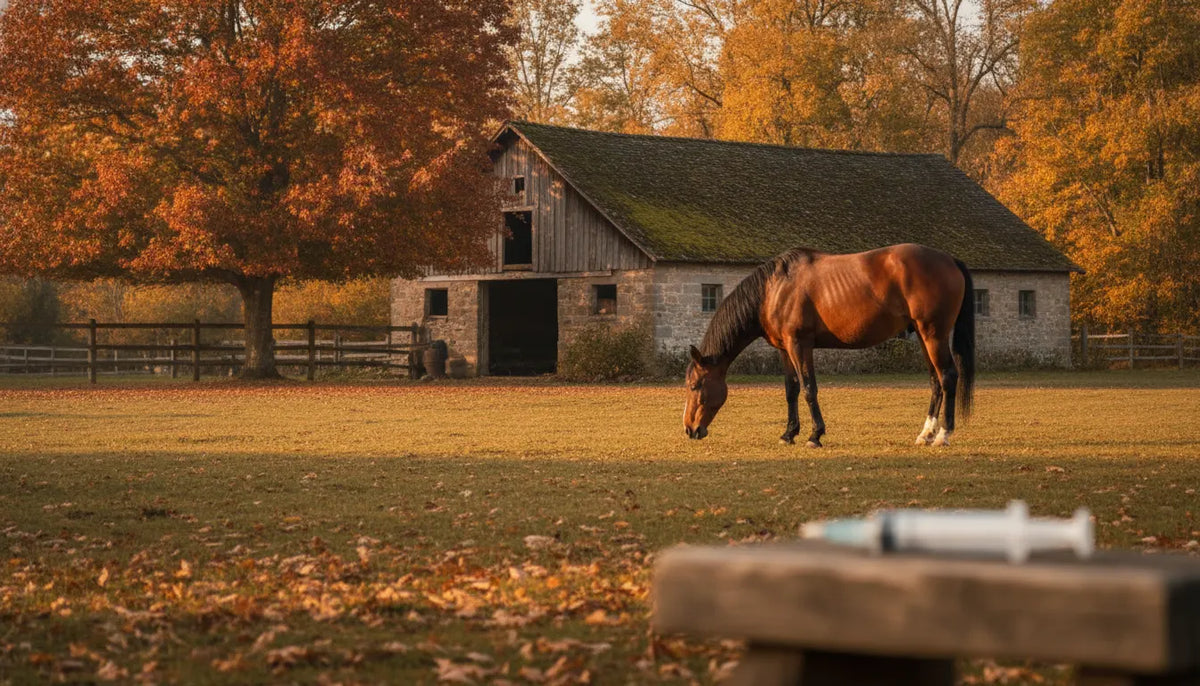
There is no single best horse wormer for fall. The AAEP's Internal Parasite Control Guidelines recommend basing treatment on each horse's age, fecal egg counts and proof that a dewormer still works on your farm, rather than a fixed calendar. Work with your veterinarian on timing and product, and follow the product label exactly.
When cooler weather arrives, many horse owners start searching for the best horse wormer for fall. Fall parasite control should fit your horse's age, health, exposure, fecal egg count history, local conditions, and your veterinarian's recommendations. A thoughtful plan can address seasonal parasite concerns while helping preserve the effectiveness of the dewormers that still work on your farm.
This guide explains how to think about fall deworming, what cold weather and first frost can and cannot tell you, how fecal testing supports better decisions, and how to review a product such as Durvet Ivermectin 1.87% Paste Apple Flavored Horse Wormer without turning general information into a prescription. Always involve your veterinarian for an individual parasite-control plan, especially for foals, young horses, senior horses, pregnant mares, horses with health conditions, and horses that travel or share pasture.
What Does Fall Deworming Actually Mean?
Key takeaway: Fall deworming is a seasonal planning conversation, not an instruction to give every horse the same product on the same date. Timing and active ingredient should follow veterinary guidance, test results, and the product label.
Fall is a natural time to review parasite control because pasture exposure, weather, and parasite life cycles change as the grazing season winds down. The American Association of Equine Practitioners (AAEP) revised its Internal Parasite Control Guidelines in 2024 to reflect growing dewormer resistance. The updated guidelines give separate recommendations for young horses (under 5), mature horses (5 to 15) and seniors (over 15), and their stated aim is to keep today's dewormers working for as long as possible.
The phrase "fall deworming" can also cover several different goals. A veterinarian may be looking at strongyle egg shedding, tapeworm control, bots, ascarids in a young horse, or whether a previous treatment still works. Those goals are not interchangeable, and a product that is useful for one parasite group may not address another.
What the AAEP guidelines say about fall
For mature horses, the AAEP describes a baseline of one or two treatments a year with a macrocyclic lactone (the drug class that includes ivermectin and moxidectin), with more frequent treatment only for horses whose fecal egg counts show they are high shedders. The guidelines note that a macrocyclic lactone given in the fall would help reduce bots, while also saying bots are very mild pathogens that should not drive treatment decisions. For tapeworms, the AAEP says a treatment should be included at least once a year if horses graze green pasture, and that in most areas it should be given in late fall, after tapeworm transmission ends with cold weather.
The UC Davis Center for Equine Health gives similar guidance, noting that bot and tapeworm treatments are typically given in late fall or early winter. These are general frameworks, not a schedule for your horse. Your veterinarian decides whether and when any of this applies to your herd.
Why Is After the First Frost Not a Universal Rule?
The first hard frost is often used as a seasonal reference point because cold weather changes parasite development. The AAEP guidelines say cold slows the rate of development or stops it altogether, and that transmission seasons vary greatly between regions of the U.S. First frost is not a diagnostic test, and its date varies widely. A mild fall in one area does not create the same conditions as an early freeze in another, and the guidelines themselves do not use first frost as a trigger.
Your veterinarian may consider the following before recommending a fall treatment:
- Local climate: Temperature, moisture, and the length of the grazing season influence parasite exposure.
- Pasture management: Stocking density, manure removal, and whether horses share fields affect pasture contamination.
- Horse profile: Age, body condition, medical history, travel, and previous fecal results all matter.
- Recent treatments: The active ingredient and timing of previous treatments help interpret testing and avoid unnecessary repetition.
- Farm-level efficacy: Resistance varies by parasite population and location, so a product that worked elsewhere may not perform the same way on your farm.
For these reasons, do not treat a first frost as permission to give a product automatically. Use it as a reminder to contact your veterinarian, review records, and decide whether testing or treatment belongs in the current plan.
Shop This Post

Featured in this article
Durvet Ivermectin 1.87% Paste Apple Flavored Horse Wormer - Single Dose Broad Spectrum Dewormer for Bots and Strongyles
$21.99
Shop Now →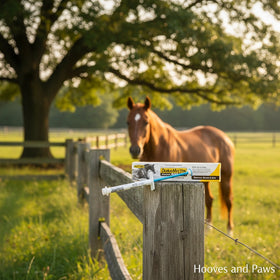
How Do Fecal Egg Counts Shape a Fall Plan?
Quick summary: A fecal egg count can show which adult horses shed the most strongyle eggs and support a more targeted plan, but it does not detect every parasite or tell you whether a horse is sick. Test timing should take the last treatment into account.
A fecal egg count, or FEC, estimates the number of parasite eggs in a manure sample. The AAEP recommends FECs once or twice a year to sort horses into low, medium and high strongyle shedders, so the horses contributing most eggs to the pasture can be identified. That information supports a lower-treatment approach for some adult horses and closer monitoring for others. The AAEP does not recommend FEC-based selective treatment for horses under 5.
An FEC is not a complete picture of parasite health. The AAEP guidelines point out several limits:
- FECs do not detect immature or larval stages, including encysted small strongyles.
- Tapeworm infections are often missed or underestimated by standard FEC methods.
- The size of an egg count does not match the size of the parasite burden, and there is no correlation between FEC and the disease-causing parasite stages.
- FECs cannot be used to judge whether parasites are involved when a horse is showing signs of illness. That is your veterinarian's call.
Ask your veterinarian when to collect the sample. The time since the last dewormer affects the result, because egg shedding is suppressed for a while after an effective treatment. To check whether a dewormer still works, the AAEP recommends a fecal egg count reduction test (FECRT) every year, comparing egg counts from the same horses before treatment and 14 days after. Your veterinarian or lab will interpret the reduction against the AAEP's thresholds for each drug class.
Keep a simple record for each horse that includes the date of testing, the result, the product name, the active ingredient, and any veterinary instructions. Good records make the next fall review more accurate and help prevent accidental duplicate treatments.
How Can You Build a Resistance-Aware Parasite-Control Plan?
Resistance is the main reason the AAEP tells owners to abandon rotational deworming. Its guidelines say to stop deworming all horses at fixed intervals year-round and to stop blindly rotating drug classes. As the UC Davis Center for Equine Health puts it, overuse of deworming medications in recent decades has led to drug resistance in many species. Switching products without testing or veterinary direction does not solve the problem.
A resistance-aware plan starts with surveillance. Your veterinarian may use FEC results, treatment history, clinical signs, and a yearly FECRT to judge whether a product is working. The goal is not to treat as often as possible. It is to protect horse health while avoiding treatments a horse does not need. The AAEP also stresses that no dewormer removes every parasite stage from a horse.
Young horses deserve special attention. The AAEP guidelines say resistance to macrocyclic lactones such as ivermectin is widespread in ascarids (roundworms), the parasite the AAEP's foal recommendations target, and should be assumed until testing shows otherwise. That matters if you planned to reach for an ivermectin paste for a young horse. Foals, weanlings, yearlings, pregnant mares, seniors, and horses with weight or digestive concerns should not be placed on an adult horse's routine without your veterinarian's advice.
Pasture practices support this effort, as covered in the barn section below. They do not replace a veterinary plan, but they can reduce the number of infective larvae horses encounter.
What Should You Check Before Choosing a Fall Horse Wormer?
When comparing products, begin with the parasite-control goal rather than the flavor, brand, or broadest marketing claim. A practical review should include these questions:
| Review point | Why it matters |
|---|---|
| Active ingredient | The ingredient decides which parasite groups and stages the label covers, and it must fit the veterinary plan. |
| Current label | The label gives approved uses, directions, warnings, storage information, and animal-use restrictions. |
| Horse details | Age, health status, weight, pregnancy, and prior reactions may affect whether a product suits your horse. |
| Recent treatment record | Previous active ingredients and dates help prevent accidental duplication and improve test interpretation. |
| Farm efficacy | FEC and FECRT results show whether the chosen product is performing as expected on your property. |
| Handling and administration | A product you can give calmly and exactly as labeled is safer than one chosen only for a marketing claim. |
Do not choose a product based only on the phrase "broad spectrum." Broad coverage does not mean every parasite is present, that every life stage is controlled, or that the product is the best option for your horse today. Ask your veterinarian which parasites matter and what evidence supports the active ingredient. The AAEP lists praziquantel, or pyrantel pamoate at a dose that targets tapeworms, for tapeworm treatment, so an ivermectin-only paste is not a tapeworm product.
What Should You Know About Durvet Ivermectin Apple-Flavored Paste?
Durvet's ivermectin 1.87% paste is an apple-flavored equine dewormer. Its label lists large and small strongyles, pinworms, ascarids, hairworms, large-mouth stomach worms, bots (oral and gastric stages), lungworms and intestinal threadworms, plus summer sores and dermatitis caused by certain worm larvae. Tapeworms are not on the label. The label says it may be used in horses of all ages, including mares at any stage of pregnancy, and that stallions can be treated without affecting fertility. It also warns that parasites can develop resistance to any dewormer and recommends fecal egg count monitoring.
The apple flavor may help with horses that resist an unflavored paste, but flavor does not decide whether ivermectin is the right active ingredient for a fall plan. We also carry Zimecterin ivermectin paste. Boehringer Ingelheim lists it for strongyles, ascarids, bots, pinworms, threadworms and lungworms; tapeworms are covered only by the separate Zimecterin Gold product, which adds praziquantel.
Before buying or giving any equine dewormer, confirm the product identity, species, active ingredient, expiration date, package condition, and current label. The Durvet label says not to use it in horses intended for human consumption, and it warns that ivermectin can cause severe reactions in other species, including dogs, so keep paste away from pets. Review the label with your veterinarian if the horse is young, pregnant, ill, underweight, recently treated, or on other medications. Never estimate an amount from memory or use a product outside its labeled directions.
Use the product page as a shopping reference, not a substitute for veterinary care. Our Horse Health & First Aid collection has related supplies.
Which Barn Practices Help Reduce Parasite Pressure?
Key takeaway: Medication works best as one part of a broader management plan. Manure removal, sensible stocking, raised feeders, and accurate records reduce exposure and make testing more informative.
Daily management makes a real difference. The AAEP guidelines say infection could be prevented if all feces were promptly removed from the pasture, that non-composted horse manure should never be spread on pastures horses graze, and that proper composting generates enough heat to kill larvae. Penn State Extension adds several practical steps. Work with the people who run your barn to keep them consistent:
- Remove manure from stalls and paddocks quickly. Penn State suggests within 24 to 72 hours, before larvae can develop. A sturdy tool such as the Cashel 18-Tine Manure Fork makes daily picking out easier.
- Compost manure before spreading it, and never spread fresh horse manure on horse pastures.
- Feed in troughs, buckets or feeders raised off the ground rather than on the ground.
- Avoid overstocking pastures, and keep grass from being grazed down so horses are not pushed to graze near manure.
- Ask a local equine professional about rotating pastures, using a sacrifice lot, or co-grazing with cattle or goats, which Penn State suggests. The AAEP also says grazing contaminated pastures with ruminants may help.
- Record treatments and fecal results for each horse rather than relying on a barn-wide memory.
- Watch appetite, body condition, manure, coat, and behavior, and call your veterinarian when something changes.
These steps are not a substitute for a dewormer when treatment is indicated. They are practical ways to reduce pasture contamination and support a more deliberate program.
When Should You Call Your Veterinarian?
Call your veterinarian before choosing a fall product if you do not have a current parasite-control plan, if the horse has not had an FEC, or if you are unsure which product was used last. Professional input is especially important when a horse shows a change in health. The UC Davis Center for Equine Health lists diarrhea, weight loss, fever and poor coat condition as common signs of strongyle infection, and intermittent colic with small strongyles, but those signs have many other possible causes, and the AAEP notes an egg count cannot settle the question.
Ask for clear instructions covering the target parasites, the reason for the timing, the product's active ingredient, label directions, follow-up testing, and what to record. If your veterinarian recommends a treatment, follow the current product label exactly. Do not increase, repeat, combine, or shorten a treatment plan because another horse received a different product.
A Practical Fall Horse Deworming Checklist
Use this checklist to prepare for a productive veterinary conversation. It is a planning aid, not a deworming schedule or dosing instruction.
- Write down each horse's age, health conditions, travel history, and current body condition.
- Gather the dates, product names, and active ingredients from recent treatments.
- Review recent FEC or FECRT results, including the lab and collection dates.
- Note pasture size, stocking, manure management, and seasonal exposure.
- Ask whether cold weather or first frost changes the parasite risks in your area, and whether tapeworm or bot treatment belongs in this fall's plan.
- Ask which active ingredient, if any, fits the plan and why.
- Read the current label before use and follow all directions, warnings, and restrictions.
- Record the treatment decision and any follow-up testing your veterinarian recommends.
This process replaces guesswork with a documented plan. It also makes next year's fall review easier because you can compare results rather than reconstructing the season from memory.
Frequently Asked Questions
What is the best horse wormer for fall?
It depends on the parasites of concern, your horse's age and history, local resistance, fecal testing, and your veterinarian's advice. No single product is best for every horse or farm. Apple flavor may make a paste easier to give, but it does not decide whether the active ingredient fits the plan.
Should I deworm my horse after the first frost?
Not automatically. Cold weather slows parasite development, and the AAEP suggests that in most areas tapeworm treatment fits late fall, after transmission ends. First frost is still only a reminder; your veterinarian should weigh local conditions, recent treatments, and testing before recommending a product or timing.
Can a fecal egg count tell me whether my horse needs a dewormer?
An FEC shows strongyle egg shedding at the time of sampling and helps identify high shedders, but it misses larval stages and often tapeworms, and it cannot diagnose illness. Your veterinarian combines the result with age, symptoms, history, and farm conditions.
Does ivermectin treat every equine parasite?
No. The Durvet ivermectin label does not list tapeworms, the AAEP says no dewormer removes every parasite stage, and ivermectin resistance in ascarids is widespread. Read the label for approved uses, and ask your veterinarian which parasites and life stages matter for your horse.
General information only. Always consult your veterinarian and follow the current product label before using an equine dewormer.


