


Hay Net Hole Sizes Explained: What 2-Inch Mesh Does for Slow Feeding
This hay net hole size guide (2 inch vs small hole) answers the most common comparison first: a 2-inch hay net is usually a moderate, accessible starting point, while a small-hole net slows access more and requires closer attention to fit, forage, and the horse's comfort. The right choice is the opening that keeps hay available at a manageable pace without creating frustration, loose loops, or a feeding setup your horse cannot use safely.
Updated September 14, 2026
What Is the Quick Answer on Hay Net Hole Size?
Choose a 2-inch opening when you want a practical first step from loose hay or a large-hole net. Choose a small-hole design when the horse is already comfortable with a larger opening and you need a slower, more controlled pace. In both cases, inspect the net full and empty, keep it out of hoof reach, and watch how the individual horse uses it.
Hole size describes the approximate opening a horse uses to pull hay through the mesh. It is not a complete feeding recommendation. The same opening can feel quite different with long, coarse stems, soft leafy hay, compressed flakes, or a bag that is overfilled. Net material, stretch, capacity, attachment height, and the horse's experience also influence how easily the forage comes out.
For many routines, 2 inches offers a useful balance. It can limit large mouthfuls and keep hay contained without making the horse work through an extremely restrictive opening. Small-hole mesh, often around 1.5 inches or less, can make each bite more controlled, but it is not automatically a better choice. The horse should still be able to eat calmly and access the forage provided in the feeding plan.
2-Inch Hay Net vs Small-Hole Mesh: What Is the Difference?
A 2-inch net generally provides easier access and a moderate feeding pace. Small-hole mesh generally provides more restriction and a slower pace. Use the table as a comparison starting point, then confirm the actual product dimensions, capacity, material, and intended use.
| Factor | 2-inch mesh | Small-hole mesh |
|---|---|---|
| Feeding pace | Moderate restriction. Hay is still accessible through a familiar, practical opening for many horses. | More restriction. Each bite is usually smaller and the horse may need more time to pull hay through. |
| Hay waste | Can contain hay and reduce scattering compared with loose hay, although results depend on the horse and setup. | Can keep even more of the forage in the feeder, but a horse that pulls aggressively may still spill or damage the net. |
| Fit for a new user | Often a sensible starting point when introducing a slow-feed net or moving down from a larger opening. | Usually better after the horse is comfortable using a larger opening, unless the product and feeding plan specifically call for a different format. |
| Safety considerations | Still requires secure attachment, short or secured ties, daily inspection, and a position outside hoof reach. | Requires the same setup checks plus closer observation for frustration, rubbing, stretched mesh, and difficulty accessing hay. |
| Common use case | Everyday stall, paddock, or controlled feeding where moderate slow feeding and containment are the goals. | A more controlled feeding pace for a horse that uses slow-feed equipment calmly and needs a smaller opening. |
| What can change the result | Hay stem length, softness, bag capacity, fill level, and the horse's feeding habits. | All of the 2-inch factors, with greater sensitivity to hay texture, dental comfort, and the horse's ability to pull manageable bites. |
The labels are useful for comparison, not a promise of an exact number of minutes. Two nets with similar listed openings can perform differently because the cord thickness, weave, shape, fill level, and forage are different. Read the current product listing for dimensions and instructions before ordering.
Shop This Post
Featured in this article
Shires Premium Haynet Slow Feeder - Heavy-Duty Poly Cord with 2-Inch Holes for Hay & Haylage
$10.99
Shop Now →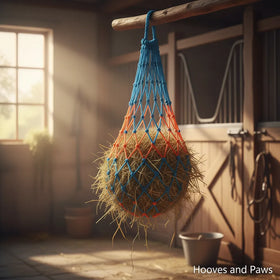
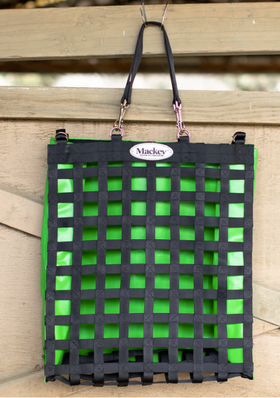
How Does a 2-Inch Opening Change Feeding Pace?
A 2-inch opening can slow the size of each pull without making access as restrictive as a small-hole net. It is often a practical bridge between loose hay and tighter mesh, but the horse's behavior and the actual hay supply are the best measures of whether the pace is working.
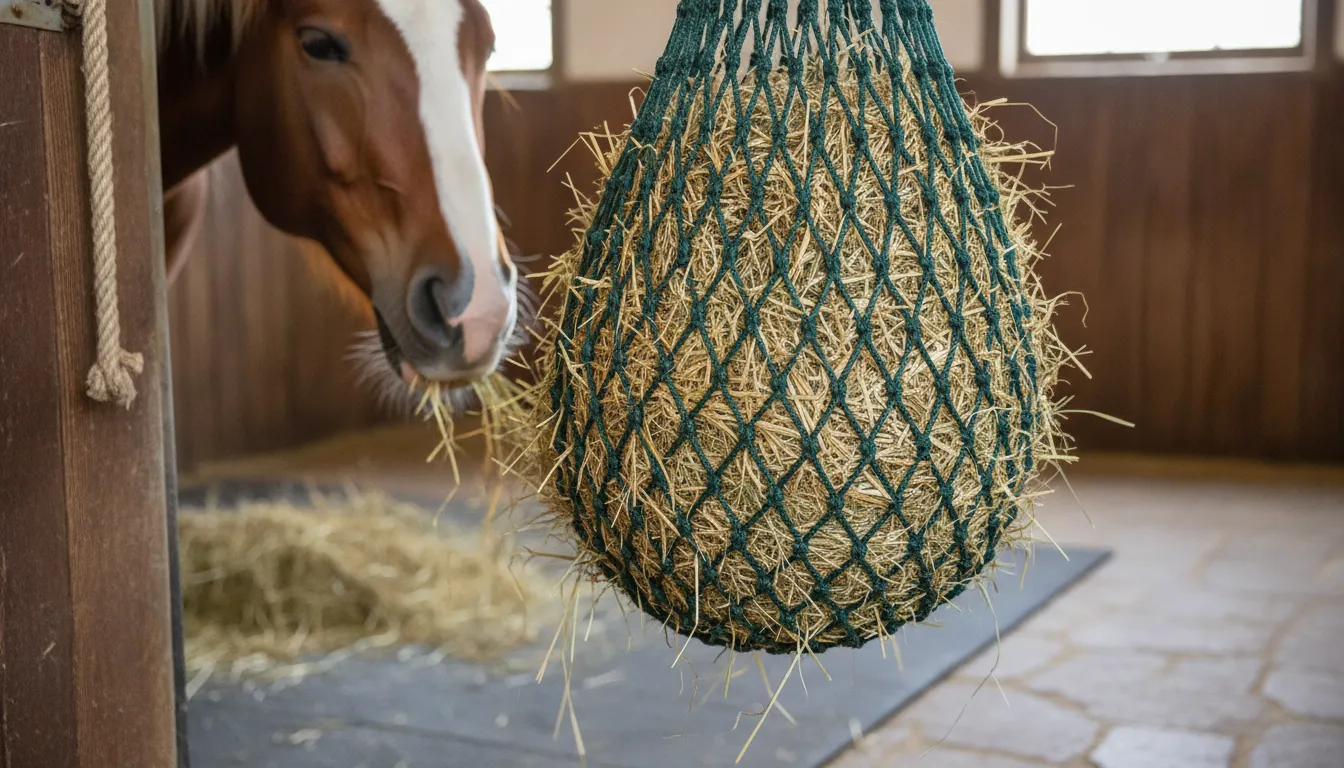
A 2-inch net changes the way a horse takes hay. Instead of lifting a large mouthful from a pile, the horse pulls smaller sections through separate openings. The net also keeps the forage gathered, which can make it harder for the horse to paw hay across bedding or a feeding area.
That does not mean every 2-inch net will slow every horse by the same amount. A determined horse may learn a quick pulling pattern. Soft hay may pass more easily than long, coarse stems. A loosely filled bag may allow hay to move toward the openings more readily than a full bag. Watch the actual routine for several meals rather than judging the opening in isolation.
A 2-inch design is often a reasonable choice for a horse that is new to slow-feed equipment, a horse moving down from a traditional large-hole net, or a routine where reliable access and moderate containment matter more than maximum restriction. If the horse stays calm and the hay still disappears faster than expected, you can compare a smaller opening after checking the horse, forage, and setup.
When Is Small-Hole Mesh a Better Fit?
Small-hole mesh may be a better fit when a horse has already learned to use a larger opening calmly and the current setup does not provide the feeding pace or containment the owner wants. The transition should be based on observations, not on the assumption that the smallest available opening is the ideal one.
- The horse uses the current net calmly: It pulls hay without repeated pawing, aggressive rubbing, or attempts to tear the feeder down.
- The current opening is too easy for the routine: Hay is pulled out quickly and scattered despite a secure, appropriately filled bag.
- The forage is compatible: The hay can be accessed through the smaller opening without excessive effort or large amounts being left untouched.
- The net can be monitored: You can check the horse, attachment point, mesh, and surrounding area during the introduction.
- The product fits the location: The bag or net is suitable for the stall, paddock, or other intended setting according to the manufacturer's instructions.
A small opening is not a substitute for a feeding plan. If the horse has dental limitations, a noticeable change in eating behavior, an unexpected body-condition change, or another health concern, discuss the feeding decision with your veterinarian or a qualified equine nutrition professional.
Can Hole Size Reduce Hay Waste?
A hay net can reduce waste by containing forage and limiting how much is pulled out at once, but no hole size guarantees the same result for every horse. Compare actual hay use, spilled forage, net condition, and the cleanliness of the feeding area.
Waste comes from more than the size of a mesh opening. Horses may scatter hay while pawing, pull out more than they eat, drop forage through bedding, or leave a net that is difficult to use. A 2-inch net can reduce loose hay around the feeding area while remaining accessible. Small-hole mesh can contain more of the forage for some routines, but it may also increase frustration if it does not match the hay or the horse.
To compare results fairly, keep the hay type, approximate amount, feeding location, and observation period consistent. Look at what remains in the feeder, what is on the ground, and whether the horse is eating normally. A feeder that appears to reduce waste but leaves a horse unable to access an appropriate amount of hay is not a successful fit.
Capacity matters too. Overfilling can stretch openings and put extra weight on seams and attachment points. Underfilling can allow the remaining hay to shift away from the openings. Follow the current product guidance and check the bag after it has settled, not only immediately after filling.
What Safety Checks Matter for Any Hay Net?
The safest hole size is still unsafe if the net can reach a hoof, a loose loop can catch equipment, or damaged mesh changes the opening. Secure the feeder, remove unnecessary slack, check the lowest position after the hay is eaten, and inspect it every day.
Setup and inspection are just as important as the listed mesh size. A hanging net should be attached to a strong, appropriate point, with excess cord secured so it cannot form a loop. Keep the net away from sharp edges, gates, latches, and other hardware that can catch the mesh.
Check the lowest position, not only the starting height. A loaded bag can hang differently from an almost empty bag, and a horse may pull the feeder downward while eating. Do not place a net on the ground for a shod horse or in any location where a hoof can reach it. If the horse paws, strikes, rubs aggressively, or pulls the feeder down, stop and reassess the arrangement before continuing.
Inspect the feeder before and after use for frayed cord, stretched openings, damaged seams, broken closures, loose strands, and worn attachment points. Retire a damaged net rather than relying on an improvised repair. A change in shape can create a new snag or entanglement concern even when the feeder still holds hay.
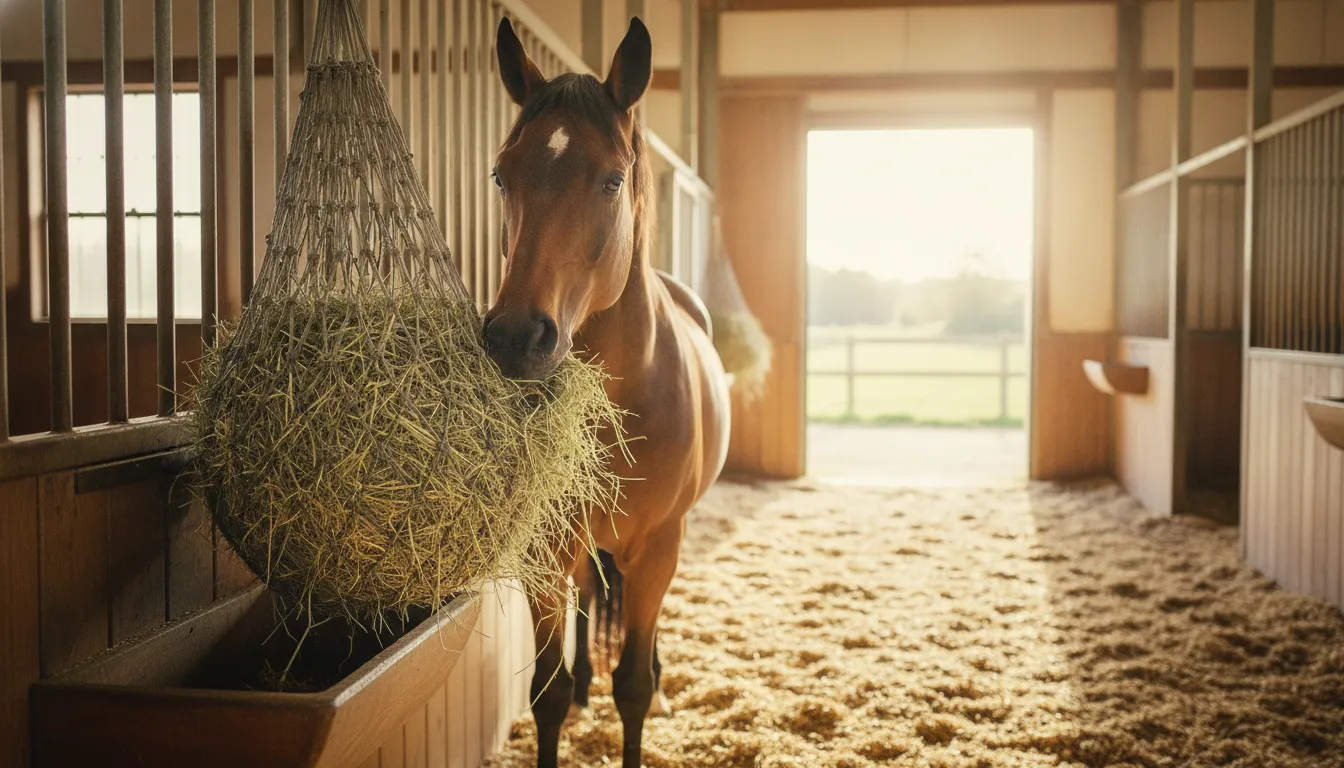
How Should You Introduce a New Opening?
Start the change when you can observe the horse and keep the rest of the routine familiar. Changing the net, hay type, feeding location, and schedule at the same time makes it harder to tell which factor caused a problem.
- Inspect the empty net: Confirm the seams, cord, closures, and attachment points are intact before adding hay.
- Use familiar forage: Start with hay the horse already knows, following the product's capacity and use instructions.
- Watch the first meal: Look for calm pulling, repeated rubbing, aggressive pawing, loose loops, or a net that shifts position.
- Check the horse and feeder: Look for muzzle irritation, damage, untouched hay, or changes in eating behavior.
- Adjust conservatively: If the horse cannot use the opening comfortably, return to an easier format and seek professional feeding guidance when needed.
A horse that adapts quickly still needs ongoing checks. Mesh can stretch with use, knots can loosen, and the lowest point of the feeder can change as it empties. Keep a simple record of how long the hay lasts, how much reaches the ground, and whether the horse remains comfortable and calm.
View Slow-Feed Hay Net Options
What Else Should You Compare Before Ordering?
Compare opening size together with material, dimensions, capacity, attachment method, feeding location, and cleaning needs. A net that fits your complete routine is more useful than one chosen by mesh size alone.
Use these questions to compare product listings:
- What are the listed openings? Confirm whether the product uses a 2-inch, 1.5-inch, 1.25-inch, or other approximate size.
- How much hay does it hold? Match capacity to the amount provided at one time and avoid overloading the bag.
- What is it made from? Review cord or mesh construction, seams, closures, and any care instructions.
- Where will it be used? A stall, paddock, trailer, and temporary holding area may call for different designs and attachment checks.
- Can it be cleaned and inspected? Choose a design you can empty, brush, rinse, dry, and examine regularly.
- What does the horse do with it? Consider previous experience, rubbing, pawing, pulling, and other habits that affect wear and setup.
Hooves and Paws curates equestrian supplies for practical horse-care routines. Review current dimensions and product instructions before ordering, because availability and specifications can change.
Frequently Asked Questions
Is a 2-inch hay net a good starting size?
A 2-inch opening is often a practical starting point for a horse new to slow-feed equipment or moving down from a larger opening. It provides moderate restriction while keeping the hay relatively accessible. Confirm the product's actual dimensions and watch the horse's first meals.
What is the difference between a 2-inch and small-hole hay net?
A 2-inch net generally allows easier pulls and a moderate feeding pace. Small-hole mesh generally makes each pull more controlled and slows access further. The result depends on hay texture, fill level, mesh construction, and the individual horse.
Does a smaller hole always slow a horse more?
Not always. Smaller openings usually provide more restriction, but a horse may pull differently depending on the hay and the net's weave. A tightly packed bag, soft hay, or stretched mesh can change the result. Observe the actual feeder rather than relying on the label alone.
Can a 2-inch hay net reduce waste?
It can reduce waste by keeping hay contained and limiting how much is pulled out at once. The amount of waste saved varies with the horse, forage, net design, fill level, feeding surface, and placement. Compare actual leftovers and spilled hay in your own routine.
Are small-hole hay nets safe for every horse?
No single opening is right for every horse. A small-hole net should be used only when the horse can access the forage calmly and the setup is secure. Consider forage, dental comfort, behavior, capacity, and professional guidance when a health or feeding concern is involved.
Can I put a hay net on the ground?
Ground placement changes the safety assessment and should not be used for a shod horse because a hoof can reach the mesh. Follow the manufacturer's instructions and use a secure setup that keeps the feeder, ties, and loose loops out of hoof reach.
How do I know when a hay net needs replacing?
Replace it when you find frayed cord, stretched openings, split seams, failed closures, loose strands, or a damaged attachment point. Also replace a feeder if chewing or pulling has changed its shape. A damaged net can create a new snag or entanglement concern.
Where can I compare current slow-feed hay nets?
You can view the Hooves and Paws slow-feed hay nets collection to compare current options. Check each listing for opening size, dimensions, capacity, material, and intended use before ordering.
Safety note: This guide provides general horse-care information, not a diagnosis or individualized feeding plan. Consult your veterinarian or qualified equine nutrition professional for health, dental, body-condition, or feeding decisions that require individualized advice.


