


Choosing the right horse collar starts with the work your horse will do, not with appearance alone. A horse collar that fits the neck and matches the job can help distribute pressure comfortably, while the wrong style or size may interfere with breathing or create sores.
Shop horse collar and breast collar options to explore correctly fitted tack for your horse today.
That distinction matters because a traditional work collar, a Western breast collar, and a turnout collar serve different purposes. Before comparing styles, it helps to understand how the collar, hames, and traces work together to turn the horse's movement into controlled pulling power.
What Is a Horse Collar and How Does It Work?
A horse collar transfers the pull of a harness across the horse's shoulders and chest instead of concentrating it on the windpipe. It lets the animal move a load with pressure spread over a broad area rather than through a narrow strap. The best choice depends on whether your horse does heavy draft work, light driving, riding, or turnout, as well as the collar's material, shape, and fit.
A horse collar is the central load-bearing component of a working horse harness. It fits around the base of the horse's neck and gives the harness a broad surface for transferring pulling force. Instead of concentrating the strain in a narrow strap, a properly fitted collar spreads the draft across the shoulders and chest, helping the horse work comfortably and efficiently.
The design matters most when a horse is pulling substantial weight. A full neck collar is built for heavy draft work such as plowing or hauling a wagon. It allows the horse to put its shoulders into the collar, while the attached traces carry that force back to the implement or vehicle. Correct fit is essential because uneven pressure can lead to discomfort, rubbing, or breathing problems.
The main parts of a neck collar
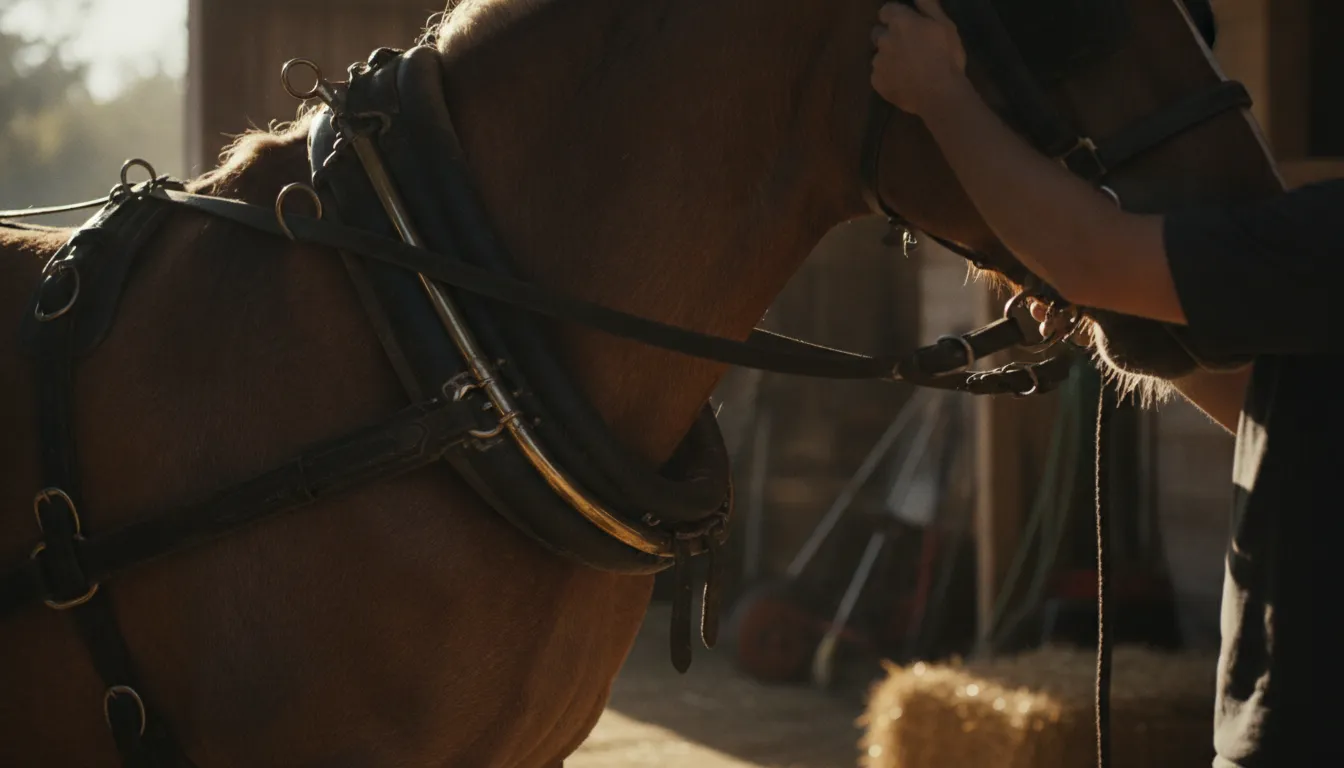
A traditional neck collar has a padded body that rests against the horse. Padding helps distribute pressure more evenly and reduces chafing along the neck. The outer groove of the collar receives the hames, a pair of rigid pieces made from materials such as steel or wood. The hames follow the collar's shape and provide secure attachment points for the harness traces.
- Collar body: The broad, shaped section that sits around the lower neck and shoulders.
- Padding: The cushioning layer that helps reduce pressure and friction.
- Hames: The rigid outer supports that hold the trace attachments in position.
- Traces: The harness connections that transfer the horse's pulling force to a wagon, plow, or other load.
Why a full collar works for heavy loads
A breast strap can be useful for light driving or riding, but it does not provide the same broad contact area as a full collar. When the load becomes heavy, a full neck collar distributes the force over the horse's shoulders and neck rather than asking a narrow strap to carry the entire draft. That broader support is why work collars are preferred for demanding pulling jobs.
Fit should never be treated as a minor adjustment. The collar needs room at the base of the neck for the horse to breathe freely. It must not press tightly enough to interfere with the jugular or normal blood flow. A collar that is too small can create sores and restrict breathing. The goal is firm, even contact across the shoulders, with enough clearance to protect the horse's airway and sensitive neck structures.
Types of Horse Collars for Every Kind of Work
Quick answer: A horse collar is chosen for the job, not the look. Full work and draft collars transfer heavy pulling force across the shoulders. Driving and buggy collars suit lighter carriage work, turnout collars allow comfortable pasture wear, and padded Euro styles add cushioning for lighter use. Match the collar to workload, harness, and the horse's build.
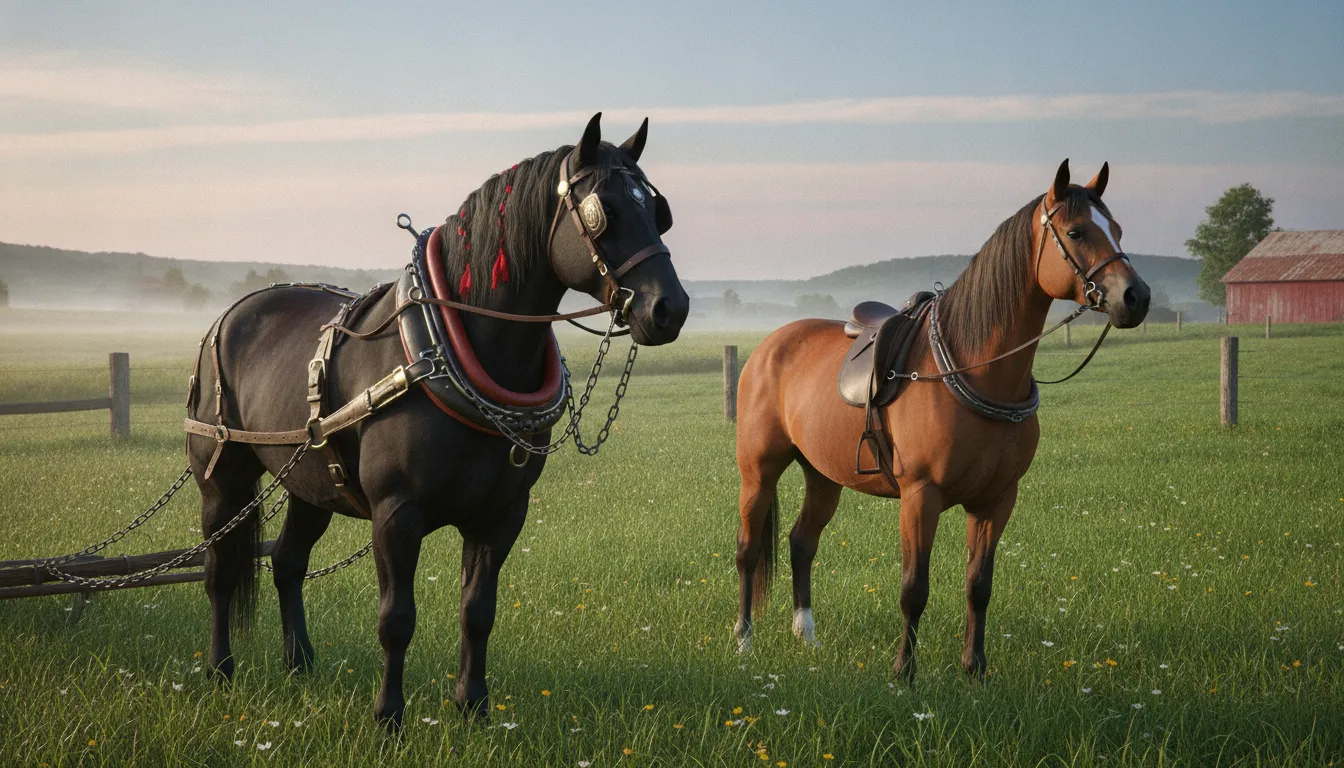
The right collar depends on how much pulling power the horse needs, how long the equipment will stay on, and how the harness transfers force. A collar selected for plowing has a very different job from one used for a short buggy ride or comfortable pasture wear. Choosing by appearance alone can create pressure points, excess weight, or poor draft alignment. Understanding how harness, hames, and tack work as a system helps you select the right collar.
Heavy draft and work collars
Farm Collars and Draft Horse Work Collars are built for demanding jobs such as plowing, logging, and heavy hauling. They are wider, more robust, and designed to spread substantial pulling force across the shoulders. A full neck collar is generally the better choice when the horse must move a heavy plow or loaded wagon because it distributes the load over a larger area.
Draft breeds also need a collar shaped and constructed for their larger necks and greater pulling capacity. A sturdy collar that fits a Belgian, Percheron, or similar draft horse should not simply be scaled up from a lighter driving collar. Shape, width, padding, and hame compatibility all matter. The hames must sit correctly in the collar's grooves so the traces pull evenly rather than creating concentrated pressure.
Driving and buggy collars
Buggy Collars and Driving Collars suit carriage work, recreational driving, and other jobs where the load is lighter and the harness needs to support controlled movement. These collars are often less massive than a farm collar, which can make them a practical choice for horses that do not need heavy-duty draft equipment. Match the collar to the vehicle, terrain, workload, and the horse's build rather than choosing the lightest option automatically.
For horses used in regular carriage training or conditioning, a properly fitted collar is part of safe preparation. The equipment should allow free breathing and comfortable shoulder movement throughout the session. Explore performance tack when building a driving setup around the collar.
Turnout and neck collars
Turnout or neck collars, such as an All Purpose Collar, are designed for comfortable long-term wear in the pasture. Their priority is allowing the horse to graze, move, and spend extended periods turned out without the bulk or specialized construction required for heavy pulling. They can be useful when the collar serves a light-duty or general-purpose role, but they still need regular fit checks and inspection for rubbing.
Euro and comfy padded collars
Euro and Comfy Collars add padding and a softer feel for horses that benefit from extra cushioning. These styles can be appealing for lighter work, frequent use, or horses with sensitive skin, but padding does not correct a fundamentally wrong size or shape. The collar must still sit securely, leave room for breathing, and distribute pressure without restricting the neck.
- Plowing or heavy hauling: Choose a wide, robust draft or farm collar matched to the horse and hames.
- Carriage or buggy work: Choose a lighter driving collar appropriate for the vehicle and load.
- Pasture wear: Choose a comfortable turnout or neck collar designed for extended use.
- Light work with extra cushioning: Consider a padded Euro or Comfy Collar after confirming the underlying fit.
A Western breast collar is a lighter, strap-style alternative for light work, but it is not the same as a full harness collar. Its fit and best uses are covered in the comparison section later in this guide.
What Materials Are Horse Collars Made From?
Quick answer: Leather is durable and molds to the horse's shape but needs regular conditioning. Synthetic collars are lighter, weather-resistant, and lower maintenance. Choose hames (steel, stainless steel, or wood) to match the collar's contour and the demands of the work.
The material of a horse collar affects comfort, longevity, cleaning, and how much weight the harness places on the horse. The right choice depends on the horse's workload, the climate where you drive or work, and how much time you can devote to maintenance.
Leather: Traditional, Durable, and Shape-Adapting
Leather remains the traditional choice for a full horse collar. It is valued for its durability and its ability to mold gradually to an individual horse's shape over time. That adaptable fit can be especially useful when the collar is selected carefully and checked regularly as the horse's condition changes.
Leather does require consistent care. Clean dirt and sweat from the surface, allow the collar to dry appropriately, and use a suitable leather conditioner to help prevent drying and cracking. A stiff or damaged collar can contribute to pressure points and sores, so maintenance is part of fit and safety, not merely appearance. The University of Missouri Extension also recommends regular cleaning and conditioning for leather harness equipment: learn more about leather harness care.
Synthetic Materials: Lightweight and Easier to Maintain
Modern synthetic collars, including poly and featherflex or Euro-style blends, offer a practical alternative to leather. These materials are often weather-resistant, easier to clean, and lower maintenance. A synthetic horse collar may also be lighter than a comparable leather model, which can reduce the weight carried by the horse during frequent or extended driving.
That combination can make synthetic materials appealing for owners who work in wet conditions, haul equipment outdoors, or want to spend less time conditioning leather. They are not automatically the best choice for every horse or job, however. Construction, padding, shape, and correct sizing still determine whether the collar distributes pressure comfortably.
What Are Hames Made From?
Hames are the rigid pieces fitted to the outside of the collar. They provide the attachment points for the harness traces, so their material and construction matter to the overall balance of the harness. Common hames materials include steel, stainless steel, and traditional wood.
Steel can provide a durable option for demanding work. Stainless steel offers similar strength with greater resistance to corrosion, which may be useful in damp environments. Wood is a traditional choice that may suit certain harness styles and preferences. Whichever material you choose, the hames must match the collar's contour and be adjusted correctly. Poor adjustment can create uneven pressure, while hame width affects the angle and force of the traces.
- Choose leather when long-term durability and a gradually molded fit are priorities.
- Choose synthetic materials when low maintenance, weather resistance, or lighter weight matters most.
- Choose hames for the job by balancing durability, corrosion resistance, tradition, and compatibility with the collar.
In a dry climate with regular maintenance, leather may be a dependable long-term choice. For wet weather, frequent washing, or a busy driving schedule, synthetic materials can simplify care. For heavy work, prioritize a robust, properly shaped collar and hames combination rather than choosing by material alone.
How to Size and Fit a Horse Collar Correctly
Quick answer: A correctly fitted collar rests firmly against the shoulders without restricting breathing. Measure the neck depth and width where the collar sits, set the collar at the base of the neck, and confirm you can slide a hand between the collar and the neck. Recheck the fit every time you hitch.
A correct fit protects your horse's breathing, skin, neck, and shoulders while allowing the collar to do its job. Work through these checks before you drive, and repeat the hands-on check every time you hitch. A collar that fit yesterday may sit differently today because of grooming, padding, harness adjustments, or changes in the horse's condition.
- Measure the area where the collar will rest. Measure the horse's neck depth and width at the point where the collar sits, rather than estimating from the horse's overall size. Use those measurements against the manufacturer's sizing guidance. The right dimensions depend on the collar style and the horse's build, so do not assume that one size works across different collars.
- Set the collar at the base of the neck. It should rest firmly against the horse without feeling snug or compressed. The collar needs stable contact so it can distribute pressure, but it must not pinch as the horse moves. Check that it is centered and sitting naturally, with no obvious tilt or gap caused by the harness.
- Confirm breathing room. The horse must have enough clearance to breathe freely. Never accept a fit that presses into the throat or constricts the jugular area. A collar that is too small can create sores and breathing problems, even if it appears secure while the horse is standing quietly.
- Use your hand as a practical side check. You should be able to slide a hand between the collar and the horse's neck on the sides. This check is not a substitute for measuring, but it can reveal a collar that has become too tight after adjustment. Feel for pressure points, rubbing, heat, or tenderness, and stop to reassess if your horse reacts.
- Consider the collar's weight. A heavy collar can be an unnecessary burden for a smaller horse. Match the collar's construction and weight to the horse's size, strength, and intended work. The goal is dependable support without adding avoidable load to the neck and shoulders.
- Watch for movement-related warning signs. A wrong size is a leading cause of neck and shoulder injuries. During and after work, look for new rubs, sores, restricted breathing, unusual resistance, or soreness around the collar area. These signs call for an immediate fit review, not simply more padding or tighter adjustments. When in doubt about sizing or hame placement, have an experienced harness fitter or your veterinarian evaluate the setup before continued work.
When in doubt, remove the collar and recheck the measurements, position, and harness adjustments before hitching again. Consistent fit checks are a small part of the routine, but they are one of the most important ways to keep a working horse comfortable and protected.
Caring for Your Horse Collar
Quick answer: Caring for a horse collar keeps it flexible, comfortable, and safe. Clean off dirt and sweat, dry it naturally, and condition leather regularly. Inspect stitching, straps, hames, and buckles for wear, and check the fit before every hitch to catch damage before it becomes a safety problem.
Good care keeps a horse collar flexible, comfortable, and ready for work. Dirt, sweat, and moisture can work into leather and gradually make it stiff. Regular cleaning and conditioning help prevent drying, cracking, and the pressure sores that can result when a collar no longer conforms smoothly to the horse's shoulders. The same routine also gives you a chance to catch worn stitching, damaged straps, or loose hardware before they become safety problems.
After each use, brush away dried dirt and wipe the collar with a clean, slightly damp cloth. Allow it to dry naturally in a well-ventilated area. Do not place wet leather against a heater or other direct heat source, since rapid drying can make it brittle. Once the surface is clean and dry, apply a suitable leather conditioner according to the product directions. Regular use of a high-quality conditioner helps prevent drying and cracking and can significantly extend the collar's service life, as noted by the University of Missouri Extension.
Inspect the collar and hardware
Cleaning is also a useful inspection point. Examine the collar for hard edges, deep cracks, rubbed areas, or changes in shape. Pay particular attention to the parts that contact the neck and shoulders. If the leather feels unusually rigid or the collar no longer sits evenly, stop and reassess the fit before hitching the horse again.
Inspect all hardware regularly, including the hames, buckles, rings, and fasteners. The Penn State Extension guidance on safe horse handling recommends checking harness hardware for wear to support safe performance. Replace or repair questionable components rather than relying on a temporary adjustment.
Hame adjustment deserves special attention. Hame width and shape influence the angle and force at which the traces pull across the horse's shoulders. Incorrect adjustment can create uneven pressure points, discomfort, and sores. If you are unsure whether the hames match the collar's contour or sit correctly, have an experienced harness fitter inspect the setup. Browse performance tack when replacing related driving equipment, and confirm that each component works with the rest of the harness.
A simple seasonal routine
- Before the busy season: Clean and condition the leather, inspect every seam and strap, and check hames and buckles for wear.
- During regular work: Wipe away sweat and dust after each use, let the collar dry fully, and check for new rubs or pressure marks.
- Before storage: Clean the collar thoroughly, condition the leather, and store it in a dry, well-ventilated place away from rodents and direct heat.
- Before the next hitch: Check the collar's condition and fit again. A collar that is clean and intact still needs to sit correctly on the individual horse.
Horse Collar vs Breast Collar: What Is the Difference?
Quick answer: A full collar wraps around the horse's neck to spread heavy pulling force across the shoulders, working with hames and traces for draft work. A breast collar lies across the chest for light riding or driving. Choose each for the load it must carry, because the two are not interchangeable.
The simplest distinction is the amount of horse and equipment involved in carrying the load. A traditional harness collar, often called a work or draft collar, wraps around the horse's neck and works with hames and traces. A Western breast collar rests across the front of the chest and is a lighter strap-style option. They are not interchangeable simply because both connect a horse to tack.
Choose a full collar when the horse must pull substantial resistance, such as a plow or loaded wagon. Choose a breast collar for riding or light driving when the load is minimal. The right choice also depends on fit, harness design, the horse's work, and the amount of weight being moved. The comparison below makes the practical difference clear.
| Feature | Traditional harness or work collar | Western breast collar |
|---|---|---|
| Type | Full neck collar that surrounds the neck, usually used with hames. | Breast strap that lies across the chest rather than around the entire neck. |
| Primary job | Transfers pulling force from the harness to the shoulders for draft work. | Helps steady the saddle or harness and supports light pulling while riding or driving. |
| Load capacity | Best for heavy loads and sustained resistance, including plowing and wagon hauling. | Best when the load is light. It is not a substitute for a draft collar during heavy work. |
| Fit | Must match the neck's depth and width, with room for breathing and even shoulder contact. | Must sit correctly across the chest without restricting the shoulders, throat, or windpipe. |
| Best for | Draft horses, farm work, plowing, hauling, and traditional driving harnesses. | Western riding, light driving, and activities where only modest pulling force is needed. |
| Weight | Heavier and wider because it is built to distribute substantial draft. | Generally lighter, with less material surrounding the neck. |
| Materials | Commonly leather or durable synthetic materials, with metal, wood, or steel hames. | Commonly leather or synthetic webbing with hardware sized for riding or light driving. |
Draft collars are specifically designed for heavy work and distribute force across the shoulders, while breast collars are lighter alternatives for minimal loads. For help selecting and positioning the second style, use our breast collar fit guide. If your horse will pull a heavy load, do not solve a fit or equipment mismatch by tightening a breast collar. Select a properly fitted full collar and compatible hames instead.
Shop draft and driving tack today to build a correctly fitted collar and harness system for your horse.
Frequently Asked Questions
What is a horse collar used for?
A horse collar transfers the force of a load across the horse's shoulders instead of concentrating it on the windpipe. A full neck collar is intended for heavier pulling work, such as hauling or plowing, while a breast collar is generally better suited to light driving or riding.
What are the main types of horse collars?
Common options include draft or work collars for heavy loads, breast collars for lighter work, turnout collars for comfortable pasture wear, and specialized driving or buggy collars. Hames attach to a full collar and provide connection points for the harness traces, so the collar and harness must be selected as a compatible system.
How do I know if a collar fits my horse?
Measure the depth and width of the neck where the collar will rest, then check the fit with the horse in a natural position. The collar should sit firmly against the shoulders while leaving room at the base of the neck for free breathing. It must not constrict the jugular area. A collar that is too small can cause sores and breathing problems, and incorrect sizing can contribute to neck or shoulder injuries. See the University of Minnesota guidance for additional conformation and fit considerations: University of Minnesota horse conformation guidance.
Is leather or synthetic better for a horse collar?
Leather is durable and can mold to an individual horse's shape over time, but it needs regular cleaning and conditioning. Synthetic collars are often lighter, easier to clean, and more resistant to weather. Choose the material that suits your workload, storage conditions, maintenance routine, and the horse's comfort.
When should I use a breast collar instead of a full collar?
Use a breast collar when the horse is riding or doing light driving with a minimal load. Choose a full neck collar for substantial pulling work because its broader contact area distributes heavier draft more effectively. A Western breast collar is not the same as a draft harness collar. So do not substitute one for the other without confirming that the equipment matches the job.
Ready to Shop for the Right Horse Collar?
The right collar helps match your horse, equipment, and intended use with a comfortable, practical fit. Review thoughtfully selected options for riding, turnout, and other tack needs, then compare styles before choosing. Shop horse collar and breast collar options to get started with a clearer path to the right equipment for your horse.


