

Breast Collars: Fit Guide
Filter and sort
10 products

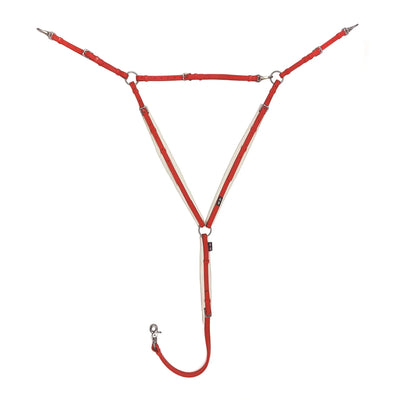

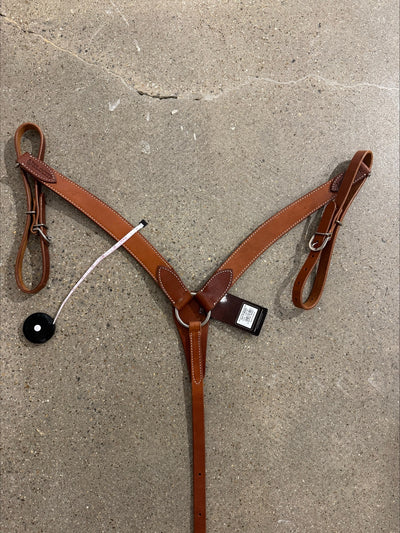

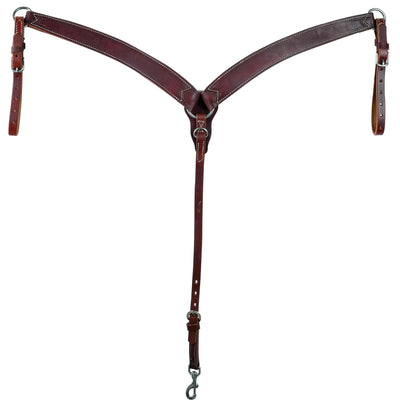

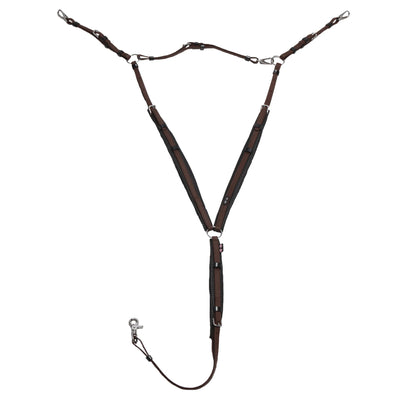

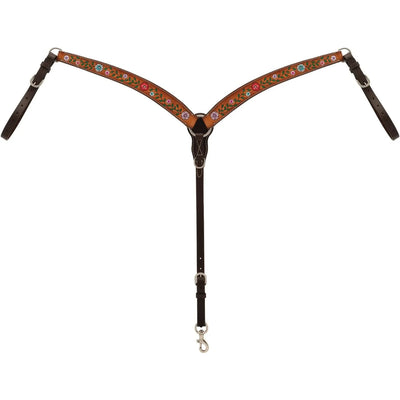

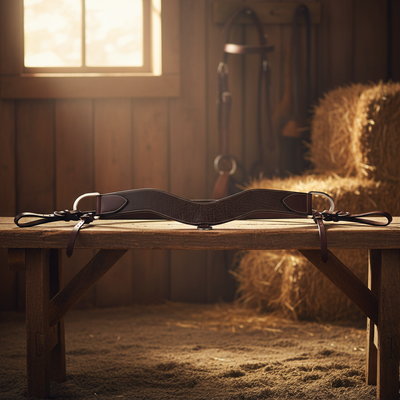

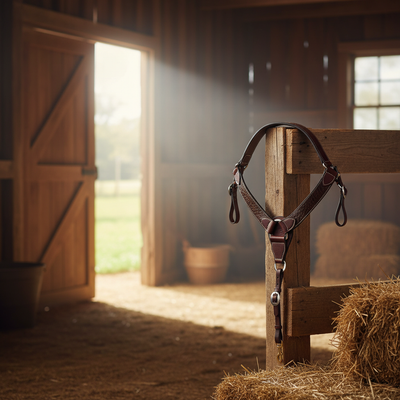

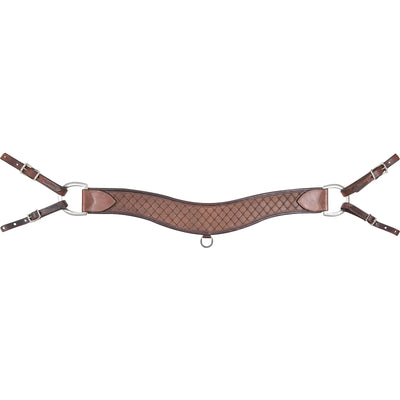

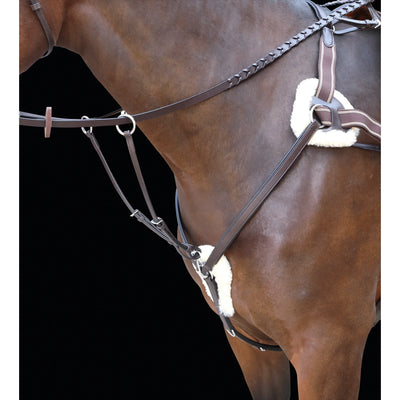

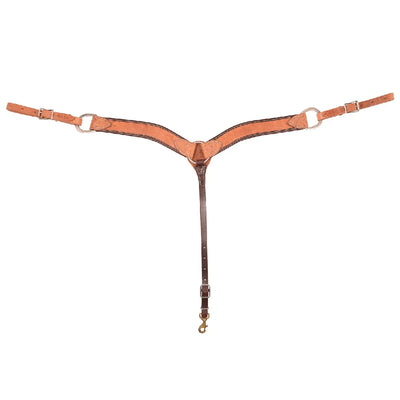
A breast collar earns its keep on a steep trail and does nothing at all hanging loose across a horse's chest. Most of the ones we see in the parking lot are set too low, which is the one mistake that turns a useful strap into something that gets in the way of the shoulder. Fit is almost entirely about height and length.
What Riders Are Actually Asking
Where should a breast collar sit on the horse?
The top edge of the shoulder straps should ride above the point of the shoulder, near where the neck ties into the shoulder. If the strap sags below the point of the shoulder it is too big or hung too low, and every stride the horse takes drives the shoulder blade into it. The center ring wants to sit at the front of the chest, roughly level with the point of the shoulder, and the center strap running down to the cinch should be snug rather than swinging. A flat hand should slide under the shoulder straps without a struggle.
How do I size a breast collar?
Measure across the front of the chest from one side to the other, following the line the collar will take between the two front dees. As a starting point, 32 inches suits slight or narrow-chested horses such as many Arabians and young stock, 34 inches fits an average horse, and 36 inches fits a heavily muscled stock type. Pony and draft sizes exist at either end. Adjustable tugs give you a few inches of play, so buy for the middle of the range rather than the end of the buckle.
Does a breast collar actually stop the saddle sliding back?
It limits how far back the saddle can travel, which is real and useful climbing hills, roping or riding a horse with flat withers. What it does not do is fix a saddle that is too wide or sitting on the wrong part of the back. If your breast collar is under load on flat ground, the saddle is already migrating and you are treating the symptom. Think of it as a stop, not a support. The riders who get the most from one are trail riders in steep country and anyone taking the shock of a rope.
Pulling, contoured or tripping style — which do I need?
Straight pulling collars are a simple band, cheap and strong, and fine for gentle work. Contoured collars are shaped to curve away from the shoulder, which is what you want on a horse with a big front end or for long days. Tripping and roper collars are the wide ones, three inches and up, built to spread the load when a rope comes tight. Width tracks the job: one to two inches for horsemanship and pleasure where the saddle barely moves, three to five inches for roping and heavy ranch work.
How is an English breastplate different?
An English five point or three point breastplate attaches at the saddle billets and often at the girth as well, spreading the load across the shoulders instead of pulling from two dees. Many include a ring at the chest for a running martingale attachment, which a western breast collar generally does not. Both are doing the same job of stopping the saddle sliding back, but they are not interchangeable hardware, so match the breastplate to the saddle you actually ride in rather than to the horse's size alone.
How to Choose the Right Breast Collar
- Set the height before anything else: Shoulder straps above the point of shoulder. Sagging below it is the single most common fit error we see.
- Measure the chest, do not guess the size: Roughly 32 inches slight, 34 average, 36 heavy stock type, measured between where the front dees will sit.
- Use the saddle's own dees if it has them: Built-in breast collar dees hold the collar up. Running it off the cinch rings alone lets it drop onto the shoulder.
- Take the width from the job: 1 to 2 inches for pleasure and horsemanship, 3 inches and up where a rope or steep ground puts real load on it.
- Snug the center strap: It should be taut enough to stop the collar swinging, loose enough that the horse can drop his head and drink.
What This Page Is Not For
This page covers western breast collars and English breastplates and how to fit them. It does not cover martingales, tie-downs or draw reins, it does not cover harness or driving collars, and it is not a saddle fitting guide. A breast collar is not the fix for a saddle that will not stay put on flat ground.
Brands Riders Trust
Weaver Leather has the widest spread here, from plain harness leather pulling collars to contoured and tooled show pieces. Professional's Choice covers the roping and ranch end with bison and Hermann Oak leather, plus the neoprene collar trail riders keep buying. Shires makes the English side with the Rossano and Velociti breastplates, Toklat builds the classic elastic breastplate with stainless ends, and Martin Saddlery does the heavy steer roper collars in hand-oiled harness leather.
Everything on this page ships in two days from an American warehouse and is covered by our 365-day guarantee. If you measure wrong, send it back and we will swap the size. Happy Tails, Happy Trails.
