

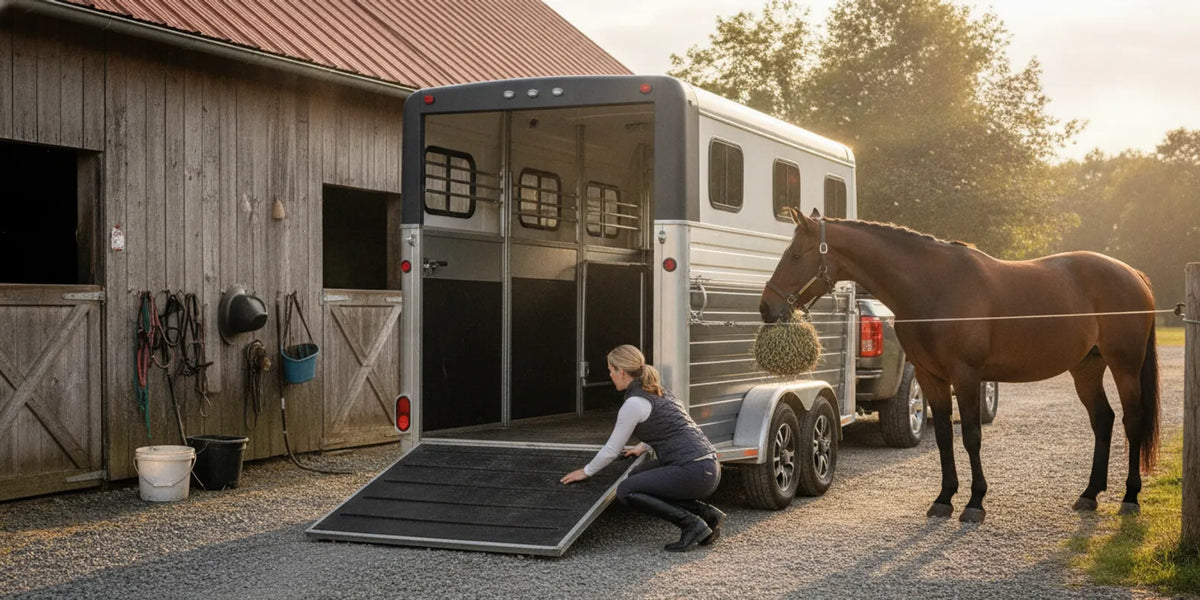
Shopping for horse trailers for sale is about more than choosing a stall count or comparing listing photos. The trailer needs to suit your horses, tow vehicle, typical routes, and loading routine. A deliberate comparison helps you separate useful features from cosmetic extras and spot questions that deserve an expert inspection.
What should a horse trailer do for your situation?
Start with your regular hauling needs. Horse size, number of horses, trip length, tow ratings, storage, and the people who will load all affect which trailer is practical.
Before looking at listings, write down how many horses you expect to haul at once and how often you travel. A person taking one horse to nearby lessons has different needs from someone who regularly hauls two horses to shows or trailheads. Note whether you need space for tack, feed, water, or other equipment, since cargo adds weight and may change the layout you need.
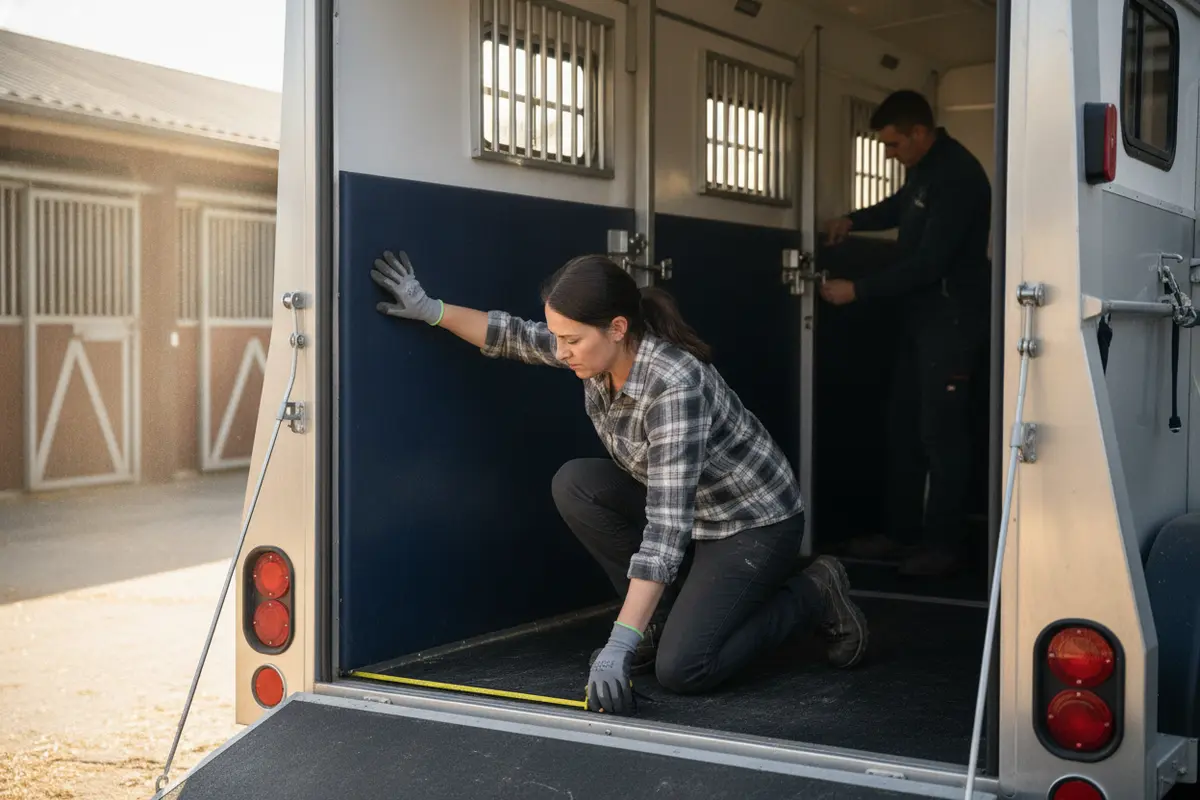
Measure each horse where practical. Record height and approximate body width, then compare those measurements with the actual stall dimensions and interior height. A “two-horse” label describes a general capacity, not a guarantee that every pair will have enough room. Check door openings, head clearance, divider placement, and the space each horse has to stand and shift balance.
Think through your horse’s behavior as well as its measurements. Does it load readily into a straight stall, or does it need more time and patient handling? Can it step up a ramp or use a step-up entry calmly? How does it back out? Consider who will handle doors and dividers while another person leads the horse. A trailer should not be treated as a quick fix for a loading problem. If loading is a challenge, get experienced training support and assess the horse and trailer together.
Finally, check the setting where the trailer will live. Measure the parking space, gate opening, and route into the storage area. Allow room to turn, back, open doors, and work safely around the hitch. A trailer that suits the horse but cannot be maneuvered or stored at home may not fit your routine.
Which trailer layouts and hitch styles should you compare?
Common choices include straight-load and slant-load stall arrangements, along with bumper-pull and gooseneck hitch designs. These describe different aspects of a trailer, so compare the stall layout separately from the towing configuration. The table is a starting checklist, not a claim that one type is always better.
| Choice | What to assess | Questions to ask |
|---|---|---|
| Straight load | Forward-facing stalls, divider and exit arrangement | Can each horse enter, stand, and exit calmly? |
| Slant load | Angled partitions, individual stall width, access | Does the space suit each horse’s size and balance? |
| Bumper pull | Hitch fit, loaded weight, vehicle capacity, handling | Are the vehicle and hitch rated for the complete load? |
| Gooseneck | Truck-bed hitch, payload, turning room, total weight | Can the truck carry and tow the loaded combination? |
A straight-load trailer may make sense for horses accustomed to entering and backing out of that configuration. A slant-load layout may provide a different stall arrangement, but you still need to check each stall’s usable width and how the horse enters and exits. Do not assume that a particular layout is easier for every horse. If possible, inspect the exact model and ask a knowledgeable trailer professional to walk you through its operation.
Bumper-pull and gooseneck trailers also have different vehicle and hitch requirements. A gooseneck needs a compatible truck-bed hitch and enough truck payload for the load carried by the truck. A bumper-pull setup needs a properly rated receiver and compatible hitch components. Either way, ratings and fit matter more than a vehicle’s appearance or engine size.
When preparing a horse-hauling kit, make a separate list of the horse equipment you already own and what must fit in the trailer or tow vehicle. The horse equipment collection can help you review general equestrian supplies, but it is not a listing of trailers. Confirm that every item you plan to carry can be stored securely without blocking doors, exits, or access to the horse.
How do you confirm your vehicle can tow a trailer?
Compare the vehicle, hitch, and trailer ratings using the expected loaded combination. Empty-trailer weight is only one part of the calculation.
Start with the trailer identification plate and owner documents, then consult the tow vehicle’s manual and hitch specifications. Do not rely on an online listing’s shorthand or a seller’s estimate when a rated figure is available. Record the trailer’s rated capacity and empty weight, then account for horses, tack, water, and all other cargo you plan to carry.
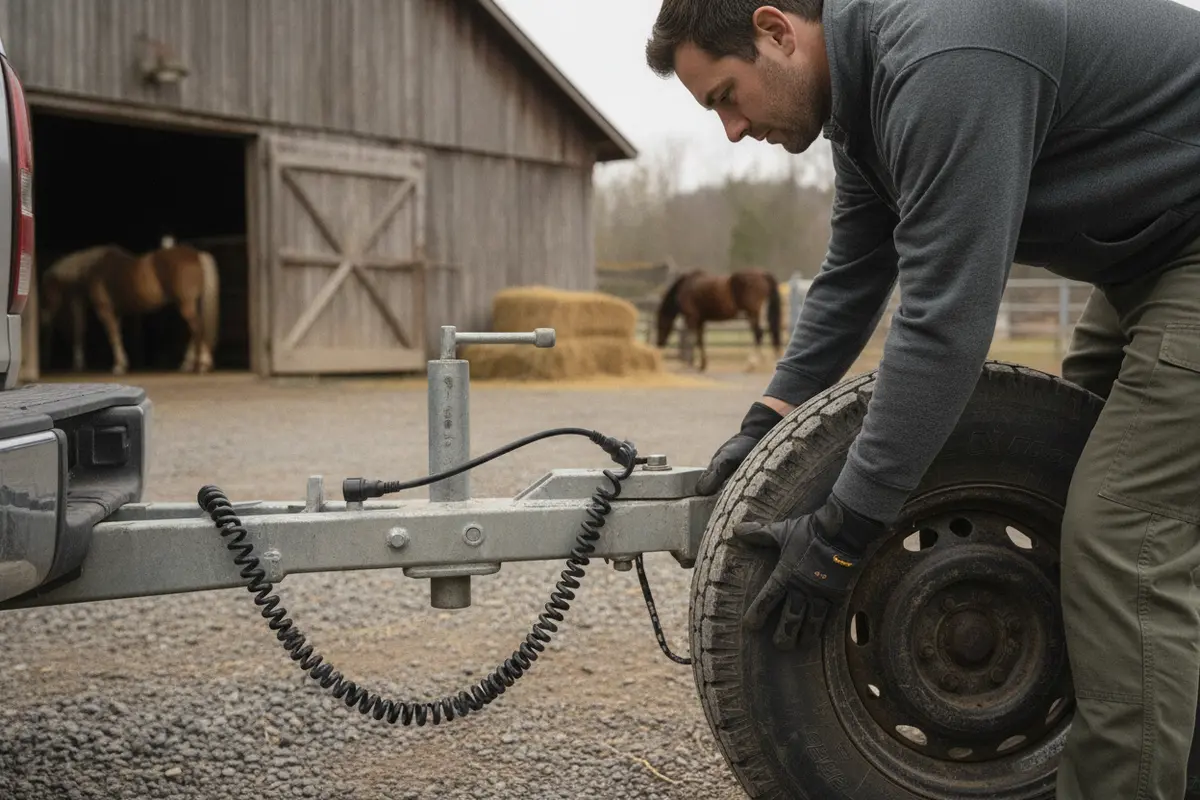
Check the applicable limits for trailer weight, tongue weight or pin weight, vehicle payload, axle ratings, tires, and braking equipment. A vehicle can have a towing figure that appears sufficient while its payload or hitch limit is not. For a gooseneck, include the weight carried by the truck. For a bumper-pull, check the receiver and ball mount as well as the vehicle rating. The complete setup must stay within the relevant limits, not just one headline number.
Ask a qualified towing or trailer professional to check the combination if the numbers are unclear. Confirm that the hitch, safety connections, lights, brakes, and any breakaway system are compatible and functioning. Equipment and legal requirements can vary by trailer and jurisdiction, so check the rules for the places where you will travel. The National Highway Traffic Safety Administration provides general road-safety information; it does not replace vehicle-specific ratings or an inspection of your trailer.
Build in a margin for the gear you actually carry instead of assuming you will always travel with an empty tack area. For example, make a written load list for a normal trip and a heavier trip. If you sometimes carry water containers, extra tack, or supplies for more than one horse, include those items in the second scenario. When either calculation approaches a limit or cannot be verified, pause and get qualified help before towing.
What should you inspect before buying?
For a used trailer, start with structure and working systems before judging paint, trim, or other cosmetic details. Ask permission to inspect it in good light, and do not be rushed. A trailer may look tidy while important areas are concealed by mats, coverings, or stored equipment. If you see a concern, ask how it was repaired and request documentation. A trailer technician can provide an independent inspection before you commit.
- Floor and frame: Look for soft spots, damaged boards or panels, corrosion, cracks, bent sections, water intrusion, and repairs that need explanation. Check the floor support structure, not just the visible surface. Ask how the floor is built and have it examined if a mat or covering makes assessment difficult.
- Running gear: Review tires, wheels, axles, suspension, and bearings. Check tire condition and age rather than relying only on visible tread. Ask when bearings and other serviceable parts were last inspected or maintained.
- Brakes and lights: Test lights and signals. Ask a qualified person to verify brakes and related wiring, plus breakaway equipment where fitted. Do not assume a connection that looks intact is working correctly.
- Coupler and hitch points: Check wear, locking action, attachment points, and compatibility with the tow vehicle. Look for damage or undocumented modifications around the hitch and frame.
- Doors, dividers, and latches: Open and secure each component. Check hinges, latches, padding, divider movement, and emergency access. A latch that sticks or will not stay secured needs attention before travel.
- Ventilation and windows: Operate vents and windows, then check that they open, close, and latch properly. Look for sharp edges and damaged hardware around openings.
- Interior surfaces: Check for exposed fasteners, broken padding, protrusions, or gaps that could catch a hoof or leg. Look at the ramp or step, its surface, hinges, and support.
Ask for maintenance records, ownership documents, the vehicle identification number, and information about modifications or prior damage. Compare the identification information on the trailer with its paperwork. Ask what equipment is included in the sale, and put any agreed items in writing. For a new trailer, review the written warranty and ask who handles service, what is covered, and how to obtain replacement parts.
Use a consistent checklist for each trailer you compare. Note the same items in the same order, such as floor condition, tire details, brake check, title status, and likely service needs. This prevents a polished finish or appealing add-on from overshadowing a concern that applies to safety or future costs. A low asking price is not a saving if substantial repairs are needed, and a higher price alone does not prove that a trailer is in better condition.
How should you compare features and total cost?
Separate must-haves from preferences. A suitable fit for your horses, sound structure, secure latches, ventilation, workable loading access, compatible towing equipment, and acceptable condition are core checks. A dressing room, extra storage, upgraded trim, or specialized tack area may be useful, but such features cannot make an unsuitable or damaged trailer a good choice.
Compare the purchase price alongside expected costs, without guessing at a universal price range. The condition, age, construction, size, equipment, and location can all affect what a seller asks. Request an itemized list of included equipment and estimate inspection, maintenance, and repair costs separately. When comparing two options, put the verified condition and immediate work beside the sale price. That makes the tradeoff clearer than comparing photographs or sticker prices alone.
Consider how each trailer will be maintained. Ask what cleaning and floor-care practices the manufacturer recommends, which parts can be replaced, and whether service support is available where you live. Look at storage access and the time needed to clean and inspect the interior after trips. The best feature list is the one that supports your routine, not the longest list in a sales description.
For example, imagine two trailers that appear to meet the same stall-count need. The first has more storage but requires a vehicle and hitch you do not currently have. The second has fewer extras, fits the tow ratings you have verified, and provides suitable stall dimensions. The comparison is not settled by storage or appearance alone: account for any vehicle changes, hitch work, inspection findings, and the way your horse will load. A written side-by-side worksheet helps make those costs and compromises visible.
Plan a first trip before you buy
Ask to review the operating instructions and learn how to hitch, connect, and secure each door and divider. Practice hitching and a full walk-around without a horse first. If the opportunity is available, evaluate loading calmly with experienced help and the seller’s permission. Do not force a horse into an unfamiliar trailer just to complete a test. If the horse is distressed or the procedure feels unsafe, stop and seek appropriate assistance.
Plan a short, straightforward first outing rather than making a long trip the first time you use the trailer. Choose a route you know, check road and weather conditions, and leave enough time that a delay will not make you hurry. Identify safe places where you could stop. For a long or unusual trip, ask your veterinarian about the individual horse’s travel needs and readiness.
Before each departure, do a walk-around. Check the connection and safety equipment, tires, lights, brakes, doors, dividers, and ventilation. Confirm that cargo is secured and that it does not obstruct access. At safe stops, recheck the equipment and observe the horses. Make a simple emergency plan with contact information and a safe place to pull over. If a horse becomes injured or appears unable to travel comfortably, stop safely and seek suitable help instead of carrying on with the planned schedule.
Keep a small written record after each trip: date, route, any unusual sounds or handling, and maintenance completed. A note such as “right rear tire needs inspection” is more useful than relying on memory later. Follow the manufacturer’s service schedule and ask a qualified technician about concerns involving brakes, tires, frame, hitch, or floor. Regular checks do not replace professional service, but they help you spot changes before the next departure.
Common buying mistakes to avoid
- Choosing by stall count alone: Verify actual dimensions and entry clearance for each horse.
- Using empty weight as the total: Include horses, equipment, water, and cargo in the towing calculation.
- Skipping an independent inspection: Structural and mechanical problems may not be obvious in photos or a brief walk-through.
- Focusing on finish and extras: A dressing room or attractive trim does not outweigh a concern with the floor, frame, brakes, tires, or latches.
- Assuming the listing tells the whole story: Verify paperwork, included equipment, repairs, warranty terms, and service history.
- Forgetting the route and storage space: Check turning, backing, gate, and parking clearance before purchase.
- Rushing the loading decision: Give the horse time and get experienced help rather than forcing a trial under pressure.
A useful final step is to write down what would make you walk away. Examples include paperwork that does not match, a floor concern the seller will not allow you to inspect, unclear ratings, or a loading arrangement that does not work for your horse. Having these limits in advance makes it easier to pause, ask follow-up questions, or seek another option without feeling pressured by a seller’s deadline.
For general horse equipment and supplies to bring along once your trailer choice is settled, browse horse supplies and verify that each item suits your animal and travel routine.
Frequently Asked Questions
How many horses should a trailer accommodate?
Choose for the number you realistically haul and the dimensions of those horses. Confirm the stall space, interior height, entry, and exit in person. The advertised stall count alone does not establish fit.
Is a used horse trailer worth considering?
A used trailer can be an option when its condition, maintenance history, paperwork, and price are clear. Arrange a careful inspection by a qualified trailer professional, with particular attention to the floor, frame, brakes, tires, and hitch.
Can any truck tow a horse trailer?
No. Check the specific vehicle’s towing and payload ratings, the hitch rating, and the fully loaded trailer weight. The entire combination must meet the applicable limits. Have a qualified professional verify the setup if you are unsure.
What matters most when checking a trailer floor?
Look for structural damage, soft areas, corrosion, and questionable repairs, including the supports beneath the visible floor surface. If a covering prevents a clear check, ask to have it assessed by a qualified technician. Follow the manufacturer’s maintenance guidance.
Should I test-load my horse before buying?
A calm, supervised evaluation may help you judge access and space when the seller and circumstances allow. Do not force a horse into an unfamiliar trailer. If loading becomes difficult or unsafe, stop and get experienced help.
What documents should I request from a seller?
Ask for ownership documents, identifying information, maintenance records, and details of repairs or modifications. Match the trailer identification information to the paperwork, and confirm in writing which accessories or equipment are included.
The right trailer is one that fits your horses and verified towing setup, is in sound condition, and supports a calm routine. Take time to inspect, compare, and ask qualified professionals when a safety or fit question remains.


