

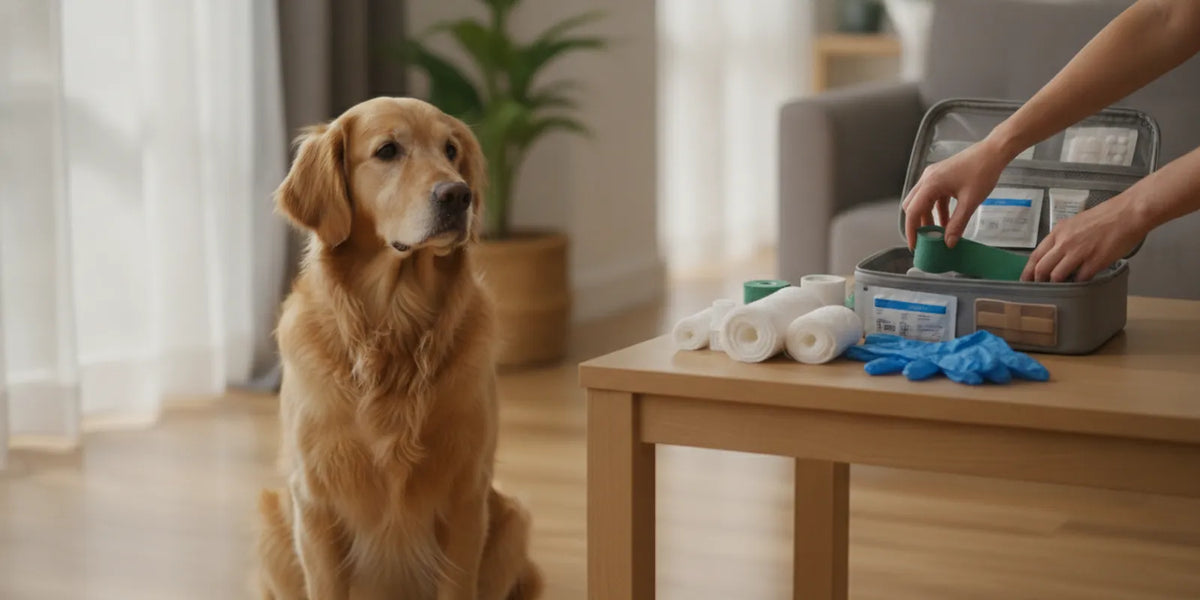
A well-planned pet first aid kit helps you respond calmly to a minor problem while you contact a veterinary professional and decide what to do next. For a home with dogs, cats, or horses, start with a shared core of clean protective and dressing supplies, then tailor the plan to each animal. A kit supports preparation; it does not diagnose an injury or replace veterinary care.
Shop horse health and first aid supplies
What belongs in a pet first aid kit?
Pack basic protection, wound-covering materials, safe-handling tools, identification details, and emergency contacts. Add only supplies you know how to use, and keep medications separate for veterinary guidance.
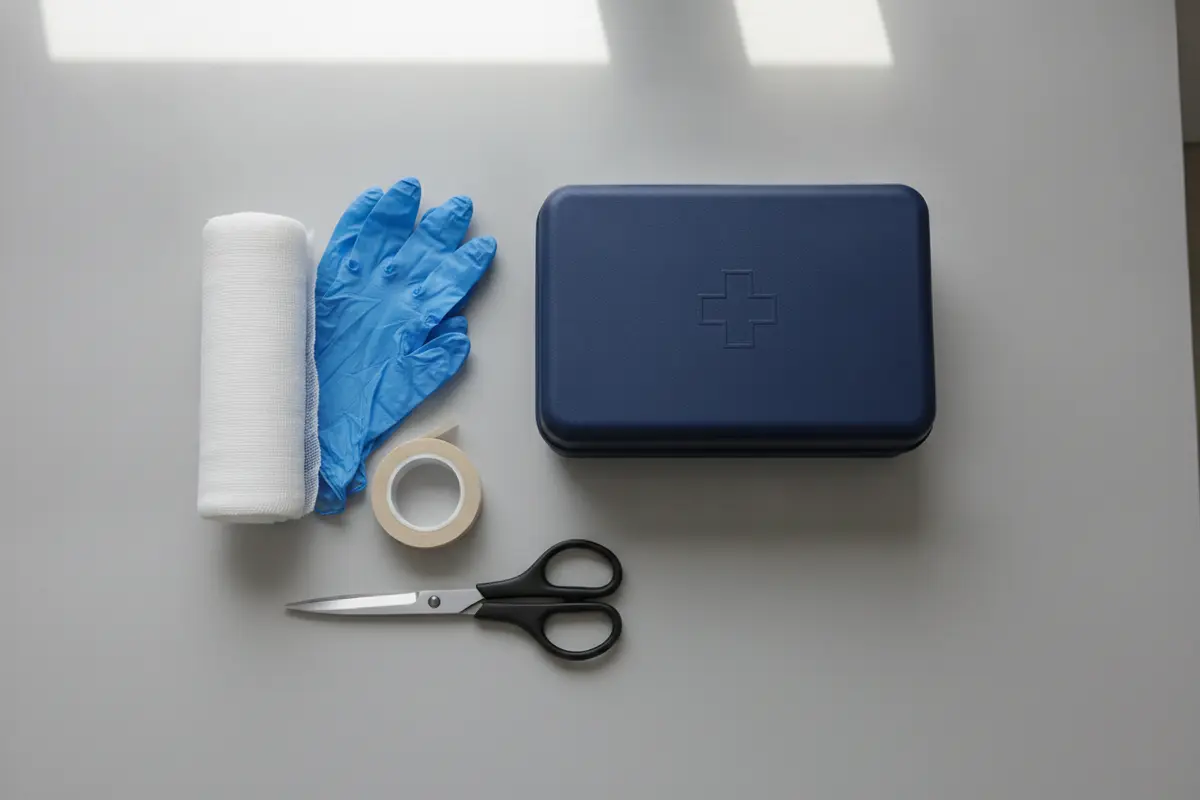
Choose a waterproof, easy-to-carry container with a clear label. Keep the contents together so you are not searching through grooming supplies or household drawers when an animal needs attention. A useful starting list includes:
- Disposable gloves: Use a clean pair when handling an injury or bodily fluids. Replace opened or damaged gloves.
- Gauze pads and rolls: Keep several sizes for covering a wound or applying gentle pressure while arranging care.
- Non-stick wound pads: These may protect a wound without adhering as readily as ordinary gauze.
- Self-adhering wrap and adhesive tape: Use only when you have been shown how. A wrap can become too tight, and tape should not be put directly on a wound or fur.
- Blunt-ended scissors: Useful for cutting gauze or tape. Keep blades away from skin, and do not trim hair near an injury unless a veterinarian advises you.
- Digital thermometer: Use only if a veterinary professional has shown you how to take a temperature safely for that animal.
- Tweezers or a tick-removal tool: Keep them clean, and use them only for tasks you can do safely.
- Sterile saline eyewash: Choose a product labeled for rinsing. Eye pain, cloudiness, or injury needs veterinary advice.
- Flashlight, notepad, and pen: A light can help you observe safely. Write down when a problem began and what changes you see.
- Clean towel and spare leash: These can help with calm handling or transport, depending on the animal and situation.
Keep medicines, ointments, and disinfectants out of a general-use first aid routine unless your veterinarian has approved their use for the specific animal and problem. A product safe for one species or one kind of injury may not be appropriate for another. Do not give human pain relievers, leftover prescriptions, or topical products without specific veterinary direction.
Include a current photo and identifying details for every animal. Write down your regular veterinarian's daytime and after-hours contacts, plus a nearby emergency clinic. For a horse, add the barn address, gate or access instructions, and a route description that someone unfamiliar with the property can follow. Keep a paper copy in the kit in case a phone is unavailable.
How should you tailor a kit to each animal?
A shared kit can hold common supplies, but each animal needs an individual handling and transport plan. Ask your veterinarian what additions suit your animal's species, size, health, and environment.
Think of the kit as two parts: a core box for supplies that can be shared, and a short animal-specific plan stored beside it. The plan should state how to approach and move that animal, who can safely handle it, and where it can be transported. Do not assume that a tool or restraint that works for one pet will work for another.
| Animal or setting | Planning additions | Important consideration |
|---|---|---|
| Dog at home or on walks | Leash, familiar restraint, tick tool, clean water, emergency contacts | A frightened or painful dog may react differently than usual. Do not force handling. |
| Cat at home or traveling | Secure carrier, familiar towel, identification, contact details | Keep a carrier accessible. Avoid chasing or cornering an injured cat. |
| Horse at a barn | Clean bucket, appropriate bandage materials, lead rope, barn access details | Learn safe restraint and handling before an emergency. Keep supplies accessible to responsible handlers. |
| Travel kit | Compact core supplies, care records, water, destination clinic contacts | Protect the kit from heat and moisture, and identify veterinary options before departure. |
For dogs, consider where you are most likely to need the kit. A walk kit might be small and limited to contact details, gloves, gauze, and a way to call for help. The home kit can hold reserve supplies and records. A muzzle is not a universal solution: only use one if the dog is accustomed to it and it is safe in the circumstances. Do not muzzle an animal having trouble breathing or vomiting, and ask a veterinarian about safe handling if you are unsure.
For cats, a sturdy carrier is part of emergency preparation, even though it is not a medical supply. Keep it in a place where you can reach it without rummaging. A towel may help create a visual barrier or provide familiar bedding, but do not wrap a cat tightly or risk a bite to force restraint. If the cat hides or resists, call the veterinary team for instructions.
For horses, keep ordinary first aid materials distinct from tack, grooming products, and medications. A barn plan should identify who is authorized to handle the horse and who can contact the veterinarian. Check that the emergency number and property directions are legible. A person arriving to help should not have to guess which horse needs attention or how to enter the property. Explore horse health and first aid supplies when planning a barn kit, and ask your horse's veterinarian to review the list.
How do you respond safely when an animal is hurt?
Start by looking at the surroundings before approaching. Other animals, traffic, unstable equipment, and a frightened animal can create additional risk. Keep children and bystanders back. Pain and fear may change behavior, so a normally calm animal may resist touch or restraint. If you cannot approach safely, stay back and call a veterinary professional for instructions.
- Contact a veterinarian early. Explain the species, approximate size, what happened, when it happened, and what you can observe. Follow the professional's instructions rather than delaying the call to complete a home treatment.
- Reduce unnecessary movement. Keep the animal as calm as possible. After a fall, collision, or suspected fracture, do not encourage walking or attempt to reposition a limb.
- Use simple measures only when safe. A clean pad and gentle pressure may help with some bleeding while you arrange care. Do not probe a wound, remove an embedded object, or apply a tight bandage.
- Observe and record changes. Note breathing, alertness, ability to stand or walk, visible bleeding, and the time each change occurs. This information can help the veterinary team assess the situation.
- Ask before transport. For a serious problem, get advice about whether and how to move the animal, and where to go. Avoid improvising a lift or restraint that could injure you or the animal.
When you call, keep your description clear and factual. For example: “My cat began limping after coming inside about 20 minutes ago. She is alert, but will not put weight on the rear paw. I have not given medication.” Or: “My horse slipped in the paddock at about 3 p.m. He is standing now, but has visible bleeding on the lower leg.” Do not guess at a diagnosis. Say what you saw and what you did.
For pet owners, the American Veterinary Medical Association's first-aid tips offer additional guidance. Use general guidance as preparation, not as a substitute for instructions from your animal's veterinarian. If your animal has a known condition or a history that changes what is safe, ask the veterinary team to document a plan you can keep with the kit.
When should you treat it as an emergency?
Call promptly for breathing difficulty, collapse, severe bleeding, suspected poisoning, seizures, major trauma, inability to stand, or sudden severe pain. If you are unsure how urgent a problem is, call and describe what you see.
Do not wait for a home kit to solve signs that may need urgent care. Contact a veterinarian immediately for trouble breathing, collapse, severe or persistent bleeding, suspected poisoning, seizures, major trauma, inability to stand, or sudden severe pain. Eye injuries, deep wounds, and punctures also warrant prompt professional advice. These examples are not a complete list. If the animal's condition is changing quickly or you are worried, call.
If you suspect a toxin or harmful product, keep the container or a clear photo of its label nearby. Tell the veterinary professional what the animal may have contacted or swallowed, the approximate time, and the amount if known. Do not induce vomiting, give food or drink as a remedy, or administer a product unless instructed. A small delay spent searching online for a treatment can make it harder to get timely advice.
Prepare a brief call checklist and store it with the phone numbers:
- Animal's species, age if known, approximate size, and any relevant known condition.
- What happened and when you first noticed the problem.
- What you observe now, including breathing, alertness, movement, and bleeding.
- Any possible exposure, product packaging, and care already attempted.
- Your location, a callback number, and whether you need help with safe transport.
After the call, assign one person to stay with the animal if safe and another to gather records, carrier or lead, and the route information. If you are alone, prioritize the veterinarian's instructions and take only the supplies needed to follow them. Do not leave an unstable animal unattended to collect optional items.
How can you keep the kit ready for home and travel?
A kit is useful only if the supplies are clean, easy to find, and appropriate. Set a recurring reminder to check it every few months, and inspect it again after every use. Replace items that are depleted, damaged, expired, damp, or unsealed. Review contact names and numbers at the same time, especially after changing clinics or moving.
Organize the container so the items you may need first are visible without unpacking everything. Small labeled pouches can separate dressings, tools, records, and animal-specific notes. Keep medications in their original packaging and separate from shared supplies. Do not decant products into unmarked containers. Store the kit in a dry place away from children and animals, while ensuring responsible adults can reach it quickly.
Use a simple inventory card inside the lid. List each item, the quantity on hand, and a place to mark when it was used or replaced. After using gauze or gloves, record the depletion immediately rather than assuming you will remember later. If several adults or barn helpers may use the kit, agree on where it belongs and how to report missing supplies.
| Check | What to do | When |
|---|---|---|
| Contact sheet | Confirm regular and after-hours numbers, address, and access details | Every few months and after a move or provider change |
| Dressings and tools | Replace used, dirty, damaged, damp, or unsealed items | After each use and during routine checks |
| Packaged products | Read labels and expiration dates; discard items no longer suitable | During routine checks |
| Travel set | Restock, secure it, and protect it from temperature extremes | Before trips and after use |
A vehicle kit should be secured so it does not slide around, and its contents should be protected from extreme temperatures. Check it before a long trip rather than assuming it stayed in usable condition in the car. Before leaving, note veterinary clinics near the destination, carry current animal identification and care records, and confirm how to reach the place where you are staying.
For a barn, make sure more than one responsible person knows where the supplies are and how to reach the veterinarian. Check that the kit is not locked behind an access point that may be unavailable after hours. Keep a written route and gate instructions with the emergency numbers. A quick walk-through with barn helpers can reveal practical issues, such as a missing light, a hard-to-open container, or an outdated contact sheet.
Keep shopping decisions separate from emergency decisions. A first aid kit should be built around your veterinarian's advice and supplies you can safely use, not around a long list of products. For general animal-care planning, you can also browse the full range of animal-care supplies, then confirm that any item you choose is appropriate for the animal and intended use.
Frequently Asked Questions
Can one pet first aid kit work for dogs, cats, and horses?
A shared core box can hold protective and dressing supplies, but handling, restraint, and transport differ. Keep separate animal-specific plans and ask each animal's veterinarian what additions are suitable.
Should I put medication in a pet first aid kit?
Do not add or give medicine for emergency use without veterinary guidance. Keep prescribed medicines in original packaging and follow the prescribing veterinarian's directions.
Is it safe to bandage an animal's wound at home?
Only do so if you have been shown how and can work safely. A wrap can become too tight or hide a worsening problem. Contact a veterinarian for direction, especially for a serious or deep wound.
What should I do if my pet may have swallowed something harmful?
Call a veterinarian promptly and keep the product packaging or label available. Do not induce vomiting or give a home remedy unless a veterinary professional instructs you.
How often should I check the kit?
Review it every few months and after each use. Replace depleted, damaged, expired, damp, or unsealed supplies, and confirm that contact information remains current.
What should go in a travel kit?
Carry a compact selection of appropriate basic supplies, current identification and care records, water, and emergency contacts. Protect the kit from temperature extremes and identify veterinary options at your destination.
Shop horse health and first aid supplies today
Preparing a kit and a clear contact plan can make the first moments less confusing, while timely veterinary advice remains central to caring for an injured or suddenly unwell animal.


