


Polo wraps are soft fleece coverings that can protect a horse's lower legs during supervised exercise. Their stretch makes them adjustable, but that flexibility also means application technique matters. A loose wrap can slip and bunch, while excessive tension can create harmful pressure.
Shop horse leg protection today
Quick answer: Polo wraps are exercise-focused leg protection for light coverage, minor knocks, scratches, and scrapes. Use clean wraps with smooth, even tension, remove them promptly after work, and ask an experienced instructor or equine professional to check your technique while you learn.
This guide explains what polo wraps are used for, how to choose them, how to apply them, and how to wash and store them. It also compares them with exercise bandages and support boots so you can match protection to the horse, activity, footing, and conditions.
What Are Polo Wraps Used For?
Polo wraps are fleece wraps designed mainly for training and other controlled exercise. When applied correctly, they cover the lower limb from below the knee through the fetlock and pastern area. The material creates a soft layer that can help protect against minor contact, brushing, scratches, and scrapes.
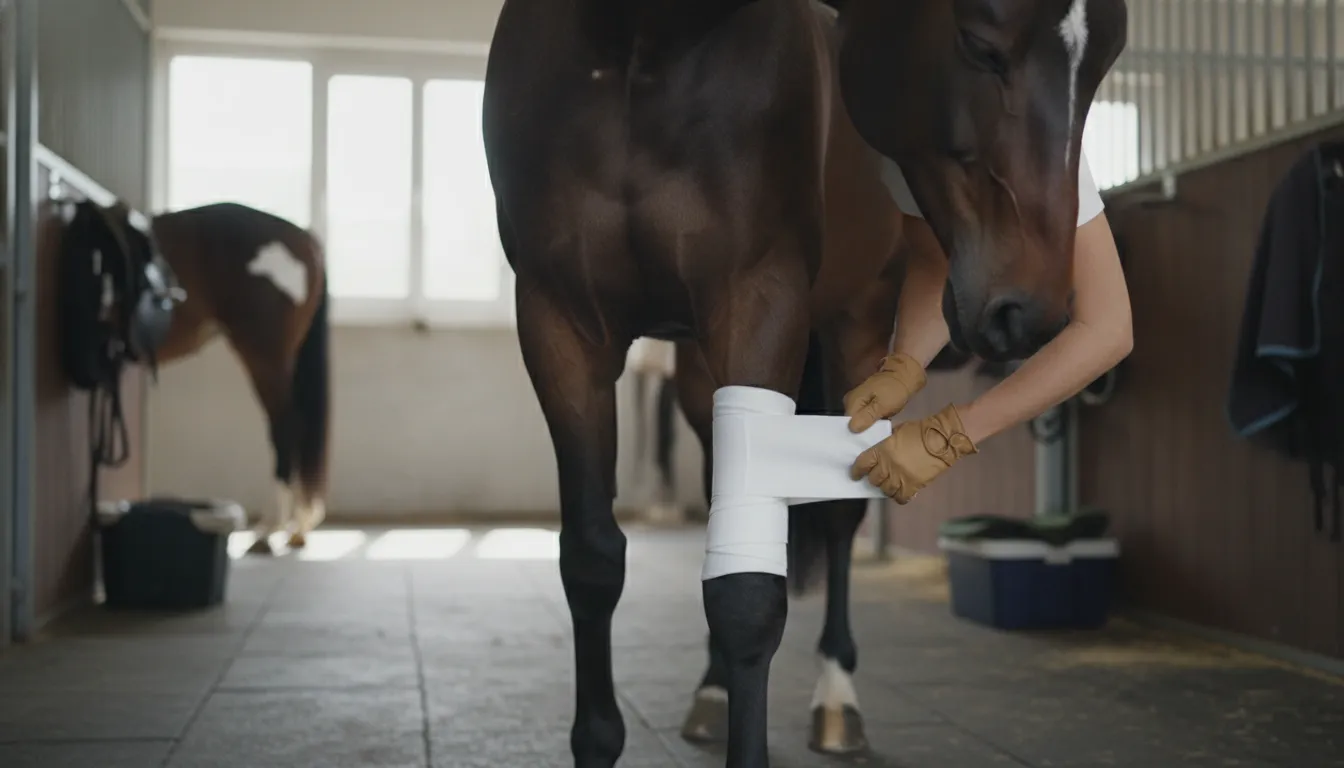
Many riders also choose polo wraps because fleece conforms closely to the leg. A flexible wrap can provide light, adjustable coverage during flatwork, schooling, hacking, or similar daily work. It is not a guarantee against tendon or ligament injury, and it should not be used to hide heat, swelling, lameness, or an unexplained leg problem.
For a broader explanation of why horses wear leg protection, read our guide to the purpose of horse leg wraps. The best choice depends on the protection needed and the rider's ability to apply and inspect it consistently.
Light support during exercise
Fleece follows the contours of the cannon bone, fetlock, and pastern more closely than a rigid guard. That makes polo wraps useful when a rider wants a comfortable layer that stays close to the leg. The finished wrap should have consistent pressure from top to bottom, with no narrow band that feels tighter than the rest.
Because the material stretches, riders can accidentally pull too hard. If the horse has an injury or the leg seems abnormal, remove the wrap and seek professional advice. Do not use a polo wrap as a way to continue work without identifying the cause.
Protection from everyday contact
During routine work, a horse can brush one leg against the other or make light contact with tack, arena equipment, or surroundings. A clean, properly fitted wrap provides a soft barrier against minor surface damage. It is not designed to replace specialized impact protection for every discipline, movement pattern, or turnout situation.
How Do You Choose Polo Wraps for Your Horse?
Choose polo wraps based on the horse's leg size, planned activity, climate, and your own wrapping skill. Color and pattern can be part of the decision, but a secure fit and sound material should come first. The finished set should provide smooth coverage without excessive bulk, slipping, or pressure points.
Look for soft fleece with controlled stretch
Good fleece should feel soft but substantial. It needs enough stretch to follow the leg without creating ridges or gaps. Material that is very thin, stiff, uneven, or stretched out can make consistent tension difficult. Run your hands along the full length before buying or using a set, and check for thinning areas, torn edges, loose stitching, or rough sections.
Stretch does not mean the wrap should be pulled as tightly as possible. Think of the tension as controlled contact that keeps the fleece flat. Riders who are learning should practice with an experienced instructor or equine professional before relying on polo wraps for regular exercise.
Choose the right length and fastener
Follow the manufacturer's sizing guidance and consider the horse's leg conformation. A wrap that is too long can create unnecessary layers, while one that is too short may not cover the intended area. Complete, smooth coverage is more useful than a thick stack around the lower limb.
The fastener should lie flat and hold securely without creating a tight band. Check it before every use. Close hook-and-loop fasteners before washing if the care label allows, and remove burrs, shavings, hair, and dirt that could irritate the skin.
How to Wrap a Horse's Legs With Polo Wraps
Correct application matters more than speed. A safe wrap lies flat against the leg with even pressure, consistent overlap, and no folds, gaps, or abrupt changes in tension. Work on a clean, level surface with the horse standing quietly. If you are not confident, ask an experienced person to supervise the first several sessions.
- Prepare the horse and equipment. The leg should be clean and dry. Remove mud, shavings, hair, burrs, and other debris that could press into the skin. Inspect the fleece, seams, and fastener. Do not use a wrap that is damaged, wet, excessively stretched, or too long for the leg.
- Position the starting end below the knee. Keep the horse's leg in a natural weight-bearing position unless a qualified professional directs otherwise. Start below the knee and avoid wrapping over the knee joint. Hold the edge flat instead of beginning with a twist.
- Wrap down toward the fetlock. Unroll the fleece gradually as you move. Keep the same direction on every turn and overlap each pass consistently. Use controlled, even contact rather than pulling hard. Do not leave a gap that exposes a narrow strip of skin.
- Cover the fetlock and pastern carefully. Continue through the intended coverage area while following the natural contours of the limb. Avoid a sharp ridge at the bottom, loose material near the hoof, or extra layers in one spot. The pressure should feel uniform across the cannon bone, fetlock, and pastern.
- Reverse direction and wrap back up. Once the lower section is covered, work upward with the same overlap and tension. The fleece should conform without riding up, slipping, or forming wrinkles. If you feel bunching or notice a sudden change in pressure, unwrap and start again.
- Fasten the wrap flat. Finish near the upper part of the wrapped area. The fastener should lie securely against the fleece with no sharp edge or loose tab to snag. It should not form a constricting band.
- Compare both legs. Use the same general direction, coverage, and technique on the opposite leg. Compare the finished wraps by sight and touch. If one is noticeably tighter, higher, lower, or more folded, remove it and correct the application.
Start with short, supervised practice sessions. After work, remove the wraps promptly and inspect the legs for pressure marks, heat, swelling, tenderness, or irritation. A wrap that looks secure but leaves a sharply defined mark may have been too tight.
When Should You Use Polo Wraps, and When Should You Not?
Polo wraps are best treated as exercise equipment. They can help protect the lower leg during supervised training, but their useful window is the work session itself. The horse should be monitored for slipping, bunching, moisture, and changes in comfort.
Situations where polo wraps may fit
Polo wraps may suit flatwork, schooling, hacking, and other controlled sessions when the rider can apply them consistently. They can be useful when soft fleece coverage and an adjustable fit are preferred. The activity should allow the rider to monitor the horse and remove the wraps as soon as work ends.
Situations that call for caution
Do not leave polo wraps on in a stall. Prolonged pressure, heat, moisture, or a hidden fold can contribute to skin irritation or pressure sores. Avoid wet or muddy conditions because fleece can absorb water, become heavy, and hold grit against the skin. Extra layers can also trap heat around the limb.
Never wrap directly over an open wound unless a veterinarian has provided specific instructions and the correct primary padding is in place. Heat, swelling, lameness, tenderness, or an unfamiliar change in the leg deserves professional assessment. A wrap should not conceal a problem or replace diagnosis, treatment, sound conditioning, or recovery guidance.
If your priority is quick, structured application, support boots may be easier to apply consistently for some routines. Boots do not suit every horse or discipline, so review the intended use and fit before choosing one.
Polo Wrap Care: Washing, Drying, and Storage
Clean wraps are more comfortable against the horse's skin and easier to apply evenly. Build a brief inspection into every use, especially after work in an arena, pasture, or grooming area where fine debris can cling to fleece.
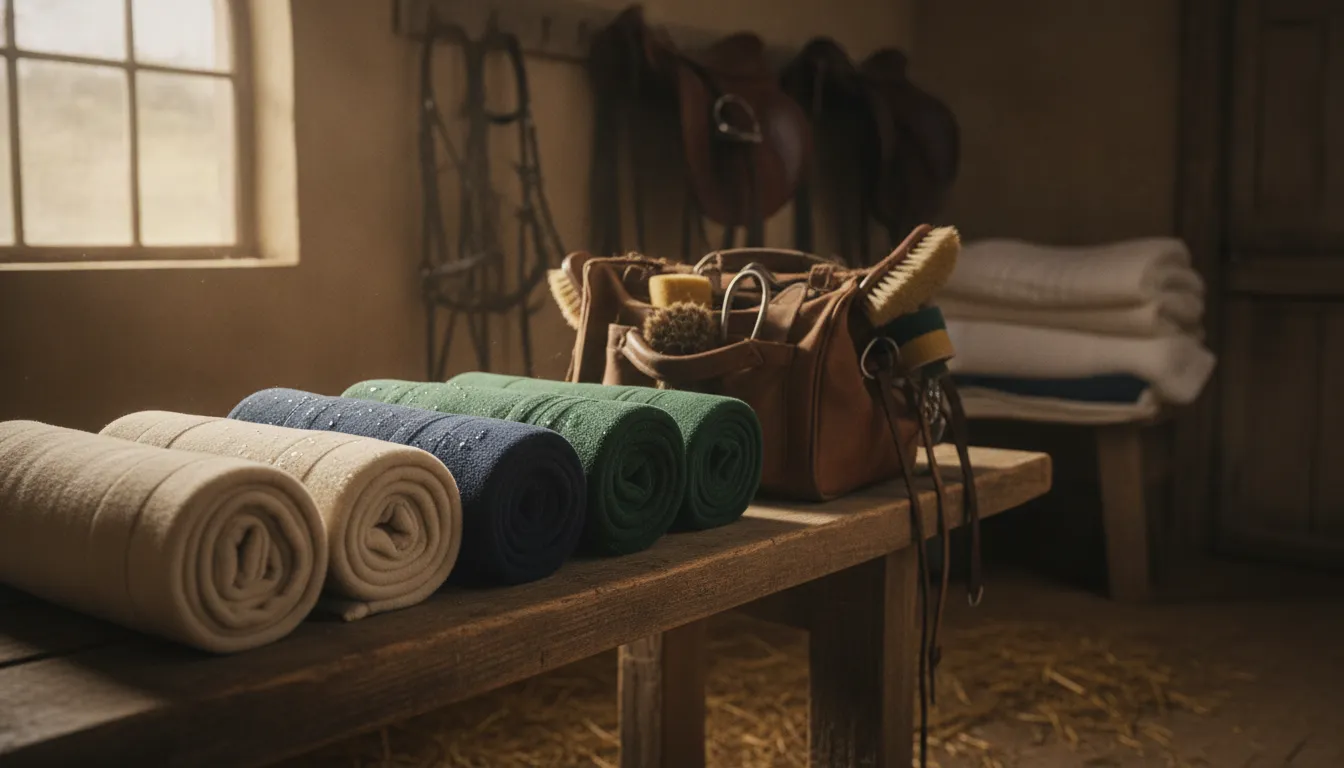
Remove debris before washing
Unroll each wrap and remove hair, shavings, dirt, and burrs before washing. Small plant pieces can become abrasive when pressed against the skin. Compacted dirt can hide weak spots. Shake out heavily soiled wraps and brush off dry material before placing them in the washer.
Wash gently
Follow the manufacturer's instructions for cycle, water temperature, detergent, and drying. A mild detergent is a sensible default when the care label permits it. Avoid harsh products or treatments that may affect fleece elasticity. Close fasteners together before washing if the manufacturer allows, so they do not snag other fabric.
Dry and store completely
Never place damp wraps in a tack trunk or feed room. Lay them out or hang them as directed until the fleece is dry throughout, including around the fastener. Moisture trapped inside a tight roll can create odor and leave the material unpleasant to use.
Once dry, roll each wrap neatly with the fastener secured against the roll. As you roll, check for thinning, stretched areas, torn edges, loose stitching, or a fastener that no longer lies flat. Store clean rolls away from direct moisture and unnecessary heat, separate from muddy boots and used stable gear.
Polo Wraps vs. Other Horse Leg Protection
Choose protection according to the job, not simply the name of the product. Polo wraps offer soft, adjustable exercise coverage. Standing bandages are used for specific stable-management situations. Exercise bandages are designed for work. Support boots provide a more structured option that is often quicker to apply.
| Protection type | Primary use | Strengths | Limitations | Typical context |
|---|---|---|---|---|
| Polo wraps | Training or exercise | Soft fleece coverage and adjustable fit | Requires even application. Too much tension, heat, moisture, or layering can cause problems. Remove after work. | Flatwork, schooling, and controlled daily exercise |
| Standing bandages | Stable management or specific bandaging situations | Can form part of a multi-layer system when applied correctly | Not interchangeable with exercise wraps. Purpose, padding, duration, and technique require careful judgment. | Stall rest or situations directed by an experienced professional |
| Exercise bandages | Leg protection during work | Designed for exercise-specific coverage | Still requires correct fit, tension, coverage, and removal after work. | Training and performance settings |
| Support boots | Structured protection during exercise | Often faster to apply. They provide a different type of protection. | Fit still needs checking. A boot does not suit every horse, activity, or goal. | Riding or training when a boot is the more practical option |
With any wrap, even pressure matters across the cannon bone, fetlock, and pastern. Leaving a wrap too tight can restrict blood flow and cause significant injury. For a closer comparison with an exercise-specific alternative, read our guide to exercise bandages for horses. When the situation is unfamiliar, have an experienced instructor or equine professional check your technique.
How Can You Check the Legs After Work?
Remove polo wraps as soon as the work session ends. Unfasten the closure and unwind the wrap in the same direction it was applied. Do not pull it sharply across the skin, especially if dirt, sweat, or bedding has collected underneath.
What should you look for?
Check the cannon bone, fetlock, pastern, and the skin around the wrap edges. Look for raw areas, pinched skin, sharply defined marks, or hair flattened in one concentrated spot. Feel for heat or swelling, and note whether the horse reacts to gentle touch.
- Pressure marks: Pause use and review the fit and tension before wrapping again.
- Heat or swelling: Stop wrapping that leg and contact a veterinarian or experienced equine professional, especially if the change persists or the horse is lame.
- Skin irritation or an open area: Keep the wrap off the affected skin. Do not cover an open wound without medical guidance and appropriate primary padding.
- Uncertainty: Ask an experienced instructor, professional, or veterinarian to assess the leg and your technique.
Inspection is part of safe use. If a wrap creates an abnormal finding, pause instead of simply applying it more loosely next time. A professional can help you develop a repeatable application and removal routine.
Shop horse leg protection today
Frequently Asked Questions
What are polo wraps used for?
Polo wraps are soft, stretchable fleece wraps used during exercise for light coverage and protection. They can help shield the lower leg from minor impacts, scratches, and scrapes, but they are not veterinary treatment or a therapeutic bandage.
How do you properly wrap a horse's legs with polo wraps?
Start below the knee, wrap down toward the fetlock, then return upward with smooth, even tension. Keep the fleece flat and maintain consistent pressure across the cannon bone, fetlock, and pastern. Practice with an experienced instructor until you can apply a secure wrap without folds, gaps, or tight spots.
Can polo wraps be used for turnout?
Polo wraps are generally intended for training or exercise and should be removed afterward. They can loosen, become wet, collect debris, or create pressure and heat during turnout. Choose equipment specifically designed for turnout when your horse needs protection outside a controlled work session.
Are polo wraps machine washable?
Many polo wraps can be machine washed with mild detergent, but follow the manufacturer's care instructions first. Remove burrs and debris, wash them regularly, and let them dry completely before rolling and storing them. Replace wraps that become thin, stretched, or damaged.
Do polo wraps provide enough support for jumping?
Polo wraps provide light support and may suit some schooling sessions, but they are not automatically the best choice for every jumping horse. A properly fitted support boot may be simpler to apply and can provide a different type of protection. Ask an experienced trainer or equine professional to match equipment to your horse and workload.


