


Puppy pads can make indoor potty training more manageable when a puppy needs a designated place to go. The right size and setup depend on your puppy, your home, and whether pads are a temporary transition or part of your long-term routine. Start by comparing the usable area, absorbency, backing, and placement rather than choosing by package size alone.
Shop pet grooming and paw-care supplies
What should puppy pads do?
A training pad creates a clear, designated toileting surface indoors. It can be useful when a puppy is still learning, when outdoor access is limited, or when a household needs an indoor option. Pads do not replace a routine. Puppies still need frequent opportunities to go, supervision, and calm reinforcement for using the intended spot.
Think of the pad as one part of a training plan. Keep the location consistent, take your puppy to it at predictable times, and reward the behavior you want. Avoid scolding for accidents. Clean mistakes promptly with a cleaner suitable for the floor surface, and follow its label directions. Lingering odor can make a spot seem like an acceptable toilet area, so thorough cleaning matters.
Choose a pad that gives your puppy enough room to stand and turn, stays in place, and suits your cleaning routine. Consistent placement and supervision are as important as the pad itself.
How do you choose the right pad size?
Start with the usable floor area and your puppy's ability to stand and turn. The best pad size leaves a practical margin around the puppy without forcing the pad to bunch against a tray or wall.
Package dimensions describe the pad laid flat, but the useful potty area may be smaller if the edges curl or a holder covers the sides. Measure the floor space available and compare it with the pad's actual dimensions. Then consider your puppy's current size and how much room it needs to approach, turn, and squat without stepping off the absorbent area.
- For a small puppy: A compact pad may fit a crate-side station or a small room, but make sure it is not so narrow that normal movement puts paws near the edge.
- For a larger or fast-growing puppy: A larger surface can allow more margin for imperfect aim and continued growth. Check the available floor area before buying a multipack.
- For a shared household station: If more than one dog may use the same area, provide enough space for each dog to approach safely without crowding.
- For a tray or holder: Match the pad dimensions to the holder's usable interior. A pad that bunches or folds can expose the floor or create an unstable surface.
Use a simple test before settling on a size: place the pad in its intended spot, guide your puppy onto it, and observe whether all four paws fit comfortably while the puppy turns. If the puppy repeatedly steps off while trying to get positioned, try a larger surface or reconsider the location. Do not put a pad where a door, chair, or other obstacle blocks an easy approach.
Which puppy pad type fits your home?
Disposable, washable, grass-style, and tray-supported pads can all work. Compare fit, backing, cleaning instructions, and the routine your household can maintain consistently.
Most households compare disposable pads, washable pads, grass-style surfaces, and pads used with a tray or holder. Each arrangement has different cleaning needs. There is no single best type for every puppy, so compare how you will use it every day.
Compare fit, absorbency, and construction
Look beyond the outside dimensions. Check how much of the surface is absorbent, whether the edges have a sealed or reinforced border, and what the backing is designed to do. If you use a tray, measure its interior rather than relying on the tray's overall footprint. A pad that is too large may bunch against the sides; one that is too small can leave an exposed gap.
Consider the floor as well as the puppy. A pad that shifts on tile may need a compatible holder, while a pad on a carpeted area can be harder to keep hygienic if liquid reaches the fibers. Use a washable, easy-to-clean location where possible. Check care instructions before purchase, especially for reusable surfaces, and think through where you will store clean replacements and dispose of soiled ones.
Absorbency alone is not a reason to leave a soiled surface in place. Plan a change routine that fits your household and monitor the pad during training. For puppies that like to scratch or pull at edges, stability and supervised use may matter more than extra features. Avoid assuming that any product is chew-proof or suitable without supervision.
| Option | Useful when | What to check | Care to plan for |
|---|---|---|---|
| Disposable pad | You want a ready-to-use surface and simple removal after use. | Dimensions, absorbent area, backing, and whether the pad stays flat. | Replace promptly when soiled and keep clean supplies nearby. |
| Washable pad | You prefer a reusable surface and can manage regular laundry. | Fit, non-slip backing, wash instructions, and whether a spare is available. | Wash as directed and allow a clean, dry replacement to be ready. |
| Grass-style surface | You want a distinct surface that may help create an outdoor-like station. | How the insert fits its base and the manufacturer's cleaning directions. | Follow product care guidance and clean the base as needed. |
| Pad with tray or holder | You want to help keep edges flat or reduce pad movement. | Pad-to-tray measurements, ease of access, and whether the puppy accepts the surface. | Remove and clean the pad and holder regularly. |
Absorbency and tear resistance are useful comparison points when evaluating products. Consumer Reports describes testing 10 puppy pads for absorbency and tear resistance in its puppy pad test overview. Consider those qualities alongside dimensions, surface feel, and cleanup instructions. Product testing does not tell you whether a particular pad will suit your puppy's habits, so observe how your puppy responds.
Buy a manageable amount first
When you are unsure whether your puppy will accept a pad's texture or size, start with a small quantity if that option is available. Try it in the planned location and watch how the puppy approaches, steps onto it, and responds after use. This avoids filling a closet with a style that slides, does not fit your holder, or proves awkward to wash. Once the setup works, decide how many clean replacements you need based on your household's actual use and laundry schedule.
Keep packaging and care directions until you know the setup works. Check dimensions again before reordering, especially if you change from a tray to a flat pad or your puppy grows. Compare products on the features you will actually use, not only on decorative prints or claims on the front of a package. A straightforward station that is easy to reset is more useful than a complicated setup nobody maintains.
Before choosing a training surface, compare the pad dimensions with your space, check how it will stay flat, and read its cleanup directions. You can review pet grooming and paw-care supplies and confirm product details before selecting a setup for your puppy.
Shop This Post

Featured in this article
Zymox Otic Pet Ear Care with 0.5% Hydrocortisone - Enzymatic Ear Solution for Dogs & Cats - 1.25 oz
$22.49
Shop Now →
Plan the training station before opening a package
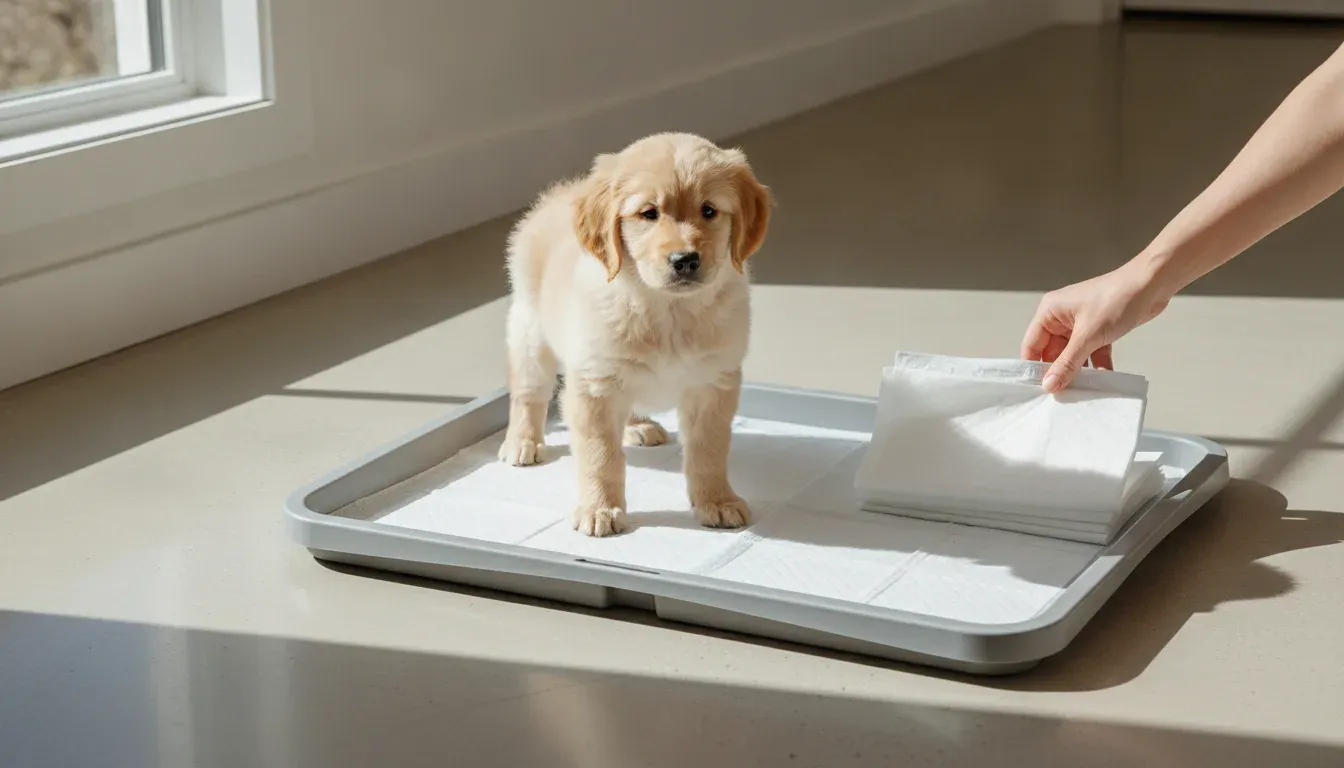
Choose one practical location that is easy for the puppy to reach and simple for you to clean. Avoid placing the pad beside food and water bowls, directly in a busy walkway, or somewhere the puppy has to cross a barrier to reach. A quiet corner with a washable floor nearby is often easier to manage than a pad placed in the middle of the room.
For related cleanup and paw-care supplies, browse the pet grooming and paw-care collection while you compare the rest of your training-station setup.
- Prepare the floor. Remove rugs or soft items that could be confused with the pad during early training. Clean the surface and let it dry.
- Set the pad flat. Smooth out folds and make sure the corners do not curl. Use a compatible holder if movement or chewing is a concern, and check that it does not make the pad hard to step onto.
- Show the puppy the location. Bring the puppy to the station after waking, eating, drinking, play, and other times it commonly needs a break. Stay nearby and give it time.
- Reward the desired behavior. Use calm praise or another suitable reward immediately after the puppy uses the pad. Keep the response consistent among household members.
- Clean and reset. Replace or wash the surface according to its type and product directions. Return it to the same location so the target stays predictable.
The American Kennel Club's guidance on potty pad and paper training discusses incorporating pads into a puppy's housetraining routine. The central practical point is to treat the pad as part of a consistent routine, not as a substitute for paying attention to your puppy's signals.
Make a simple daily plan
Write down the moments when someone can take the puppy to the pad or outdoors, such as after sleep, meals, drinks, and active play. The exact rhythm varies between puppies, so use observation rather than treating a fixed timetable as a guarantee. Watch for your puppy pausing, sniffing, circling, or moving away from play, and guide it to the station promptly. If several people share care, agree on the same location, cue, and reward so the puppy receives a consistent message.
Keep the station ready before the puppy needs it. Have a clean replacement within reach, check that the pad lies flat, and make sure the route to it is open. After an accident, clean the area and return to closer supervision instead of moving the pad to a new room. A brief note of successful uses and accidents can help you spot whether the problem is timing, location, size, or an interruption in routine.
Choose a routine that matches your goal
Before relying on pads, decide what success should look like. Some households use an indoor pad as an ongoing option. Others use it during a transition toward outdoor toileting. The distinction affects where you place the station and how gradually you adjust it.
If your goal is to move outdoors, begin with a consistent pad location and take the puppy outside at regular opportunities as well. When the puppy is reliably using the designated area, you can follow a gradual plan for shifting the routine. Avoid changing the pad location repeatedly or making several changes at once. If accidents increase, slow down and restore a predictable setup while you assess what changed.
If you expect to keep an indoor station, make it easy to maintain. Keep a supply of clean pads or a ready-to-use washable replacement, follow product care directions, and clean the surrounding floor. A permanent setup still needs routine monitoring so it stays sanitary and comfortable.
Households with long periods away from home should not assume one pad will handle every need. Consider the puppy's age, routine, supervision, and the time between check-ins. If you are unsure how often your puppy needs to go or whether a toileting change is normal, ask a veterinarian for advice tailored to your dog.
Common setup problems and practical fixes
The puppy keeps missing the pad
Check the usable absorbent area and whether the pad is large enough for your puppy to turn. Make sure the station is not tucked behind furniture or placed where the puppy approaches at an awkward angle. Temporarily using a larger surface can help you see whether size is the issue. Reward correct use and clean previous accident spots thoroughly.
The pad slides, folds, or gets chewed
Try placing it on a dry, level floor and smoothing the corners. A compatible holder may keep the pad flatter, but only use one that your puppy can approach without difficulty. Supervise chewing. If your puppy shreds or ingests pad material, remove access and consult your veterinarian about an appropriate alternative.
The room smells even after cleanup
Replace soiled disposable pads promptly or wash reusable pads as directed. Clean the floor and any tray, paying attention to seams and edges where liquid may collect. Use a product suitable for the surface and follow its instructions. Do not mix cleaning products, and keep them away from the puppy while cleaning.
The puppy uses rugs or towels instead
Soft, absorbent household items can resemble a toileting surface to a puppy that is still learning. Put away loose rugs and laundry for now, keep the training area consistent, and supervise closely when the puppy is out of the station. Reward the pad behavior you want rather than punishing accidents.
As you compare training and cleanup supplies, you can browse pet grooming and paw-care supplies and check product details for the care and fit information that matters to your household.
Shop pet grooming and paw-care supplies today
Frequently Asked Questions
How large should a puppy pad be?
Choose a pad with enough usable absorbent area for your puppy to approach, stand, and turn without stepping off. Compare the pad's actual dimensions with the floor space and any holder, then observe whether your puppy can use it comfortably.
Should I use a disposable or washable pad?
Choose based on your cleanup routine. Disposable pads can be removed after use, while washable pads need regular laundering and a clean replacement. Check dimensions, backing, care instructions, and how readily your puppy accepts the surface.
Can I use puppy pads and still train my puppy to go outside?
Yes, some owners include pads while working toward outdoor toileting. Keep the routine clear and consistent, offer outdoor opportunities, and make changes gradually. If your puppy becomes confused or accidents increase, simplify the setup and consider asking a qualified trainer or veterinarian for guidance.
Where should I put the puppy pad?
Pick a quiet, accessible place with a floor that is straightforward to clean. Keep the location consistent and avoid blocking the approach with furniture or placing it in a high-traffic path.
How often should I change a puppy pad?
For disposable pads, replace them when soiled and follow any product directions. Wash reusable pads according to their care labels and have a clean surface ready. Clean the surrounding area as needed so the station remains sanitary.
What if my puppy chews or eats part of a pad?
Remove access to the damaged pad and contact your veterinarian for advice, especially if you think any material was swallowed or your puppy seems unwell. A holder or a different supervised setup may help, but choose equipment that is safe and easy for the puppy to use.
With a suitable surface, consistent placement, and attentive supervision, puppy pads can give your household a clearer indoor training setup. Reassess the size and routine as your puppy grows, and seek veterinary guidance when toileting habits change unexpectedly.


