


Choosing supplements for dogs can feel confusing when labels promise broad benefits and products come in powders, chews, oils, and capsules. A safer starting point is a specific question about your dog, a complete review of the ingredients, and a conversation with your veterinarian. The right choice may be a supplement, a diet adjustment, a different care routine, or no added product at all.
What should supplements for dogs help you address?
Start with one clearly defined need. A supplement is not a substitute for diagnosis, prescribed treatment, a complete diet, or veterinary care.
Before comparing products, write down the concern you want to discuss. Is your dog eating a complete and balanced food? Has a veterinarian identified a nutritional gap or suggested an ingredient? Are you responding to a change in appetite, coat, digestion, mobility, or behavior? These questions do not have the same answer. A new, sudden, or worsening sign deserves professional assessment rather than a trial-and-error shopping decision.
Keep the goal narrow enough to observe. “Support general wellness” is difficult to measure. A more useful question is, “What change would we hope to notice, and when should we review it?” For example, you might track appetite, stool consistency, willingness to move, or coat condition. These notes do not diagnose a problem. They simply give you and your veterinarian clearer information.
Consider whether an added product is needed at all. Dogs eating an appropriate complete diet may not need extra vitamins or minerals, and multiple products can create overlap. Treats, chews, toppers, fortified foods, and existing supplements all count. Make a full list before you decide. The product with the longest ingredient list is not automatically the best fit.
Individual context matters. A dog’s age, size, diet, health history, allergies, pregnancy or nursing status, and current medications can change the questions you need to ask. A product suitable for one dog in your household may not be suitable for another. Treat each dog as an individual rather than copying a friend’s serving routine.
How do you compare supplement types and labels?
Format affects daily practicality, but it does not prove that a formula is effective or appropriate. A chew may be convenient, while a powder may mix easily into food. A liquid may allow measured servings, and a capsule may be useful for some dogs. Compare the active ingredients and amount per serving instead of choosing by product name or front-label language alone.
| What to compare | What to check | Question to ask |
|---|---|---|
| Purpose | Named ingredients and stated intended use | Does this match a need discussed with the veterinarian? |
| Amount | Ingredient quantity per chew, scoop, or measured volume | What amount is appropriate for this dog and diet? |
| Other ingredients | Flavorings, carriers, added vitamins, and minerals | Could anything duplicate another food or product? |
| Directions | Serving guidance, storage, cautions, and duration | Are these instructions suitable for this dog? |
| Quality information | Manufacturer identity, lot details, and contact information | Can the maker explain its quality controls? |
| Daily fit | Format, measuring method, and acceptance by your dog | Can the household follow the directions consistently? |

Read the entire label, including the fine print. Confirm that the product is intended for dogs and that the directions explain how to measure a serving. Do not guess from a human product’s serving size or adapt directions intended for another animal. Check storage instructions, expiration information, lot details, and manufacturer contact information. Keep the original packaging so you can share the complete ingredient list with your veterinarian.
Look for plain, specific information rather than sweeping assurances. Marketing language alone does not establish suitability, safety, or a predictable result. Check whether the label identifies the amount of each important ingredient, not just a combined blend without useful quantities. If information is incomplete or unclear, pause and ask for clarification instead of filling in the gaps yourself.
Serving size deserves special attention. Some products describe a serving by weight, while others use the dog’s size or a scoop. A scoop is only useful if you know whether it is level and how much it holds. A chew is not necessarily equivalent to another chew with a similar name. Write down the exact product, amount, and frequency that your veterinarian approves.
How should you read a broad product claim?
Separate the claim from the measurable contents. A phrase such as “daily wellness” does not tell you whether the formula suits your dog’s diet or concern. Use the label to identify the intended animal, ingredients, amounts, directions, warnings, and contact information. Then ask whether those details support a conversation about your individual dog.
For background, the Association of American Feed Control Officials explains pet supplements and advises owners to speak with a veterinarian. A review in the National Library of Medicine discusses veterinary supplements and nutraceuticals as a broad area with different uses and considerations. These sources can help you form questions, but they cannot select a product or serving for your dog.
Shop This Post

Featured in this article
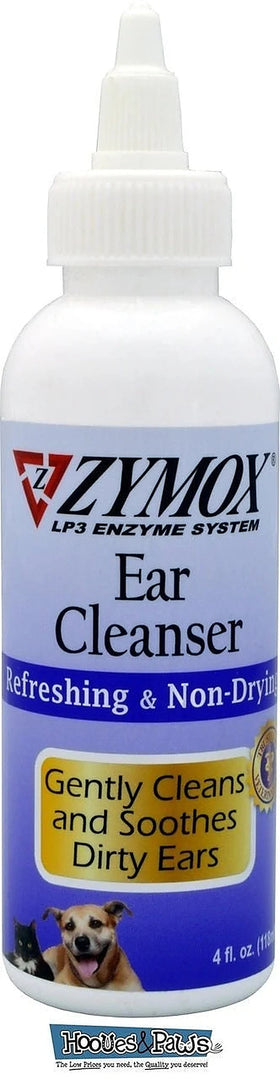
Zymox Otic Pet Ear Care with 0.5% Hydrocortisone - Enzymatic Ear Solution for Dogs & Cats - 1.25 oz
$22.49
Shop Now →
What safety checks should you make before starting one?
Share the product label and your dog’s full medication, diet, and health history with a veterinarian before introducing a new supplement.
Make a short appointment checklist. Include your dog’s food, treats, chews, toppers, medications, existing supplements, known conditions, allergies, and the concern you hope to address. Bring the exact product name and label, not only a description such as “joint chew” or “vitamin.” Ask whether an ingredient is suitable, whether it overlaps with the current diet, how long to evaluate it, and what signs mean you should stop and call.
Extra care is important for puppies, senior dogs, pregnant or nursing dogs, and dogs with chronic illness or scheduled procedures. A veterinarian may want to review the timing of a product, its ingredients, or its place in the overall care plan. Do not start a product in place of prescribed treatment, and do not delay urgent care while waiting to see whether a supplement helps. If your dog appears seriously unwell or has a severe sudden reaction, seek veterinary help promptly.
Ask about interactions and duplication. An ingredient may appear in several products under different names or as part of a blend. The total daily amount can also change when a fortified treat or diet is added. A complete list lets the veterinarian assess the whole routine instead of looking at one container in isolation.
Use one change at a time when your veterinarian agrees that a product is appropriate. Starting several new products together makes it difficult to identify the cause if your dog develops a problem. It also makes any improvement hard to interpret. Follow the agreed directions, and do not increase the amount because you think the effect is too slow.
How can you introduce a new product responsibly?
Plan the change for a period when you can observe your dog. Avoid introducing a new product immediately before travel, boarding, a major diet change, or another unusual event if your veterinarian does not direct you to do so. A stable routine gives you a clearer comparison and makes it easier to notice a change in appetite, stool, energy, or comfort.
- Record the starting point. Note the concern, the date, the usual diet, and ordinary observations related to your goal.
- Confirm the directions. Write down the exact amount, frequency, storage method, and review date agreed with your veterinarian.
- Make one change. Keep other foods, treats, and products as consistent as practical unless your veterinarian advises otherwise.
- Observe without overinterpreting. Record relevant changes, but do not treat a good or bad day as proof of a result.
- Review the plan. If there is no meaningful change, ask whether the concern needs another evaluation rather than adding more products on your own.
This process is useful even when the product is easy to give. It keeps the decision tied to a defined purpose and creates a record that can help your veterinarian. If a reaction occurs, stop and contact the veterinarian for guidance. Keep the container, lot information, and remaining product available in case details are needed.
How should you monitor your dog after a change?
Keep a simple daily or weekly record based on the goal. For a digestive concern, you might note appetite and stool observations. For a mobility concern, you might record willingness to rise, walk, or use stairs in the dog’s normal routine. For coat care, you might note grooming observations. Use the same kind of observation each time so the notes remain comparable.
A useful record includes the date, product, amount, time given, relevant observation, and any unusual event. Avoid turning the record into a promise of improvement. A change may reflect exercise, weather, stress, another food, or an underlying issue. The purpose is to give your veterinarian a more accurate account, not to replace an examination.
Follow the review period your veterinarian recommends. If there is no meaningful change, do not automatically add another product or increase the serving. Ask whether the original concern needs a different evaluation. Stop and contact the veterinarian if you notice an unexpected reaction or worsening signs. Keep the label and lot details available.
Store products safely and follow package directions. Keep them out of reach of pets and children, and do not transfer them into an unlabeled container. Close packages securely, use the stated storage conditions, and check expiration information before giving a product. If packaging changes or a product is recalled, check with the manufacturer and your veterinarian before continuing.
Which format fits your household routine?
A practical format is one that your dog accepts and your household can measure consistently. A powder may be easy to mix into food, but it can be difficult to measure if the scoop is unclear. A chew may be convenient, but confirm the amount of the relevant ingredient and account for its place in the daily treat routine. Liquids may permit measured servings, but they require careful handling and storage. Capsules can be difficult for some dogs to take.
Do not assume that a natural-sounding description means risk-free. Check flavorings and other ingredients that matter for your dog. If your dog refuses a format, ask the veterinarian whether another form or approach is suitable instead of forcing administration or changing the dose.
Build a realistic decision and follow-up plan
Consider a household example: your dog eats a complete food, but you are interested in a chew after hearing a friend describe one. First, write down what concern the chew is meant to address. If no specific concern exists, that may be a reason to hold off and ask whether extra nutrition is appropriate at the next routine veterinary visit. If there is a new symptom, arrange an assessment instead of treating the product as a test.
In another case, a veterinarian suggests discussing a particular ingredient for a defined concern. Gather the label, the dog’s current diet, and every other product given. Compare the ingredient amount per serving, verify the serving method, and ask how long to use it before review. If the dog dislikes the flavor or the household cannot measure it reliably, report that practical obstacle. A plan only works when it can be followed accurately.
Before buying, make a decision sheet with four columns: concern, veterinarian’s guidance, product details to verify, and review date. This simple record prevents the purpose from drifting as you compare marketing claims. It also makes it easier to notice when the plan needs reconsideration, such as after a diet change, new medication, or diagnosis.
Supplements are only one part of a dog’s daily care. Consistent meals, fresh water, appropriate activity, safe enrichment, grooming, and veterinary checkups also matter. For a broader care routine, you can browse dog and animal care bundles or consider a dog enrichment option. These links are shopping resources, not medical recommendations, and any product should fit your dog’s needs and your veterinarian’s advice.
Hooves and Paws is a family-owned online retailer serving horse, dog, and cat owners since 1994. Its selection is curated for animal families, with practical guidance for comparing supplies. For dog health products, explore the dog health essentials collection and review each item’s information carefully.
Shop dog health essentials today
Frequently Asked Questions
Does every dog need a supplement?
No. Whether a dog needs a supplement depends on its diet and individual health. Ask a veterinarian to review the complete diet and specific concern before adding one.
Can I give my dog a human supplement?
Do not assume that a human product or serving amount is appropriate for a dog. Ask your veterinarian to assess the ingredients and amount for your dog before use.
Can I start two supplements at once?
It is generally easier to monitor a single change at a time when your veterinarian approves the plan. Starting multiple products together can make a reaction harder to identify and an improvement harder to assess.
What should I do if my dog has a reaction?
Stop giving the product and contact your veterinarian for guidance. If your dog is seriously unwell or has an urgent reaction, seek veterinary care promptly and bring the product label if possible.
How do I know whether a supplement is working?
Agree on a specific goal and review period with your veterinarian. Keep simple notes on relevant observations and follow up rather than increasing the serving or adding products on your own.
Should I choose a powder, chew, liquid, or capsule?
The best format depends on the ingredient, directions, your dog’s acceptance, and your ability to measure it correctly. Ask your veterinarian whether the format and full ingredient list fit your dog.
Make the choice with a clear plan
Good supplement decisions begin with a clear question, a complete label, and veterinary guidance tailored to your dog. Take time to compare options, introduce only an agreed change, and keep monitoring your dog’s comfort and health. With a measured plan and careful observation, you can make dog-care choices that are practical, informed, and centered on your animal’s individual needs.


