


Choosing the best uv protection fly mask is about more than finding the highest percentage on a product page. Your horse's daily sun exposure, facial markings, eye clearance, mesh, coverage, and comfort all matter. If you are shopping for a mask because your horse squints, rubs, has eye discharge, or has a diagnosed eye condition, involve your veterinarian before treating the mask as a health solution.
The best UV protection fly mask is one with a clear, product-specific UV claim, enough coverage for your horse's exposure, shaped eye panels that stay away from the eyes, breathable mesh, and a secure, comfortable fit. UV protection applies only to covered areas. A fly mask does not diagnose, prevent, or treat uveitis or another eye disease, so new or persistent eye symptoms need veterinary attention.
This guide focuses on how to compare UV fly-mask features without treating one rating as a universal promise. It also explains how to assess visibility and fit during daily use. The goal is a practical shopping decision: choose a design your horse can wear safely and comfortably while you follow the broader sun, insect, and veterinary care plan appropriate for that horse.
What Makes the Best UV Protection Fly Mask?
A strong UV fly-mask choice balances stated fabric performance, useful coverage, clear vision, airflow, durability, and fit. The best design for one horse may not be the best design for another.
A UV fly mask should solve a real management need without creating a new one. Look for a product description that explains the UV performance of the fabric or panel, then compare that claim with the areas the mask actually covers. A mask can only shield the skin and structures behind its material. If the nose, ears, or lower face are uncovered, those areas still need their own sun and insect management.
Also consider how your horse behaves in turnout. A mask that shifts when the horse grazes, rubs, or plays cannot provide consistent coverage. A cooler, simpler style may be a better everyday choice for a horse that removes elaborate headwear. A horse that needs more coverage may benefit from ears or a nose panel, provided the added material does not interfere with hearing, breathing, eating, or comfortable movement.
Use these questions before comparing individual products:
- What area does the stated UV claim cover?
- Does the mesh preserve a wide field of view and clear space around each eye?
- Will the mask stay in place when the horse lowers its head?
- Is the material breathable enough for the climate and turnout schedule?
- Can you inspect, clean, and refit the mask every day?
- Does the design match the horse's face shape, size, and sensitivity?
How Should You Read a Fly Mask's UV Rating?
UV ratings are useful comparison information, but they are not a complete care plan. Start by confirming whether the stated performance applies to the whole mask, a particular fabric, or a specific panel. Product descriptions can vary in how they present coverage, so read the specifications alongside the product photos and fit notes. If the claim is unclear, contact the retailer or manufacturer instead of assuming that the highest number applies to every part of the design.
A stated percentage should also be kept in context. The horse's eyes may be behind the eye mesh, while the muzzle and lower face remain outside the mask. Some designs include a nose extension, and others leave the nose open for a lighter feel. Neither choice is automatically right. The correct decision depends on the horse's facial pigmentation, sun exposure, insect pressure, and veterinarian's recommendations when a medical concern exists.
A UV claim is not the same as a medical claim. Do not describe a fly mask as treating uveitis, preventing eye disease, curing photosensitivity, or replacing a treatment plan. If the horse has squinting, tearing, cloudiness, redness, swelling, discharge, unusual light sensitivity, or repeated face rubbing, remove assumptions from the shopping process and call your veterinarian. Eye problems can worsen quickly, and a mask should never delay an examination.
For routine protection, use the UV claim as one filter in your comparison. Then evaluate whether the construction gives the horse comfortable, stable coverage during the hours it spends outside. A lower stated rating in a well-fitting design may be more practical than a higher stated rating in a mask that gaps, shifts, or rubs.
Shop This Post

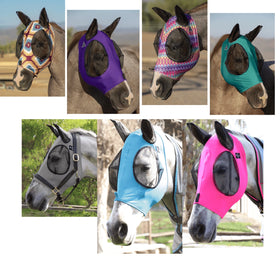
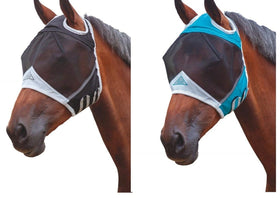
Coverage: Eyes, Ears, and Nose
Coverage is the most visible difference between many UV fly masks. Basic eye and forehead coverage can help reduce insects and sunlight around the eyes. Ear coverage adds a barrier for horses bothered by flies around the ears. A nose extension can shade more of the muzzle, which may matter for a horse with a light-colored or sun-sensitive nose. Some masks let you add or remove coverage, which can make them easier to adapt across seasons.
More coverage is not automatically better. Check that ear panels do not compress the ears or trap excess heat. A nose section should not restrict eating, drinking, breathing, or normal muzzle movement. The lower edge should sit clear of the nostrils and should not catch on feed or water buckets. If the horse is uncomfortable, it may rub the mask off and lose all of its intended coverage.
Match the design to the actual exposure:
- Eye and forehead coverage: useful when the main goal is reducing insects and sun around the eyes.
- Ear coverage: worth considering when flies gather around the ears or the horse is sensitive there.
- Nose coverage: helpful to discuss when the muzzle is lightly pigmented or especially exposed, but it must preserve normal eating and breathing.
- Convertible coverage: practical when you want to adjust the mask for different turnout conditions.
Coverage should work with other management steps, not replace them. Shade, turnout timing, fly control, daily grooming, and any veterinary instructions remain part of the overall plan. The fly mask is one piece of that system.
Mesh, Visibility, and Breathability
Choose mesh that protects the covered area while allowing the horse to see, breathe, and stay comfortable. Fine mesh may help block small insects, but the panel still needs enough structure and clearance to stay away from the eyelashes and eyelids.
Mesh has to perform several jobs at once. It should reduce insect access, support the intended sun protection, allow airflow, and preserve the horse's view. The best mesh is not necessarily the finest or most tightly woven. A panel that sags into the eyes or holds too much heat is a poor fit even if its material looks protective.
Inspect the eye panels from the front and side. They should stand away from the eyelashes and eyelids rather than pressing against them. The horse should be able to look forward and to each side without a loose section falling across the eye. Watch what happens when the horse lowers its head to graze. Some masks look correct while the horse is standing still but shift when the head and neck change position.
Consider the climate as well. Breathability matters in hot, humid weather, during long turnout, and for horses that sweat easily around the face. A mask with a structured eye area can preserve clearance, while soft binding can reduce rubbing along the cheek and forehead. Look for smooth seams, secure edging, and a construction that holds its shape after washing.
When a horse first wears a new mask, supervise the initial trial. Watch for frequent head shaking, rubbing, pinned ears, reluctance to eat, or attempts to remove the mask. Those signs do not prove the mask is unsafe, but they do mean you should remove it and inspect the fit before trying again.
Fit and Sizing Checks That Matter
Correct sizing is essential for both UV coverage and comfort. Use the manufacturer's measuring instructions rather than choosing a size based only on breed or height. A horse's forehead, cheek shape, jaw, and poll can all affect how a mask sits. If your horse falls between sizes, compare the adjustment range and return policy before ordering.
A well-fitted mask should pass these checks:
- Eye clearance: the eye mesh and seams stay away from the eyelashes and eyelids.
- Forehead position: the top of the mask lies smoothly without sliding toward the eyes.
- Cheek comfort: the side panels do not pinch, twist, or leave a hard edge against the skin.
- Poll and ear room: the closure sits securely without pulling on the ears or pressing on the poll.
- Lower edge: the mask does not interfere with the nostrils, muzzle, eating, or drinking.
- Movement test: the mask stays in place when the horse lowers its head, turns, and walks.
Check the mask shortly after turnout begins and again when the horse returns. Dirt, sweat, moisture, and rubbing can change how the material feels. Look for red areas, hair loss, swelling, abrasions, broken stitching, stretched closures, and damaged mesh. Stop using a mask that causes repeated rubbing or has lost its shape.
Do not tighten a mask to compensate for the wrong size. Excessive tension can create pressure points and may pull the eye panels into an unsafe position. If the mask cannot be adjusted into a comfortable fit, try another size or shape.
Find a Comfortable Fly Mask for Your Horse
Should a Horse With Uveitis Wear a UV Fly Mask?
A horse with diagnosed uveitis or another eye condition needs an individual veterinary plan. A UV fly mask may be one management tool your veterinarian discusses, but it does not treat inflammation, infection, pain, or the cause of an eye problem. Ask your veterinarian which coverage, turnout schedule, medication routine, and follow-up checks are appropriate for your horse.
Do not put a new mask on a horse with active eye symptoms and assume that shade is enough. Squinting, tearing, redness, swelling, discharge, cloudiness, unusual sensitivity to light, or sudden face rubbing should be treated as reasons to seek veterinary advice. If your veterinarian recommends a mask, ask whether the horse needs eye, ear, or nose coverage and how often the mask should be removed for inspection.
When a vet-approved mask is part of care, make daily checks routine. Confirm that the panels are clean, the eyes are clear of debris, the mask has not shifted, and the horse is comfortable. Keep the mask clean according to the product directions, and keep a spare if the horse depends on it during turnout. Never apply medication to the mask or use a product around the eyes unless your veterinarian specifically instructs you to do so.
The safest language is simple: a fly mask can protect covered areas from some sunlight and insects, but it cannot diagnose or treat eye disease. A veterinarian is the right source for decisions involving uveitis, pain, discharge, cloudiness, injury, or persistent light sensitivity.
Comparing Common UV Fly Mask Features
Use a feature comparison to narrow the field, then confirm fit and comfort with the individual horse. The table below describes what each feature can contribute and what to check before choosing.
| Feature | Why it may help | What to verify |
|---|---|---|
| Stated UV performance | Provides a product-specific sun protection reference | Which fabric or panel does the claim cover? |
| Shaped eye darts or structure | Can help preserve space around the eyes | Does the shape stay clear while grazing? |
| Fine insect mesh | May reduce access for smaller flying insects | Is it breathable and still easy for the horse to see through? |
| Ear panels | Extend insect and sun coverage around the ears | Do they allow comfortable ear movement without heat or pressure? |
| Nose extension | Shades more of the muzzle | Does it leave room for breathing, eating, and drinking? |
| Adjustable closures | Help fine-tune the position and security | Can the closure stay flat and avoid pressure points? |
| Soft binding | May reduce rubbing along the face | Are the seams smooth and durable after washing? |
Do not rank products by one row alone. A mask with many features may not be the best everyday option if your horse dislikes the fit. Start with the protection area that matters most, then choose the simplest construction that provides clear vision and reliable comfort.
How to Introduce and Maintain a UV Fly Mask
Introduce a new mask during a calm period when you can observe your horse. Let the horse investigate it, then fit it for a short supervised session. Walk the horse, offer a small amount of feed if appropriate, and watch for rubbing or distress. Check the eye panels after a few minutes and again after movement.
Once the fit looks right, use the mask for a limited turnout period before relying on it for a long day. Remove it after turnout and inspect the face. This gradual approach makes it easier to spot a seam, closure, or panel that needs adjustment.
For maintenance:
- Remove dirt, sweat, and debris according to the care instructions.
- Inspect mesh, seams, binding, closures, and ear panels each day.
- Allow the mask to dry fully before storage.
- Keep a clean spare if the horse wears a mask frequently.
- Replace a mask when the eye area sags, the mesh tears, or the fit can no longer be adjusted safely.
A clean mask is easier to inspect and more comfortable against the skin. Do not keep using a damaged mask because its original UV claim was attractive. The condition of the mask affects whether it can continue to provide stable, comfortable coverage.
Frequently Asked Questions
What is the best UV protection fly mask for horses?
The best UV protection fly mask for horses is one with a clear product-specific UV claim, suitable coverage, good eye clearance, breathable mesh, and a secure fit for the individual horse. Match the design to the horse's sun exposure, facial markings, insect pressure, and turnout routine. Comfort and stability matter as much as the stated rating.
Does a fly mask prevent or treat uveitis?
No. A fly mask does not prevent or treat uveitis. It may shade covered areas and reduce some irritation from insects, but it is not a substitute for veterinary diagnosis or treatment. A horse with squinting, redness, discharge, cloudiness, pain, or unusual light sensitivity needs prompt veterinary guidance.
Should a UV fly mask cover the horse's ears?
Ear coverage can be useful when insects gather around the ears or when additional sun protection is part of a veterinarian's management plan. It is not required for every horse. Check that the ear panels allow normal movement and do not create heat, pressure, or rubbing.
Is nose coverage necessary on a UV fly mask?
Nose coverage may be helpful for a horse with a lightly pigmented or sun-sensitive muzzle, but it is not automatically necessary. Choose a design that leaves the horse able to breathe, eat, and drink comfortably. Follow veterinary advice for a horse with skin changes or a known photosensitivity concern.
How do I know if a fly mask fits correctly?
A correctly fitted fly mask keeps the eye panels and seams away from the eyelashes and eyelids, stays in place while the horse lowers its head, and does not pinch the cheeks, poll, ears, or muzzle. Inspect the horse's face after the first few uses and stop using the mask if you see repeated rubbing or irritation.
Can a horse see through fine fly-mask mesh?
Many horses can see through properly designed fly-mask mesh, but visibility depends on the material, light, panel shape, cleanliness, and fit. The mesh should stay away from the eyes and should not sag across the horse's field of view. Observe the horse in the mask during calm movement and grazing.
How often should I clean a UV fly mask?
Clean a UV fly mask whenever it has visible dirt, sweat, discharge, or debris, and follow the product's care instructions. Inspect it every day when the horse wears it regularly. A clean, dry mask is easier to check for damage and less likely to cause avoidable skin irritation.
Shop UV Fly Masks for Fly Season Today
The right UV fly mask should give your horse practical coverage without compromising vision, breathing, movement, or comfort. Compare the stated protection, coverage, mesh, fit, and care requirements, then make veterinary advice the priority whenever eye or skin symptoms are present. For trusted fly-season supplies, explore the curated selection from Hooves and Paws.


