

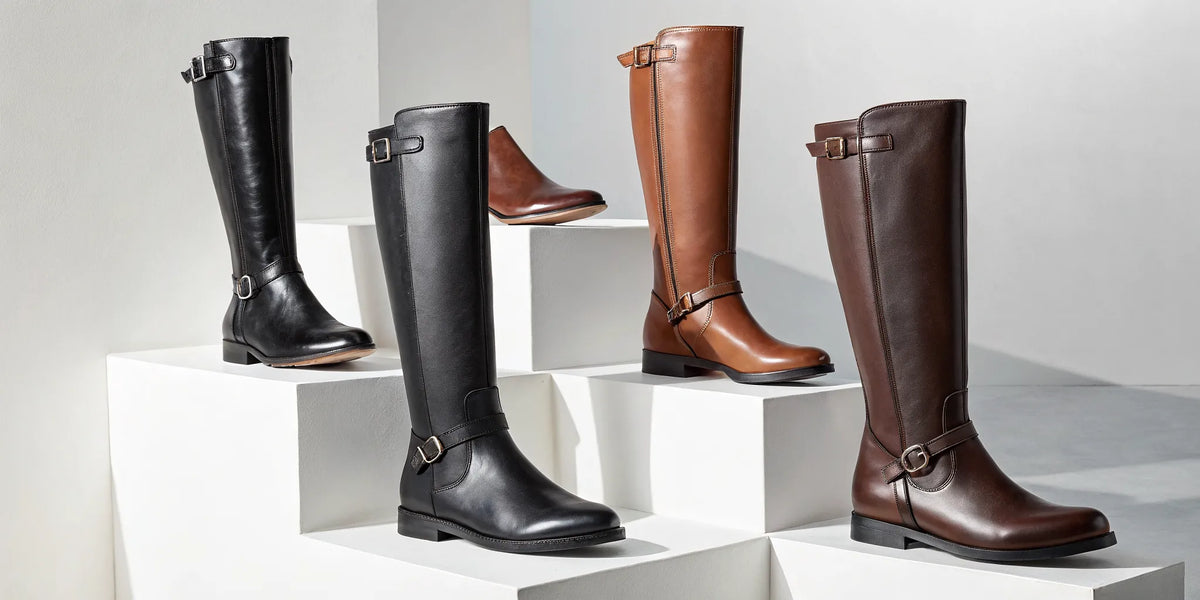
The best women's tall leather riding boots fit your calf closely, reach the right height once the ankle settles, and suit your discipline: field boots with ankle laces for jumping, or stiffer dress boots for dressage. Measure your foot, calf width and calf height in your riding breeches and socks before you buy, and pick leather you'll care for.
Your riding boots are the main point of contact between your leg and your horse's side, which makes them a tool for communication as much as part of your outfit. A good boot gives you a stable, close-contact feel that builds confidence in the saddle. When your leg is secure and comfortable, you can focus on your ride and your connection with your horse. In this guide, we cover the styles, fit, quality checks and care that make the difference, plus the tall boots we carry.
Key Takeaways
- Prioritize a precise fit: Your perfect boot requires more than just a shoe size; accurately measuring your calf width and boot height is the most important step for finding a pair that is comfortable, safe, and supportive.
- Your discipline determines the design: The right boot style directly supports how you ride, so choose flexible field boots for jumping or stiffer dressage boots for flatwork to get the specific features you need for optimal performance.
- Make boot care a habit: You can significantly extend the life of your boots with a simple routine: wiping them down after each ride, conditioning the leather regularly, and using boot trees for storage will keep them in top shape.
What Makes a Great Riding Boot?
Finding the right pair of tall riding boots can feel like a quest, but it's one of the most important investments you'll make as a rider. A great boot isn't just about looking polished in the saddle; it affects your comfort, your safety and how clearly you can use your leg. So, what separates a decent boot from a great one? It comes down to fit, material, support and style.
First and foremost, the fit has to be right. A well-fitting boot should feel snug through the ankle and calf, giving stability without cutting off circulation. A boot that's too loose will sag at the ankle as it breaks in, crease and rub, and end up too short. A precise fit helps you keep a correct leg position and give clear aids.
The material is just as important. Leather is the classic choice for tall boots because it's durable and softens to the shape of your leg as you wear it. Synthetic boots have improved and can be easier to care for and kinder to a budget, but a well-made leather boot that's cleaned and conditioned can last for years of lessons, trail rides and shows.
Finally, a great boot is built for comfort from the inside out. Look for a supportive footbed, a lining that helps manage moisture, and a sole with a defined heel that sits securely in the stirrup. Long hours at the barn and in the saddle demand a boot that can keep up without leaving your feet sore. When you find a boot that combines a secure fit with quality materials and thoughtful construction, you've found a true partner for your ride.
Brands Riders Ask About
When you're shopping for tall leather riding boots, you'll hear a handful of names again and again, including Ariat, Dublin, TuffRider, Parlanti, DeNiro, Tredstep, Mountain Horse and Ovation. We don't carry these brands, so we aren't reviewing them here. If you're considering one of them, go by that maker's own size chart and fit guide, because sizing and calf widths vary from brand to brand.
What matters more than the name on the box is how the boot fits your leg and suits your riding. Use the measuring steps below, compare them with the maker's chart, and look for the quality features we cover later in this guide. That approach works whichever brand you choose.
Tall Boots We Carry: Shires Moretta
The tall boots we carry come from Shires' Moretta line. Each one is described below from Shires' own product pages, so you can compare features before you check the size chart. You can see them all, along with paddock boots and half chaps, in our Riding Boots collection.
Shires Moretta Gianna
The Shires Moretta Gianna Leather Tall Riding Boots combine leather with synthetic stretch panels for a close fit. Shires describes hard-wearing leather inner calves with softer outer panels that follow the leg, a stretch mock-lace detail at the ankle, dressage-cut tops with soft piqued leather inners, and rear YKK zips. Underfoot, they have ActiveFlex insoles with Shires' Impact Support System, Moretta shock-absorbing rubber soles with steel shanks, and WickAway linings.
Shires Moretta Lanciano
The Shires Moretta Lanciano English Leather Tall Field Riding Boots are made from smooth leather with a streamlined zip fastening, a shaped leg and a contoured ankle. Shires offers them in Extra Slim, Slim and Regular calf widths and describes them as suitable for training and competition. If you've struggled to find a tall boot that's close enough through a slim calf, they're worth a look.
Shires Moretta Ortona
The Shires Moretta Ortona Tall Black Leather Riding Boots are a dressage-cut boot in milled cow leather polished to a high shine. Shires lists a YKK zip with a leather zip security tab and guards, decorative stretch mock laces, leather-covered UltraFit panels to shape the calf, a WickAway lining, an ActiveFlex insole, steel shanks, a Moretta shock-absorbing rubber outsole and a leather-covered spur rest.
Shires Moretta Voltana Long XGRIP
If you ride outside in wet weather, the Shires Moretta Voltana Long XGrip Tall Leather Riding Boots are built for it. Shires uses buffalo leather treated for water protection over a full waterproof membrane, full-length zips, a WickAway lining and a Moretta XGRIP outsole that it lists as stirrup compatible. They're a practical choice for hacking, trail riding and winter barn days rather than a polished show-ring look.
Find the Right Style for Your Ride
Choosing the right tall riding boot is a lot like picking the right partner for a dance. It needs to fit well, support you, and match your style of movement. The type of riding you do will be the biggest factor in deciding which boot is best for you, as each style is designed with specific functions in mind. From the formal arena to the open field, the right boot is a key piece of riding gear that provides comfort, stability, and a polished look. Let's walk through the most common styles to help you find the perfect pair for your discipline and needs.
Dressage Boots
Dressage boots, often called dress boots, are the black-tie attire of the equestrian world. They are designed for elegance and precision, with a stiffer shaft and often a Spanish-cut top that rises higher on the outside of the leg to create a long, streamlined line. That structure helps support a still, steady leg for the subtle aids dressage asks for. They don't have laces at the ankle, which keeps their sleek, polished appearance in the show ring. Because the leather is stiffer, expect a longer break-in than with a field boot.
Field Boots
If you’re spending your time in the jumping arena or out on a cross-country course, field boots are your go-to. Their defining feature is the lacing at the ankle, which provides the flexibility you need for a shorter stirrup length and a secure two-point position. This design allows your heel to drop comfortably over fences. Field boots are typically made from softer, more supple leather than dressage boots, which means a much shorter break-in period. They offer a fantastic combination of traditional style and athletic performance, making them a favorite among hunter, jumper, and event riders.
All-Purpose Boots
Not quite ready to commit to a single discipline? An all-purpose boot is a fantastic and versatile option. Think of it as a hybrid, blending features from both dressage and field boots. They offer more structure than a typical field boot but more flexibility than a stiff dressage boot. This makes them a great choice for riders who enjoy a little bit of everything, from flatwork and trail riding to small jumps. They’re also an excellent starting point for new riders who are still exploring different equestrian activities and want a boot that can handle it all.
Paddock and Jodhpur Boots
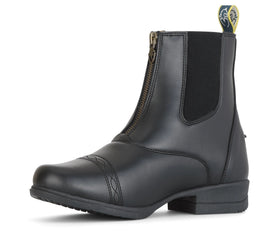
Not every English ride needs a tall boot. Paddock boots are ankle-height riding boots that many riders wear for lessons, schooling, trail rides and barn days, often with half chaps for grip and leg protection. Jodhpur boots are ankle-height too, and the names often overlap: Shires, for one, describes its Moretta Lucilla Jodhpur Boots as leather paddock boots for everyday riding. Both are accepted in plenty of show classes. USEF’s 2026 dressage rules (DR120.1.6) let riders at Fourth Level and below wear tall boots or paddock or jodhpur boots, with half chaps or garters that match the boots and are made of smooth leather or a leather-like material, while tall English-style boots, dress or field, are required above Fourth Level. In saddle seat equitation, USEF’s equitation rules (EQ116.1a) list jodhpur boots as part of informal attire.
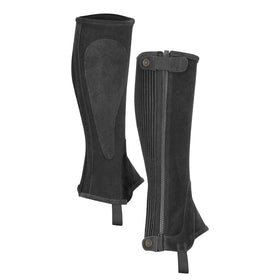
We don’t stock jodhpur boots at the moment, but we do carry paddock boots. Shires describes the Shires Moretta Anita Women’s Synthetic Leather Paddock Riding Boots as wipe-clean synthetic leather with elasticated mock laces and a rear zip, and the Shires Rosetta Paddock Boots as full grain leather with an UltraFit ankle insert and a front YKK zip. Pair either with half chaps such as the Shires Moretta Suede Half Chaps, in genuine suede with a full-length inner zip, or the machine-washable synthetic suede Shires Moretta Amara Adult Half Chaps. Our guide to paddock riding boots covers this style in more depth.
Winter Riding Boots
Riding doesn't stop just because the temperature drops, and your feet shouldn't have to suffer for it. Winter riding boots are designed to keep you warm and dry during cold-weather rides. Many are insulated and use waterproof construction to keep out snow and slush. Most importantly, look for the same safety features as any riding boot: a defined heel to help stop your foot from slipping through the stirrup and a sole with good grip for walking on slippery ground around the barn. Check that the sole fits your stirrup, too, since some chunky winter soles are too wide for a standard iron.
Shop This Post

Featured in this article
Shires Moretta Clio Plus Paddock Boots - Black, Zip-Front Equestrian, Gently Used
$29.99
Shop Now →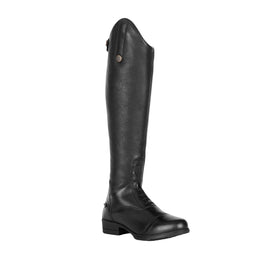
How to Find the Perfect Fit
Finding the right riding boot is about so much more than just your shoe size. A perfect fit is the foundation for comfort, stability, and a correct leg position in the saddle. When your boots fit properly, you can focus on your ride instead of pinching, rubbing, or slipping. On the flip side, ill-fitting boots can cause painful blisters, chafing, and even create safety issues if your foot gets stuck or slips in the stirrup. It’s a common mistake to just order your street shoe size and hope for the best, but tall boots require a more precise approach.
To get it right, you need three key measurements: your foot size, your calf width, and the boot height. Taking the time to measure correctly is the single most important step you can take before adding a new pair of boots to your riding wardrobe. It’s the difference between a boot that feels custom-made and one that gathers dust in your closet. Don't worry, it's a simple process, and getting it right will pay off in every ride. Let’s walk through exactly how to find the measurements that will lead you to your perfect pair.
Measure Your Foot and Calf
Start with what you know: your standard shoe size. But don't stop there. The most important measurements for a tall boot are your calf width and calf height. Wear the breeches, tights and socks you usually ride in when you measure, as Ovation's tall boot fit guide recommends, because they change the fit. Use a soft measuring tape around the widest part of your calf, keeping it snug but not tight. Measure both calves, as they can differ slightly, and use the larger measurement. It helps to have a friend hold the tape so you can keep your leg relaxed.
Find Your Correct Width
Your calf measurement directly translates to the boot width you’ll need. Each brand has a size chart that pairs foot sizes with different calf widths, often labeled as slim, regular, wide, or extra-wide. To find the best fit, you’ll use that number you just found by measuring around the fullest part of your calf. Always compare your measurement to the specific brand’s sizing guide, as a “regular” in one brand might be a “slim” in another. This simple step prevents the dreaded feeling of a boot that’s too tight to zip or so loose it slouches at the ankle.
Slim, Wide and Extra-Wide Calves
If standard tall boots never seem to fit your calf, look for a boot sold in several widths before you think about custom. Shires lists the Moretta Lanciano in Extra Slim, Slim and Regular calf widths, and the Moretta Ortona in widths from Extra Slim to Extra Wide with Standard and Tall heights. On our listing, the Gianna comes in combinations of width and height from Extra Slim to Extra Wide, including short and tall versions, and the Voltana Long XGRIP comes in Slim, Regular and Wide. Measure both calves in your riding clothes, use the larger number and match it to the maker’s chart. If you’re usually between widths, our guide on finding riding boots that fit your calf goes through the options.
Get the Right Boot Height
Next up is height. Measure your calf height from the floor to the back of your knee; this number tells you how tall the boot shaft should be. New tall boots are made to sit a little high at first, because the leather around the ankle softens and settles as you wear them. Ovation's fit guide says that once broken in, the front of a field boot should reach the center of your kneecap, and a dressage boot should sit slightly below it. If a new boot hides your kneecap completely or bends at the top when you bend your knee, it's too tall. Starting with the correct height means the boots won't end up too short after they settle.
How to Break in Your New Boots
Let's be honest: your new leather boots will probably not be comfortable during your first few rides. Ovation notes that boots should be hard to pull on and off at first and that the leather loosens up a bit as you wear them. The easiest way to start that process is to wear them around the house for short periods before you ride in them. If the back of the boot is digging into your knee while they settle, some riders use heel lifts for a few weeks to give a little extra clearance. Patience is key, and soon they'll feel like a second skin. If a boot still pinches or rubs badly after a reasonable break-in, check the fit again rather than forcing it. Our guide on how to break in leather riding boots walks through the first few weeks.
Spotting a High-Quality Riding Boot
When you’re investing in a pair of tall riding boots, you want to know they’ll last. A great boot isn’t just about looks; it’s about performance, safety, and comfort that holds up ride after ride. Knowing what to look for can make all the difference between a pair that falls apart after a season and one that becomes a trusted part of your riding gear for years. By paying attention to a few key details like the leather, construction, and sole, you can confidently choose a boot that meets your needs.
Leather Quality 101
The material of your boot is its foundation. Leather is the traditional choice for tall boots because it's durable and softens to the shape of your leg over time. Synthetic materials can be a good option for easy care and a lower price, but they don't soften and shape to your leg in the same way. When you're looking at a leather boot, feel the leather: it should feel supple and strong, not stiff or plastic-like. Look at how the boot is put together, too, including the stitching, the zip and how the shaft joins the foot. A well-made leather boot that's cared for is a long-term partner in your riding, with a classic look that never goes out of style.
Prioritizing Comfort and Support
You spend hours in your boots, so comfort is non-negotiable. A high-quality boot is designed with the rider's anatomy in mind, with features that reduce fatigue and keep you focused. Look for a cushioned footbed that absorbs shock both in and out of the saddle. Many makers build in their own support systems, such as the ActiveFlex insoles in Shires' Moretta boots. A moisture-wicking lining is another useful feature, since it helps keep your feet dry during long rides. Don't overlook the ankle; a well-shaped boot will help steady your leg without feeling restrictive.
Explore our Riding Boots collection to compare tall boots, paddock boots and half chaps side by side.
Check the Sole and Grip
The sole is where the rubber meets the stirrup, and its design is critical for your safety and performance. A proper riding boot sole has two key features: a defined heel and a suitable tread. The heel helps stop your foot from sliding forward through the stirrup. The tread should give enough grip for stability without being so deep or chunky that it catches on the stirrup. Look for durable soles that can stand up to walking on concrete, gravel and grass around the barn. The overall fit, especially around the ankle and calf, also affects how the boot feels and performs and keeps your foot secure.
Consider Weather Protection
Your riding doesn't stop when the weather turns, and your boots shouldn't have to, either. Think about the conditions you ride in most often. If you frequently ride outdoors or live in a rainy climate, a waterproof boot can be a game-changer. Many all-weather boots use a waterproof membrane inside the boot and water-treated leather outside. For colder regions, insulated boots add warmth. A sleek, non-waterproof boot might be perfect for the show ring or an indoor arena, but a reliable weatherproof pair is a smart addition for any rider who keeps going through the winter.
Breaking Down the Cost of Riding Boots
When you start shopping for tall leather riding boots, the price tags can feel like they're all over the map. It helps to know what you're generally paying for as prices rise. You can find a safe, comfortable boot for everyday riding without spending a fortune, but you can also invest in a pair with finer leather and a closer fit. Thinking in tiers will help you balance your budget with your riding goals. Prices change often, so compare current prices from the retailer or maker rather than relying on a set dollar range.
Entry-Level Boots
For riders just starting out or those who don't spend every day at the barn, entry-level boots are a sensible choice. In this tier, you'll find boots made from grained leather or a mix of leather and synthetic materials. They offer the essential support and protection you need for safe riding without a hefty price tag, and they're a good way to get the look and feel of a tall boot without a major commitment. Our guide to riding leather boots goes deeper into leather types if you're weighing your options.
Mid-Range Boots
If you're riding several times a week or starting to compete, you'll notice the step up in mid-range boots. This is where you'll start to see softer, smoother leathers that tend to break in more easily, along with more refined features like cushioned footbeds, moisture-wicking linings, stretch panels, spur rests and more calf-width options. These boots give a closer feel with your horse and more comfort during long hours in the saddle. Think of this tier as an investment in performance and daily comfort.
Premium and Custom Boots
For dedicated riders, premium boots are an investment in craftsmanship. These boots typically use the finest leathers and offer a very close, refined fit. Many makers in this tier offer semi-custom or full custom options, letting you choose details like the leather, the height, the calf shape and the zip placement. They come with a significant price tag, but with proper care they're built to last for years, which can make them worthwhile for serious competitors.
Common Boot-Buying Mistakes to Avoid
A great pair of riding boots is an investment in your comfort, safety, and performance. But with so many options out there, it's easy to make a misstep that leads to painful break-in periods or a boot that just doesn't last. We want to help you get it right the first time. Avoiding a few common mistakes will ensure you end up with boots you love to wear, ride after ride. Here are the most frequent slip-ups to watch out for so you can shop with confidence.
Prioritize Function Over Fashion
It can be tempting to grab a stylish pair of riding-style boots from a fashion brand, but they aren't built for the real work of riding. True equestrian boots are designed for performance. Fashion boots often have a different shape, a chunky or flat sole and a looser fit through the calf and ankle. A proper riding boot gives you a defined heel and a sole that works with the stirrup, protects your leg from the stirrup leathers, and fits closely enough for clear communication with your horse. When you're shopping, always choose boots made for riding.
Don't Forget Your Calf Width
A good fit goes way beyond your shoe size. One of the most common reasons a boot doesn't work out is the wrong calf measurement. A boot that's too tight is painful and can be hard to zip, while one that's too loose will bunch and crease at the ankle. To find your best fit, measure around the fullest part of your calf while wearing your usual breeches and socks. Measure both legs, and if the numbers differ, use the larger one. Then compare it with the maker's own size chart, since calf widths aren't standard across brands.
Match the Boot to Your Discipline
Not all riding boots are created equal. The right boot for a dressage rider is very different from what a show jumper needs. As Ovation's fit guide explains, the right height differs between field and dressage boots, and fitting them properly matters for comfort and performance. Dressage boots are typically stiffer to support a long, still leg position. Field boots have laces at the ankle to give the flexibility needed for a shorter stirrup over fences. Choosing a boot designed for your discipline gives you the right support and freedom of movement. For a broader look at styles, see our English riding boots guide.
Keep Your Boots in Top Shape
A great pair of riding boots is an investment in your comfort, safety, and style. Just like your saddle and bridle, your boots need consistent care to stay in prime condition. A little effort goes a long way in extending their life and keeping the leather supple and strong. By building a simple care routine, you can protect your boots from the daily wear and tear of barn life and ensure they look sharp for years to come. Here’s how to keep them looking and feeling their best, from daily wipe-downs to long-term storage.
Your Daily Care Routine
After every ride, take a minute to wipe down your boots with a slightly damp cloth or sponge. This simple step removes dirt, manure, and sweat before they have a chance to settle in. These contaminants can leech into the leather over time, causing it to dry out, crack, and weaken. Think of it as a quick reset for your boots that prevents long-term damage and keeps them ready for your next ride. It’s the single most effective habit for prolonging the life of your leather and takes less time than cooling out your horse.
How to Deep Clean and Condition
For a more thorough cleaning, use a leather-specific cleaner, such as the Toklat Leovet Leather Cleaning Spray, to lift away built-up grime. Pay special attention to zips, as sand and mud can cause them to stick or break. After cleaning, apply a quality leather conditioner to restore suppleness, following the product's directions; Shires, for example, recommends cleaning and drying its Moretta boots, then polishing and conditioning them regularly. To help your boots hold their shape, slide boot trees in once you've finished. This helps keep the ankles from dropping and creasing as they dry.
Store Your Boots Properly
How you store your boots is just as important as how you clean them. Use boot trees to keep them upright and help prevent sagging at the ankle. Store them in a cool, dry place away from direct sunlight or heat sources like vents, which can dry out and fade the leather. For extra protection against dust and scuffs, especially when traveling to shows, a padded boot bag such as the Professional's Choice English Tall Boot Bag is a great idea. Proper storage keeps your boots protected and ready to go when you are.
Ready to Find Your Perfect Pair?
Finding the right tall leather riding boots is an investment in your comfort, safety and style. With so many options out there, it's all about matching the right features to your needs in the saddle. Whether you spend long hours training or enjoy relaxed trail rides, the right boot will feel like it was made for you. Now that you know what to look for in quality, fit and function, you can shop with confidence.
Before you decide, get your measurements right. Measure your foot, your calf width and your calf height in your riding clothes, compare them with the maker's size chart, and think about how much the ankle will settle as the leather breaks in. Then choose the style that suits your discipline: a field boot for jumping, a dress boot for dressage, or a waterproof boot for wet-weather riding.
You can start by comparing the Moretta tall boots in our Riding Boots collection, and if a defined heel is your first priority, our guide to women’s riding boots with a heel compares five Moretta picks side by side.
Related Articles
- How to Find Your Perfect Equestrian Riding Boots
- English Riding Boots: A Complete Buyer's Guide
- Riding Leather Boots: A Complete Buyer's Guide
Frequently Asked Questions
What's the most important factor when choosing a new pair of riding boots?
Fit. A good boot is snug through your calf and ankle without cutting off circulation. Before you buy, measure your foot size, the width of your calf at its widest point, and your calf height from the floor to the back of your knee, wearing your usual riding breeches and socks. Then compare those numbers with the maker's own size chart.
How do I decide between field boots and dress boots?
Go by the riding you do most. Field boots have laces at the ankle for the flexibility needed in jumping, hunters and eventing. Dress boots are stiffer, have no ankle laces, and give the long leg line preferred in dressage. If you ride a bit of everything or are just starting out, a field boot is often the more versatile choice. It works for dressage too: USEF’s 2026 dressage rules (DR120.1.6) count dress or field boots among the tall English-style boots required above Fourth Level.
My new boots feel really stiff. Is that normal?
Yes. New leather boots usually feel stiff and should be hard to pull on and off at first; the leather softens and settles to your leg as you wear them. Wearing them around the house for short periods before you ride speeds this up. If they still pinch or rub after break-in, recheck the fit.
How can I make my leather boots last as long as possible?
Wipe them down with a damp cloth after every ride to remove sweat and dirt, clean and condition the leather regularly following the product's directions, and store them on boot trees in a cool, dry place. A boot bag protects them when traveling. Do you need to spend a lot? Not necessarily: you can find safe, durable boots at an entry-level price, and higher prices mainly buy finer leather, comfort features and a closer fit. When the heel is no longer distinct, the leather cracks in a way conditioning can’t fix, or the zip or ankle no longer holds your leg securely, it’s time for a new pair; USEF’s rules (GR801.9) require boots worn while riding at its competitions to have a distinguishable heel.
Do I need tall boots, or will paddock boots and half chaps do?
For lessons, schooling and everyday riding, paddock boots with half chaps give you grip and leg protection with an easier fit, and they make a sensible first pair. Tall boots give the traditional look many show classes expect. Check your rulebook before you show: USEF’s 2026 dressage rules (DR120.1.6) allow paddock or jodhpur boots with matching half chaps or garters at Fourth Level and below and require tall boots above it, and Ariat’s competition boot guide notes that half chaps are allowed in most cases if they match the color of the boot.


