


A western riding helmet should feel like part of your riding gear, not an afterthought. The right choice combines a recognized safety standard, a secure fit, comfortable ventilation, and a shape that suits your western style. It should also arrive without adding an avoidable shipping hurdle.
Shop Western Riding Helmets and Safety Gear Now to compare certified, free-shipping options in one trusted place.
A properly fitted, ASTM/SEI certified helmet is the essential starting point when choosing a western riding helmet free shipping option. Shop a trusted helmet with free continental U.S. shipping and no minimum order, then confirm the size and fit before every ride. That combination protects you without forcing a trade-off between safety and the western look you prefer.
Western riding helmets are known for looking good in the saddle. Even so, riders often have questions about certification labels, sizing, and which profile suits them best. Understanding the basics takes the guesswork out of the decision and helps you buy once, with confidence.
Hooves and Paws brings more than 30 years of equestrian expertise to the selection process. We offer carefully chosen products and practical service for riders and their families. Before comparing brim shapes, finishes, or trail details, it helps to understand what certification means and why it matters during an equestrian fall.
Why an ASTM/SEI Certified Western Riding Helmet Matters
Western riding may look traditional, but the forces involved in a fall are serious. A certified helmet is not simply a piece of western-inspired riding gear. It is protective equipment tested against equestrian impact conditions, giving you a meaningful safety standard to look for before you compare brim shape, color, or ventilation.
ASTM develops the performance requirements, while SEI certification verifies that a helmet model meets the applicable standard through independent testing and ongoing quality controls. According to equine safety guidance from Extension Horses, equestrian helmets should be ASTM/SEI certified to ensure they meet rigorous safety standards. Those standards are designed around the forces a rider may encounter during equestrian activities, rather than around appearance alone.
Key Takeaway: Choose a western riding helmet with visible ASTM/SEI certification, then make sure it fits correctly and stays securely fastened. Certification is the baseline safety requirement, not an optional feature.
What certification tells you
A certification mark helps distinguish a purpose-built equestrian helmet from a casual hat or an unverified novelty design. Certified helmets are constructed and tested to manage impact energy in ways appropriate for riding. That matters whether you are working cattle, trail riding, competing, or spending a quiet afternoon in the arena. Western styling can complement your riding wardrobe, but it should never replace the underlying protective standard.
The CDC equestrian helmet fact sheet identifies head injuries as a serious concern and describes helmets as the most effective way to reduce the risk. Helmet use has also been shown to reduce the severity of head injuries in equestrian falls. For that reason, wearing a helmet should be part of every ride, not reserved for competition days or unfamiliar horses.
Certification and fit work together
ASTM/SEI certification cannot compensate for a helmet that is loose, tilted, or left unfastened. A certified model still needs to sit level, remain stable when you move your head, and be secured according to the manufacturer's instructions. Start with a certified option from the western riding helmets collection, then use the sizing guidance to choose a model that feels secure without creating painful pressure.
When safety is the priority, shop by certification first. Style, comfort, and western details can help you find a helmet you will gladly wear, but the ASTM/SEI mark is the non-negotiable starting point.
How to Measure and Fit a Western Riding Helmet for the Right Size
A helmet can only do its job when it stays in the correct position. A loose helmet may not protect the rider properly during a fall, while an overly tight helmet can create pressure points that make a ride uncomfortable. Use the manufacturer's size chart as your guide, then check the fit on your head before riding.
- Measure around your head. Use a soft measuring tape and wrap it around the widest part of your head. Generally about one inch above your eyebrows and across the fullest area at the back. Keep the tape level and comfortably snug, not tight. Record the measurement and compare it with the helmet brand's size chart. If your measurement falls between sizes, follow the manufacturer's fitting guidance rather than guessing.
- Set the helmet level. Place the helmet on your head so the front sits just above your eyebrows. It should cover the forehead without resting far back toward the crown. The helmet should sit level from front to back and side to side. This position helps keep the protective shell where it belongs if you fall. Avoid tilting it upward for a more hat-like appearance.
- Check for a secure, comfortable fit. Fasten the retention system if the model has one, then gently move the helmet forward, backward, and side to side. A properly fitted helmet should not rock independently of your head. It should feel snug and secure without causing sharp pressure, a headache, or uncomfortable tightness. The fitting guidance from horses.extension.org emphasizes both stability and comfort. Wear it for several minutes to notice pressure points before deciding on the size.
- Secure and adjust the chin strap. Fasten the chin strap and adjust it so the helmet stays in place without choking or pinching. The strap must be securely fastened to help prevent the helmet from shifting during a fall. Check the buckle each time you ride, and make sure the strap sits comfortably beneath your chin rather than against the front of your throat.
Key Takeaway: Measure around the widest part of your head, choose the corresponding manufacturer size, and wear the helmet level just above your eyebrows. The final fit should be snug, stable, and comfortable, with the chin strap securely fastened.
Before buying, review the product's size guide and consider the shape of your head as well as its circumference. A western riding helmet with free shipping can be convenient to order online, but fitting still requires careful adjustment when it arrives. Browse the western riding helmets collection to compare available styles and sizing information.
Shop This Post

Featured in this article
Troxel Dakota Western Riding Helmet - Matte Duratec, ASTM/SEI Certified, SureFit Pro - Multiple Sizes
$104.99
Shop Now →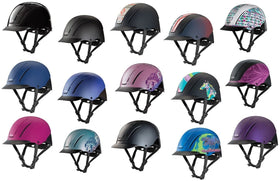
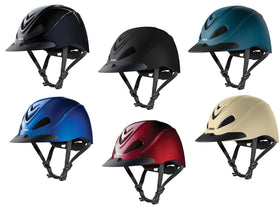
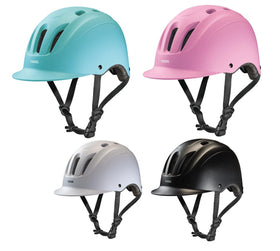
Western Helmet Styles: Cowboy Hats, Wide Brims, and Trail Looks
Western riding helmets make it easier to protect your head without giving up the look that feels natural in the saddle. The best designs pair a western-inspired silhouette with the safety features riders expect from a modern equestrian helmet. According to the product guidance for this guide. Western helmets are designed to provide the same safety benefits as English-style helmets while offering styling that works with western riding attire. The difference is visual, not a reason to compromise on certification, fit, or everyday comfort.
Cowboy-hat-inspired profiles
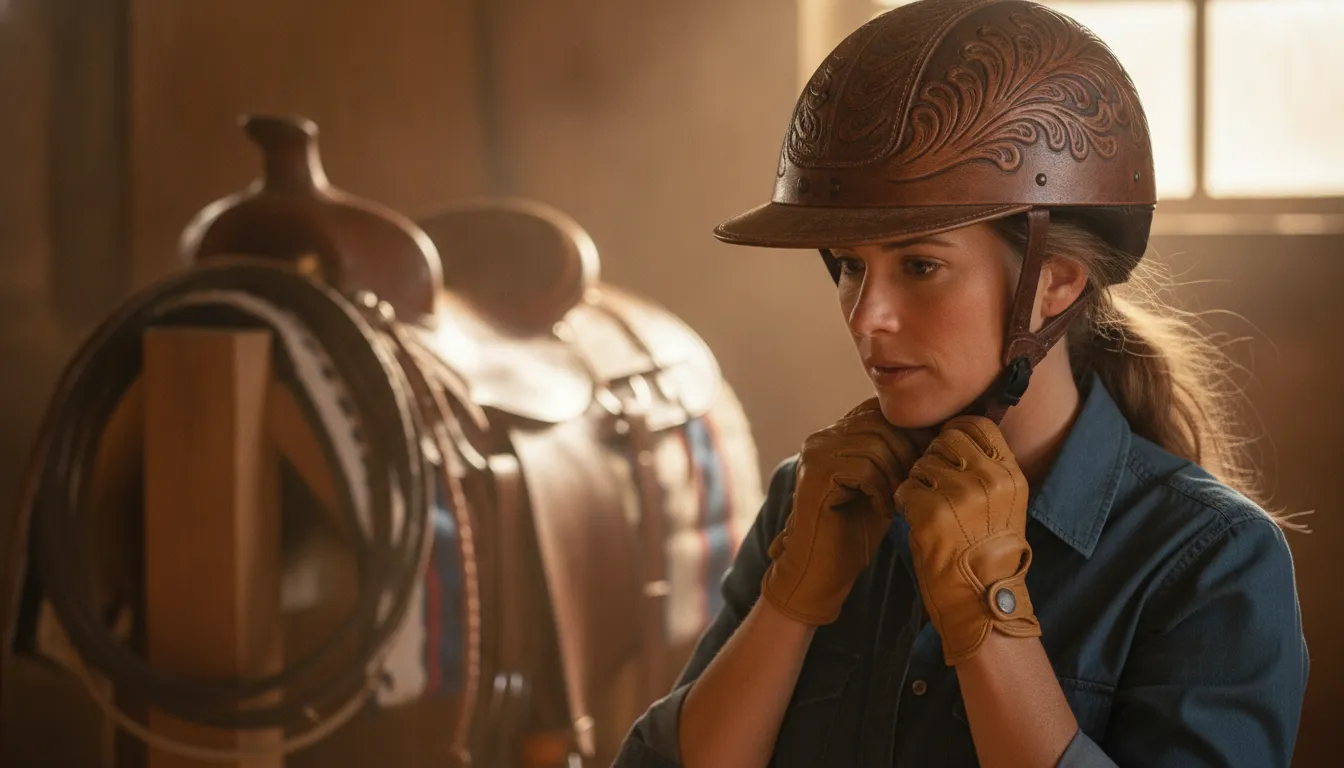
Some western helmets are shaped to resemble a traditional cowboy hat, with a defined crown and a brim that complements western shirts, boots, and chaps. This approach can be especially appealing to riders who want their safety gear to feel consistent with their established wardrobe. Look for a model that keeps the helmet shell securely positioned on your head rather than choosing a style based on appearance alone. A western look should support your riding routine, not distract from a proper fit.
Wide brims for a familiar western outline
Wide-brim styles create a recognizable western profile and can offer useful shade on bright trail days. The brim should never interfere with your visibility, reins, or ability to check your surroundings. When comparing options, consider how the brim sits from different angles and whether the shape works with the way you ride. A well-selected wide-brim helmet can look at home in the arena, at a show, or on a long trail while retaining the protective construction expected of equestrian headwear.
Low-profile trail styles
Low-profile western helmets take a quieter approach. They sit closer to the head and tend to work well for riders who prefer a streamlined shape under a hat-like outline. These styles can be practical for trail riding, schooling, and daily barn use because they avoid an overly bulky appearance. Modern western riding helmets also use materials designed to remain lightweight and strong, helping reduce the sense that protective equipment is weighing down a long ride. Ventilation is another useful feature, particularly when you spend hours riding in warm weather. Newer models may include airflow channels that help improve comfort without changing the helmet's western character.
For easier care between rides, many western-style helmets include removable, washable liners. A liner that can be taken out and cleaned is useful after hot-weather schooling or dusty trail work, though you should follow the manufacturer's washing and replacement instructions. Compare cowboy-hat, wide-brim, and low-profile options in the western riding helmets collection, then prioritize certified protection and a secure fit before finalizing your style choice.
When to Replace and How to Care for Your Western Helmet
A riding helmet can look perfectly normal after an accident and still have damage that is not visible from the outside. Treat replacement as a safety decision, not a cosmetic one. If your helmet has been involved in a significant impact, replace it before riding again. The same applies after a serious accident, even if you cannot find a crack, dent, or loose component. The protective materials may have absorbed impact energy and may not perform the same way a second time.
Know when replacement is necessary
Follow the manufacturer's recommendations for the useful life of your helmet, and replace it sooner if it experiences a serious accident. Guidance from Equine Extension helmet safety resources recommends replacing any helmet involved in a significant impact. Keep a simple record of when you purchased the helmet and whether it has been involved in a fall or collision. That makes it easier to recognize when replacement is due, especially if the helmet is used frequently by more than one rider.
Inspect the liner and shell regularly
Before rides, look over the shell for cracks, deep scratches, distortion, loose fittings, or other changes. Check the liner and padding for compressed areas, torn fabric, separation, or excessive wear. Regularly inspecting both the liner and shell can help identify wear that may affect safety. Also examine the chin strap and adjustment points for fraying or damage. An inspection is not a substitute for replacement after impact, but it is a practical habit that can catch problems early.
Clean and store your helmet correctly
Many western-style helmets have removable, washable liners. Remove the liner according to the manufacturer's instructions, wash it as directed, and let it dry completely before reinstalling it. Avoid harsh cleaners, solvents, unnecessary heat, and rough handling that could damage the shell or interior materials. When the helmet is not in use, store it in a cool, dry place away from direct sunlight, extreme temperatures, and damp tack-room conditions. Proper storage helps prevent material degradation and keeps the helmet ready for your next ride.
For a replacement or a second helmet, browse the western riding helmets collection and compare the fit, certification, liner, and care instructions before ordering.
Shopping for Western Riding Helmets with Free Shipping
Once safety, fit, and riding style are clear, the final purchase decision should be straightforward. Look for a helmet from a reputable brand, confirm the available size and certification details, and review the store's shipping and satisfaction policies before ordering. Those details matter because a helmet is riding equipment you need to feel confident wearing, not an impulse accessory chosen only for its appearance.
Hooves and Paws makes that process easier for riders across the continental United States. The store offers free continental U.S. shipping with no minimum order threshold, so you can order a helmet without adding unrelated items to qualify for delivery. Orders placed before 2 PM PST are eligible for same-day shipping. Which can be useful when you are preparing for lessons, a trail outing, or a show and need your equipment moving promptly. Shipping speed does not replace careful sizing, but it does remove one common source of uncertainty from online shopping.
When comparing a western riding helmet free shipping option, use the total buying experience as part of the evaluation. A low-friction delivery policy is valuable, but it should sit alongside verified safety features, a dependable fit, and a clear approach to returns or satisfaction support.
| Factor | What to check | Why it matters |
|---|---|---|
| Certification | Look for the applicable ASTM/SEI safety certification. | Certification indicates the helmet has been tested against recognized equestrian safety standards. |
| Fit | Confirm your head measurement and use the manufacturer's size guide. | A level, secure fit helps the helmet stay correctly positioned while riding. |
| Style | Choose a western profile, color, brim, and ventilation setup that suit your discipline and comfort needs. | You are more likely to wear a helmet consistently when it works with your riding wardrobe and feels comfortable. |
| Shipping | Check whether continental U.S. delivery is free and whether order cutoffs apply. | Clear shipping terms help you plan without unexpected costs or delays. |
| Guarantee | Review the store's satisfaction policy before you buy. | A defined guarantee gives you support if the product does not meet your expectations. |
Hooves and Paws has more than 30 years of experience serving horse, dog, and cat owners, with more than 18,000 curated SKUs and 25-plus premium brand partnerships. That breadth is useful when you want guidance rather than a random list of products. The selection can help you compare western profiles, features, and sizing from established equestrian brands while keeping the focus on practical use.
The store also offers a 365-day satisfaction guarantee, including for safety gear such as helmets. Read the product details and size guidance carefully, measure as directed, and contact the team if you need help narrowing the choices. Then browse the western riding helmets collection to compare options and choose a helmet that brings together certification, comfortable fit, western styling, and dependable service.
Shop Western Riding Helmets with Free Shipping
Why Do Some Western Riders Skip Helmets on Trail Rides?
Some western riders skip helmets because they associate them with English show attire. Worry about heat, or believe a familiar trail and a quiet horse make a fall unlikely. Those concerns are understandable, but trail conditions can change quickly. A spook, uneven footing, low branch, or unexpected encounter can create a fall even for an experienced rider. The importance of helmet use applies to every riding discipline, including western riding, not only to competition or lessons. Extension horse-safety guidance recommends treating head protection as part of routine riding safety.
A properly selected western model removes much of the style objection. Western riding helmets are designed to provide the same safety benefits as English-style helmets while offering shapes and finishes that work naturally with western riding attire. Look for an ASTM/SEI-certified helmet, then choose a profile and color that suit your trail gear. ASTM/SEI testing standards are intended to ensure helmets can handle forces likely to occur during equestrian activities. So certification matters more than whether the helmet resembles a traditional cowboy hat.
Western style and everyday protection are not competing choices. An ASTM/SEI-certified helmet, fitted correctly and worn on every ride, gives trail riders a practical way to protect their heads without giving up the look they prefer.
Comfort is another reason riders hesitate, especially on long summer rides. Modern western riding helmets use advanced materials that can be lightweight and comfortable while maintaining strength. Ventilation also helps manage warmth during extended rides in hot weather. A helmet should feel secure without creating painful pressure. It should sit level, remain stable when you move your head, and stay fastened with the chin strap. If a model rocks, pinches, or feels excessively hot, try a different size or design rather than abandoning head protection.
The CDC identifies helmets as the most effective way to reduce the risk associated with equestrian head injuries. And helmet use can significantly reduce the severity of head injuries in falls. Wearing one every time you ride is a simple habit that protects the person who depends on you at home, at the barn, and on the trail. Compare certified options in the western riding helmets collection, and use the manufacturer size guidance before ordering.
Shop Western Riding Helmets Today
Frequently Asked Questions
Why is ASTM/SEI certification important for a western riding helmet?
ASTM/SEI certification indicates that the helmet has been tested against established equestrian safety standards and is built to handle forces likely in riding activities. Look for the certification marking before choosing a helmet, then wear it on every ride. Learn more about ASTM/SEI helmet standards.
What should I look for when fitting a western riding helmet?
The helmet should sit level, just above your eyebrows, and remain stable when you move your head. It should feel secure without painful pressure, and the chin strap should be fastened correctly. A loose helmet may not provide the intended protection in a fall. Review equestrian helmet fitting guidance.
Does free shipping apply to western riding helmets?
Hooves and Paws offers free shipping throughout the continental United States with no minimum order requirement, including eligible helmet orders. Orders placed before 2 PM PST are also eligible for same-day shipping under the store's shipping policy. Check current shipping details.
How often should I replace my western riding helmet?
Replace a helmet immediately after a significant impact or serious accident, even if there is no visible damage. You should also follow the replacement schedule recommended by the manufacturer and inspect the shell and liner regularly for wear. Read equestrian helmet replacement guidance.
What is the difference between Western and English riding helmets?
The main difference is styling and design details that coordinate with the rider's discipline and apparel. A western-style helmet can offer equestrian safety protection while providing a look suited to western riding. Choose based on certification, fit, comfort, ventilation, and the style you will wear consistently.
Find the Right Western Riding Helmet Today
Choosing your next western riding helmet comes down to three things: the right ASTM/SEI certification, a secure fit, and a style you will actually enjoy wearing. When you find the model that checks all three, the decision gets easy. And with free continental U.S. shipping on every order and no minimum, you can shop with confidence.
At Hooves and Paws, we have helped riders find quality safety gear for more than 30 years, backed by a 365-day satisfaction guarantee. Whether you ride the arena, the trail, or the show grounds, having the right head protection makes every ride safer.


