

Breathable Fly Sheets
Filter and sort
9 products

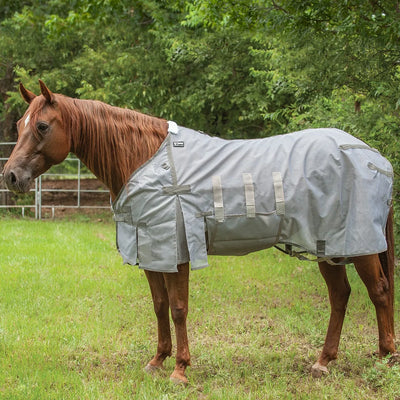

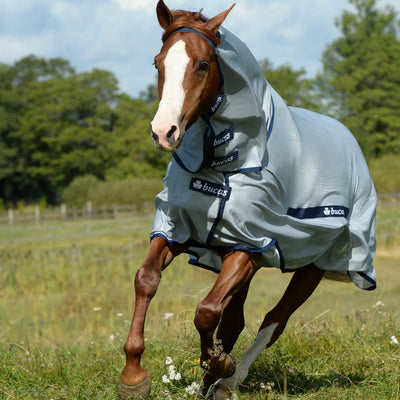

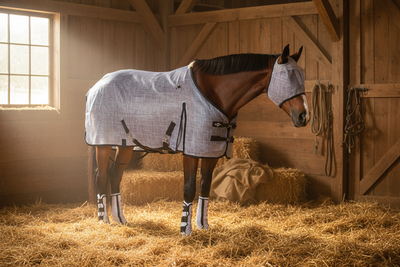

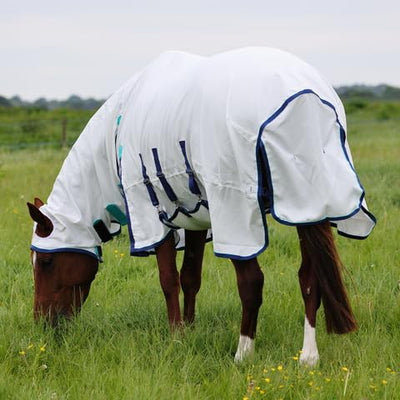

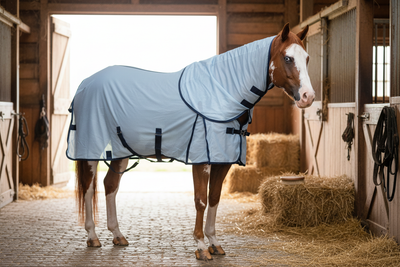

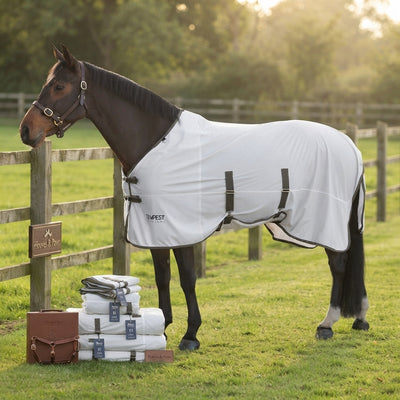

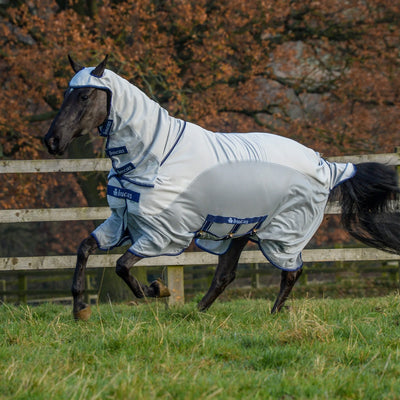

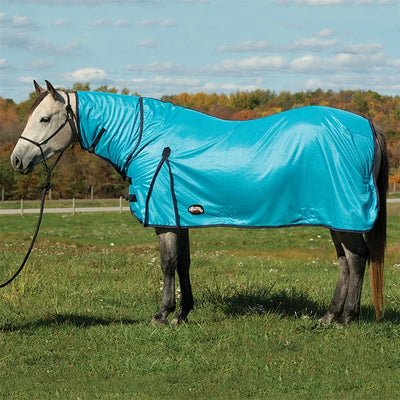
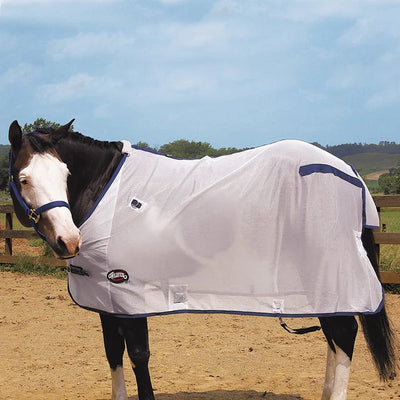
Ask ten people at a summer show whether a fly sheet makes a horse hotter and you will get about five answers each way, which tells you the honest answer is that it depends on the horse, the humidity and the sheet. What nobody argues about is the other half of the problem: mesh tears, and where it tears is predictable.
What Riders Are Actually Asking
Does a fly sheet make my horse hotter?
Riders genuinely split on this and there is no good controlled study to settle it. In dry heat, a loose white mesh sheet works something like a linen shirt, shading the skin while air still moves through, and people in the desert Southwest report horses sweating less under one. In humid heat the argument flips, because evaporation is already struggling and a layer makes it worse. The common working rule on the forums is to pull sheets above about 95 degrees, and to check under the sheet at midday: a horse breathing hard with damp, hot skin has told you the answer.
Why does the mesh tear, and where?
Almost always at the shoulder, at the point of the hip, and along the seam where mesh meets a solid panel. Fine mesh is what keeps midges out, and fine mesh is also what a pasture mate's teeth or a T-post finds first. Look for ripstop panels or a heavier denier over the shoulders and chest: 600D shoulder patches on an otherwise light mesh body is the usual compromise. A horse who plays hard will still go through sheets, and the honest fix there is a plainer, tougher sheet rather than the finest weave you can buy.
Do I size a fly sheet the same as a turnout blanket?
Yes, same measurement, and that is where most rubs start. Measure from the center of the chest, along the side, to the point of the rump, and use that number in inches. American sizes step in three-inch increments, usually 66 through 87. Because a fly sheet is light and slippery, a sheet an inch or two too big will slide sideways and hang on the point of the shoulder all day. If you sit between sizes on a fine-boned horse, go down; on a big-shouldered warmblood, go up and rely on the shoulder gussets.
Do I need the neck cover and belly band?
It depends what is biting. Neck covers are worth it for horses who rub their manes out on fence rails and for anything sensitive to gnats along the crest. A belly band matters for midline dermatitis, the crusty scabby line down the belly that black flies cause, and for sweet itch a full combo with a fine, midge-proof weave is the whole point of the purchase. If your problem is ordinary house flies on a horse with a normal skin, a standard-neck sheet is enough and gives you one less strap to check.
Will it rub the shoulders or the withers?
It can, and the mechanism is usually moisture rather than friction alone. Sweat trapped under a sheet softens the skin, and softened skin abrades at a fraction of the pressure dry skin needs. Look for a shoulder gusset, a smooth lining panel over the withers, and a sheet that fits closely enough that it is not swinging. Then look under it every couple of days, especially where the leg straps cross. Riders have reported permanent scarring on thin-skinned horses from rubs that went unnoticed for a week.
How to Choose the Right Fly Sheet
- Weave first, weight second: Fine mesh stops midges and gnats. Coarse mesh survives turnout with a playful gelding. Decide which problem you actually have.
- Look for a reinforced shoulder: Ripstop or heavier denier over the shoulder and chest is where a light sheet earns a second season.
- Measure chest to rump: Same measurement as a blanket, in three-inch steps. A loose fly sheet slides and rubs faster than a snug one.
- Add the neck only if he rubs: A detachable neck is easy to leave off. A sewn-in one is not, and it is one more thing to soak and dry.
- Have a spare on the rail: Sheets get washed, torn and repaired mid-season. The horse still needs cover on the day yours is at the tailor.
What This Page Is Not For
This page is turnout fly sheets. It does not cover fly masks, fly boots, fly spray or feed-through fly control, and it is not the place for rain sheets or turnout blankets, which are waterproof and not breathable in the same way. If you want the full insect setup, the sheet is one of four things you probably need.
Brands Riders Trust
Shires runs the deepest line here, from the Tempest Original standard neck up to the Highlander Plus Sweet Itch combo built on 600D for horses that react to midges. Weaver Leather makes the plain white UV-reflective mesh sheet that a lot of barns buy by the pile. Professional's Choice covers the rip-stop and Theramic ceramic options. Toklat imports the Bucas Buzz Off line, and Cashel offers a lightweight sheet cut to match their Crusader fit.
Every sheet here is stocked in an American warehouse and moves in two days, and the 365-day guarantee covers you if it does not work out on your horse. Happy Tails, Happy Trails.
