


If you are comparing the best cat toys for bored cats, start with the behavior you want to encourage. A good toy gives an indoor cat an appropriate way to stalk, chase, pounce, bat, forage, or solve a small problem. The best choice is rarely the most complicated gadget. It is the option your cat can use successfully and enjoy often.
Shop cat toys for bored cats today and build a play rotation with hunting, chasing, and puzzle options.
By Hooves and Paws Editorial Team
This roundup focuses on boredom relief rather than a generic list of interactive products. It covers how to recognize an under-stimulated routine, how to match a toy to your cat's play style, and how to use real products in a repeatable schedule. For a broader look at interactive play, see our guide to interactive toys for bored cats.
Why Do Indoor Cats Get Bored?
Indoor living can be safe and comfortable while still becoming predictable. A cat may have food, water, a clean litter box, and a favorite bed, yet have little to investigate between meals. If every toy stays in the same place and every play session follows the same path, the environment can lose its novelty.
Boredom may show up as restless nighttime activity, repeated vocalizing, attention-seeking, furniture scratching, ambushing people or other pets, or knocking objects from shelves. Some cats respond by sleeping more and showing less interest in their surroundings. These signs can also have medical or stress-related causes, so a sudden or intense behavior change deserves veterinary attention. Toys are one part of a broader enrichment plan, not a substitute for health care.
A review in Applied Animal Behaviour Science found support for hiding boxes and vertical resting spaces. It also noted that household conditions are complex and some feeding-enrichment claims need more study. Read the systematic review of social and environmental factors affecting indoor cat welfare for context.
Look for patterns instead of labeling every unwanted behavior as boredom. Does your cat become more relaxed after a short chase? Does it engage when a toy moves behind furniture but ignore a stationary plush item? Does it investigate a food puzzle and then settle down? Those observations tell you whether your cat is seeking movement, sensory novelty, food-based work, or shared attention.
- Stalking and chasing toys give active cats a safe outlet for a hunting sequence.
- Kicker and plush toys suit cats that prefer wrestling, biting, and hind-leg kicking.
- Puzzles and foraging toys add decision-making to mealtime.
- Tunnels, scratchers, and elevated spaces change how a cat explores the room.
- Short, successful sessions are often more useful than leaving every toy available all day.
The goal is not to keep your cat moving constantly. The goal is to create regular opportunities for focused play, exploration, and rest. A simple rotation can make familiar toys feel new again while helping you learn what your individual cat prefers.
What Should You Look for in Toys for a Bored Cat?
Start with your cat, not the product label. A toy designed for fast chasing may frustrate a cautious cat that prefers to watch from cover. A complex feeder may be ignored by a cat that has never used a puzzle. The right toy creates an achievable challenge and lets the cat control enough of the interaction to feel successful.
Match the toy to the play style
Watch the first few minutes of play. A cat that crouches and follows a moving object may enjoy a wand or track. A cat that grabs a toy and kicks it may prefer a long stuffed kicker. A cat that sniffs every bag and searches under furniture may be a strong candidate for foraging or food-dispensing enrichment. A shy cat may engage more readily with a tunnel or toy that can be approached from cover.
Useful features include unpredictable but manageable movement, varied textures, a size that is easy to carry or bat, and a way to finish the activity. A moving target that never can be caught can leave play feeling incomplete. During interactive sessions, slow the toy, pause, and let your cat make contact. End with a physical toy or appropriate food reward when that fits the cat's routine.
Check construction before every session
Inspect seams, feathers, strings, bells, plastic parts, and elastic before offering a toy. Remove anything that is unraveling, cracked, sharp, or small enough to swallow. Supervise wand, ribbon, and string toys, then store them away. Do not assume an automatic toy is safe simply because it uses batteries. Watch the first sessions and follow the product's care and operating instructions.
Choose a clear play area without fragile objects, loose cords, or narrow gaps where a toy can become trapped. Wash or wipe toys according to their material and replace them when cleaning cannot remove buildup. Quality and fit are more important than buying a large quantity of novelty items.
Balance independent and shared play
Independent toys help fill quiet periods, while interactive toys let you vary speed and direction. Both have a place in a boredom-relief routine. Keep a few safe items available, reserve higher-supervision toys for time together, and rotate options before your cat fully loses interest.
Shop This Post

Featured in this article
Ducky World Yeowww! Cigar 7" Organic Catnip Kicker for Barn Cats
$12.11
Shop Now →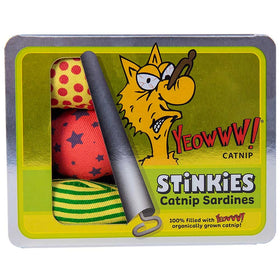

Best Cat Toys for Bored Cats That Encourage Hunting
Hunting-style play is a strong starting point for a bored cat because it gives the session a clear story. Move a target into view, allow time to watch, create a short chase, and then let the cat catch something tangible. You do not need to make every session intense. A few minutes of focused stalking can be valuable enrichment.
Feather wands for controlled interactive play
Use a feather wand to imitate the irregular movement of a small flying or ground-level target. Sweep it along the floor, pause behind a chair, and change direction instead of moving in a constant circle. Keep jumps moderate and let your cat choose whether to pounce. A cautious cat may prefer the toy to stay low and partly hidden.
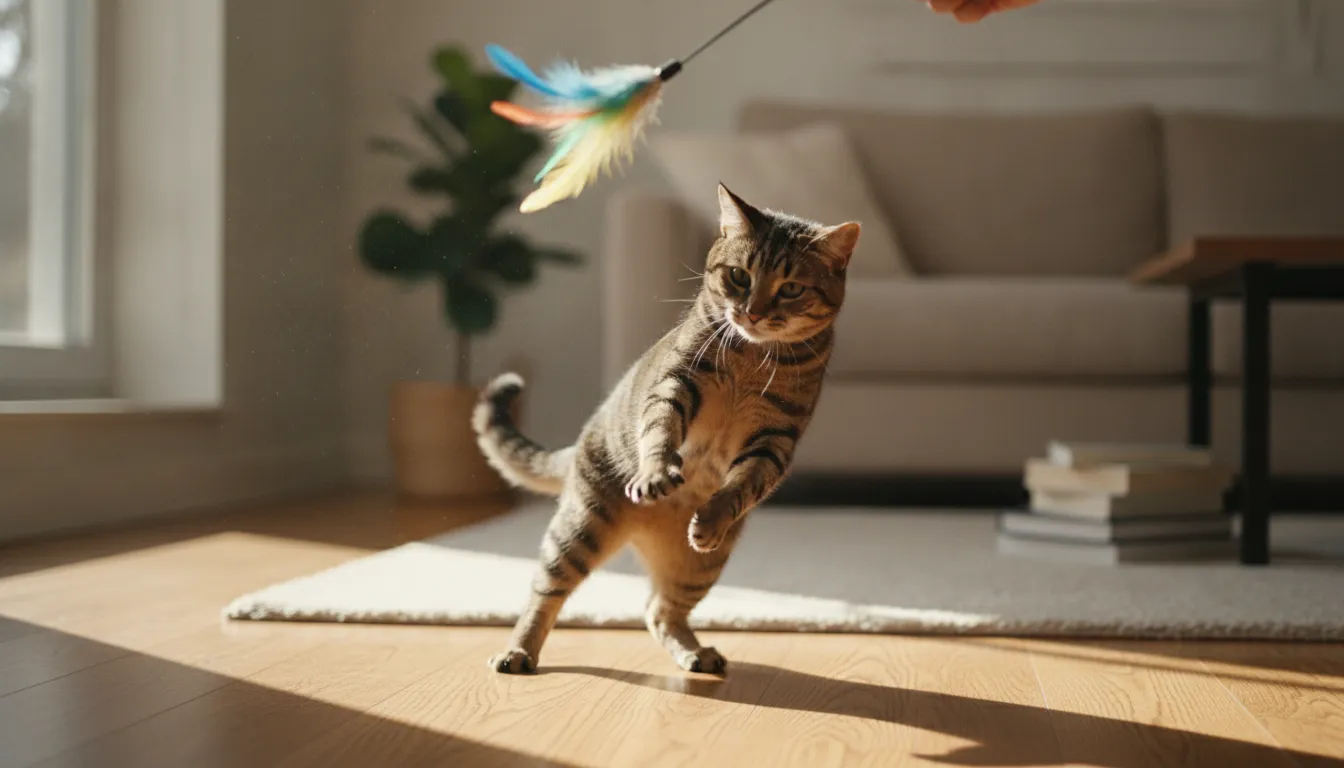
Give your cat regular successful catches. If the cat loses interest, reduce the speed, bring the toy closer, or switch to a floor-based movement. Interactive play should feel like a shared game, not a test the cat keeps failing.
Stuffed kicker toys for grabbing and wrestling
After a chase, many cats want to hold, bite, and kick the object they caught. A long stuffed kicker can provide a substantial surface for that activity. Offer it at the end of a wand session or leave it available if the construction is appropriate for independent use. Check it frequently for loose seams, exposed filling, or detached pieces.
Hooves and Paws carries product options that can support this style of play. The Yeowww! Cigar organic catnip kicker is a specific example of a long, soft item that can be grabbed and wrestled after a chase. Catnip affects cats differently, so introduce any catnip toy in a calm setting and observe your cat's response.
Moving prey toys for variety
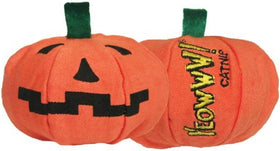
Motion and wind-up toys can add variety when you are not available to control a wand. Introduce them while you are present, choose a clear floor area, and use short sessions. The Yeowww! Hearrrt Attack catnip toy offers another type of physical interaction for cats that like to roll, bat, carry, or chew. It can complement, rather than replace, a moving chase toy.
For a simple sequence, start with two or three minutes of tracking, allow a catch, offer the kicker, and then transition to rest or a meal. This rhythm is more useful than leaving a cat with a fast-moving toy for an extended period without an opportunity to finish.
Top Chasing and Swatting Toys for Cats
Not every cat wants to jump after a feather. Some prefer to stay close to the floor and send an object skittering with one quick paw. Chasing and swatting toys are useful for those cats because the animal controls the timing and can repeat the action at its own pace.
Ball tracks and contained movement
A ball track keeps the ball within a stable circuit while openings invite the cat to reach, swat, and follow movement. Look for a wide, steady base that is difficult to tip. Place it where the cat has room to approach from more than one side. If the track is ignored, add a different toy nearby rather than forcing the cat's paw into the opening.
Our interactive cat toy ball guide can help you compare the kind of movement a ball toy provides. A track is most useful when it fills a specific role in the rotation, such as a quiet afternoon option, rather than being the only enrichment available.
Coil springs and small batting toys
Light coil springs can bounce and slide unpredictably across a hard floor. They are simple to put away and easy to rotate, which makes them useful for cats that enjoy short bursts of play. Inspect them for cracks and sharp edges. If your cat chews small toys instead of batting them, provide the toy only during supervised sessions.
Tunnels and ambush routes
A tunnel changes the shape of the play space. Drag a wand or soft toy past an opening, pause, and allow the cat to choose whether to ambush it. Tunnels can give cautious cats cover and give confident cats a route for dashing. Keep the surrounding area open and remove the tunnel if fabric becomes damaged or unstable.
Motion toys and laser pointers
Automatic motion toys can be helpful for short independent sessions, but they should not replace observation. Use the manufacturer's settings and watch for overheating, loose parts, or signs that the cat is becoming frustrated. If you use a laser pointer, finish by directing the cat to a physical toy it can catch. A final tangible reward gives the chase a clearer ending.
For more ideas, compare the options in our top-rated interactive cat toys guide. The useful question is not which toy is universally best. It is which movement your cat follows, which surface it enjoys touching, and which activity it returns to without being pressured.
Are Puzzle and Food-Dispensing Toys Good for Bored Cats?
Puzzle play gives a bored cat a reason to investigate even when no person is available. Instead of placing every bite in one bowl, you can offer an appropriate portion through a feeder, foraging toy, or dispenser. The cat must make choices and use its paws or nose to reach the food.
| Toy type | Best for | Main action | Starting approach |
|---|---|---|---|
| Puzzle feeder | A cat that enjoys figuring things out | Pawing, lifting, sliding, or reaching | Use an easy opening with familiar food. |
| Foraging toy | A curious cat that likes searching | Sniffing, exploring, and locating portions | Hide food in obvious, accessible places. |
| Slow feeder | A cat that rushes through meals | Working around channels or textured areas | Keep the first setup simple to prevent frustration. |
| Food dispenser | A cat that likes rolling and batting | Moving an object to release food | Use a small portion on a clear floor. |
Start easy and measure success
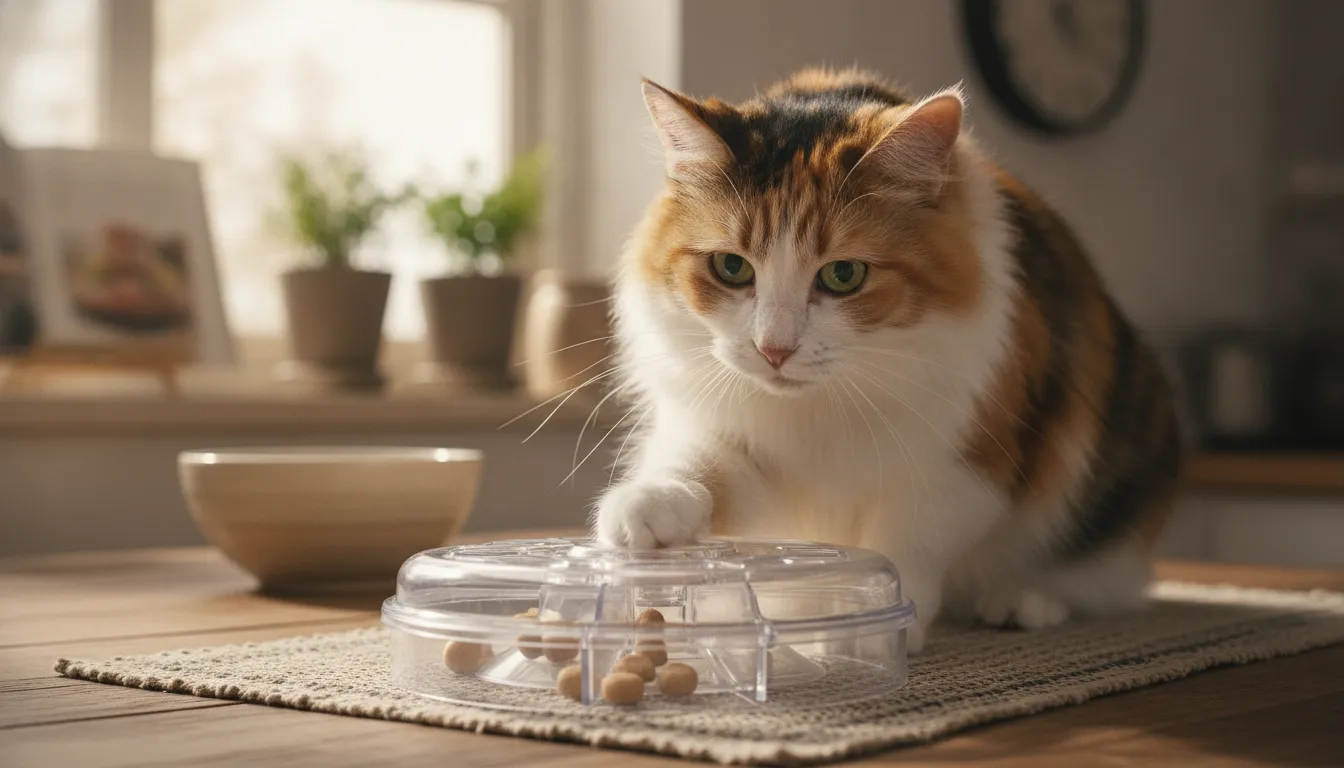
Put a few familiar pieces of the regular meal in an easy-to-access section. Let your cat see and smell the food. If it walks away, reduce the difficulty or try a different shape. The purpose is to create engagement, not to make the cat work until it gives up.
Keep portions consistent. Treats and food placed in puzzles still contribute calories, so account for them in the daily feeding routine. Keep fresh water available and follow your veterinarian's direction if your cat has a condition requiring a specific diet. For cats that eat quickly, our cat puzzle feeder guide offers additional ways to turn meals into manageable enrichment.
Use food toys as one part of the rotation
Food puzzles are not a complete replacement for chase or social play. Rotate them with a wand, kicker, scratcher, or safe batting toy. A food dispenser can be especially useful during a quiet period, while a person-led chase can provide movement and attention later in the day.
How Can You Keep Cat Toys Interesting?
Novelty does not require constant shopping. Put most toys away in a clean container and leave out a small set with different jobs. For example, one day might include a ball track, a kicker, and a puzzle feeder. Another day might include a tunnel, a soft batting toy, and a short wand session.
- Observe which toy your cat chooses and how it interacts with it.
- Keep two or four safe options available instead of every toy at once.
- Swap one or two items when interest begins to fade.
- Change the play location while keeping the area safe and uncluttered.
- Vary speed, pauses, and direction during supervised chase play.
- Inspect and clean each item before returning it to the rotation.
Use the cat's response as your guide. Focused watching, crouching, pawing, chasing, and a calm finish suggest that the activity is working. If the cat becomes overstimulated, hides, hisses, or loses interest, pause and try a quieter option later. A rotation should make enrichment easier, not create pressure.
Also rotate the type of reward. A toy can end with a catch, a kicker, a meal portion, or a calm grooming and rest period. That variety helps prevent every play session from becoming the same repetitive chase. For health-related questions about supplements or nutrition, consult your veterinarian and use our cat supplements guide as general shopping education, not medical advice.
How Do You Choose a Safe Play Routine?
Set up play in a space where your cat can move without colliding with furniture or getting a toy caught behind an appliance. Keep cords, ribbons, and long strings out of reach when you are not supervising. If several cats share the home, offer enough space and choices to reduce competition around one toy.
Start with short sessions and stop while the cat is still engaged. A calm end is preferable to pushing for one more chase. After active play, provide water and a quiet place to settle. If your cat shows persistent lethargy, pain, appetite changes, breathing trouble, or a sudden behavior shift, contact a veterinarian rather than trying to solve the issue with a new toy.
Hooves and Paws curates supplies for animal families, including cat toys and enrichment options for different play styles. The store has served horse, dog, and cat owners since 1994 and offers a 365-day satisfaction guarantee. It provides free continental U.S. shipping with no minimum order and same-day shipping for orders placed before 2 PM PST. Review each product's details and choose the option that fits your cat's routine.
Shop the cat toys collection and refresh playtime today
Frequently Asked Questions
What are the best cat toys for bored cats that play alone?
Safe ball tracks, sturdy batting toys, tunnels, and appropriate food puzzles can suit cats that play alone. Choose a toy your cat can use without loose strings or detachable pieces, and inspect it regularly. Keep supervised wand and ribbon toys stored away between sessions.
Are feather wands safe for cats?
Feather wands can be useful for supervised interactive play. Watch the cat while the toy is in use, prevent chewing on loose parts, and store the wand afterward. Let your cat catch the toy regularly, then replace it when feathers, string, or attachments become damaged.
Are puzzle feeders good for bored cats?
Yes. Puzzle feeders turn part of a meal or treat routine into searching and problem-solving. Begin with an easy design and familiar food, then adjust the challenge based on successful use. Count food placed in the feeder toward the cat's daily feeding plan.
Should I use a laser pointer to play with my cat?
A laser pointer can encourage chasing, but the session should finish with a physical toy the cat can catch. That final catch provides a tangible outcome. Use short sessions, avoid shining the light near the eyes, and stop if your cat becomes frustrated or overstimulated.
How often should I rotate my cat's toys?
Rotate toys when your cat begins ignoring familiar options, often after a few days or when interest changes. Keep a few favorites available, replace others with different textures or challenges, and bring stored toys back after a break. Inspect and clean everything before reuse.
View cat toys for curious indoor cats and choose a few options for your next play rotation.


