


The best socks to wear with riding boots are the pair that stays flat against your calf, clears the boot top by a short margin, and keeps sweat off the leather. A tall field boot, a short paddock boot, and a half chap each need a different sock height. The wrong height bunches at the ankle, slips into the heel, or leaves a bare strip of skin against the boot.
This guide is a pairing chart, not a brand roundup. If you want fabric types, cushion levels, and a wider sock shop, start with our horse riding socks guide, then come back here to match a height to the boot you already own.
What are the best socks to wear with riding boots?
Start with the boot you already ride in, then pick the sock that matches its shaft. Measure from the floor to the top of the boot while you are standing in it. The sock should end about one inch above that line for tall boots, and it should sit fully inside a short boot or a half chap.
| Boot you ride in | Sock height to choose | Fabric and cushion | What goes wrong |
|---|---|---|---|
| Tall field or dress boot. | Knee-high or boot sock. It should clear the top by about an inch. | Thin merino or synthetic knit. Use light footbed cushion only. | A thick crew sock packs the calf. The foot then slides. |
| Paddock or jodhpur boot. | Crew or mid-calf. It should end inside the boot collar. | Light cushion at the heel. Keep the ankle smooth. | A knee-high folds over the short shaft. That fold rubs. |
| Half chap over a paddock boot. | The same mid-calf sock. The chap should cover it fully. | Thin, smooth knit. Skip a bulky cuff. | A cuff under the chap zipper creates a hot spot. |
| Western or tall cowboy boot. | Boot sock inside the shaft. Skip a slouchy fold over the top. | Thin merino. Look for a reinforced heel and toe. | A doubled athletic sock changes the fit you sized. |
Quick answer: Knee-high and thin for tall boots. Mid-calf and smooth for paddock boots and half chaps. Keep the sock inside a western shaft. If the sock shows as a thick roll, it is the wrong height.
How should socks sit in tall field boots?
Tall field boots are close through the calf. Inside that close calf, the sock should act as a smooth sleeve rather than a padded layer. Pick a knee-high with a flat toe seam and only a light cushion under the foot. A heavy terry sole steals the room your foot needs to stay seated in the stirrup.
Put the sock on, then the boot, then stand and flex the ankle once. The knit should stay smooth from ankle to the boot top. If you can pinch a fold behind the ankle, the sock is too long or too loose. A fold there is the usual start of a heel blister on a long school.
Leather also needs a dry foot. The American Academy of Dermatology says moisture-wicking socks, and shoes that fit, are the first step in stopping friction blisters. Cotton athletic socks hold sweat against the boot lining, which is the opposite of what a long lesson needs. A merino or synthetic boot sock moves that moisture out.
New leather is a separate job from the sock. If the tall boot is still stiff, follow a break-in plan for leather riding boots before you blame the knit. A sock cannot fix a boot that has not yet softened at the ankle.
Dress boots are even less forgiving than field boots. The calf is closer, and many show riders want no sock showing at all. You can still use a thin knee-high. Tuck the top edge so it sits just inside the boot, with no roll. If that edge will not stay down, the sock is too short, and the bare calf will take the rub instead.
Check the pair after the first ten minutes of sitting trot or a long walk. Heat builds fastest behind the ankle and across the top of the foot, where the boot throat closes. A smooth sock keeps those two spots from grabbing. If either spot pinks up, stop and peel the sock flat before you try the next pass.
Key Takeaway: In a tall field boot, thin beats plush. One smooth layer that clears the top by about an inch keeps the calf comfortable and the foot from sliding.
What socks work with paddock boots?
Paddock boots stop near the ankle, so a knee-high has nowhere to go. It folds over the collar or sticks out and rubs the chap or the breeches. A crew or mid-calf sock that ends inside the boot is the better match.
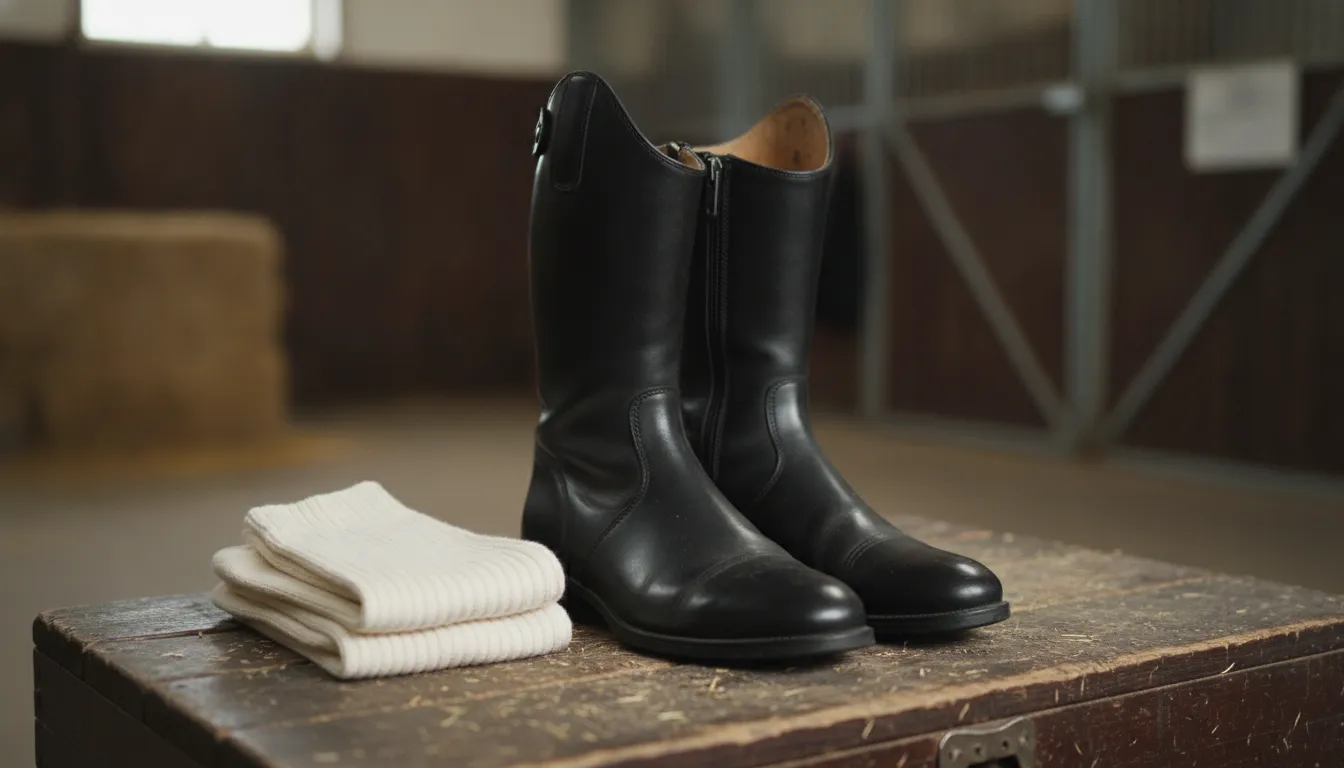
Look for a smooth ankle and a little cushion only at the heel. The short shaft already gives less calf coverage, so the sock's job is to stop the heel from lifting, not to add warmth up the leg. If your ankle gets cold in winter, add a breeches layer or a half chap. Do not solve it with a taller sock that will not stay put.
On the Hooves and Paws boot wall, the Shires Moretta Anita paddock boot is a short synthetic shaft with a rear zip and a moisture-wicking lining. Pair it with a mid-calf sock that disappears inside that collar. A thick folded cuff sitting at the zip is a clear sign the sock is too tall for that boot.
Lace-up paddock boots need the same height, with one extra check. The tongue and laces already take space over the instep. A cushioned athletic sock stacked under that tongue makes the front of the ankle tight while the heel still lifts. Use one smooth sock, snug the laces from the toe up, and leave the top eyelet loose enough that the sock edge is not pinched.
Jodhpur boots end in an elastic cuff just above the ankle, so they punish a tall sock even more. The elastic grips whatever fabric sticks out. A crew sock that finishes inside the cuff stays put. A knee-high rolled down over the elastic walks down the ankle by the end of the lesson.
Quick answer: Crew or mid-calf, fully inside the paddock boot. If the sock peeks out as a roll, switch to a shorter one.
How do half chaps change the sock you need?
A half chap covers the calf that a paddock boot leaves bare. It does not replace the sock, and it does not want a second tall sock underneath. Wear the same mid-calf sock you use with the paddock boot, then zip the chap over a smooth leg.
The failure point is the cuff. A ribbed band or a folded top under the chap zipper presses into the shin for the whole ride. Choose a sock with a flat top edge. Smooth the chap from ankle to zipper before you mount, and check that no knit is caught in the teeth.
Suede half chaps, such as the Shires Moretta suede half chaps, grip a little as they break in. A thin sock under them is enough. Two sock layers plus a chap plus a paddock boot is too much bulk, and it changes how the stirrup feels.
Leather half chaps are smoother, so a loose sock can still migrate. Seat the heel of the sock with your hand before you zip. Then walk the aisle and check the zipper line again. A chap that gapes at the ankle usually means the sock has slid down and taken the chap with it.
Riders who school in summer heat sometimes skip socks under chaps. That feels fine for ten minutes and then sticks. Skin against suede or leather holds sweat in the same way cotton does. Keep the thin sock, and if you want less warmth, choose a lighter knit rather than a bare ankle.
- Put on a mid-calf sock and seat the heel.
- Zip the paddock boot and flex the ankle once.
- Pull the half chap up over a smooth sock with no folded cuff.
- Zip the chap and run a hand down the shin to confirm nothing is bunched.
- Walk ten steps. If the heel lifts, the sock is loose or the boot is too big.
Which socks belong in western boots?
Western boot shafts are taller and roomier than a close-fit field boot, but the sock rule is the same: one thin layer that stays inside the shaft. A slouchy fold above the top looks casual and rubs once you are in the saddle for an hour.
Pick a boot sock with a reinforced heel and toe. Western riders often spend longer hours standing and walking the barn, so the heel takes more wear than it does in a short lesson. Merino still earns its place here because it handles cold mornings and warm afternoons without swapping pairs.
Do not double up athletic socks to "fill" a boot that feels loose. Extra thickness changes the fit you were sized for and raises the chance of a hot spot at the instep. If the foot slides in a single thin sock, the boot is the problem. Browse riding boots in a size that holds the heel without padding tricks.
Tall western shafts also hide a sock that has twisted. After you pull the boot on, reach in and lay the knit flat along the calf before you stamp the heel down. A twist you cannot see will sit on the shin for the whole ride. Trail riders who walk a parking field between rides usually feel that spot first.
Cold-weather riding tempts people toward a heavy work sock. Use that only if the boot was fitted over it. A boot fitted in a thin sock, then worn later with a thick hunting sock, goes from comfortable to numb across the instep. Pick one sock weight and stay with it, and keep a second dry pair in the trailer for the ride home.
Key Takeaway: One thin boot sock inside the western shaft. A fold over the top, or a second pair stuffed in to tighten the fit, is a rub waiting to happen.
How do you test a sock and boot pairing?
Try the pair the way you will ride, not barefoot in a shop aisle. Wear the breeches or jeans you use, then the sock, then the boot. Stand, walk, and flex. The checks below take one minute and save a blistered lesson.
- The sock top sits where the chart says, with no thick roll.
- You cannot pinch a fold behind the ankle or under the heel.
- Toes move a little. They do not feel packed by a heavy cushion.
- The heel stays down when you rise on the balls of your feet.
- No seam crosses the toe or the back of the heel.
If a spot turns red in the first fifteen minutes, stop and fix the pair before the next ride. The Academy of Dermatology notes that padding a rub, or stopping when skin turns red, keeps a hot spot from becoming a blister. A donut of soft padding around a sore spot can help for one ride. It is not a substitute for the right height.
Replace the sock when the heel has worn thin or the top edge has stretched into a bag. A tired sock slips even if the boot still fits. For the wider shop, materials, and care basics, use the horse riding socks guide rather than guessing from a fashion sock.
A note on two sock layers
Some riders wear a thin liner under a taller sock in brand-new tall boots. That can cut friction while leather softens, which matches the idea of reducing rub before a blister starts. Treat it as a short break-in trick, not the everyday pair. Once the boot flexes at the ankle, go back to one sock. Two layers left in for months change the fit and hold more moisture.
If you do use a liner for a week or two, both layers should be smooth and free of thick cuffs. The liner ends at the ankle. The outer sock follows the height in the chart. Never add a liner to make a large boot feel smaller. That problem belongs to the boot size rather than the sock drawer.
Frequently Asked Questions
Can I wear regular athletic socks with tall riding boots?
You can, but most athletic crews are too short and too thick. They stop mid-calf, so the bare leg rubs the tall boot, and the cushioned sole crowds the foot. A thin knee-high made for boots is the better pair.
Should riding socks show above tall boots?
A short band, about an inch, is useful. It marks that the sock is tall enough to protect the calf and gives you an edge to pull the boot on. A long folded cuff above the boot is too much fabric and will not stay smooth.
Do half chaps need their own sock?
No. Wear the mid-calf sock that fits your paddock boot, and let the chap cover the leg. A second knee-high under the chap bunches at the zipper and creates a pressure line.
Are wool socks too warm for summer lessons?
Light merino is usually fine because it moves sweat instead of holding it. If the boot still feels swampy, switch to a thin synthetic boot sock. Avoid cotton, which stays wet against the lining.
What if my heel still slips in the right sock?
A single thin sock should not have to tighten a loose boot. Check the size, the insole, and whether the boot is fully broken in at the ankle. If the heel lifts in a smooth, well-fitted sock, look at a different boot size rather than adding another layer.
How often should I replace boot socks?
Retire a pair when the heel is thin, the toe seam has risen, or the top no longer stays up. Those are the spots that start a rub. Washing after sweaty rides keeps the knit from packing down early.


