


Adding greenery can make a home feel calmer, brighter, and more inviting, but curious cats turn every new leaf into a possible nibble. Choosing cat safe plants is not just a matter of picking a familiar houseplant. You also need to confirm the exact species, consider soil and treatment products, and plan where the plant will live.
Shop Cat Toys for Safe Indoor Enrichment
This practical guide explains how to evaluate plants for a cat household, which options are commonly considered safer, what plants deserve extra caution, and what to do if your cat chews on an unknown leaf. Use a trusted plant database for the final check, especially when a plant has several common names.
What Does Cat Safe Plants Really Mean?
Cat safe usually means a plant is listed as non-toxic to cats by a trusted reference. It does not mean a cat should eat unlimited amounts, and it does not cover treated soil, fertilizers, pesticides, floral preservatives, or look-alike species.
When people search for cat safe plants, they usually want two answers: which greenery can live in the home, and how to reduce the risk if a cat investigates it. Those are related but separate questions. A plant can be classified as non-toxic while still causing vomiting, diarrhea, mouth irritation, or an upset stomach if a cat eats a large amount.
The safest approach is to treat non-toxic as a screening result, not a guarantee of zero risk. Look up the plant by its scientific name whenever possible. A common name such as palm, fern, lily, or ivy can refer to several unrelated plants with very different safety profiles.
The ASPCA toxic and non-toxic plant list for cats is a useful starting point. Compare the exact plant, not just a store tag or a photograph. Keep a screenshot or note of the scientific name before you buy so you can check the right entry later.
Which Houseplants Are Commonly Considered Safer for Cats?
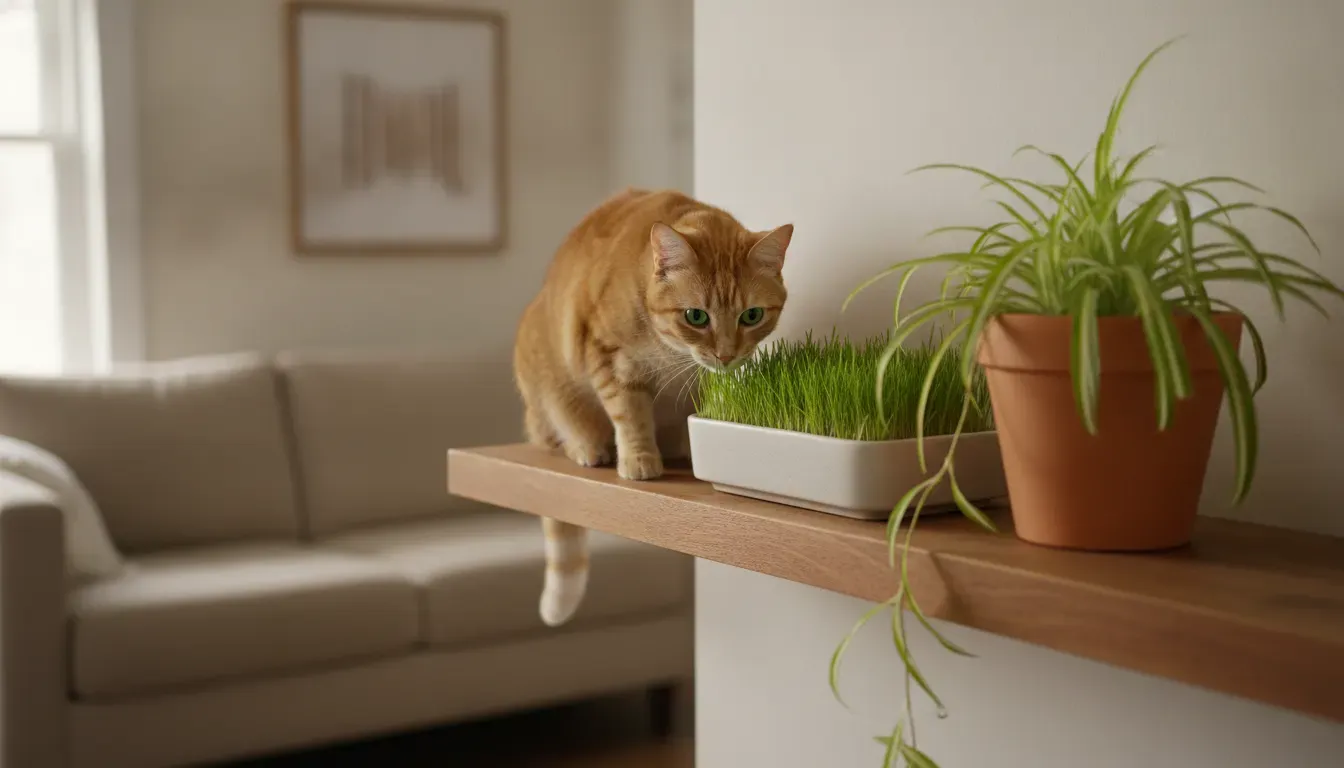
Spider plants, Boston ferns, areca palms, parlor palms, many prayer plants, orchids, and cat grass are common starting points for a cat-friendly home. Confirm the exact species and keep every plant free from unsafe treatments.
The following plants are frequently selected for homes with cats because reputable pet-safety references list them as non-toxic or generally cat-friendly. They are examples for further checking, not a substitute for an individual plant lookup. Names can vary by nursery, and a hybrid or cultivar may not have the same profile as the plant you intended to buy.
| Plant to research | Why people choose it | Cat-home reminder |
|---|---|---|
| Spider plant | Long, arching leaves and forgiving indoor care | Place it where repeated chewing will not damage the plant or upset your cat's stomach. |
| Boston fern | Soft, full foliage for indirect light | Confirm it is a true Boston fern, not an unrelated fern-like plant. |
| Areca palm | Bright tropical shape without a strongly fragrant bloom | Check the scientific name and keep the pot stable around climbing cats. |
| Parlor palm | Compact palm form that suits smaller rooms | Do not assume every palm is equally safe. Verify the exact variety. |
| Prayer plant | Colorful leaves and a low-growing habit | Ask the nursery for the plant's full identification before bringing it home. |
| Orchid | Pet-friendly color when you want a flowering accent | Consider the potting medium and any plant food, not just the flower. |
| Cat grass | A simple way to offer cats a plant material option | Use clean seed, uncontaminated soil, and a sturdy container. |
| Rosemary or basil | Useful culinary herbs with a fresh scent | Keep herbs free from pesticides and confirm the species before use. |
Other plants may also appear on a non-toxic list, including some peperomias, calatheas, haworthias, and certain succulents. Do not rely on a broad label such as succulent or palm. Identify the plant first, then check it in the ASPCA database or ask a veterinarian familiar with toxicology.
Shop This Post

Featured in this article
Ducky World Yeowww! Cigar 7" Organic Catnip Kicker for Barn Cats
$12.11
Shop Now →

How Can You Check a Plant Before Bringing It Home?
Identify the exact plant, record its scientific name, check a trusted cat-specific toxicity database, and ask about treatments used by the grower. If any part of that chain is unclear, choose a different plant.
A five-minute check is easier before a plant is in your living room. Use this process whenever you buy a new plant, receive a bouquet, or move a patio plant indoors:
- Read the full plant label. Look for the common name, scientific name, cultivar, and any warning about sap, berries, bulbs, or seeds.
- Check the scientific name. Search the exact name in the ASPCA cat plant database. If the label lists only a nickname, ask the nursery to identify it.
- Inspect the entire arrangement. A bouquet may contain several species, and decorative moss, ribbons, floral foam, or plant food can create separate hazards.
- Ask how it was treated. Pesticide residue, fertilizer granules, systemic insecticides, and moldy soil are not covered by a simple non-toxic plant label.
- Plan the location. Consider whether your cat can reach the leaves, knock over the pot, dig in the soil, or drink the drainage tray.
- Introduce it gradually. Watch for chewing, drooling, vomiting, diarrhea, or unusual behavior during the first several days.
If a plant cannot be identified, do not try to decide its safety from a social media photo. Set it behind a closed door until you can identify it, or return it. This is especially important with lilies because some species can cause life-threatening kidney injury in cats.
Which Plants Should Cat Owners Avoid?
Some plants deserve a firm do-not-bring-home rule unless a veterinarian or a trusted toxicity reference confirms the exact species. Lilies are the most important example. True lilies and daylilies can be extremely dangerous to cats, and exposure may involve the flower, leaves, pollen, or vase water.
Other plants commonly associated with cat poisoning or irritation include sago palm, azalea and rhododendron, oleander, dieffenbachia, some philodendrons, pothos, tulips, daffodils, and autumn crocus. This list is not exhaustive. It is a reason to verify plants, not a replacement for a current poison-control database.
- Lilies and daylilies: keep them out of the home rather than trying to place them on a high shelf.
- Sago palm: every part can be hazardous, including seeds.
- Bulb plants: bulbs may be more concentrated than leaves or flowers.
- Plants with irritating sap or crystals: chewing can cause mouth pain, drooling, vomiting, or difficulty swallowing.
- Unidentified bouquets: assume the arrangement needs checking before your cat can access it.
When comparing plant lists, use a cat-specific reference. A plant described as safe for dogs is not automatically safe for cats. If a cat has potentially eaten a risky plant, remove access to the plant and contact your veterinarian or the ASPCA Animal Poison Control Center promptly for case-specific guidance.
How Do You Set Up Cat Safe Plants in a Real Home?
Plant selection is only one part of a safer setup. Cats climb, swat leaves, dig in soil, and knock over containers. A plant that is safe to nibble may still be a poor choice if the pot is unstable or the cat can reach a fertilizer pellet.
Choose stable containers
Use a broad, heavy pot that does not wobble when a cat brushes past it. Avoid sharp ceramic edges, hanging cords, thin plant stands, and containers with loose decorative stones that could be swallowed. Empty standing water so a cat cannot drink from a saucer that contains fertilizer runoff.
Keep soil and treatments controlled
Store fertilizers, insecticides, rooting powders, and plant treatments away from pets. Follow label directions, allow treated leaves to dry as instructed, and ask a veterinarian if you are unsure about a product. Do not add cocoa mulch, essential oils, or homemade pest remedies to a cat-accessible pot.
Give curious cats another outlet
A cat that repeatedly bites houseplants may be responding to texture, movement, boredom, or a desire to graze. A designated tray of cat grass can offer a more controlled alternative, while play sessions and climbing spaces can reduce attention on decorative plants. For additional indoor enrichment ideas, see the interactive cat toys guide and the guide to cat toys for bored cats.
Find Indoor Cat Enrichment at Hooves and Paws
What Should You Do If Your Cat Chews an Unknown Plant?
Remove access, identify the plant, save a sample or clear photo, and call your veterinarian or an animal poison-control service. Do not wait for symptoms when lilies or another known toxic plant may be involved.
Stay calm, but treat unknown plant ingestion seriously. Move the plant away from your cat and keep other pets out of the area. Note the plant's common and scientific names, when the chewing happened, which part may be missing, and whether the plant was treated with any product.
Call your veterinarian or an animal poison-control service for instructions. Do not induce vomiting or give home remedies unless a veterinary professional specifically tells you to do so. If your cat is having trouble breathing, collapsing, seizing, bleeding, or showing severe weakness, seek emergency veterinary care immediately.
Possible signs of plant-related illness can include drooling, pawing at the mouth, vomiting, diarrhea, reduced appetite, lethargy, tremors, changes in urination, or unusual breathing. Signs vary by plant and dose, so the absence of symptoms does not prove that an exposure is harmless.
How Can You Make a Plant-Friendly Home More Cat-Friendly?
The best setup balances your interest in plants with your cat's individual habits. If your cat ignores greenery, a stable non-toxic plant on a protected stand may work well. If your cat chews every leaf, choose a restricted room for decorative plants and provide a designated cat grass option elsewhere.
Use these practical safeguards:
- Keep a current photo and scientific name for each plant in your home.
- Put toxic plants, especially lilies, on your never-bring-home list.
- Choose sturdy pots and avoid loose decorative materials.
- Keep fertilizers, pesticides, and treated cut flowers away from pets.
- Offer safe play and enrichment so plants are not your cat's only interesting object.
- Recheck a plant when you buy a new cultivar, move it outdoors, or change the soil.
Hooves and Paws has served horse, dog, and cat owners since 1994, with a curated selection built around animals as part of the family. If your next step is creating a more engaging indoor routine, browse the cat toys and scratch posts collection for options that complement a well-planned plant setup.
Shop Cat Enrichment Options Today
Frequently Asked Questions About Cat Safe Plants
Are spider plants safe for cats?
Spider plants are commonly listed as non-toxic to cats, but a cat that eats a large amount may still develop stomach upset. Confirm the exact plant and keep it free from pesticides and fertilizer residue.
What is the safest plant for a cat home?
There is no single safest plant for every home. Cat grass, when grown in clean soil without unsafe treatments, is a practical option for cats that like to nibble. For decorative plants, verify the exact species in a trusted cat-specific database.
Are lilies safe for cats?
No. True lilies and daylilies can be extremely dangerous to cats, including through pollen and vase water. Keep them out of the home and contact a veterinarian or poison-control service immediately after a possible exposure.
Can cats eat cat grass?
Cat grass is generally used as a cat-friendly grazing option, but it should be grown cleanly and offered in moderation. Discard grass that develops mold, contains pesticide residue, or is mixed with unknown plants.
Are orchids safe for cats?
Many commonly sold orchids are listed as non-toxic to cats, but confirm the exact species and consider the potting medium, fertilizer, and any decorative materials. A non-toxic plant can still cause stomach upset if eaten in large amounts.
What should I do if my cat eats a plant?
Remove access, identify the plant, photograph or save a sample, and contact your veterinarian or animal poison-control service. Do not induce vomiting or give a home remedy unless a veterinary professional directs you to do so.
Can a plant be safe for dogs but unsafe for cats?
Yes. Dogs and cats can respond differently to the same plant, and cat-specific toxicity information is the better reference for a cat household. Always check the plant for the animal that may actually ingest it.


