


A child's horse riding helmet is vital safety gear that protects young riders from serious head injuries during falls, tumbles, or other riding accidents. The CDC notes that while no helmet is fully concussion-proof, a certified model provides the defense needed for high-risk horse sports and activities. To find a safe fit, you must measure your child's head above the eyebrows with a level tape to ensure a snug and secure position. Every helmet should meet ASTM F1163 standards and be SEI certified to confirm it was tested to handle hard impacts in the arena. Choosing a trusted brand with MIPS technology from an expert like Hooves and Paws ensures every child stays safe as they learn to ride.
Shop ASTM-SEI Certified Children's Riding Helmets Now
Parents often ask why they cannot just use a bike helmet for lessons. Learning Why a Child's Horse Riding Helmet Is Non-Negotiable is the first step in keeping your young rider safe. This guide covers how to measure for a snug fit and what safety marks to check. The path begins with understanding exactlyChild's Horse Riding Helmet: Why a Child's Horse Riding Helmet Is Non-Negotiable
Horse riding is a fun sport for kids, but it comes with real risks. A fall from a horse can happen at any time, even with a calm pony. Because of this, a child's horse riding helmet is the most vital piece of gear you can buy. Head safety must be the top goal for every parent when their child starts to ride. While no gear can stop every hurt, special headwear is built to save lives.
Protecting young brains
The main goal of a riding helmet is to lower the risk of severe head harm. As stated by the CDC, horse helmets help protect riders from serious brain or head injuries during accidents. Even a slow fall can lead to a hard hit on the ground. These helmets are made to crush and take in that force so the brain does not take the full blow. It is vital to know that while they help a lot, no helmet is truly concussion-proof. Using the right gear is still the best way to keep your young rider safe in the saddle.
Riding helmets versus bike helmets
Many parents ask if they can use a bike helmet for horse riding lessons. The answer is no, because bike and horse helmets are built for different types of falls. A bike helmet is made to protect against a single hit on a flat road. In contrast, a horse riding helmet must handle hits from a greater height and on rough ground. It also protects if a horse's hoof strikes the head. You can read more in our guide on how to choose a riding helmet to see these facts in detail.
Start with a safety habit
Wearing a helmet every time builds a good habit from the very first day. At Hooves and Paws, we have helped families find the right gear for over 30 years. Our team knows how to pick items that meet strict safety rules while still being easy for kids to wear. We suggest looking at riding helmets for children that are tested and ready for horse use. This ensures the gear will work as it should if a fall occurs. Buying a good helmet is a small price for your child's safety.
ASTM-SEI Safety Standards: What Every Parent Should Know
Choosing a child's horse riding helmet is the most vital safety step for any young rider. You should not just look at style or color when you buy gear. The main factor is the safety rating. High-quality gear protects against head injuries that can happen during a fall or kick. Safety should always come first when kids are around horses.
The meaning of ASTM F1163 and SEI
ASTM F1163 is the top standard for horse riding helmets in the United States. It sets strict rules for how well a helmet must handle force and stay on the head. To prove a helmet meets these rules, a group called the Safety Equipment Institute (SEI) must test it. This SEI seal means a third party checked the gear for safety. It gives parents proof that the gear will work when it is needed most.
Every helmet made by Troxel meets and even beats these safety standards. This fact is why many parents choose them for their kids. You can learn more about how to choose a riding helmet to find the best fit for your child. Certified gear helps lower the risk of a serious brain or head injury during an accident. Never buy a helmet that does not have these clear safety marks on the box or label.
How MIPS technology protects the brain
Many new helmets now use MIPS technology. This stands for Multi-directional Impact Protection System. Most falls do not happen in a straight line. Instead, a rider often hits the ground at an angle. This creates rotational force that can strain the brain. Standard helmets protect against direct hits, but they may not handle the twist of an angled fall as well.
MIPS uses a thin layer inside the helmet that slides slightly during a hit. This layer helps soak up the twist from an angled impact. By cutting down on this force, the technology gives your child a better level of care. It is an extra layer of peace for parents who worry about high-impact falls. Many top brands now offer MIPS in their youth models to keep young riders safe.
When to replace your riding helmet
A helmet is built to handle one major hit. If your child falls and the helmet hits the ground, you must replace it right away. Even if it looks fine on the outside, the foam inside may be crushed. This hidden damage means it can no longer protect the head well. You should also never use gear that is cracked or missing parts because it will not stay in place.
- Replace any helmet after a fall or hard impact.
- Get a new one if you see cracks in the shell.
- Check the age of the helmet and replace it every five years.
- Avoid using old helmets with missing foam or parts.
- Buy a new helmet if the straps or buckles break.
Heat and sunlight can also wear down the materials over time. Proper care ensures the gear stays strong and safe for years. Always keep the helmet in a cool, dry place when not in use. Avoid leaving it in a hot car or in direct sun. This simple step helps the safety gear last as long as possible and keeps the shell from getting weak.
How to Measure Your Child's Head for a Riding Helmet
Getting the right fit starts with a clear measurement. A child's horse riding helmet must stay snug to protect against impacts. If a helmet is too loose, it can slide and leave the head exposed. Before you buy, you need to find the size of your child's head in centimeters or inches. This simple check ensures the safety gear works as intended during every ride.
Gather Your Tools
You will need a few basic items to get a good reading. Most parents use a soft tape measure because it wraps easily around curves. If you do not have one, you can use a piece of string and a ruler. It is also a good idea to have a mirror nearby. This helps you keep the tape level as you work. For more tips on gear, you can read our guide on how to choose a riding helmet for any age.
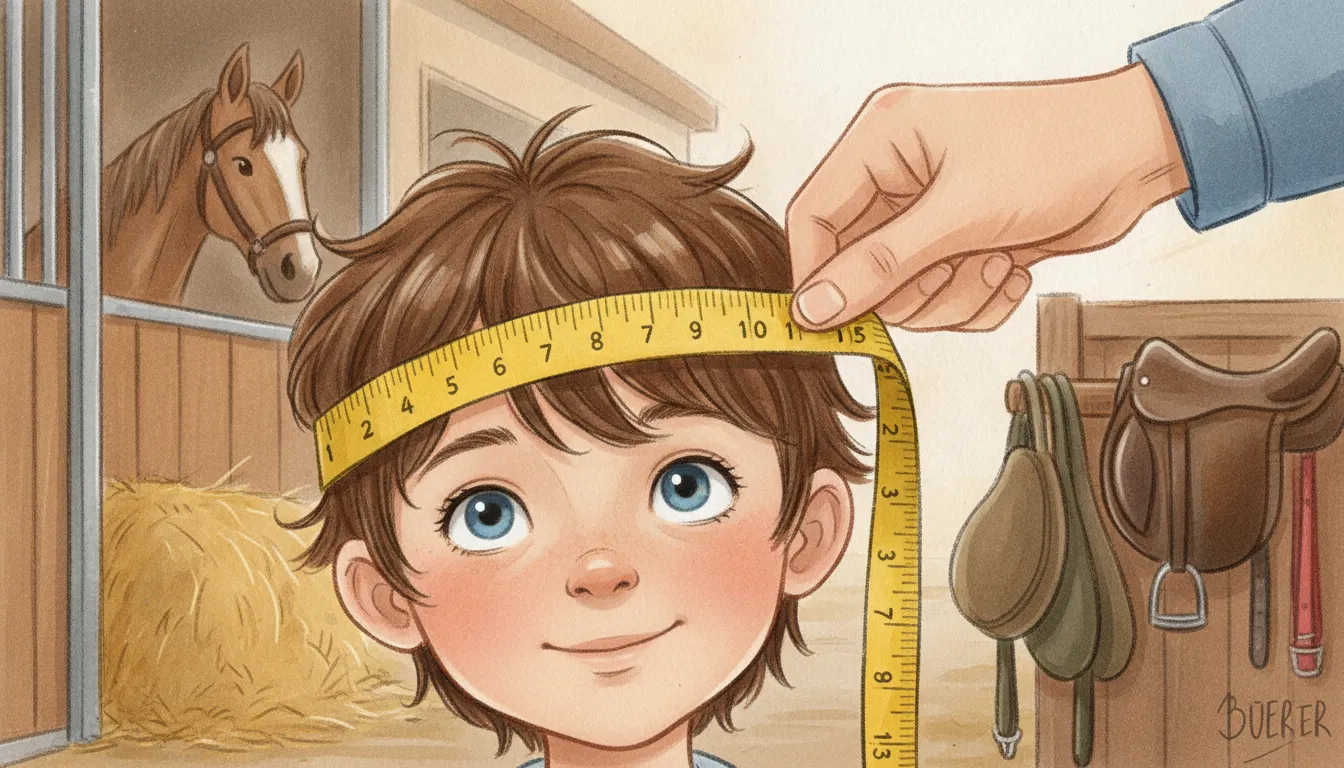
Place the end of the soft tape measure in the center of your child's forehead. Position it about one inch above their eyebrows and just above their ears.
Wrap the tape around the widest part of the back of the head. Make sure the tape stays level from front to back to get a true reading.
Pull the tape snug but not tight. Note the number where the tape meets the start. Most helmet brands use centimeters for their size charts.
If you use string, mark the spot where the ends meet. Lay the string flat against a ruler to find the length in inches or centimeters.
Have your child wear their hair in the same style they use for riding. A low ponytail or braids can change how a helmet sits on the head.
Compare your final number to the size chart for the brand you want. Sizes vary between makers, so always check the chart for each new model.
Check the Helmet Position
Once you have the number, check the physical fit of the helmet. Guidance from the Centers for Disease Control and Prevention says the helmet should sit level on the head. The front rim should be about one inch above the eyebrows. This position protects the forehead without blocking the rider's view. If the helmet tips back, it is too small or not in the right spot.
A good fit should feel firm but easy to wear. It should not cause a headache or leave deep red marks on the skin. You can also look at starter kits for young riders that include adjustable helmets. These models often have a dial system to help you change the fit. This feature lets you keep the helmet snug as your child grows.
Choosing the Right Helmet Style for Your Young Rider
Matching Helmet Style to How They Ride
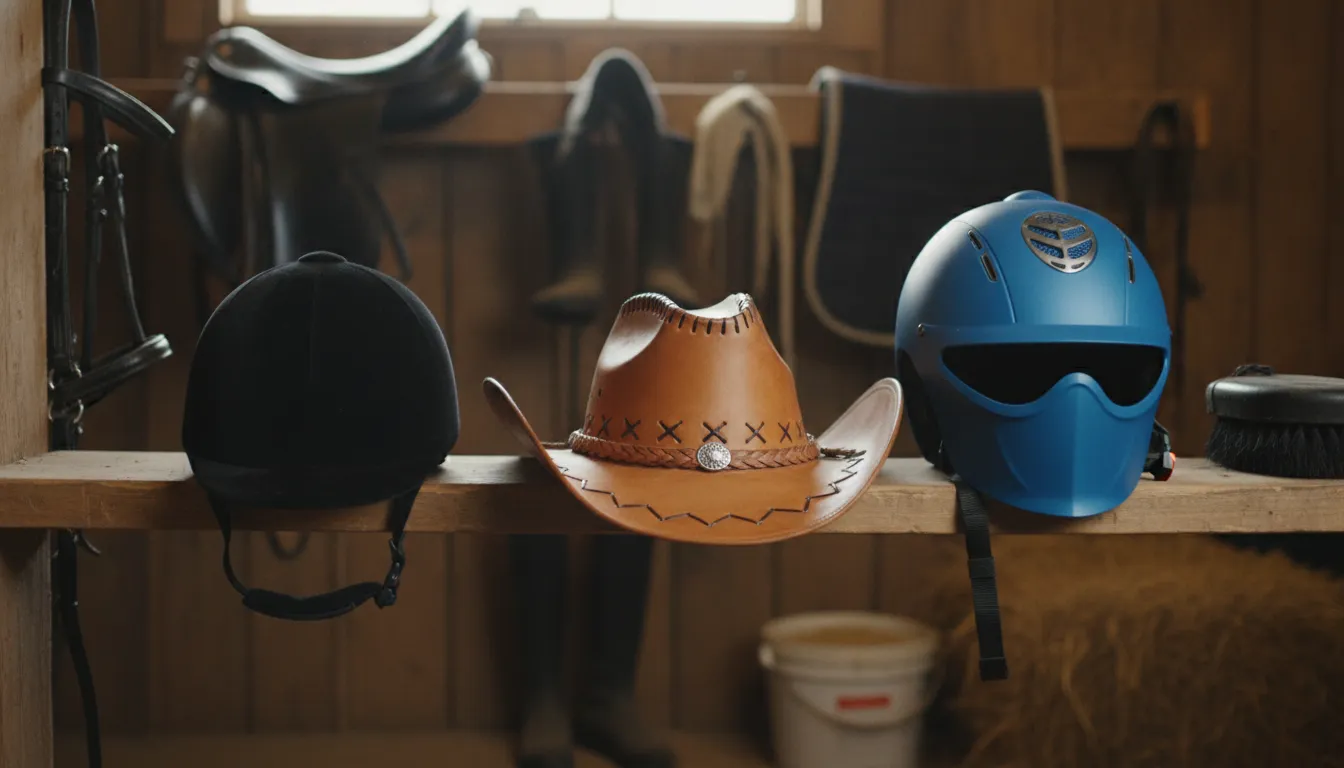
When you buy a child's horse riding helmet, you may want it to match your child's riding style. English riders often choose sleek, smooth helmets or those with a velvet look. Western riders may pick earthy colors or matte finishes that match their gear. While the look is fun, the safety rating is the most important part of any pick. You must make sure the helmet is made for riding and not just for bikes or skating.
A child's horse riding helmet must protect the head from impact. All styles sold at Hooves and Paws meet safety rules to help protect young riders from brain injuries during a fall. You can find many looks that fit both show ring rules and safety needs. Most show groups want these helmets to have a safe, snug fit that stays level on the head.
Full Coverage and Youth Designs
Some riders want more coverage or an exact look. For Western riders, the Troxel Cheyenne is a top pick for a full-coverage style. It offers a rugged look and keeps kids safe on trail rides or shows. There are also models made just for very young riders. These youth-specific models often have smaller shells to fit tiny heads without being too heavy. A light helmet helps prevent neck strain for small kids who are just starting out.
Some kids prefer the look of a western hat while they ride. You can find a cowboy hat helmet for kids that combines this classic style with real safety features. These helmets have a wide brim like a hat but a hard shell inside. They are great for kids who want to look like a cowboy or cowgirl while staying safe in the saddle. The wide brim also helps keep the sun out of their eyes during long days outside.
Air Flow and Comfort for Every Season
Riding can be hot work, especially in the summer. Air flow is a key feature to look for in a child's horse riding helmet. Many helmets have vents to let air move over the head. This helps keep your child cool and comfy during long lessons. Helmets like the Ovation Deluxe Schooler are well-known for having good vents that help with heat. Good air flow reduces sweat and makes the helmet feel better on the head for a long time.
Comfort is not just about heat. It is also about fit. Many youth helmets use a dial-fit system. This lets you turn a small wheel to make the helmet snug. This is helpful for kids who are growing fast. You can change the size as they get bigger. You should also look for liners that come out. These are easy to take out and wash with mild soap and warm water to keep the gear fresh. You can find our full range of gear in our riding helmets and safety collection.
Browse Our Full Collection of Children's Riding Helmets
Top Brands and Features for Kids' Riding Helmets
Parents have many choices when they look for a child's horse riding helmet. We carry brands that put safety first, such as Troxel, Shires, and Cashel. Each name is known for quality in the equestrian world. These brands offer features that help young riders stay safe and feel good in the saddle. The right gear helps whether your child is just starting or ready for a show.
Trusted brands for young riders
Troxel is a top pick for many families. They make many styles for both Western and English riding. Their helmets are famous for being light and having good air flow. This keeps a child's head cool during long rides in the sun. Many Troxel models also use a dial-fit system. This lets you turn a small wheel to get a custom fit. This is helpful for kids who are still growing.
Shires is another great brand for young riders. They make helmets with a sleek, classic look that works well for English riding. Their Karben line is strong but not too bulky. Cashel offers simple and solid options that are often the lowest in cost. They work well for kids who are just trying out riding for the first time. You can find a basic child's horse riding helmet for about $35.
Prices for these helmets vary based on the tech and style. High-end models with extra safety features can cost up to $235. No matter which you choose, every helmet we sell meets the ASTM safety standards. This means they have been tested to protect against head injuries during a fall. We focus on offering gear that parents can trust for their children's safety.
Choosing by style and size
Finding the right fit is a key part of helmet safety. Brand sizes can vary, so you should always check the chart for each model. For example, the Troxel Spirit is a popular choice. It comes in four main sizes. The XS fits heads from 6 1/4 to 6 1/2. The Small fits 6 1/2 to 6 7/8. Medium covers 7 to 7 3/8, and the Large fits 7 3/8 to 7 3/4.
The Troxel Dynasty is another stylish model with its own fit. Its XS starts at 6 1/4. But the Small fits 6 5/8 to 7. The Medium fits 7 to 7 1/4, and the Large fits 7 1/4 to 7 3/8. You must measure your child's head before you buy. If you want a Western riding helmet, these Troxel models are great. They come in many colors that fit that style. Parents often choose the Spirit for its tough shell. The Dynasty is picked for its lower profile and modern look.
Balancing safety and budget
When you shop, you may see the term MIPS. This stands for Multi-directional Impact Protection System. This tech helps reduce the force of an impact if a rider hits their head at an angle. It is a premium feature found in models like the Troxel Spirit MIPS. Many parents choose MIPS for the best peace of mind. It adds an extra layer of safety that can help in many types of falls.
If you have a tight budget, a non-MIPS helmet is still a safe choice. All ASTM-certified helmets help protect against serious brain injury. A basic model from Cashel or Shires offers great value. These brands focus on core safety needs while keeping costs low. You can start with a basic helmet and move up to a MIPS model later. This is a good plan as your child grows and starts to do more advanced work in the ring.
| Brand | Models | Key Features | MIPS Options | Price Range |
|---|---|---|---|---|
| Troxel | Spirit, Dynasty, Rebel | Dial-fit system, many colors, light weight | Yes | $55 - $235 |
| Shires | Karben | Low profile, classic look, sleek English style | No | $70 - $120 |
| Cashel | Junior Riding Helmet | Lightweight, low-cost, simple fit | No | $35 - $60 |
How to Check the Fit of a Child's Riding Helmet
Getting a new helmet is just the first step. You must also check that it stays in the right place while your child rides. A loose helmet can slide and leave the head open to harm. Use these steps to verify a safe fit every time they head to the barn.
Position and Stability Tests
Start by placing the helmet level on the head. The front edge should sit about one inch above the eyebrows to cover the forehead. You should be able to see your child's eyes, and they should have clear vision in all directions (CDC). Use the dial-fit ring or padding to get a snug feel all around with no gaps between the head and the foam.
Perform a shake test once the helmet is on. Ask your child to move their head side to side and up and down. The helmet should not move in any direction independently of the head. If it slides, use the adjustment features to tighten the fit before you move on to the straps.
- Center the chin strap. Buckle the strap so it sits right under the chin. It should be tight enough that only one or two fingers fit between the strap and the skin.
- Check the side straps. Look at the straps under the ears. They should form a clean V-shape that meets just below the earlobe without pinching the skin.
- Try the yawn test. Ask your child to open their mouth wide in a big yawn. The helmet should pull down firmly on their head as they do this. If it does not move, the chin strap is too loose.
- Assess the comfort. Ask your child how the gear feels. A safe helmet must be snug, but it should not be so tight that it causes a headache.
- Final vision check. Ensure the helmet sits level and does not tilt back or low over the eyes. Both you and the child should see clearly straight ahead and to the sides.
Fine-Tuning the Interior
Many modern shells come with tools to help you get the best fit for a growing child. Some brands use removable padding of different thicknesses to fill small gaps. Others have a dial-fit system that tightens a plastic band inside the shell. These help you keep the gear safe as your child's hair or head shape changes over the season.
Helmet Care, Replacement, and When to Size Up
Taking care of a child's horse riding helmet keeps the safety gear in top shape. You should clean the gear often with warm water and a mild soap. Avoid soaking the helmet or using harsh chemicals, as these can harm the parts (F009). Never use high heat to dry it. Great heat can warp the shell and break down the foam inside.
Inspect for wear and damage
You must check the helmet for signs of wear before every ride. Look for cracks in the outer shell or thin spots in the chin straps. If a helmet is cracked, broken, or missing parts, do not let your child wear it (F010). Even small cracks can make the gear less safe during a fall.
The soft pads inside the gear can also wear down over time. Check if the foam seems flat or if it has lost its spring. If the fit feels loose because the pads are thin, it may be time for a new one. You can find many safe choices in our collection of riding helmets.
Know when to replace the gear
Most experts say you should get a new riding helmet every five years. This rule exists because sun light and sweat break down the foam over time. Even if the gear looks new, the foam loses its power to soak up shock after a few years. This aging is a key reason to track the age of your safety gear.
You must also replace a helmet after any fall. A helmet is made to protect the head once. The foam inside crushes to soak up the force of a hit. Once this foam is crushed, it cannot protect the head again. The shell might look fine, but the damage is on the inside where you cannot see it. Always buy a new one if your child has a fall.
Signs it is time to size up
Kids grow fast, so you need to check the fit often. A helmet that fits well should sit level on the head. The front edge should be about one inch above the eyebrows (F005). If the gear sits too high or leaves red marks on the skin, it is too small. A tight fit can also cause headaches for young riders (F025).
Keep in mind that sizes vary by brand. You should re-measure each time you buy a new one (F014). Take your child with you when you shop to check the fit (F023). Note that different hair styles can also change how a helmet fits on the head (F008).
View the Best-Selling Helmets for Kids at Hooves and Paws
Frequently Asked Questions
Can my child wear a ponytail with a horse riding helmet?
Yes, your child can wear a ponytail, but it will change how the helmet fits. You should always have your young rider try on their helmet with the same hairstyle they use for riding. According to the CDC, a change in hair can make a safe helmet fit poorly. A low ponytail or braid usually works best to keep the helmet level on the forehead.
How do I measure my child's head without a soft tape measure?
If you do not have a soft tape measure, you can use a simple piece of string. Wrap the string around your child's head just above the ears and eyebrows. Mark the length and then hold it against a straight ruler to find the size in inches or centimeters. The CDC suggests keeping the string level from front to back to get a correct number for the size chart.
What is the safest way to store a children's riding helmet?
Store your child's riding helmet in a cool and dry place away from direct sunlight. High heat can damage the safety foam inside the helmet and make it less useful. According to the CDC, you should never leave a helmet in a hot car or near a heater. Most parents find that a padded helmet bag or a special shelf in a closet works best to keep the gear safe between lessons.
Can I return a riding helmet if it does not fit my child?
Yes, you can return a helmet if it is not the right fit for your child. Buying safety gear for young riders can be hard. It helps to shop with a trusted store. At Hooves and Paws, we offer a 365-day guarantee on all our riding products. This gives you peace of mind. It also gives you time to make sure the helmet fits well and feels snug before the first ride.
Ready to find the safest and best riding helmet for your child?
Leaving your young rider in an old or poorly fitting helmet puts their health at high risk every single time they get in the saddle. Since falls can happen even at a slow walk, do not wait for a bad fall to learn that your gear is not safe. Hooves and Paws offers free continental U.S. shipping with no minimum order and same-day shipping on orders placed before 2 PM PST.
Shop Now for a Child's Riding Helmet
Not sure which helmet is right for your young rider? Contact our team of equestrian experts for personalized advice. With over 30 years of experience and 70,000+ five-star reviews, Hooves and Paws is here to help you find the perfect fit for your child's next ride.


