


Updated November 6, 2026
The best green lipped mussel supplement for your dog is one that lists New Zealand green lipped mussel (Perna canaliculus) clearly on the label, skips unnecessary fillers, gives plain feeding directions and comes in a form your dog will actually eat. Research on it for joint comfort is promising but limited, so choose one with your vet.
Quick picks
We carry one green lipped mussel supplement, on its own or in a bundle, plus the omega oil this guide mentions for skin and coat. Ask your vet before starting any of them, and follow the label for the amount.
| Product | Best for | Why |
|---|---|---|
| Diggin Joint Power Green Lipped Mussel Supplement | Owners who want a single-ingredient powder they can measure | Its maker says it has exactly one ingredient: New Zealand green lipped mussel, as a powder |
| Coat & Joint Wellness Bundle for Dogs | Pairing green lipped mussel with an omega oil, once your vet agrees | One container of Diggin Joint Power plus one 500 ml bottle of Canpressco Camelina Oil |
| Canpressco Camelina Oil (500ml) | Skin and coat support (an omega oil, not green lipped mussel) | Expeller-pressed camelina oil sold as an omega 3-6-9 coat and skin supplement |
Please note: This article is for general educational purposes only and is not veterinary advice. The right amount of green lipped mussel depends on your dog's weight, health, and the specific product you choose. Always follow the manufacturer's label and consult your veterinarian before starting your dog on green lipped mussel or any new supplement.

Watching your once-bouncy dog start to slow down is one of the toughest parts of being a pet parent. That slight hesitation before jumping on the couch, or the stiffness after a long nap, is hard to see. Many owners start looking for a food-based option to discuss with their vet, and green lipped mussel (often shortened to GLM) is one of the ingredients that comes up most. The real challenge isn't only deciding whether to try it, but how to tell a well-made product from a poor one. This guide walks through what GLM is, what the published research does and doesn't show, and how to pick a supplement with confidence. The single-ingredient powder we carry, Diggin Joint Power Green Lipped Mussel Supplement, is used as an example throughout, and you can see the rest of our range in the Pet Supplements & Wellness collection.
Key Takeaways
- It's a joint-support ingredient with some research behind it: Green lipped mussel contains omega-3 fatty acids, including a less common one called ETA. Controlled trials in dogs with joint disease have reported benefits, but reviews describe the overall evidence as limited.
- Read the label and know your dog: Choose a supplement with clearly listed ingredients and no unnecessary fillers, then pick the form that suits your dog, whether that's a powder for their food or a chew they see as a treat.
- Always talk to your vet first: Before starting any new supplement, get your vet's approval to confirm it's a sensible choice for your dog's health, to agree on the amount, and to check it fits with any medications.
What Is Green Lipped Mussel for Dogs?
If you've been looking for ways to support your dog's joint health, you've probably come across the term "green lipped mussel." So, what exactly is it? Green lipped mussel, or Perna canaliculus, is a species of shellfish native to New Zealand. For pet supplements, the mussel meat is dried and ground into a powder, packed into capsules or chews, or sold as whole dried mussels.
What draws attention to this mussel is its fat profile. Like oily fish, it contains omega-3 fatty acids, and it also contains a less common omega-3 called eicosatetraenoic acid (ETA). Those fatty acids are the reason researchers have studied GLM for dogs with joint disease, and the reason it is one of the most familiar ingredients in canine joint products.
For our dogs, especially those getting older or showing joint stiffness, the question is whether those nutrients make a practical difference. Several controlled studies in dogs have reported improvements, and we'll go through them below so you know exactly what was found. GLM is available in several convenient forms, including powders you can sprinkle over food, chews, and whole freeze-dried mussels, which makes it simple to fit into a daily routine once your vet agrees it's a good idea.
From New Zealand's Coast to Your Dog's Bowl
The story of green lipped mussel begins off the coast of New Zealand, the only place this species comes from. Products made from it should say so on the label, and reputable makers are happy to tell you where and how their mussels were harvested and processed. When you see "New Zealand green lipped mussel" or "Perna canaliculus" on an ingredient list, you know which shellfish you're buying, rather than a vague "mussel extract" with no species named.
That matters because mussels from different species and different processing methods are not interchangeable. The studies discussed in this article used specific green lipped mussel products, so the closer a supplement is to clearly identified Perna canaliculus, the easier it is to compare what you're giving with what was tested.
What's Inside a Green Lipped Mussel
So what makes this little mussel interesting to vets and researchers? The headline nutrients are its omega-3 fatty acids. In a joint-supplement talk published by Auburn University's College of Veterinary Medicine, a board-certified veterinary surgeon explains that omega-3 fatty acids such as EPA and DHA are proposed to compete with an omega-6 fatty acid (arachidonic acid) in cell membranes, which can reduce the production of some inflammatory messengers. That is the main reason omega-3s are discussed for joint comfort.
ETA: The Omega-3 People Talk About
Beyond the familiar omega-3s, the same Auburn talk notes that green lipped mussel powder contains eicosatetraenoic acid (ETA), which is proposed to act on two inflammatory pathways, cyclooxygenase and lipoxygenase. "Proposed" is the key word: it describes how researchers think ETA may work, not a proven effect in every dog. You'll see a lot of marketing built around ETA, so it helps to know that the science is still a working explanation rather than a settled one.
You may also read that GLM is packed with vitamins, minerals, antioxidants, hyaluronic acid or "building blocks for cartilage." We haven't found dog studies that show those parts make a difference on their own, so we don't make those claims here. If a product makes them, ask the maker what evidence they rely on.
Joint Changes in Dogs: Why Owners Look at GLM
Signs Worth Mentioning to Your Vet
Stiffness and limping are often what first make owners wonder about joint supplements, and they don't only show up in old dogs. You might notice your dog limping, struggling to get up after a nap, hesitating on stairs, or being less enthusiastic about walks. These aren't just signs of getting older; they can be signs of pain that deserve a proper exam.
That exam comes first. Limping and stiffness have many causes, from arthritis to injuries and other conditions that need different care, and a supplement is not a substitute for a diagnosis. Once your vet knows what's going on, you can talk together about where a joint supplement might fit alongside weight management, exercise, and any treatment your vet recommends.
Shop This Post

Featured in this article
Diggin Your Dog Firm Up! Pumpkin & Apple Fiber Dog Digestive Supplement - Supports Stool Consistency, 100% USA Grown
$7.59
Shop Now →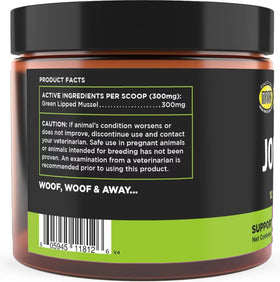


What the Research Says About GLM for Dogs
It's reassuring when a supplement has real studies behind it rather than only stories from other owners. Green lipped mussel does, but the details matter, so here is what we read and what each study actually found.
The 2006 Placebo-Controlled Trial
A study published in the New Zealand Veterinary Journal in 2006 followed 81 dogs presumptively diagnosed with mild to moderate degenerative joint disease. For 56 days, dogs received either a green lipped mussel extract or a placebo, without owners or the examining vet knowing which. Both groups improved at first, and at day 28 there was no significant difference between them. By day 56, a higher proportion of the dogs on the mussel extract had improved clinical signs, and their musculoskeletal scores were marginally better. The researchers reported no signs of toxicity and concluded that the extract had a beneficial effect, adding that long-term use may be needed before improvement is apparent.
A 2024 Trial That Included an NSAID Group
A blinded, placebo-controlled study published in Frontiers in Veterinary Science in 2024 looked at 101 pet dogs with hip osteoarthritis pain over six weeks. Dogs received a green lipped mussel and krill oil extract, a different plant-based supplement, the prescription anti-inflammatory meloxicam, or a placebo. The researchers measured how much weight dogs put on the affected leg using a force plate, along with an orthopedic score. Both the mussel-and-krill extract and meloxicam increased weight bearing on the force plate compared with placebo; the plant-based supplement did not. All three active treatments had somewhat better orthopedic scores than placebo by week six, though the authors described those changes as small. The study was funded by the company that makes the mussel-and-krill extract. Note that this was a specific extract combined with krill oil, so the result can't be assumed for every GLM powder.
What Systematic Reviews Conclude
Single studies are only part of the picture, so it helps to look at reviews that pull many trials together. A 2012 systematic review in the Journal of Veterinary Internal Medicine, the journal of the American College of Veterinary Internal Medicine, examined 22 controlled trials of joint nutraceuticals in horses, dogs and cats. It concluded that the evidence of efficacy for nutraceuticals was poor overall, with diets enriched in omega-3 fatty acids in dogs as the main exception.
A 2022 systematic review and meta-analysis in the International Journal of Molecular Sciences came to a similar view: it found clear evidence of pain-relieving efficacy for omega-3-enriched diets and omega-3 supplements in dogs and cats with osteoarthritis, grouping green lipped mussel trials with the omega-3 products. The Auburn vet-school talk mentioned above also summarizes that six of seven dog studies of green lipped mussel extract it reviewed showed beneficial effects on osteoarthritis signs.
Reading the Evidence Honestly
Put together, the research suggests green lipped mussel may help some dogs with joint disease feel and move better, mostly through its omega-3 content, but the studies are few, often small, and use different products. That is a good reason to treat GLM as one part of a plan your vet guides, not as a cure or a replacement for veterinary treatment.
What Green Lipped Mussel Can and Can't Do
This small mollusk from New Zealand gets a lot of big promises online. Here is how we'd frame its benefits based on what we could verify.
Joint Comfort and Mobility
The clearest research use for GLM is supporting comfort and mobility in dogs with degenerative joint disease, as in the trials above. In those studies, improvement showed up as better clinical scores and, in the 2024 trial, better weight bearing on the sore leg. Owners often describe the change as their dog getting up more easily or being keener on walks. It works gradually, and not every dog responds the same way.
Omega-3s and Inflammation
One of the reasons green lipped mussel is studied is its omega-3 fatty acids, including ETA. Omega-3s are the nutraceutical group with the strongest evidence for osteoarthritis comfort in dogs, according to both systematic reviews we read. That's also why many owners choose to combine GLM with another omega-3 source after checking with their vet. If you'd like both in one purchase, our Coat & Joint Wellness Bundle for Dogs pairs Diggin Joint Power with a bottle of Canpressco camelina oil.
Skin, Coat, Digestion and Immunity
You'll often read that green lipped mussel improves skin, coat, digestion and the immune system. We couldn't find dog studies that support those claims for GLM specifically, so we're not making them. If skin and coat are your main concern, talk with your vet about an omega oil such as Canpressco Camelina Oil (500ml), which is sold as an omega 3-6-9 coat and skin supplement, and follow its label.
How to Choose the Best Green Lipped Mussel Supplement
With so many joint supplements on the market, finding the right one for your dog can feel like a huge task. We get it. You want something well made, with clear ingredients, from a company that stands behind it. Rather than ranking brands, we think it's more useful to show you the three main types of GLM product and what each is good for, so you can compare any option on the shelf.
Whether you have a senior dog with stiff joints, an active dog you want to support, or a small dog who is fussy about food, one of these forms should suit. Exploring them with your vet is a great step in planning your dog's joint care.
1. Single-Ingredient Powder
For owners who want to know exactly what they're giving, a single-ingredient powder is the simplest choice. A product like Diggin Joint Power contains New Zealand green lipped mussel and nothing else, so there are no fillers or flavorings to wonder about. A powder mixes into wet or dry food and lets you measure the amount on the label precisely, which is handy if your vet wants you to adjust it for your dog's size. The trade-off is that some very picky eaters notice it in their bowl.
2. Soft Chews and Combination Formulas
If you have a smaller dog or one that turns their nose up at powders, a soft chew can make supplement time feel like a treat. Many chews combine green lipped mussel with other ingredients such as glucosamine, turmeric or hemp. That can be convenient, but it also means each ingredient may be present in a smaller amount, and every extra ingredient is one more thing to check with your vet, especially if your dog takes medication. Read the full ingredient list and the amount of green lipped mussel per chew before you compare prices.
3. Whole Freeze-Dried Mussels
Who says supplements can't be a treat? Whole freeze-dried green lipped mussels are a single-ingredient snack many dogs enjoy. They're easy to offer as a reward, but the amount of mussel in each piece varies more than a measured scoop of powder, so they're less precise if you're following a specific amount from your vet. Follow the maker's feeding guide and count them as part of your dog's daily treats.
What to Look for in a Quality GLM Supplement
When it comes to your dog's health, you deserve confidence in the products you choose. Pet supplements are not regulated like prescription drugs: the Auburn vet-school talk notes that nutraceuticals are not closely regulated by the FDA, cannot claim to treat, cure or mitigate disease, and that contamination has been found in some products. That makes the label and the company behind it especially important. With more than 30 years of helping pet owners, we've learned to look past the marketing and focus on a few core areas.
First, look at what's actually in the product and how much. Second, look at the quality and sourcing of each ingredient. Finally, look for signs that the company takes quality control seriously and is easy to reach with questions. Those three checks will filter out most poor products.
Clear Contents and Dosing Directions
A product can say "with green lipped mussel" on the front and contain very little of it. Look for a label that states the amount of green lipped mussel per scoop, chew or capsule, and gives feeding directions by weight. If you're comparing a combination formula with a single-ingredient powder, compare the amount of GLM per serving, not just the price per container.
Clean Ingredients and Ethical Sourcing
The phrase "you are what you eat" applies to our dogs, too. That's why we favor supplements with short, clear ingredient lists. Fillers dilute the active ingredient and give you nothing extra. We also favor brands that are open about where their green lipped mussels come from and how they're processed, because a company that answers those questions is usually one that has thought about them.
Decoding "Nutraceutical Grade"
When you're comparing supplements, you might come across the term "nutraceutical grade." It sounds official, but there is no single legal standard behind it for pet supplements, so treat it as a description rather than a guarantee. What tells you more is the information behind it: a named species, a stated amount per serving, a lot number and expiry date on the container, and a company you can contact. When those are present, a product is easier to trust whatever words are on the front.
Independent Quality Checks
Lab results and quality programs add a layer of assurance. One to look for is the National Animal Supplement Council (NASC) Quality Seal. According to the NASC, companies that display it must pass an independent quality audit, keep an adverse event reporting and complaint system, follow labeling guidelines, and submit to random independent lab testing to check label claims. The seal doesn't prove a product works for your dog, but it does tell you the company has agreed to outside checks.
Trusted by Vets and Dog Owners
Real-world feedback matters too. Reading what other dog owners say can tell you whether dogs eat a product happily and whether the company deals well with problems. Most important of all, ask your own vet. They know your dog's history and can tell you whether a particular product is a reasonable fit.
How to Choose the Right Form for Your Dog
Once you and your vet have decided to try a green lipped mussel supplement, the next step is picking one your dog will take every day. Focus on the quality of the ingredients, the form of the supplement, and the reputation of the brand, and you'll narrow the field quickly.
Steer Clear of Fillers and Additives
The first thing we always do is turn the container around and read the ingredient list. The best supplements have a short, understandable list. You want to see green lipped mussel as the star of the show, not a long list of fillers, artificial colors or flavorings. Be especially careful with any product, including human supplements, that contains xylitol: the FDA warns that xylitol is toxic to dogs, can be fatal, and can turn up in dietary supplements such as gummies.
Powder, Chew, or Capsule: Which Is Best?
GLM supplements come in a few different forms, and the best one is simply the one your dog takes without a fuss. Powders mix right into food and are easy to measure, which makes them practical for dogs of any size. If you have a picky eater, a tasty soft chew might be the easiest way to go since it feels like a treat. Capsules can be hidden in a treat or opened over a meal, if the label allows it. There's no single "best" form; it's about what makes supplement time easy for both of you.
Look for Reputable, Transparent Brands
A reputable brand will be proud of its product and transparent about how it's made. Look for companies that say where they source their green lipped mussels and how they manufacture and test their products. Good Manufacturing Practices (GMP) and the NASC Quality Seal are both signs of attention to quality control. Here at Hooves and Paws, we choose the brands we carry carefully, and we're happy to answer questions about any product before you buy.
How Much Green Lipped Mussel Should You Give Your Dog?
Figuring out the right amount of green lipped mussel for your dog depends on your dog's weight, their overall health, and the concentration of the specific supplement you choose. Formulas differ, so an amount that's right for one product can be wrong for another. The starting point is always the product label.
Think of the label as the place to begin the conversation with your vet. They can confirm the amount for your dog and make sure it complements their diet and any other medications.
Follow the Label for Your Dog's Weight
Because the right amount varies with your dog's size and the specific product, follow the dosage instructions on the product label and check with your veterinarian before you begin. Don't swap amounts between brands: a scoop of one powder is not the same as a chew from another.
How to Introduce GLM into Your Dog's Diet
Introducing a new supplement should be easy and stress-free. A powder can be mixed into your dog's regular wet or dry food. If you're using capsules, follow the label on whether they can be opened. Chews and freeze-dried mussels can be given as a treat. Some labels explain how to phase a product in over the first days; if yours doesn't, ask your vet whether to start with a smaller amount, and watch your dog for any stomach upset as they adjust.
How Long Until You See Results?
Patience is important with joint supplements. In the 2006 trial described above, the difference between GLM and placebo wasn't apparent at four weeks and showed up by eight weeks, and the researchers noted that long-term use may be needed before improvement is apparent. The 2024 trial measured results at six weeks. So give a supplement a fair, consistent trial of at least several weeks, and if you're not seeing the results you hoped for, check in with your vet rather than simply giving more.
Why Consistent Use Matters
When you start giving your dog a green lipped mussel supplement, it helps to think of it as part of a long-term routine, not a quick fix. The studies above gave the supplement daily for weeks. Give it every day as the label directs, keep a simple note of how your dog is moving, and review it with your vet at check-ups so you can decide together whether it's worth continuing.
Is Green Lipped Mussel Safe for Your Dog?
It's smart to ask about safety before adding any new supplement to your dog's diet. In the 2006 trial of 81 dogs, researchers screened blood work and owner reports and found no signs of toxicity. That's reassuring, but it doesn't cover every dog or every product, so here's what to keep in mind.
Setting Realistic Expectations: GLM as Part of a Plan
Green lipped mussel is a supplement, not a treatment for disease. Think of it as one step in a wider plan that includes a healthy weight, appropriate exercise, any treatment your vet prescribes, and regular check-ups. Keeping your dog lean is one of the most useful things you can do for sore joints, and no supplement replaces it.
Shellfish Allergies and Stomach Upset
Green lipped mussel is a shellfish, so it isn't a good choice for a dog with a known shellfish allergy; ask your vet about alternatives. As with any new food, some dogs may get a mild stomach upset when they first start. If you notice vomiting, diarrhea or itching, stop the supplement and call your vet.
Recognizing an Emergency
It's important to know the difference between a little tummy trouble and a serious reaction. Call your vet or an emergency clinic right away if your dog gets hives, has a swollen face or muzzle, has trouble breathing, has repeated vomiting or diarrhea, seems unusually weak, or collapses. Never hesitate to reach out if you're concerned.
Medications and Other Supplements
If your dog takes any prescription medication, or other supplements, it's especially important to check with your vet before adding green lipped mussel. Make a list of everything your dog takes, including omega-3 oils and other joint products, and bring it to the conversation. This simple step helps avoid doubling up on ingredients or causing an interaction.
When to Talk to Your Vet First
Honestly, a quick chat with your vet is always the best first step before starting any new supplement. This conversation is especially important if your dog has a health condition, is very young or elderly, or takes other medications. Your vet can help you confirm the right amount and choose a product that fits your dog's health plan.
Precautions for Pregnant or Breeding Dogs
If your dog is pregnant, nursing, or part of a breeding program, you're likely being extra cautious about everything your dog eats. That caution is wise. The studies we read were in adult dogs with joint disease, not pregnant or nursing dogs, so always consult your veterinarian before introducing GLM or any new supplement at this stage.
What to Do If Your Dog Eats Too Much
Even with the most careful pet parents, accidents happen. Maybe your dog got into the container and had a few too many tasty chews. If you suspect your dog has eaten much more than the label amount, call your vet or an animal poison control line. Have the container handy so you can say exactly what product your dog ate, its ingredients, and your best guess of the amount. This is especially important for small dogs, and for any chew that contains other ingredients.
Mistakes to Avoid When Buying GLM Supplements
Choosing the right supplement for your dog can feel overwhelming, especially with so many options on the shelf. Here are a few common missteps to avoid.
First, don't get swayed by a flashy label without reading the fine print. Look for green lipped mussel high up on the ingredient list, with the amount per serving stated, not hidden behind a long list of other ingredients. A shorter, cleaner ingredient list is usually easier to judge.
Another common mistake is not checking the product's quality. Look for brands that are transparent about their sourcing, manufacturing and testing, and consider whether the company takes part in an outside program such as the NASC Quality Seal.
A third mistake is believing big promises. Because supplements can't legally claim to treat or cure disease, a product that promises to cure arthritis or replace your dog's medication is a red flag.
Finally, one of the biggest mistakes is skipping a chat with your vet. Your veterinarian knows your dog's specific health needs and can tell you whether GLM is a sensible choice, especially if your dog is on other medications, and help you settle on the amount.
Your Checklist for Finding the Right GLM Supplement
Choosing the right one doesn't have to be complicated. Before you buy, run through this list:
- Has your vet examined your dog and agreed a supplement is worth trying?
- Does the label name New Zealand green lipped mussel (Perna canaliculus) and state how much is in each serving?
- Is the ingredient list short and free of fillers, artificial colors and xylitol?
- Are the feeding directions clear for your dog's weight?
- Does the container have a lot number, expiry date and a way to contact the maker?
- Is the form one your dog will happily take every day?
- Have you listed your dog's other medications and supplements for your vet?
If you can tick every box, you've found a good candidate. You can browse the options we carry in our Pet Supplements & Wellness collection.
Related Reading
- Green Lipped Mussel for Dogs: Benefits & Dosage
- Green Lipped Mussel vs Glucosamine for Dogs
- Raw Green Lipped Mussel for Dogs: Pros and Cons
- Omega-3 Fish Oil for Dogs and Cats
Frequently Asked Questions
How long will it take to see a difference in my dog?
Joint supplements work gradually. In a 2006 placebo-controlled trial, the benefit of green lipped mussel extract showed up by eight weeks rather than four, and a 2024 trial measured improvement at six weeks. Give it daily, as the label directs, for a fair trial of several weeks, and review progress with your vet before deciding whether to continue long term.
Can I give green lipped mussel to my puppy?
The dog studies we read were in adult dogs with joint disease, so there's little research on puppies. Some products are labeled for dogs of all ages, but ask your vet before giving any supplement to a growing puppy, especially a large breed, and follow the product label for amounts.
What side effects should I watch for?
The 2006 trial of 81 dogs reported no signs of toxicity. As with any new food, some dogs may get a mild stomach upset at first. Green lipped mussel is a shellfish, so skip it for dogs with a shellfish allergy. Stop the supplement and call your vet if you see vomiting, diarrhea, itching, hives or facial swelling.
How is green lipped mussel different from glucosamine?
Green lipped mussel is a whole food that contains omega-3 fatty acids, including ETA, which are thought to help with joint inflammation. Glucosamine is a single compound proposed to support cartilage. A 2022 meta-analysis found good evidence for omega-3 products in canine osteoarthritis but no pain-relieving effect for glucosamine-chondroitin. Our green lipped mussel vs glucosamine guide covers the details.


