


A CSI saddle pad is a Western pad built around the Flex-Plate®, a flexible polymer plate that spreads saddle and rider weight over a larger area, paired with a replaceable wool liner in 1/2 or 3/4 inch thickness. CSI makes its pads in Missouri and sells them through its own website. Hooves and Paws does not carry CSI.
Because so many riders search for CSI saddle pads for sale, we put together this buyer's guide to help you understand what you are paying for before you order. It covers how the pad is built, the shapes, liners and options CSI offers, how to fit and care for one, and where to buy it. We have been in the tack business since 1994, and while CSI isn't a brand we stock, we've also listed the comparable Western pads we do carry in case you want to compare.
Key Takeaways
- Understand the System: The CSI pad pairs the Flex-Plate® with a removable wool liner. CSI designs the plate to spread saddle pressure over a larger area and reduce pressure points.
- Invest in Gear That Lasts: These pads are built for the long haul. CSI says the Flex-Plate® won't break down over time, and the wool liner, which CSI says lasts one to three years, can be replaced on its own instead of buying a whole new pad.
- Support Natural Movement and Comfort: By allowing for more freedom in the shoulders and back and using breathable wool to wick away sweat, the CSI pad aims to keep your horse comfortable on the trail or in the arena. Remember that no pad replaces a saddle that fits.
What Makes a CSI Saddle Pad Worth It?
When you’re looking for the best for your horse, the saddle pad is one of the most critical pieces of equipment you can buy. It’s the direct link between your saddle and your horse’s back, responsible for comfort, protection, and performance. CSI says its pad was designed to reduce or eliminate common saddle fit issues, including pressure point soreness. They aren’t just another layer of padding; they are an engineered system designed to work with your horse’s anatomy to improve saddle fit and comfort.
The pad has a two-part construction: the Flex-Plate® in the outer pad and a removable 100% wool liner against the horse. The plate spreads weight from the saddle's bars, and the liner provides the cushion and moisture management. Whether you ride long trail miles or compete in the arena, the goal is the same: even contact and fewer pressure points under a saddle that already fits.
How the Flex-Plate® Creates a Better Fit
At the heart of every CSI Saddle Pad is the Flex-Plate®, which CSI describes as a very flexible, high-tensile strength polymer. Think of it as a flexible, protective shield for your horse's back. It’s designed to distribute the weight from the saddle's tree bars over a wider surface area, which is intended to reduce the concentrated pressure points that can make a horse sore. According to the team at CSI, "The CSI Flex-Plate® itself is encased in two layers of high impact material with a layer of military-grade shock absorbing foam to provide added comfort and protection." CSI says that by increasing the contact area of the bars, the plate can reduce or eliminate pinch and pressure points.
How Two Layers Absorb More Shock
The CSI pad isn’t a single piece of material; it’s a smart, two-layer system. The Flex-Plate® top works in tandem with a separate, replaceable liner that CSI describes as 100% all natural needled wool. This combination is what makes the pad so effective at absorbing shock and relieving pressure. The Flex-Plate manages the weight distribution, while the dense wool liner provides a soft, conforming cushion against your horse’s back. As CSI Saddle Pads explains, "When combined with the 100% all natural wool felt insert, the system can virtually eliminate pressure point soreness." The liner attaches with hook-and-loop fastening, so it comes out for cleaning or replacement.
Why 100% Wool Felt Matters for Your Horse
The material of your saddle pad liner matters, and CSI’s choice of 100% wool felt is deliberate. Unlike synthetic materials, natural wool is incredibly breathable and excels at wicking away sweat, keeping your horse cooler and drier during rides. This helps prevent skin irritation and discomfort. Wool is also naturally durable and molds to your horse’s back with use. With proper care, these liners last a long time. CSI notes that, "On average, a wool CSI Liner will last from one to three years depending on care and the amount of use." For comparison, CSI notes that many saddle fit experts advise replacing other wool pads about every eight to twelve months.
Made in the USA
When you invest in equipment for your horse, knowing where it comes from provides an extra layer of confidence. CSI says its pads are manufactured in the USA, in Missouri, by people who ride horses, and that its wear leathers are made from American-raised cattle. Each pad is handmade, so CSI notes that the finished length can vary slightly from pad to pad. If American manufacturing matters to you, that is a genuine point in CSI's favor.
Choosing Your Perfect CSI Saddle Pad
Once you understand the benefits of the CSI system, the next step is choosing the right pad for your specific needs. CSI offers several designs tailored to different riding styles and disciplines, so you can find the perfect match for you and your horse. Whether you’re hitting the trails for a long ride or competing in the show ring, there’s a CSI pad designed to support you. Let’s look at the most popular options to help you decide.
Pads for Western and Round Skirt Saddles
For everyday riding, trail riding, and general Western disciplines, the classic Western and Round Skirt pads are fantastic choices. Both are built around the same Flex-Plate®, and CSI says every shape carries the same plate inside. The difference is the outline: choose the shape that matches your saddle's skirt, square or round, so the pad covers the saddle without excess material. This matters most on longer rides, where pressure can build up under a poorly matched pad.
Show Cut Pads
If you show, CSI also offers a Western Show Cut Saddle Pad. The show cut is shaped to sit neatly under a show saddle and blanket for a clean look in the pen, while keeping the same Flex-Plate® inside. If you rope or ranch, pay more attention to liner thickness than to shape; CSI recommends its 3/4 inch liner for trail riding, roping, ranching and general use.
Other Models in the CSI Store
Beyond the standard Western and round skirt cuts and the show cut, CSI's store lists a Marcos Costa Pad. If you are considering it, read CSI's own product page for how it differs from the standard cuts, since we haven't seen one in person.
CSI also lets you style a pad through its wear leathers, the leather patches where your stirrup leathers and fenders rub. Colored wear leathers add durability where the saddle makes the most contact, and they let you match the pad to the rest of your tack.
Make It Your Own: Custom Options & Parts
CSI makes it easy to build your own saddle pad in just a few simple steps. You select the shape for your saddle (square, round or show cut), the length, the liner thickness, the carpet color and the wear leather. CSI also sells replacement liners: its all natural wool liner, a Platinum Fleece liner and a newer Coats liner, so you can swap out a worn liner and keep the pad working.
Choosing Pad Length and Carpet Color
Getting the right fit and look is simple with CSI’s straightforward options. You can start by selecting the pad length that best corresponds to your saddle’s skirt length, with choices of Small, Medium and Large; CSI notes that every pad is contoured. From there, you choose from eight carpet colors: Black, Brown, Tan, Grey, Blue, Green, Red and Burgundy. This allows you to coordinate with your existing horse tack for a polished, professional look or simply pick the color that best suits your personal style. It’s an easy way to get a semi-custom pad that feels uniquely yours while providing all the functional benefits your horse needs.
Selecting Wear Leather Styles
Beyond the basics, you can further customize your pad with different wear leather styles. These aren't just for looks; the wear leathers add durability where your saddle and fenders make the most contact, protecting the pad for the long haul. CSI lists black, brown, purple, turquoise and pink wear leathers, rough-out versions of these, Hermann Oak leather, and other leather options. Choosing your wear leather is a great way to add a touch of personal flair while also investing in the longevity of your pad. It’s a functional detail that ensures your gear not only performs well but also holds up to the demands of regular riding.
Special Orders by Phone
Some options are not sold online. CSI says its Merino wool liners have to be ordered by phone, and riders with unusual fitting questions can also call. CSI's contact page lists its phone numbers and weekday business hours in Central time. Calling is also the quickest way to ask whether a particular combination is in stock before an event.
Essential Accessories and Extras
CSI's dedication to horse care doesn't stop with their pads. They also offer a thoughtful selection of accessories and tools designed to support your entire equestrian routine, from tack maintenance to daily grooming. It’s one thing to have a good saddle pad, but having the right tools to maintain it makes for a complete system.
Care Products and Grooming Tools
Keeping your high-quality tack in great shape is essential for its longevity and performance. CSI understands this and provides the necessary tools to help you do it right. Its store lists a cleaning brush for the pad, a grooming tool called the Groom Ninja, and other handy items such as rope ties and tailbags. A dedicated brush makes the routine liner cleaning CSI recommends quick and easy.
Gift Certificates
Searching for the perfect gift for the horse lover in your life can be a challenge, but CSI makes it simple with their gift certificates. This is a fantastic option when you want to give a thoughtful, high-value present but aren't sure about the specific size or style they need. A gift certificate allows your friend or family member to browse the full selection and choose the exact pad or accessory that’s right for their horse and discipline. It takes the guesswork out of gifting and ensures they get a piece of equipment they will truly use and appreciate for years to come.
Shop This Post

Featured in this article
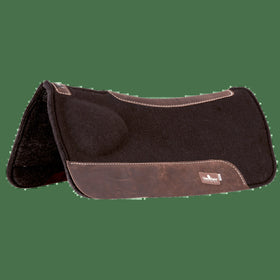
Professional's Choice Contoured Steam-Pressed Wool Felt Saddle Pad
$158.99
Shop Now →
How Do CSI Saddle Pads Compare?
When you’re investing in high-quality horse tack, you want to know you’re making the best choice for your horse. CSI pads are well known among Western riders, but how do they stack up against other pads on the market? Let's break down the key differences in durability, comfort, and materials to see what you are paying for. Understanding these distinctions can help you feel confident that you're providing your horse with the support and comfort they deserve for years to come.
How Long Does a CSI Saddle Pad Last?
A saddle pad is an investment, and you want one that will go the distance. CSI says the wool liner lasts from one to three years depending on care and the amount of use, and that the Flex-Plate® won't break down or lose its protection over time. The outer carpet, CSI says, is long lasting and easy to care for. Because the liner is the part that wears, the cost of keeping the pad going over the years is mostly the cost of replacement liners, not new pads. How long your own pad lasts will depend on how often you ride, how hard, and how well you clean and dry the liner.
Comparing Horse Comfort: CSI vs. Others
Your horse’s comfort is non-negotiable, and this is where CSI focuses its design. Most pads work by cushioning alone: foam, felt or gel compresses under the saddle bars. The CSI system adds a semi-rigid layer, the Flex-Plate®, on top of the wool liner, with the aim of spreading the load from the bars over a wider area before it reaches the horse. CSI claims that 300 plus pounds of pressure is nothing for the plate to disperse. We haven't seen independent pressure testing of CSI pads, so treat that as the maker's claim, and judge the result by your own horse: even sweat marks, no dry spots, and a back that stays comfortable after work.
Wool, Gel and Synthetics
The debate over pad materials is a big one. Natural wool is breathable, wicks moisture away from the skin and provides good shock absorption, which is why CSI and many other Western pad makers use it against the horse. Some gel and closed-cell foam pads breathe less and can hold heat, so check for sweat buildup after riding with them. Research is limited: in a 2010 study in the Equine Veterinary Journal, Kotschwar, Baltacis and Peham tested gel, leather, foam and reindeer fur pads under a fitting saddle, and only the reindeer fur pad significantly reduced peak force on the horse's back; none of the pads significantly increased it. The study did not test wool or CSI pads, but it is a useful reminder that material alone doesn't guarantee a better fit. If you like the idea of wool against the horse, two of the Western pads we carry, listed below, use wool or wool felt too.
How to Buy a CSI Saddle Pad
Getting your hands on a CSI pad is a straightforward process. Whether you're upgrading your current gear or investing in your first premium pad, here’s what to know before you order.
Price
CSI pads sit at the premium end of the Western pad market, and replacement liners are sold separately. Prices change, so check CSI's own store for current pricing on the pad, the liner thickness you need, and any extras such as shims. Think of it less as a simple purchase and more as a long-term piece of equipment, since the liner is the part you replace over the years.
Where to Buy an Authentic Pad
Hooves and Paws does not sell CSI saddle pads. The surest way to get an authentic pad is to order from CSI directly through its online store, where you can build a pad and buy liners, shims and accessories. If you are buying used or from a third-party seller, look for the CSI name and Flex-Plate® inside, ask how old the liner is, and budget for a new liner if it is worn. If you are still deciding between CSI and another plate-style pad, our CSI vs. 5 Star comparison looks at the two side by side.
Ordering Directly from the Manufacturer
Ordering straight from CSI is particularly helpful if you have specific questions about the product or want options that go beyond standard stock. It gives you a direct line to the people who make the pad, so you can get precise answers about unique fitting challenges, materials or construction. CSI also offers a free fitting consult by phone: you send photos of your horse's bare back from each side and from behind and above, standing square on level ground, plus photos of your saddle, and one of its saddle pad fitters reviews them. See CSI's fitting page for the exact photos they ask for.
Western Pads We Carry as Alternatives
None of these use a Flex-Plate®, but if you'd like to compare well-made Western pads, these are ones we stock:
- Professional's Choice SMx Air Ride All-Around Saddle Pad: a 3/4 inch SMx Air Ride core with a fleece lining, for riders who want a shock-absorbing core.
- Weaver Leather Synergy Contoured Performance Saddle Pad: New Zealand wool with a Merino wool fleece, for riders who want wool against the horse.
- Classic Equine Performance Trainer Western Saddle Pad: 3/4 inch wool felt with a Merino fleece bottom, in a 31 by 32 inch size.
- Professionals Choice 30 x 30 Western Saddle Pad Liner: a thin wool-blend liner to use under a pad and wash more often than the pad itself.
You can compare more options in our Performance Saddle Pads collection.
Is a CSI Saddle Pad Right for Your Horse?
Choosing the right saddle pad is one of the most important decisions you can make for your horse’s comfort and performance. A great pad protects their back, distributes pressure evenly, and helps your saddle fit its best. The CSI Saddle Pad is a significant investment, so you want to be sure it’s the right one for you and your partner. Let’s walk through the key factors, from your riding style to your horse’s unique shape, to help you decide if a CSI pad is the perfect fit.
Which Disciplines Suit a CSI Pad Best?
If you spend long hours in the saddle or ask your horse for high levels of performance, a CSI Saddle Pad is built to meet those demands. CSI says its pads are trusted by rodeo athletes, competitors, performers, clinicians and trainers, and it recommends the standard 3/4 inch liner for trail riding, roping, ranching and general purposes. You don’t have to be a pro to consider one, though. Trail riders who spend long hours in the saddle are a big part of CSI's audience.
Matching the Pad to Your Horse's Back
One of the biggest challenges in saddle fitting is accommodating a horse's unique back, and this is where the CSI pad’s design truly shines. At its core is the CSI Flex-Plate®, a feature that distributes the rider's weight and saddle tree pressure evenly. By creating a more uniform contact area, the pad is designed to reduce the sore spots that come from concentrated pressure. If your horse has very high withers, broad shoulders or a sensitive back, start with a saddle fit check and consider CSI's free fitting consult before ordering. For high-withered horses, you can also browse our Saddle Pads for High Withers collection.
Understanding Liner Options and Thickness
CSI pads offer another layer of customization through their liner thickness options, allowing you to tailor the fit even more precisely. For most horses and general riding, CSI recommends the 3/4 inch liner, and it says about 85% of horses and riders use it. CSI suggests the 1/2 inch liner for horses that are mutton withered or round backed, or horses from 6 to 12 years old that already have a good fitting saddle, where a thinner liner avoids adding bulk.
Using Shims for a Custom Fit
For horses with more unique back shapes, CSI offers a way to fine-tune the fit. You can use specialized saddle pad shims to address common fitting challenges by filling in hollow areas and creating a more level surface for the saddle. CSI says shims can help a horse with pockets behind the withers or a sway back, and that uneven development may or may not need one depending on how severe it is. Its store sells shims in Medium Fill, Swayback and TearDrop sets of two. Shims fine-tune the pad system, but they are not a cure for a saddle that doesn't fit; if you need more than a little fill, have the saddle itself checked.
Signs It's Time to Switch from a Traditional Pad
You might be wondering if it’s time to move on from your current pad. A few signs might point to yes. If you’re constantly battling saddle slippage, noticing dry spots after a ride, or if your horse seems sore or resistant, your pad could be part of the problem, but so could the saddle or a health issue. Have the saddle fit checked, and ask your vet about any back soreness, before you assume a new pad is the answer. If the saddle fits and the pad is worn or flattened, that is the time to consider an upgrade. CSI explains its reasoning on its why CSI page.
How to Fit and Care for Your CSI Saddle Pad
Once you’ve invested in a high-quality CSI Saddle Pad, you’ll want to make sure you get the most out of it. Proper fitting and regular care are the keys to ensuring your pad performs its best and lasts for years to come. Taking a few extra minutes to measure correctly and clean your pad after a ride will protect your horse’s back and your wallet. Think of it as simple maintenance for one of the most important pieces of your tack.
How to Measure for the Perfect Fit
Getting the right fit is crucial for your horse’s comfort and the pad’s effectiveness. An ill-fitting pad can cause pressure points and discomfort, no matter how well-designed it is. The great thing about CSI is the ability to tailor the pad to your needs. According to CSI Saddle Pads, "You can build your own CSI Saddle Pad in 5 steps: Choose your pad shape: Options include square, round, and show cut. All shapes have the same Flex-plate® inside." To choose a length, measure your saddle’s skirt and pick the Small, Medium or Large pad that covers it without a lot of excess. If you are unsure, use CSI's free photo-based fitting consult rather than guessing.
Easy Cleaning Tips for a Longer-Lasting Pad
To maximize the life of your pad, a little upkeep goes a long way. CSI's care instructions say to let the liner dry fully after riding, then gently brush dirt, sweat and hair off it, taking care not to damage the wool. Brush loose dirt off the outer shell with a rubber-fingered brush, a lint brush or a vacuum. For a deep clean, CSI says to spray the liner with a garden hose from the side opposite the dirt, use a wet/dry vac from the horse side to pull the water out, and air-dry it outside in the sun. It also recommends a deep clean, and reversing the liner, each spring and fall. The company notes that, "On average, a wool CSI Liner will last from one to three years depending on care and the amount of use," so consistent cleaning is well worth the effort.
Keeping Your Pad in Top Condition
One of the best features of the CSI system is its long-term value. The two-part design means you aren’t stuck when the liner eventually wears out. Instead of replacing the entire pad, you can simply get a new liner. Because the liner attaches with hook-and-loop fastening, you don't have to buy a whole new pad when the inside wears out. By purchasing replacement liners, you can keep your complete horse tack setup in top condition for a fraction of the cost of buying a new premium pad every few years.
Related Articles
- CSI Saddle Pad vs. 5 Star: An Honest Review
- 7 Best Saddle Pads for Comfort and Performance
- Best Ever Saddle Pad Review: Is It Worth the Money?
Frequently Asked Questions
Does Hooves and Paws sell CSI saddle pads?
No. We don't carry CSI. You can buy a new CSI pad, liners and shims directly from CSI's website. If you want to compare other Western pads, the alternatives listed above are ones we stock.
Why does a CSI saddle pad cost more than many other pads?
The price reflects the Flex-Plate® system, handmade construction in the USA and the wool liner. Because you replace the liner rather than the whole pad as it wears, the long-term cost is mostly replacement liners. CSI says a wool liner lasts one to three years depending on care and use.
Will a CSI pad fix a poorly fitting saddle?
No pad can fully correct a saddle that is fundamentally wrong for your horse, such as a tree that is far too wide or too narrow. A CSI pad is designed to spread pressure more evenly, and shims can fill small hollows, but start with a properly fitted saddle and have a saddle fitter check it if you have doubts.
Should I choose the 1/2 inch or 3/4 inch liner?
CSI recommends the 3/4 inch liner for most horses and for trail riding, roping, ranching and general use. It suggests the 1/2 inch liner for mutton-withered or round-backed horses, or horses from 6 to 12 years old that already have a good fitting saddle.


