


A dog ramp can make everyday travel and home life easier for dogs that hesitate to jump, have shorter legs, or simply prefer a steadier way to reach a car, sofa, or bed. The right dog ramp is not just about length. It should match the height you need to reach, give your dog reliable traction, stay stable under movement, and be simple enough for you to set up every time.
Shop dog travel and comfort gear at Hooves and Paws
This guide explains what to look for, how to measure before buying, how to introduce a ramp without pressure, and how to check it before each use. It is practical equipment guidance, not a diagnosis or treatment plan. If your dog suddenly avoids stairs or jumping, appears painful, or has a mobility concern, ask your veterinarian what type of support is appropriate.
What is a dog ramp used for?
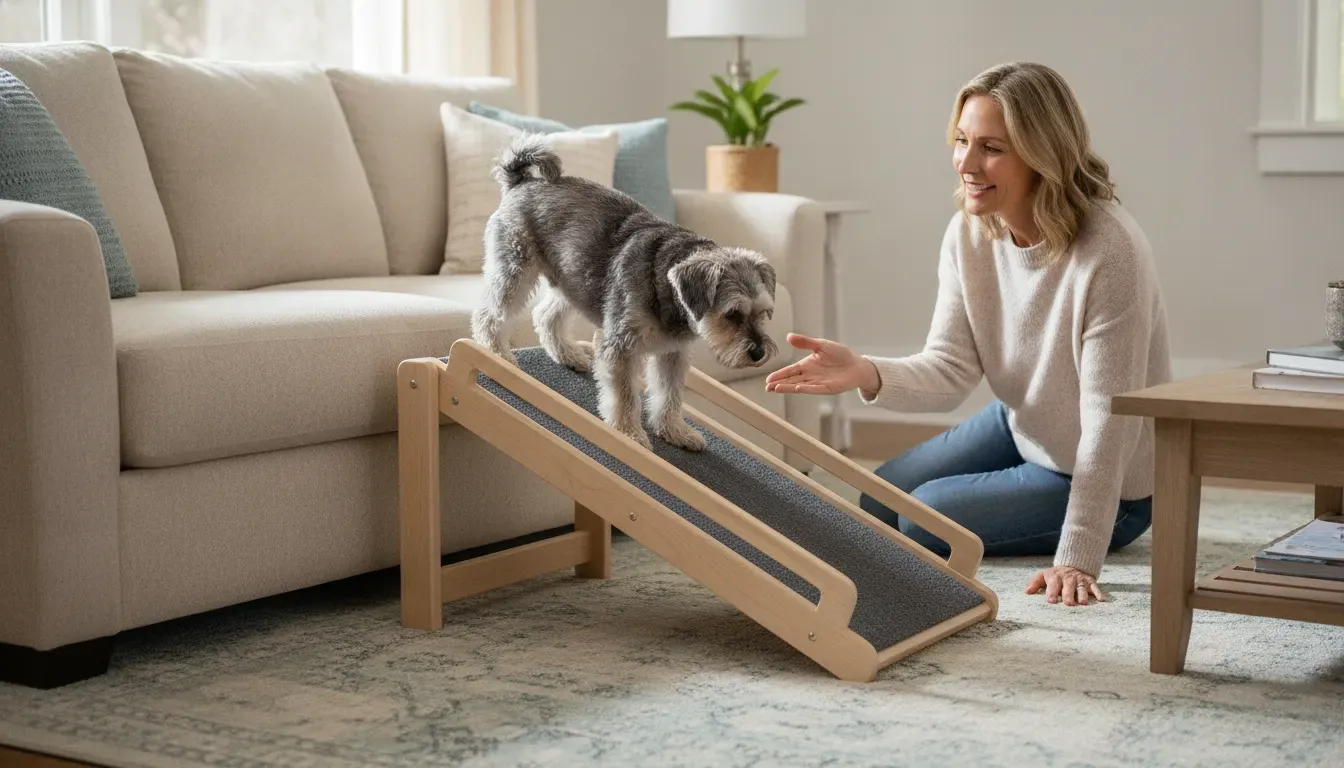
A dog ramp creates a sloped walking surface between the ground and a raised destination. Common uses include helping a dog enter an SUV, hatchback, or truck; reach a bed or sofa; step over a tall threshold; or move through a home with fewer jumps. A ramp can be especially useful when a dog is nervous about heights, has difficulty balancing, or is not comfortable with stairs.
Ramps and stairs solve different problems. Stairs take up less floor length and may work well for a confident dog that already uses steps. A ramp usually offers a more continuous surface, but it needs enough room to create a comfortable incline. Your available space and your dog's confidence should guide the choice.
How do you measure for a dog ramp?
Measure the actual destination before shopping. For a vehicle, measure from the ground to the loading edge when the vehicle is parked on the surface where you normally use the ramp. For a bed or sofa, measure from the floor to the top surface your dog needs to reach. Then measure the clear distance available for the ramp to extend, including room for you to stand safely beside it.
- Measure height: Record the vertical distance from the floor or ground to the entry point.
- Measure usable length: Note how much straight floor, driveway, or pavement is available. Do not count a space blocked by a wall, curb, furniture, or another vehicle.
- Check width: A wider surface gives a dog more room to correct a step. Dogs that are anxious, unsteady, or large may be more comfortable with extra width and side rails.
- Check the destination edge: Confirm that the upper end can rest securely without sliding or damaging the vehicle or furniture.
- Leave handling room: Account for the ramp's folded size and weight so you can carry, store, and position it consistently.
Do not choose a short ramp simply because it is easy to store. A short ramp rises more sharply to reach the same height. If the slope looks intimidating or your dog has to lean forward heavily, consider a longer model if your space allows. Manufacturer dimensions and weight limits are the final reference for the ramp you buy.
Which dog ramp features matter most?
Shopping becomes easier when you separate essential safety features from convenience features. A telescoping or folding design may be useful, but it should never outweigh the basics of a secure walking surface and dependable support.
Traction
The walking surface should help paws stay planted in dry and damp conditions. Look for a textured, carpeted, or rubberized surface that does not feel slick when you run your hand across it. Very smooth plastic may be difficult for a hesitant dog, especially if paws are wet. Check that the texture remains attached and does not bunch, peel, or create a raised edge.
Stability
The ramp should not wobble, twist, or shift when a dog steps on the lower end. Look for a secure base, a stable upper contact point, and any locking mechanism recommended by the manufacturer. On a vehicle, set the ramp on level ground whenever possible and confirm that it is seated correctly before inviting your dog to use it.
Side rails
Raised edges or side rails can give a dog a visual boundary and reduce the chance of stepping off the side. They are helpful for dogs that wander while walking, hesitate at edges, or need more confidence. Rails should be high enough to help but not so intrusive that they narrow the usable walking surface.
Width
A ramp should feel like a path, not a narrow plank. Compare the walking width with your dog's body size and natural gait. A dog that walks cautiously or looks behind while moving may need more room than a dog that travels in a straight line. Remember that the listed outside width may include side rails, so check the actual walking width.
Weight capacity
Use the manufacturer's stated weight rating and leave sensible headroom above your dog's weight. A ramp that flexes can feel unstable and make training harder. If you plan to steady your dog by placing a hand or knee on the ramp, do not assume the ramp can support a person. Follow the manufacturer's instructions, and never stand on a dog ramp unless it is specifically designed and rated for that use.
Shop This Post

Featured in this article
Doggie Design Alpine All Weather Dog Parka - Waterproof Fleece Lined Reflective - Multiple Sizes
$25.00
Shop Now →
What length and angle should a dog ramp be?
There is no single ideal ramp length for every dog or destination. A ramp to a low sofa can be much shorter than a ramp reaching an SUV hatchback or truck bed. The key relationship is simple: as the height increases, a longer ramp generally makes the climb less demanding. A ramp that is too short may be difficult to use even if its weight rating is generous.
Set the ramp at the intended height and look at it from the side before your dog steps on. It should form a smooth path without a sharp bend, unstable lip, or abrupt transition at the top. If the ramp must be very steep because of space limitations, ask your veterinarian whether a different setup is more appropriate for your dog. Never force a dog to use a ramp that causes visible distress or unsafe scrambling.
For vehicle use, consider where the ramp will extend. A long ramp may need a clear driveway, parking space, or trailhead area. For indoor use, measure around furniture and doorways. A ramp that is technically long enough but cannot lie flat and stable is not the right fit.
How can you teach a dog to use a ramp?
Training is part of selecting a ramp. Even a well-designed model can feel strange at first because it moves slightly underfoot, changes the dog's view, or creates a new surface texture. Work in short sessions when your dog is calm, and reward investigation before expecting a full climb.
- Start on level ground: Place the ramp flat on a non-slip surface. Let your dog sniff it and walk across it at its own pace.
- Reward small choices: Offer praise or a favorite reward for looking at the ramp, touching it, placing one paw on it, and taking a few steps.
- Add only a small incline: Once your dog is relaxed on the flat ramp, raise one end slightly and repeat the short sessions.
- Use a calm guide: Walk beside your dog rather than pulling from the collar or pushing from behind. Keep the route clear and let the dog control its pace.
- Practice both directions: Teach walking up and down. A dog that can climb up may still hesitate when looking down.
- Transfer to the real setting: Move to the sofa, bed, or vehicle only after your dog is confident on the ramp at a modest incline.
Do not drag a dog up the ramp, place it at the top without preparation, or use excitement to make it rush. If your dog freezes, backs away, jumps off, or scrambles, lower the difficulty and return to an easier step. Gentle repetition builds better habits than one stressful session.
Shop practical dog gear for travel and everyday comfort
How do you use a dog ramp safely in a car?
Park on a stable, reasonably level surface and keep the vehicle secured according to the manufacturer's instructions. Clear the landing area of bags, leashes, toys, and other obstacles. Position the upper end securely, open or lock the ramp as directed, and check the lower end before your dog approaches.
Use a leash only if it helps you guide your dog without creating a tangle. Keep your body beside the ramp, not directly behind a dog that might back up. Do not let several pets crowd the ramp, and do not leave a dog unattended while it is on an elevated surface. When the ramp is wet, muddy, or icy, pause and improve the footing before use.
For a truck bed or tall SUV, the loading height may create a greater incline than your dog can manage comfortably. A longer ramp, a lower loading point, or assistance from another adult may be safer than rushing the process. Follow the ramp manufacturer's instructions for vehicle compatibility and the maximum supported height.
When is a dog ramp better than dog stairs?
A ramp may be the better choice when your dog is uncomfortable with individual steps, needs a more continuous path, or must enter a vehicle with a taller loading edge. Stairs may be more practical when floor space is limited, the destination is low, and your dog is confident with steps. Some dogs prefer one option immediately, while others need practice with either one.
Do not select equipment based only on age or breed. Observe how your dog moves, where the equipment will be used, how much room you have, and whether the surface can stay stable. If a dog has a new change in gait, reluctance to move, or signs of pain, get veterinary guidance before deciding whether a ramp or stairs is suitable.
How do you clean and maintain a dog ramp?
Inspect the ramp before each use, especially after it has been stored in a vehicle or used outdoors. Look for cracks, bent hardware, loose hinges, missing feet, worn traction material, and a locking mechanism that no longer holds. Test the ramp without your dog first if anything looks different.
- Brush away hair, dirt, and gravel that could reduce traction.
- Clean the surface according to the manufacturer's instructions and let it dry fully before storage.
- Keep hinges, clips, and locks free of packed debris.
- Store the ramp where heat, moisture, and heavy objects will not deform it.
- Retire the ramp if the walking surface becomes slick, the frame flexes unexpectedly, or a support point no longer sits flat.
Also keep your dog's paws and nails in comfortable condition. Excessively long nails, wet paws, or fur between paw pads can change footing on any surface. If you are unsure whether a paw or mobility issue is affecting safe ramp use, ask a veterinarian or qualified canine rehabilitation professional.
Dog ramp checklist before you buy
- Destination height measured accurately
- Enough clear length for a gradual, stable setup
- Walking width suitable for your dog's size and confidence
- Textured or otherwise reliable traction
- Side rails or raised edges when extra guidance is useful
- Weight rating with reasonable headroom
- Secure upper and lower contact points
- Folded or stored size that fits your vehicle or home
- Manufacturer instructions reviewed before first use
Hooves and Paws helps animal owners choose practical supplies for the animals who are part of their families. Alongside dog apparel and accessories, you can explore durable dog travel and rest gear, including a Weaver Leather dog camp bed for trips, events, and outdoor downtime. Browse the broader dog care and equipment guidance to build a setup that fits your dog's routine.
Frequently Asked Questions
Can a dog use a ramp to get into an SUV?
Yes, many dogs can use a ramp to enter an SUV when the ramp is long enough, stable at both ends, wide enough for the dog, and covered with dependable traction. Measure the SUV's loading height and follow the ramp manufacturer's height and weight guidance.
How long should a dog ramp be for a car?
The needed length depends on the vehicle's loading height and the incline your dog can manage confidently. A longer ramp generally creates a gentler slope for the same height. Measure the vehicle and choose a model whose instructions support that setup.
Are dog ramps safe for senior dogs?
A properly selected and secured ramp may be a useful option for a senior dog, but safety depends on the individual dog and the setup. Use traction, stable contact points, a gradual introduction, and veterinary guidance if the dog shows pain, weakness, or a sudden change in movement.
Should a dog ramp have side rails?
Side rails can help dogs that are nervous, unsteady, or likely to drift toward the edge. They are not a substitute for supervision or a stable base, and they should not reduce the usable walking width too much.
Can a small dog use a large dog ramp?
A small dog can use a larger ramp if the walking surface, incline, traction, and side rails are comfortable and the ramp is secured correctly. Check that the dog can turn or correct a step without feeling trapped by the design.
How do I get my dog comfortable using a ramp?
Begin with the ramp flat on the floor, reward calm investigation, and practice short crossings. Add a small incline only after your dog is relaxed. Never pull or push the dog up the ramp, and return to an easier step if it freezes, scrambles, or tries to jump off.
With the right measurements, a stable setup, and patient practice, a dog ramp can become a dependable part of trips and home routines. Choose equipment that supports confident movement, inspect it regularly, and let your dog's comfort guide the pace.


