


The right riding boot does more than complete a polished look. It should keep your foot positioned securely, suit the way you ride, and remain practical through mounting, barn work, changing weather, and regular care. English and Western boots solve those needs in different ways, so the best choice starts with your discipline and daily routine.
Shop Men's Riding Boots and compare styles, dimensions, materials, and available features before you buy.
The best horse riding boots mens option is one with ankle coverage, an appropriate heel, a secure fit, and a sole suited to your riding environment. Choose English or Western construction based on your discipline, then check shaft, calf, width, weather protection, and care requirements against the manufacturer's guidance.
Safety comes first, whether you ride in an arena, work around the ranch, or spend most of your time on the trail. Here is how to assess the construction details that make a pair genuinely ride-ready.
What Makes Horse Riding Boots Mens Styles Safe and Ride-Ready?
Start with the parts of a boot that manage your foot inside the stirrup. A defined heel, ankle coverage, and a sole with a modest tread are practical safety features, not merely style details. University of Kentucky riding-safety guidance explains that footwear should cover the ankle and have a heel to help prevent the foot from going too far into the stirrup. It also recommends a small tread and an appropriately sized heel to help keep the foot from passing through the stirrup. Read the footwear guidance from the University of Kentucky.
Choose boots with ankle coverage, a practical heel, a small tread, enough toe room to stay comfortable, and a sole suited to your riding environment. Fit and intended use matter more than a fashionable silhouette.
Heel, ankle coverage, and stirrup control
The heel should be substantial enough to create a stop beneath the stirrup, without making it difficult to walk or maintain a balanced position. Ankle coverage helps protect the joint from rubbing and gives the boot a more secure connection around the foot. The exact heel shape varies between English and Western designs, so compare the boot with the stirrups and discipline you actually use.
Look for a sole that is relatively smooth across the stirrup-contact area, with only enough tread for traction when walking. Deep or oversized lugs may be useful in some work environments, but they can be less suitable for a riding boot if they interfere with easy foot release. The University of Kentucky specifically identifies sandals and athletic shoes as inappropriate for riding footwear. Review its riding footwear recommendations before substituting everyday shoes.
Toe room, sole construction, and the job beyond the saddle
Your toes should have room to lie naturally without pressing against the front of the boot. Avoid sizing so tightly that swelling or thicker riding socks create pressure. At the same time, excess movement can reduce comfort and make your foot feel unstable. A firm, supportive sole can be useful around the barn, but the product's stated construction and intended use should guide your decision.
Riding and groundwork are not identical jobs. CDC guidance recommends hard-toed leather boots or shoes that cover the ankles and have heels for horseback riding, rather than sneakers. It also recommends sturdy boots around horses, including in the stable. See the CDC's horseback-riding safety guidance. For chores or groundwork where a horse could step on your foot, some riders consider safety boots with toe protection or metatarsal guards. Those features address a different risk and do not automatically make a boot appropriate for riding. Keep the sole, heel, toe shape, and stirrup compatibility in view, then follow the manufacturer's specifications.
English or Western Boots: Which Style Fits Your Ride?
Start with the way you ride, work around horses, and move through a typical barn day. English and Western boots can both be appropriate choices, but their shapes and closures are built around different traditions and practical priorities. Your discipline, terrain, stirrups, weather, and time spent on foot should guide the decision rather than appearance alone.
English footwear is commonly divided into tall boots, field boots, paddock boots, and half-chap combinations. That separation is reflected across men's equestrian assortments, where paddock boots, half chaps, tall boots, and trail riding boots serve different use cases. See the category structure at Ariat's men's equestrian riding boot guide and the distinct paddock, field, and tall boot groupings described by Mountain Horse.
| Boot approach | Best fit for | Shaft and closure | Heel and sole considerations | Everyday use |
|---|---|---|---|---|
| English tall or field boots | English flatwork, lessons, jumping, and riders who want a close leg feel | Tall shaft; commonly a close-fitting profile with a zip or lacing detail, depending on style | Choose a riding-appropriate heel and controlled tread that work with your stirrups | Well suited to riding-focused use, though tall shafts may feel less convenient for chores |
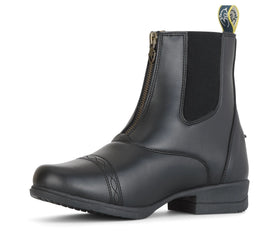
| English paddock boots with half chaps | Lessons, schooling, trail rides, and riders who want flexible separation between foot and calf fit | Low ankle boot plus a separate half chap; front-lace and zip options are available | Look for secure ankle support, an appropriate heel, and a sole suited to walking at the barn | Often practical when you ride and work on foot, because each component can be fitted separately |
| Western riding boots | Western arena work, ranch riding, trail riding, and regular horse-handling routines | Usually a taller shaft than a paddock boot, with a pull-on construction and a Western toe profile | Heel shape, sole profile, and toe room should suit the stirrup and the amount of walking you do | Can transition from riding to ranch or casual wear, subject to the boot's construction and care needs |
Western boots are often presented around arena and ranch use, with performance and durability as design considerations. That positioning is illustrated by Tony Lama's men's Arena collection. It does not mean every Western boot suits every job. So check the individual specifications instead of assuming that a cowboy-style silhouette guarantees a particular level of protection or traction.
For English riders, tall boots create a continuous shaft around the calf, while paddock boots paired with half chaps offer a modular alternative. A separate half chap can make calf fit easier to adjust, but it adds another item to size, clean, and secure. Front-lace and back-zip options are both established considerations in men's paddock footwear, as shown in Dover Saddlery's riding boots and chaps categories.
For either style, confirm the shaft height and calf dimensions before ordering. Men's riding boot listings can span substantially different shaft heights, and widths may range from medium to wide options. The right choice is the one that stays secure without restricting movement, works with your stirrup, and matches the ground you will cover. Compare measurements, toe shape, heel, sole, closure, reviews, and manufacturer guidance before you shop men's horse riding boots.
Shop This Post

Featured in this article
Shires Moretta Clio Plus Paddock Boots - Black, Lace-Up Equestrian, Gently Used
$29.99
Shop Now →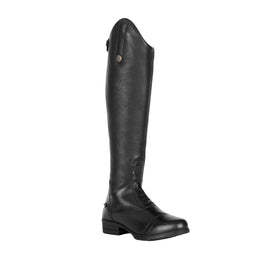
How Should Men's Horse Riding Boots Fit?
A well-fitting boot should feel secure through the heel and midfoot without squeezing your toes or restricting your ankle. Start by measuring both feet at the end of the day, when they are slightly larger. Wear the socks you expect to use for riding, stand on a sheet of paper, and measure from the longest toe to the back of the heel. Compare that measurement with the manufacturer's size chart rather than assuming your usual everyday shoe size.
Check length, width, and toe room
Your toes should be able to move slightly, but your foot should not slide forward when you walk or sit in the saddle. Leave enough room for natural swelling and your riding socks, with no pressure across the toe box. Round and square toe shapes are both available in men's riding boots, so choose the shape that gives your forefoot comfortable space without allowing excessive movement. Ariat's men's riding boot listings illustrate both round-toe and square-toe options: review the manufacturer's available toe shapes and sizing information before ordering.
Pay close attention to width. A boot that is too narrow can create hot spots along the little toe or the ball of the foot. One that is too wide may let your foot move inside the boot, reducing stability. Width labels vary by brand. For example, Ariat lists D-Medium and EE-Wide options in its men's assortment, which shows why checking the brand's width guide matters instead of treating width as universal.
Evaluate heel lift, ankle support, and the shaft
Some initial heel lift is normal in a new pull-on leather boot, but your heel should not rise dramatically with every step. As the boot settles, the footbed and upper should hold your heel more securely. Lace-up or zip styles may feel more immediately adjustable around the ankle. In every style, the ankle should feel supported without painful pinching, and the boot should not crease sharply against your ankle when you bend your leg.
For tall boots, measure your calf while wearing riding socks and measure shaft height from the floor beside your heel. The top should sit comfortably below the back of your knee, without cutting into it or collapsing around your calf. Men's riding boot listings show shaft heights from 7.5 to 20 inches, so height is not a minor detail. It can determine whether a tall boot works for your leg shape. If a tall boot does not suit your measurements, a paddock boot with half chaps may offer a more adjustable combination.
Use sitting and walking checks before riding
Walk on a firm surface, climb a few steps, and flex your ankle. Look for rubbing, numbness, pressure points, or a heel that slips excessively. Then sit as you would in the saddle. Your toes should remain relaxed, and the shaft should not dig into the back of your knee. Break-in can soften leather and improve comfort, but it will not correct the wrong length, width, or shaft measurement. Do not rely on painful pressure becoming acceptable.
Measure both feet with riding socks, confirm length and width against the maker's chart. Allow comfortable toe room, check for controlled heel lift, and measure your calf and shaft needs separately. Walk and sit in the boots before riding, and follow the manufacturer's fit and break-in instructions.
Waterproofing, Weather, and Barn-Day Practicality
Weather should influence your boot choice before you start comparing colors or finishing details. A boot that feels comfortable for a dry arena may not be the right tool for wet grass, muddy gates, or daily stable chores. Think about where you will wear it most often, then check the material, construction, and care guidance for that specific boot.
Leather, synthetic, or rubber?
Leather can offer a structured feel and may become more comfortable as it conforms to your foot, but it needs appropriate cleaning and conditioning. Do not assume every leather boot is treated for wet conditions. Synthetic materials are often easier to wipe clean and can be a practical choice for riders who regularly move between the barn and the saddle. Their resistance to water, abrasion, and chemicals still depends on the particular construction.
Rubber and muck-style boots are designed for wet ground, mud, and stable work. They can make sense when you are filling buckets, cleaning stalls, or walking through saturated turnout areas. However, a barn boot is not automatically a good riding boot. Confirm that any boot used in the saddle provides the heel, sole profile, ankle coverage, and fit appropriate for your stirrups and discipline.
The distinction between water-resistant and waterproof matters. Water-resistant footwear may shed light moisture for a time, while waterproof construction is a more specific product claim that should appear in the manufacturer's specifications. Look for details about seams, gussets, membranes, treatments, and intended conditions rather than relying on a product photo or a general material label.
Plan for mud, cold, and drying time
Wet grass and light rain are different from standing water, deep mud, or repeated exposure during chores. After a muddy day, remove loose soil before it dries hard. Let boots dry naturally away from radiators, heaters, fireplaces, and direct high heat, which can stiffen or damage some materials. Follow the maker's instructions before applying conditioner, waterproofing spray, or another treatment. A product formulated for leather may be unsuitable for synthetic panels, elastic, or rubber.
Winter riding adds another decision: insulation. A lined boot may be useful in cold conditions, but thicker materials can change the fit around your foot, ankle, or stirrup. Wear the socks you expect to use, and check that you still have secure control and enough room for natural movement. If you ride through changing seasons, a separate warmer work boot or removable liner may be more practical than forcing one pair to cover every condition.
Many riders benefit from separating barn footwear from riding footwear. Use a dedicated muck boot for wet chores when appropriate, and reserve riding boots for the saddle so mud. Manure, and moisture do not shorten their useful life or compromise comfort. Before buying, read the care and use guidance supplied by the manufacturer. The men's riding boot categories commonly include winter and muck or rubber options alongside paddock and riding styles. So choose for the conditions you actually face, not for a promise that one boot will do everything.
Breaking In and Caring for New Riding Boots
New riding boots should become comfortable through controlled use, not force. A careful break-in protects the boot's materials while helping you notice fit problems before a longer ride or busy barn day. Use this sequence for leather or other materials, then give the manufacturer's instructions priority because cleaning products, conditioners, and construction details vary.
- Inspect the boots before wearing them. Check the stitching, sole, heel, zippers, laces, fasteners, and lining. Look for rough edges, loose threads, damaged hardware, or a sole that is not seated evenly. Try both boots with the socks you expect to ride in. If the foot feels cramped, the heel is painfully tight, or the shaft restricts normal movement. Pause and compare your measurements with the manufacturer's size guide instead of trying to stretch the problem away.
- Start with brief, low-risk wear. Wear the boots indoors or on a clean, dry surface while standing, walking, and sitting as you would in the saddle. Keep the first sessions manageable and pay attention to pressure at the heel, ankle, instep, calf, and toe box. Walking naturally is useful; sharp pain, numbness, rubbing, or restricted circulation is not a normal break-in signal. Do not use a demanding ride to test boots that have not yet proved comfortable on foot.
- Choose appropriate socks. Use clean riding socks with a thickness that matches the fit you selected. Thick socks cannot reliably correct a boot that is too large, while a boot that is already tight may become more uncomfortable when layered. Keep the sock smooth around the heel and ankle so folds do not create avoidable friction. Recheck the fit after changing sock thickness or adding cold-weather layers.
- Avoid forcing the shape. Do not soak boots, apply unapproved heat, bend them aggressively, or use makeshift stretching methods. Excess moisture and heat can affect leather, adhesives, finishes, and structural components. If you need targeted stretching or a fit adjustment, ask a qualified boot professional or contact the manufacturer. For additional practical ideas, see this guide on how to break in leather riding boots.
- Remove dirt after use. Brush or wipe away arena dust, mud, and manure promptly with a method suitable for the boot material. Use only the cleaner recommended for that finish, and keep grit away from zippers, stitching, and moving hardware. Do not assume a product made for smooth leather is appropriate for suede, synthetic materials, rubber, or a treated finish.
- Dry boots slowly and away from heat. If the boots become damp, empty them and let them dry at room temperature in a ventilated area. Keep them away from radiators, heaters, fires, hair dryers, and direct high heat. Rapid drying can damage or distort some materials. Never store damp boots in a closed bag, trailer compartment, or tack trunk where moisture cannot escape.
- Condition only when compatible. Leather may need a compatible conditioner, but the correct product depends on the leather type, finish, and manufacturer guidance. Apply a small amount as directed, and avoid conditioning suede, nubuck, rubber, or synthetic boots unless the maker specifically approves it. Conditioner can change the appearance or feel of some finishes, so test an inconspicuous area when permitted. For broader maintenance guidance, read this overview of leather riding boot care.
- Store boots upright and supported. Keep boots clean, dry, and upright between uses. Boot trees or another manufacturer-approved support can help the shaft retain its shape, while gentle stuffing can support the boot when trees are not suitable. Do not fold tall shafts sharply or leave heavy equipment pressing against them. Finish by reviewing the care label and manufacturer instructions before applying any new product or storage accessory.
Care is part of fit and performance over the life of a pair. If discomfort continues after normal use, stop and reassess the size, width, shaft, and intended riding application rather than treating pain as something every boot must cause.
What Should You Check Before Buying?
A final check can prevent an expensive mismatch between the boot you like and the boot your routine actually needs. Start with use: will you ride in an arena, on trails, at a ranch, or in several settings? Note whether you need a dedicated English boot, a Western style, or a versatile option for riding and barn work.
- Safety: Look for ankle coverage, an appropriate heel, and a sole with a small, suitable tread. These features help reduce the risk of a foot passing too far through a stirrup. The University of Kentucky advises against sandals and athletic shoes for riding, while CDC guidance recommends hard-toed boots or shoes that cover the ankle and have heels. Review established riding-footwear safety guidance.
- Measurements: Check foot length and width, then compare them with the manufacturer's size chart. For tall boots, measure the shaft and calf as directed. Men's riding boot listings can vary substantially in shaft height and width, so do not assume your everyday shoe size will be enough.
- Construction: Confirm the toe shape, heel height, sole design, and closure. Decide whether you prefer laces, a front zip, a back zip, pull-on construction, or a Western opening. A closure should hold the boot securely without creating pressure points.
- Weather and chores: Match the material and insulation to wet grass, mud, winter conditions, or dry arena work. Treat water-resistant and waterproof as different claims, and verify both on the individual product page. If you regularly muck stalls or handle horses on the ground, consider whether a separate barn-work boot is more practical than using your riding pair for every task.
- Care: Read the manufacturer's cleaning, drying, conditioning, and storage instructions before ordering. Materials and finishes can have different requirements, and following the maker's guidance is the best way to protect the boot.
- Reviews and policies: Read reviews for comments about fit, sizing consistency, break-in, closures, and real-world use. Then check availability, dimensions, brand information, return terms, and the exact wording of any satisfaction guarantee. Do not treat a guarantee as a substitute for confirming fit.
- Budget: Set a spending range before comparing features, but weigh the total value of suitable construction. Comfort, care needs, and intended use rather than choosing solely by the lowest listed price.
Hooves and Paws helps riders compare a curated equestrian selection with product specifications, dimensions, images, availability, brand information, and reviews where provided. That practical detail supports a more confident decision for both experienced riders and recreational horse owners.
Frequently Asked Questions
What type of boots are best for horseback riding?
Choose boots that cover the ankle, have an appropriate heel, and use a sole with limited tread so your foot is less likely to pass through the stirrup. The right style depends on your discipline, terrain, weather, and whether you need one pair for riding, barn work, or both. The University of Kentucky advises against sandals and athletic shoes for riding. Learn more about riding footwear safety.
What type of boot toe is best for riding horses?
Look for a toe shape that leaves your toes comfortable without allowing excessive movement inside the boot. Round and square toe options are both available, so prioritize secure fit, adequate room, and a hard-toe construction where appropriate. Do not choose a narrow toe that pinches or a loose boot that lets your foot slide.
Is there a difference between cowboy boots and riding boots?
Yes. Western cowboy boots are commonly shaped for ranch and arena riding, while English options include paddock, field, and tall boots designed around English tack and apparel. Either can be suitable when the fit, heel, sole, and intended use are appropriate. Compare the boot with your discipline and daily barn tasks instead of assuming one style works for every rider.
Are lace-up horse riding boots for men a good choice?
Lace-up paddock boots can offer an adjustable feel around the foot and ankle, while zip styles may be faster to put on and remove. Check that laces are secured and do not create a snag or stirrup concern. If you are uncertain, ask your instructor which closure suits your saddle, riding routine, and stable rules.
Are men's leather riding boots best for horseback riding?
Leather is one option, not an automatic best choice. Compare leather, synthetic, and rubber according to breathability, wet-weather needs, cleaning, break-in expectations, and the manufacturer care instructions. A boot is a better choice when its construction and fit match your riding use. Always follow the maker's guidance for conditioning, drying, and storage.
Ready to Choose Your Men's Riding Boots?
With your riding discipline, fit preferences, weather needs, and care routine in mind, you can narrow the options with confidence. Compare styles and specifications in the curated collection, then choose the pair that suits how you spend time around horses. Shop Men's Riding Boots to take the next step.


