


Blanket a horse when it cannot stay warm and dry on its own: it is clipped, very young or old, thin, not used to the cold, likely to get wet, or turned out without shelter when the temperature or wind chill drops below 5°F. A dry, acclimated horse with a full winter coat and shelter often needs no blanket.
What decides whether a horse needs a blanket?
The thermometer is only the starting point. A horse's own coat, its shelter, the hay in front of it and whether it stays dry usually matter more than the number on the porch.
University of Minnesota Extension puts a horse's lower critical temperature, the point below which it has to burn extra energy to stay warm, at about 41°F with a summer coat and about 18°F with a full winter coat. Below 18°F, UMN Extension says a horse needs about 1% more dietary energy for every degree of cold.
Penn State Extension lists the horses most likely to need a blanket:
- Horses with no shelter during turnout when the temperature or wind chill falls below 5°F
- Horses likely to get wet from rain, ice or freezing rain
- Horses clipped for showing
- Very young or very old horses
- Horses not yet used to the cold, such as one recently moved from a warmer climate
- Horses with a body condition score of 3 or less, or in poor health
Wet hair is the big one. Penn State and UMN Extension both note that as little as 0.1 inch of rain can cause cold stress by flattening the coat. UMN Extension adds that, with no wind or moisture, horses tolerate temperatures at or slightly below 0°F.
When to blanket a horse: temperature chart
Use this chart as a starting point, then adjust for the horse in front of you. It is a framework, not a rule.
| Outdoor conditions | Full-coated horse with shelter | Clipped, fine-coated, thin or poorly sheltered horse | What to check |
|---|---|---|---|
| Above 50°F and dry | Often no blanket | Usually no blanket, or a light sheet for a clipped horse if conditions and work call for it | Don't blanket a warm horse just because the season changed |
| 40°F to 50°F | Monitor; a light layer may help in rain or wind | Consider a light sheet or light turnout | Feel behind the withers and check for damp skin |
| 30°F to 40°F | Many horses stay comfortable if dry, acclimated and sheltered | Consider a light or medium layer; rain and wind push the choice heavier | Use the lightest layer that works if you can't change it later in the day |
| 20°F to 30°F | Consider a light layer if the horse is exposed, wet, elderly, thin or clipped | A medium layer may fit; confirm fit, dryness and how the horse responds | Watch for shivering, a clamped tail, seeking shelter, sweating or damp skin |
| Below 20°F | Assess shelter, forage, wind and the individual horse first | A medium or heavier turnout may be needed, with frequent checks | Don't use a heavier blanket to cover for a wet coat, poor fit or no shelter |
The British Horse Society makes the same point from the other side: many horses cope without a rug until about 5°C (41°F), and each horse should be judged as an individual and rugged only when needed.
Shop This Post

Featured in this article
Weaver 1200D Ripstop Stable Blanket 200g - Heavy Duty Warmth
$169.43
Shop Now →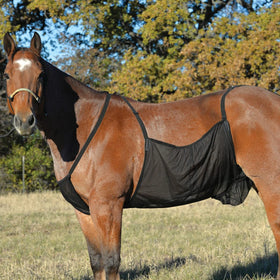
How do you choose blanket weight after the temperature check?
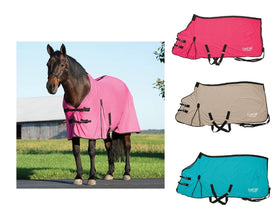
Pick the shell first, then the fill. A turnout shell is waterproof for time outside; a stable rug or sheet is for a dry stall. Then choose the fill weight: a sheet (no fill) or lightweight around 100g, a medium around 200g, and heavier fills for the coldest, most exposed horses. Our horse blanket weight guide compares how brands define light, medium and heavy.
A few examples from the shop:
- Shires Highlander Plus 100g Standard Neck Turnout Rug: a lightweight waterproof turnout for clipped horses on cool, wet days.
- Shires Highlander Plus 200 Standard Neck Turnout Blanket: a medium-weight turnout for colder bands of the chart.
- Toklat Bucas Power Extra Classic Turnout: a heavyweight turnout for exposed or clipped horses in hard cold.
- Weaver Leather Premium Turnout Blanket, Heavy Weight 300g: a heavyweight 1200D turnout for the coldest, most exposed horses.
- Shires Tempest Plus 100 Stable Rug: a light stable rug for a dry barn.
- Weaver 1200D Ripstop Stable Blanket 200g: a medium stable blanket with a tough shell for stalled horses.
- Professional's Choice Cotton Horse Day Sheet: an unfilled sheet to keep a coat clean or under-layer in the barn.
- Shires Elastic Leg Straps: replacement leg straps to keep a rug from shifting.
For types, sizing and care, see the horse blanket guide, or browse all horse blankets and sheets.
How should you adjust the chart for coat, clip and body condition?
Move one step lighter for a horse with a thick, dry, natural coat, good shelter and plenty of hay. Penn State Extension notes that woolly horses hold more heat, so it is sometimes better not to blanket them at all.
Move one step heavier for a horse that is clipped, thin, older, unwell or new to the cold. A full body clip removes most of the coat's insulation, so a clipped horse may need a light layer in weather where its unclipped pasture mate needs nothing. If a horse is losing condition or you aren't sure about its health, talk to your vet before relying on a heavier blanket.
When is a turnout blanket better than a stable rug?
Use a waterproof turnout blanket whenever the horse is outside and could meet rain, wet snow or wind. Use a stable rug or sheet only in a dry stall; most are not waterproof and soak through outside. Don't leave a horse in a warm stable rug in a heated or closed-up barn where it can overheat.
How do you check that a blanketed horse is comfortable?
The British Horse Society suggests sliding a hand under the rug behind the withers: the horse should feel comfortably warm and dry, not cold or sweaty. Check the chest, shoulders and belly too.
- Signs of cold: shivering, a clamped tail, standing hunched or seeking shelter
- Signs of overheating: sweating, damp skin under the rug, heavy breathing or rubbing
UMN Extension recommends taking the blanket off daily to check for damage and rubs and to reposition it, and both UMN and Penn State say not to blanket a wet horse; wait until it is dry. Poorly fitted straps can cause sores, so check fit at the chest, shoulders, withers and leg straps, and again after the horse has rolled.
What should you do when the weather changes?
Penn State Extension advises removing the blanket on warm days so the horse doesn't sweat. If you can only visit once a day, choose the lightest layer that will cover the coldest, wettest part of the day rather than the heaviest one. Never stack wet layers; a dry, well-fitted lighter blanket is safer than a soaked heavy one.
How do hay and water fit into winter blanketing?
Digesting forage produces heat, so hay is part of keeping a horse warm. UMN Extension gives an example: an idle 1,000-pound horse eating 16 pounds of hay a day at 18°F may need about 2 to 2.5 pounds more at 0°F, and more without shelter. UMN Extension also says most 1,000-pound adult horses need at least 10 to 12 gallons of water a day and drink more when water is kept at about 45°F to 65°F. Talk to your vet or an equine nutritionist before making big diet changes.
Frequently Asked Questions
At what temperature should I blanket my horse?
There is no single number. Penn State Extension's clearest trigger is a horse with no shelter when the temperature or wind chill is below 5°F; clipped, thin, old or wet horses need a layer much sooner.
Does a full winter coat mean my horse never needs a blanket?
Not always. A dry, sheltered, well-fed horse with a full coat often copes well, but rain, wind and poor condition can change that quickly.
Should a clipped horse wear a blanket above 40°F?
Often a light sheet helps on cool, wet or windy days. Check behind the withers and take it off if the horse is sweating.
Can I use a stable rug for turnout?
No. Most stable rugs aren't waterproof. Use a turnout blanket outside.
How do I know if a horse blanket is too heavy?
Sweat or damp skin under the rug, heavy breathing or rubbing are the usual signs. Switch to a lighter layer.


