

Cinches & Girths: Sizing and Material
Filter and sort
10 products

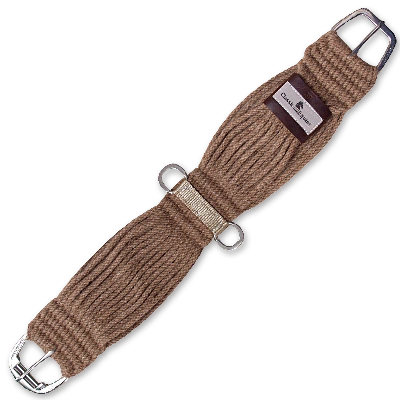



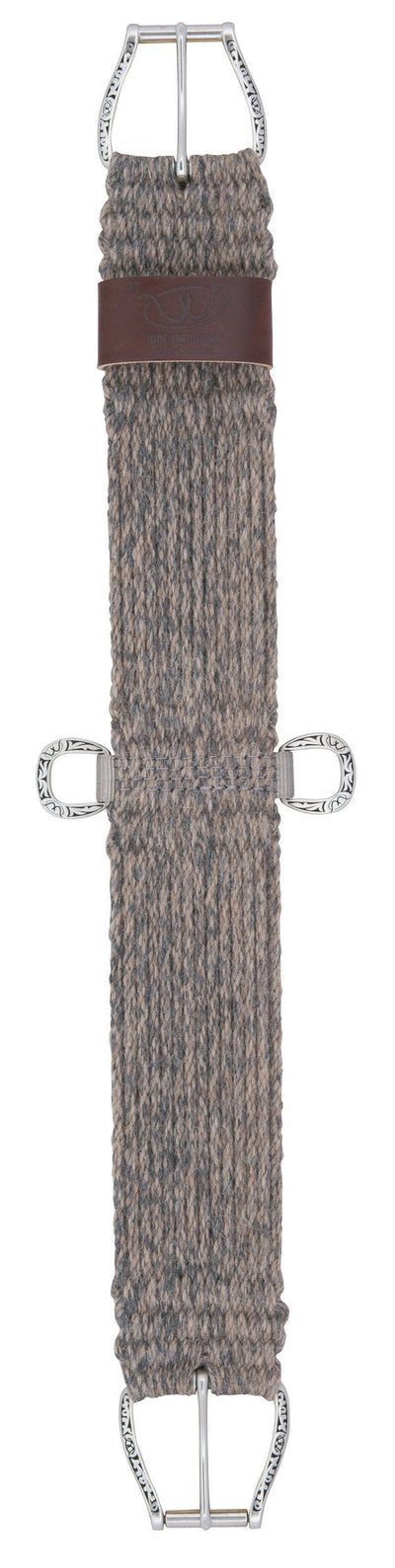

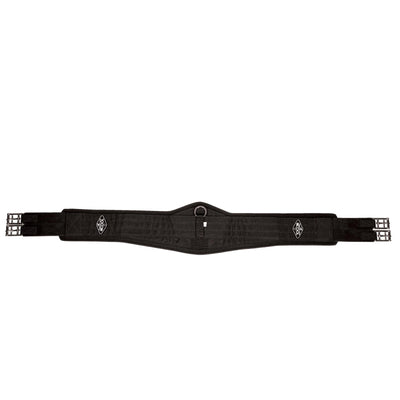

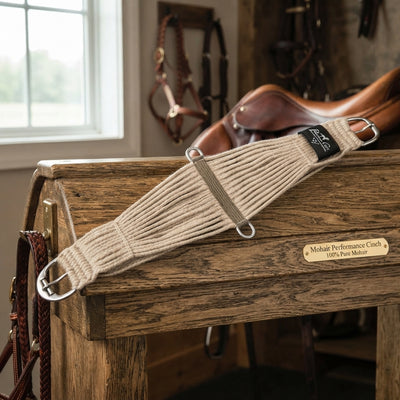

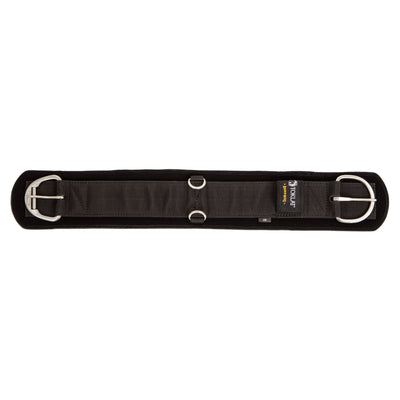
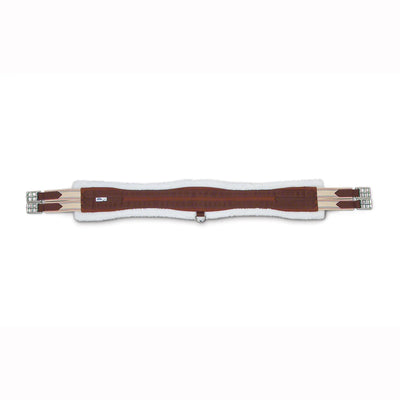

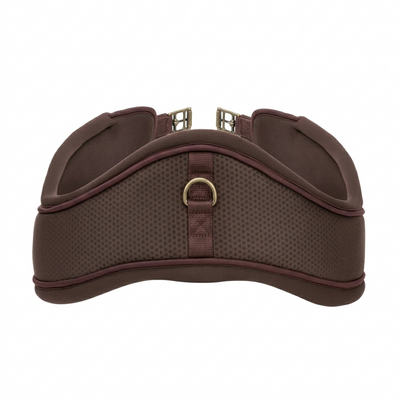

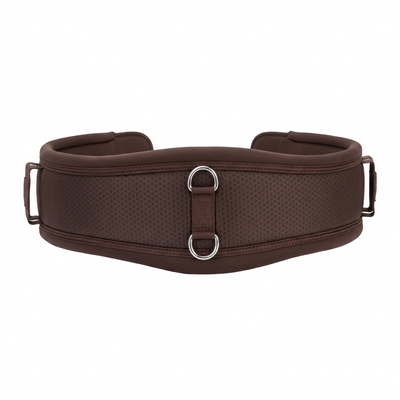

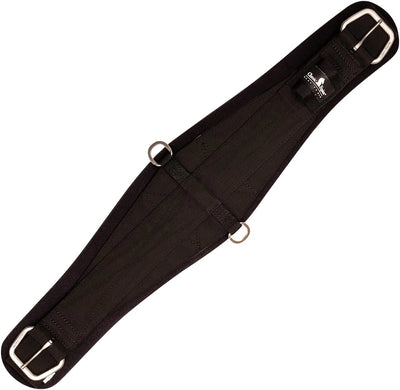
A cinch takes the blame for a lot of things that are really the saddle's doing, but two of them belong to the cinch alone: the length and the lining. Get the length wrong and it drags the rigging forward into the shoulder. Get the lining wrong and you find a bald stripe behind the elbow in July.
What Riders Are Actually Asking
How do I work out what size cinch I need?
Run a soft tape from the center of the cinch ring on the near side, under the barrel, up to the same point on the off side, then subtract 16 inches. That 16 covers roughly 8 inches of latigo hanging on each side. Western cinches come in even sizes only, and most stock horses land somewhere between 28 and 34 inches. Round to the nearest even number, and if you are stuck between two, take the longer one. A cinch that runs an inch long is far kinder than one that hauls the rings up into the shoulder.
Do I need a long girth or a short dressage girth?
Your saddle decides that, not your horse. Long billets, standard on dressage saddles, take a short girth in the 22 to 30 inch range. Regular billets under a jump or all-purpose flap take a long girth, usually 42 to 54 inches. Measure from the middle hole of the billet on one side, under the barrel, to the middle hole on the other. When it is done up, the buckles should sit above the point of the elbow so the leg does not slam into them, and you want two or three fingers of clearance between the top of the girth and the bottom edge of the saddle flap.
Mohair, neoprene or fleece: which lining is kindest?
Each one fails differently. Mohair breathes, wicks, and molds to the horse over a season, and a 27-strand cinch spreads pressure across more surface than a 17-strand does, but neglect it and the fibers pack into a board. Neoprene wipes clean in ten seconds and soaks up nothing, which is why ropers reach for it, though thin-skinned horses often blister under it once the temperature climbs. Fleece and felt are the most forgiving on a horse that already has a sore spot, and the least forgiving of a lazy owner: caked fleece works like sandpaper.
My horse is girthy. Will a different girth fix it?
Sometimes, and riders disagree about this in good faith. Anatomic and contoured girths are cut away behind the elbow, and plenty of people swear the pinning and pinching stopped the week they switched. Just as many report no change at all, because the real cause was ulcers, a saddle bridging over the loin, or a habit set years ago. The part you can actually check is physical. Look for a rub line or thin hair in the girth groove, and notice whether the objection comes on the first hole or only on the last two. No mark plus an early objection usually means the gear is not the culprit.
Straight, roper or contoured: does the shape matter?
It does, and it comes down to where your horse carries his width. A straight cinch holds one width the whole way across and suits a fairly even barrel. A roper is deeper through the middle, often 4 to 5 inches, so the shock of a hard stop spreads over more skin instead of concentrating on a narrow band. A contoured cinch pinches in at the elbow end so it clears the skin fold when the front leg swings back. If your horse is broad-chested with the elbow set forward, start with the contoured shape.
How to Choose the Right Cinch
- Measure, then take off 16 inches: Ring to ring under the barrel, minus 16. Round to an even number, and size up rather than down when you are between.
- Pick the lining for the work: Neoprene for muddy, wet days you have to hose off. Mohair or alpaca for long summer hours when the horse needs to breathe.
- Check where the rings land: With the saddle set correctly the front ring should sit about 4 inches behind the front leg, on flat ribs rather than on the vein.
- Count the strands on natural fiber: A 27-strand cinch carries load over more surface than a 17-strand. The extra money buys contact area, not decoration.
- Roller buckles if you saddle alone: A roll-snug style buckle lets you take up one hole at a time without fighting the latigo, which matters most on a green or cinchy horse.
What This Page Is Not For
This page is front cinches and English girths only. Back cinches, flank cinches, latigos, tie straps, off billets, cinch hobbles and training surcingles are not here, and neither are sheepskin girth covers or bareback pad girths. Those parts size by a different rule and mixing them up is how people end up with a 34 inch cinch and a 6 foot latigo they cannot use together.
Brands Riders Trust
Weaver Leather built the Smart Cinch with the patented roll-snug buckle that most Western riders have owned at least once. Professional's Choice works both sides of the barn, from pure mohair cinches to the 2XCOOL English girths with the cooling liner. Shires covers English at two price points, with the ARMA line for everyday and Velociti for leather. Classic Equine brings the alpaca and mohair blends, and Toklat handles the wash-and-go synthetics.
Everything here ships in two days from an American warehouse, and if it rubs your horse it comes back to us under the 365-day guarantee. Happy Tails, Happy Trails.
