

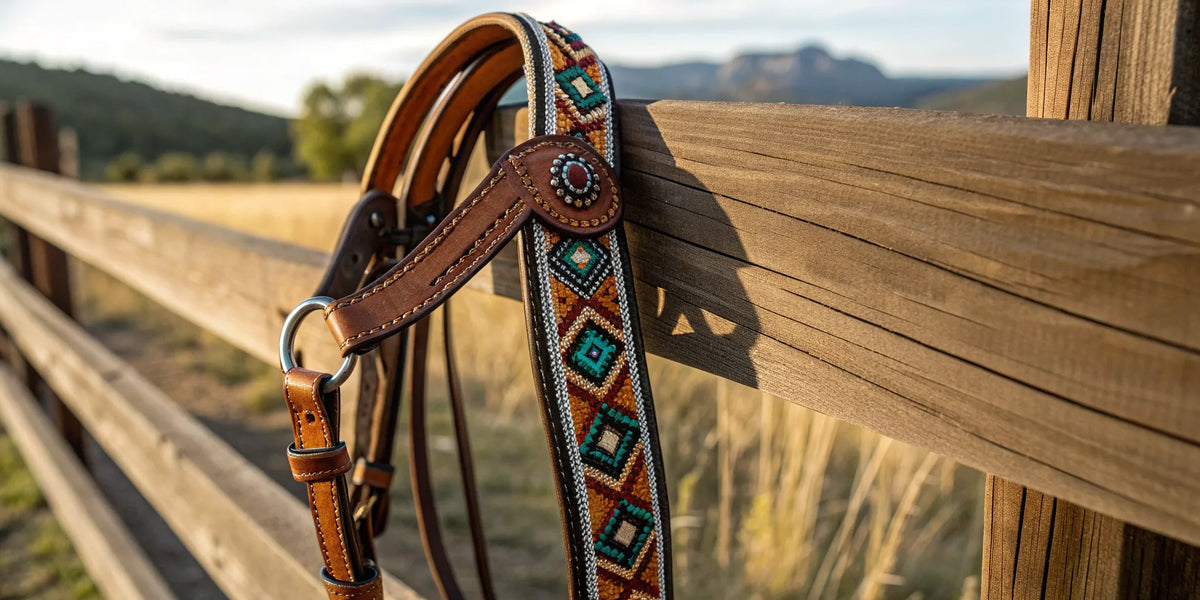
A beaded Western headstall is a working headstall with beaded inlays set into the leather. Choose it like any headstall: sound leather, rust-resistant hardware and a correct fit come first, then style. A browband with a throatlatch is the secure choice for a snaffle; one-ear and sliding-ear styles usually suit a finished horse in a curb.
You want your horse to look great, but comfort comes first. So when you spot a striking beaded Western headstall, it is fair to wonder whether it is just for show. Will the leather be stiff, or the fit be off? You do not have to choose between style and function. A good beaded headstall is built on supple leather and a sensible design, and this guide shows you what to look for so you can choose a piece that works as well as it looks.
Key Takeaways
- Look beyond the beads to the basics: A beautiful headstall is no use if it is badly made. Check for supple leather, rust-resistant hardware and secure stitching before you fall for a pattern.
- Choose a style that suits your ride: Weaver Leather calls the browband with throatlatch the most secure style of headstall, and recommends a throatlatch with a snaffle. One-ear and sliding-ear styles are often used with leverage bits on finished horses.
- Protect your investment with proper care: Wipe your headstall after each ride, condition the leather while keeping conditioner off the beads, and store it in a cool, dry place out of direct sunlight.
What Is a Beaded Western Headstall?
A beaded Western headstall is a functional piece of horse tack that doubles as decoration. It is the part of the bridle that fits over your horse's head to hold the bit in place, with beadwork added for personality. These headstalls are a popular way for riders to show personal style in the arena or on the trail, blending traditional leatherwork with eye-catching designs.
The best beaded headstalls never sacrifice function for looks. They are built on good leather and durable hardware, so they can be as reliable and comfortable for your horse as any plain headstall. From subtle patterns to bold, colorful designs, there is a beaded headstall to suit most horse and rider pairs. If you are still sorting out the terms, our guide to headstall vs bridle explains how the headstall fits into the full bridle.
The Craftsmanship Behind Beaded Tack
Beaded tack is more than a trend. The beadwork on these pieces can range from simple geometric patterns to complex, vibrant designs, set into tooled or stamped leather. That range lets riders choose tack that reflects their own taste and suits their horse's coloring. It is a way to stand out and add a personal touch to your gear, turning an everyday item into a statement piece.
Looks Good, Rides Well: Style and Function
While the beadwork is what catches your eye, the most important job of a headstall is to hold the bit correctly and comfortably so your cues come through clearly. A well-fitting headstall is essential for a safe and enjoyable ride, and a quality beaded headstall should deliver both style and substance. The decorative elements should never interfere with the fit or function. Look for beadwork that is securely set into the leather and does not create stiff spots or pressure points, so the leather can sit comfortably on your horse's head.
From Rodeo to Western Pleasure
You might think a beaded headstall is reserved for slow, quiet rides, but beaded pieces show up across Western riding, from timed events to the show pen and the trail. For speed events, strength and sound hardware matter most. In the show pen, where subtle communication counts, a well-fitted headstall keeps the bit sitting where it should. Whatever you do with your horse, choose the headstall for the job first and the pattern second. If you show, check your organization's rulebook for any limits on equipment in your class.
Anatomy of a Beaded Headstall
When you look at a beaded headstall, a few features deserve a close look. First is the leather. A supple, durable leather base is the foundation of a headstall that will last. Next, examine the beadwork itself: it should be tight and secure. The hardware, meaning buckles, spots and conchos, should be rust-resistant. Weaver Leather, for example, uses non-rust stainless steel spots and hardware on its turquoise beaded headstalls. Finally, headstalls come in several styles, such as the browband, the one-ear or split-ear, and the sliding ear. Each offers a slightly different fit and look, so choose the one that best suits your horse and your riding.
Finding Your Beaded Headstall Style
Once you start shopping, you will see just how many options there are. It is more than picking colors; the design of the headstall affects its fit, function and feel for your horse. The right style depends on your bit, your horse and your riding, and then on your personal taste.
Think of it like choosing any other essential piece of horse tack: function comes first, but you do not have to sacrifice style. Here are the most common designs. For a broader comparison of plain and decorated styles, see our guide to Western horse headstall types.
The Timeless Look: Browband Headstalls
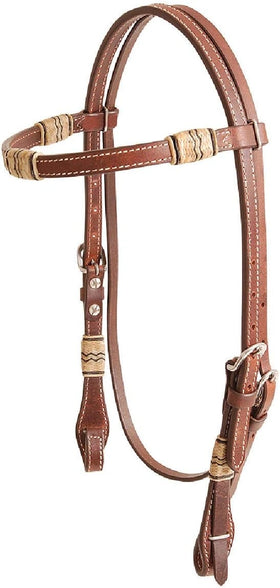
The browband headstall is the trusty classic of the Western world. A strap runs across the forehead, connecting the crownpiece and cheek pieces, and most browband headstalls also have a throatlatch. Weaver Leather calls the browband with throatlatch the most secure style of headstall. That stability makes it a sensible choice for training, trail riding and any time you ride in a snaffle. If you have a young horse, ride in rough country or simply prefer a secure, traditional look, a beaded browband is a reliable option.
We carry the Weaver Leather Beaded Browband Western Horse Headstall in chestnut leather with colorful beaded inlays and basket weave tooling, and the Weaver Leather Turquoise Diamond Beaded Headstall. Weaver describes the latter's browband version as a 5/8 inch dark-oiled headstall with carved floral accents highlighted by a tan stain, turquoise diamond beaded inlays, and non-rust stainless steel spots and hardware. For smaller horses, the Weaver Leather Pony Browband Headstall with turquoise bead floral design is Weaver's pony size of that design.
One Ear, Split Ear or Sliding Ear?
For a more streamlined look, many riders choose an ear headstall. Weaver describes the split ear as the traditional cowboy look, with a single static ear loop cut into the crownpiece, and the sliding ear as an ear loop that can move along the crownpiece to help fit different horses, in one-ear or two-ear versions. These styles are lightweight and show off more of your horse's face, but without a browband they do not hold the bridle in place the same way.
Weaver explains why they are so common in the show pen: a leverage bit puts slight downward pressure on the crown when the reins are engaged, which helps keep the headstall from riding up. Ear headstalls are usually seen on finished horses in curb bits. The Weaver Leather Beaded Single Ear Headstall we carry is listed by Weaver as a sliding ear headstall in chestnut leather with a multicolor beaded inlay, basket weave tooling, stainless steel hardware and a 5/8 inch width.
Beyond the Browband: Other Styles
Browband and ear headstalls are the most common canvases for beadwork, but they are not the only options. Some riders use a bitless bridle or a halter bridle for certain horses or jobs. The best piece of horse tack is the one that works for your horse, so if you are weighing a different style, talk it over with your trainer.
Bitless Bridles and Halter Bridles
Bitless bridles skip the bit and work through pressure on the head instead, so they ask for different training and a different feel than a bitted headstall. Halter bridles combine a halter and a bridle in one piece; on many designs the bit can be unclipped so the horse can be led or tied in the halter. If you are curious about either, ride in one under a trainer's eye before you take it out on the trail, and check your show rules before you use one in competition.
Traditional or Modern: Which Pattern Is for You?
This is where you get to express yourself. Decorative Western headstalls come in a wide variety of styles. Weaver describes the turquoise diamond inlays on its dark-oiled headstalls as adding southwestern style, while other designs use multicolor beadwork set into basket weave tooling. Some decorative headstalls add conchos, crystals or extra tooling. When choosing a pattern, think about the rest of your tack. Do you want the headstall to be the statement piece, or to complement your saddle and breast collar? There is no wrong answer; it is about creating a look you love.
A Touch of Bling: Crystal and Concho Designs
If you like extra sparkle in the show ring or on the trail, designs with crystals or decorative conchos catch the light. This does not have to mean over the top; a few well-placed crystals can add elegance, while bold conchos give a classic, substantial look. As with beadwork, quality matters. Check that crystals are securely set and conchos firmly attached before you ride, and keep checking them as part of your regular tack inspection.
Going Custom: Designing Your Own Headstall
Beyond the main style, the details make the difference. When you compare headstalls, Weaver's advice is to consider the quality of the leather you are buying: good leather resists cracking soon after purchase, and Weaver says its oiled, conditioned and hand-rubbed premium harness leather gets better with age. Pay attention to the hardware too. Whether you want a simple design or a custom show piece, good materials are what make a beaded headstall last.
Making Your Own Beaded Headstall
If you are feeling creative, making your own beaded headstall is a rewarding project that lets you design something unique. Start by gathering inspiration from finished headstalls you like, then look for a headstall pattern or template that gives you the basic shape and leaves you free to focus on the beadwork. Video tutorials can help visual learners, and written patterns suit riders who prefer a structured guide. If you are new to leather and beads, start with a simple design. Whatever you make, use sound leather and hardware rated for tack, and check the finished piece carefully before you ride in it.
Creating a Coordinated Look: Matching Pieces
Once you have found a beaded headstall you love, coordinating the rest of your tack is a natural next step. A matching breast collar, and sometimes reins, pulls the whole picture together for a polished look in the show pen or on the trail. Many makers design beaded pieces in the same leather, colors and tooling, so it is often simple to find a headstall and breast collar that belong together.
Pairing Your Headstall with a Breast Collar and Reins
The breast collar is the most visible companion to your headstall. It helps keep your saddle in place and gives a large canvas for complementary beadwork. The key is to match the leather color, tooling and hardware. For example, Weaver describes both its beaded headstall and its Weaver Leather Beaded Contoured Western Breast Collar as chestnut leather with a multicolor beaded inlay, basket weave tooling and stainless steel hardware; the breast collar tapers from 2 inches to 1 3/4 inches. Add reins in a matching leather color to complete the look. Whether you buy pieces that were designed together or put together your own, consistent leather and hardware give the cleanest result.
Shop This Post


Which Brands Offer the Best Quality?
When you are investing in a beaded headstall, you want it to last. The maker's name can tell you a lot about the leather, hardware and construction to expect, but the details of the individual piece tell you more. Here is how to sort through the options.
Makers We Carry
Among beaded headstalls, the pieces we currently have in stock are from Weaver Leather, and we also carry plain and tooled headstalls from Professional's Choice, Shires, Cashel and Martin Saddlery. You can compare browband and one-ear styles side by side in our Headstalls: One Ear vs Browband collection. Whatever the brand, read the maker's description for the leather, width, hardware and size before you buy.
Other Brands You May See
You will also see beaded headstalls from brands such as Hilason, Schneiders, Showman and Circle Y. We do not carry those brands, so compare their pieces using the same checklist in this guide: leather, beadwork, hardware, bit ends and fit.
What Do the Reviews Say?
Sometimes the most useful insights come from fellow riders. Reviews often highlight what matters in day-to-day use: how the leather wears, whether the beads stay put and how the headstall fits. Beyond materials, fit is everything, because a headstall that fits properly keeps the bit where it should be and your horse comfortable. Read reviews alongside the maker's specifications, not instead of them.
Variety and Popularity
When you start your search, a few brand names appear again and again. Large makers offer a wide selection, which means you can find everything from a simple, sturdy browband for daily training to an intricate single-ear show piece. A wide selection is useful, but it also means two headstalls with the same brand name can differ in leather, width and hardware, so check each one.
Using Customer Ratings to Guide Your Choice
Brand reputation is a starting point, but customer reviews tell the real-world story. Fellow riders will tell you how the leather holds up after a dusty trail ride or whether the beadwork stands up to daily use. When a headstall has consistently good reviews and the maker's specifications match what you need, you can buy with more confidence.
What to Look for in a Beaded Western Headstall
A beautiful beaded headstall can be the centerpiece of your tack, but a great one is more than a pretty face. It needs to be safe, comfortable for your horse and built to last. When you shop, it is easy to get swept away by patterns and colors. Looking closely at a few details helps you choose a headstall that performs as well as it looks.
Start with the Foundation: Leather and Construction
The foundation of any good headstall is the leather. Good leather is not just about looks; it is about durability and your horse's comfort. Feel the leather: it should be supple and smooth, not stiff or plasticky. Look for even coloring and finished edges that will not rub. Poor leather can crack, stretch or break under pressure, which is the last thing you want on a ride. Weaver's guide to choosing a quality headstall starts with the same point.
Decoding Leather Types: From Skirting to Harness
Headstall descriptions name several leathers. Weaver's headstall guide lists premium harness, harness, latigo and bridle leather. Harness leather is a vegetable-tanned leather stuffed with tallows; Weaver Leather Supply describes Hermann Oak's russet harness leather that way and lists reins and tack among its uses. Skirting leather is the heavy leather saddles are made from, and some headstalls use it for tooling. Each can make a good headstall when it comes from a quality tannery and is well finished; the best choice depends on whether you want a softer, oiled feel or a firmer leather for tooling and carving.
Will the Beadwork Last? What to Look For
The beadwork is what makes these headstalls stand out, so you want it to last. Run your fingers over it. Does it feel secure, or are some beads loose? Ask how the beads are attached and check that nothing catches or lifts at the edges. On many beaded headstalls, including the Weaver pieces in this guide, the beads are an inlay set into the leather. A careful look before you buy will keep your headstall looking its best down the road.
Don't Overlook the Hardware
The hardware, meaning buckles, rings, spots and conchos, holds everything together, so it needs to be tough. Look for rust-resistant hardware; stainless steel is common on good headstalls. Test the buckles to make sure they adjust easily but hold the straps securely once fastened. Sound, reliable hardware is non-negotiable for safety and longevity.
Features for Convenience: Double Buckles and Bit Ends
Some hardware features are about making your life easier. Buckles on both cheeks let you adjust the fit from both sides so the bit hangs level. Bit ends matter too: Weaver lists quick change, buckle, water tie, snap and Chicago screw ends on its headstalls and says choosing a bit end is really a matter of preference. If you switch bits often, quick change or water tie ends can save time. Whichever you choose, check the bit ends before each ride.
Measure for a Correct Fit
No matter how striking a headstall is, it is not the right one if it does not fit your horse. A poorly fitting headstall can rub and can let the bit sit too high or too low, which interferes with your cues. Before you buy, measure your horse with a soft tape from the corner of the mouth on one side, up over the poll just behind the ears, to the corner of the mouth on the other side. You can also measure a headstall that already fits, from bit end to bit end. Compare your number with the maker's size information so you have room to adjust both ways.
Finding the Right Size: From Pony to Large Horse
Headstalls come in sizes for different builds. Weaver, for example, makes its turquoise beaded browband in both a horse size and a pony size. Size names vary between makers, so the best way to get a good fit is to compare your horse's measurement with the specific maker's sizing for the piece you want. A horse with a long or wide head may need a different size than its height suggests.
Common Buying Mistakes (and How to Avoid Them)
A few common mistakes can turn a great headstall into a poor choice. The first is pairing a one-ear or sliding-ear headstall with a snaffle. Weaver explains that when both snaffle reins are engaged, the headstall tends to loosen slightly, most visibly in the cheek pieces, which is why it recommends riding with a throatlatch in a snaffle. Put your snaffle on a browband headstall with a throatlatch. The second mistake is choosing by pattern alone. Understanding how your bit and headstall work together is key to clear communication and a comfortable horse.
What Affects the Cost of a Beaded Headstall?
When you start shopping, you will notice that prices for beaded headstalls vary widely. The cost reflects the leather, the beadwork, the hardware and the amount of handwork involved. Knowing what drives the price helps you decide where to spend and where to save.
Everyday Headstalls
If you want a durable headstall for everyday schooling and trail riding, simpler designs are often all you need. A plain browband with a modest beaded inlay can be a reliable workhorse, as long as the leather, stitching and hardware are sound. Do not assume a lower price means poor quality, and do not assume a higher one guarantees it; check the details.
Show and Statement Pieces
Headstalls with more tooling, carving, larger beaded inlays or added conchos and crystals take more work and more materials. These are the pieces riders often save for the show pen or special occasions. The same checks apply: supple leather, secure decoration and hardware you can trust.
What Determines the Price?
Several factors come into play. The leather is a major one; heavier, well-finished harness leather from a named tannery costs more than thinner, stiffer leather. Handwork is another: carving, tooling and beadwork take time and skill. Finally, the hardware, from buckles to conchos, adds to the cost. Weaver's quality guide makes the same point, noting that headstalls of the same style vary when makers add intricate designs, patterns and hardware.
Keep Your Beaded Headstall Looking Its Best
A beaded headstall is an investment in both style and function. A little regular care goes a long way toward keeping the leather supple and the beadwork bright, and clean tack is more comfortable for your horse.
Your Simple Cleaning Routine
Weaver recommends wiping leather tack down with a damp cloth or sponge after each ride and, if you ride daily, following up with a mild tack cleaner at least once a week. Use a soft cloth around the beaded sections so you do not snag any threads, and pay special attention to the parts that touch your horse.
Keeping the Leather Soft and Supple
After cleaning, condition the leather with a product made for leather, following the conditioner's directions. Weaver notes that regular conditioning helps keep leather from becoming dry, brittle and prone to breakage. Apply a light, even coat to the leather and keep it off the beadwork, then buff off any excess. Let the headstall air dry in a cool, well-ventilated place.
Keeping the Beadwork Safe and Secure
The beadwork needs special attention. Avoid harsh household chemicals such as bleach or ammonia cleaners around it. If the beads themselves are dirty, a soft, slightly damp cloth is usually all you need. Keep leather oils and conditioners off the beads, since residue can attract dust. While you clean, check that every bead and stitch is still secure.
Where and How to Store Your Headstall
How you store your headstall matters as much as how you clean it. Weaver advises storing leather tack away from direct sunlight in a cool, dry place, because tack left in damp or humid conditions for long periods is prone to mold, mildew and deterioration. Hang your headstall on a rounded bridle hook or rack to help it keep its shape, and inspect it regularly for cracks, tears and loose stitching. Weaver's article on caring for leather horse tack covers these steps in more detail.
Where to Find Your Beaded Headstall
Once you know what you are looking for, the fun part begins. Finding the right beaded headstall is a balance of browsing options, setting a budget and making a final choice based on quality and fit. Whether you prefer shopping from home or visiting a tack shop, knowing what to look for makes the process smoother.
Your goal is a piece that looks great, holds up to regular use and keeps your horse comfortable. Here are the final steps.
Online vs. In-Store: Which Is Right for You?
Deciding where to shop often comes down to preference. Shopping online gives you access to a large selection from many makers, and you can easily compare styles and read reviews. The downside is that you cannot handle the leather or beadwork before you buy, so read the maker's specifications closely. In a store, you can feel the materials and check the craftsmanship up close, and get advice on the spot, though the selection may be smaller.
Setting a Budget
Decide what the headstall is for before you set a budget. An everyday headstall for schooling and trail rides needs to be sound and comfortable; a show piece may justify more tooling and decoration. In both cases, spend first on leather, hardware and fit, and then on the beadwork you love.
Making Your Final Decision with Confidence
When you are ready to decide, focus on the fundamentals. The most important factors are the leather and the fit, because they affect your horse's comfort and the clarity of your cues. Check that the stitching is tight and the hardware is solid. Finally, make sure the style suits your horse, your bit and your discipline.
Frequently Asked Questions
Are beaded headstalls durable enough for everyday riding?
A well-made one can be. The beadwork is an addition to the leather headstall, not a replacement for its strength. Choose a piece with a sound leather base, securely set beadwork and rust-resistant hardware, and inspect it regularly, and it can handle regular training and trail rides.
How do I know what size headstall my horse needs?
Measure a headstall that already fits your horse from bit end to bit end, or run a soft tape from the corner of the mouth on one side, over the poll just behind the ears, to the corner of the mouth on the other side. Compare that number with the maker's size information for the headstall you want.
What should I check first when buying a beaded headstall?
Start with the leather. A strong, supple leather base is what makes a headstall comfortable and long-lasting. Then check that the beadwork is secure, the stitching is tight, the hardware is rust-resistant and the bit ends suit the way you change bits.
Can I use a snaffle bit with a one-ear headstall?
It is not recommended. Weaver explains that a headstall tends to loosen slightly when both snaffle reins are engaged, and recommends a throatlatch when riding in a snaffle. Put a snaffle on a browband headstall with a throatlatch, and save one-ear and sliding-ear headstalls for curb bits on finished horses.


