

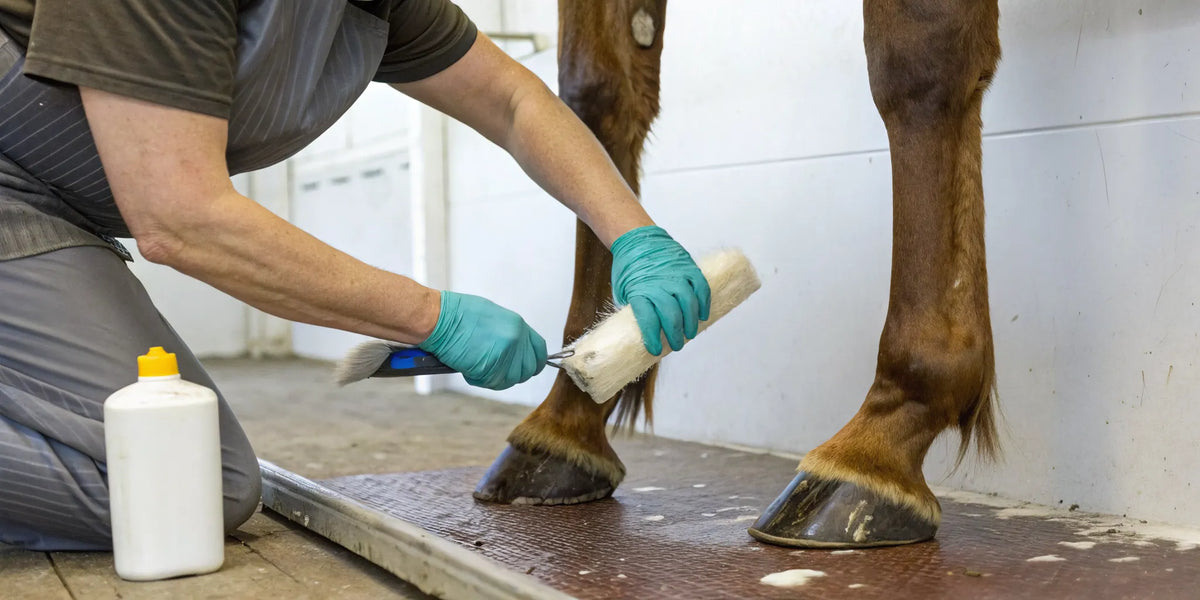
Keratex Hoof Hardener is a liquid treatment that its maker says strengthens weak, brittle or cracked hooves by cross-linking the keratin in the hoof horn and sole. Keratex directs applying it daily for one week, then twice weekly, to the lower half of the hoof and the sole, avoiding the coronary band and frog.
Tired of hoof care products that just add a temporary shine? Many oils and greases simply coat the outside of the hoof, failing to fix the real issues causing poor hoof quality. Keratex Hoof Hardener is different. Instead of sitting on the surface, its formula absorbs into the hoof wall and sole. Keratex says it works by strengthening the hoof's internal structure from the inside out. Think of it as building a stronger hoof, not just painting over the cracks. This guide explains how the process works, how to apply it, and what the label says about safe handling.
Key Takeaways
- Builds stronger hooves from within: Keratex absorbs directly into the hoof horn to reinforce its internal protein structure. Keratex says that because it absorbs into the hoof, it will not come off in the field, unlike surface-level oils or sealants.
- Follow a consistent routine for best results: Keratex directs applying it daily for the first week, then twice weekly for maintenance. Always start with a clean, dry hoof and do not use any hoof oils or greases while using it.
- Solves common problems like cracks and lost shoes: The maker lists brittle, cracked, soft or weak hooves, soft or thin soles, repeated shoe loss and the transition to barefoot among its uses. It says treated horn is better able to support nails, so shoes stay on better.
How Keratex Hoof Hardener Builds Stronger Hooves
If you’ve ever dealt with hoof issues, you know the old saying, "no hoof, no horse," is no joke. Weak, brittle, or cracked hooves can sideline your horse and lead to a frustrating cycle of lost shoes and soreness. That’s where a targeted treatment like Keratex Hoof Hardener comes in. It’s not a cosmetic hoof dressing or a simple conditioner. Instead, it’s a formula designed to strengthen the structure of the hoof horn.
So, what exactly is it? According to its creators, Keratex Hoof Hardener is a patented treatment that works by strengthening the molecular structure of the hoof itself. Think of it as a way to build resilience from the inside out, making the hoof wall and sole better equipped to handle everyday wear and tear. It’s a go-to solution for horse owners managing everything from soft soles in wet climates to brittle walls in dry conditions. Keratex says the product has been available since 1990 and was the first of its kind.
The Science Behind Stronger Hooves
Keratex explains that the product works by cross-linking the keratins and proteins within the hoof’s internal structures, forming additional bonds between keratin molecules. Keratin is the tough, fibrous protein that makes up the hoof wall, just like it makes up our own hair and nails. By creating stronger bonds between these protein chains, the hardener makes the entire hoof structure more robust and durable.
This process effectively strengthens the hoof from within, rather than just coating the surface. The maker’s aim is a hoof that is less likely to crack, chip and break, helping it stand up to the environment and the demands of work.
A Breakdown of the Keratex Formula
The ingredient list on the Keratex product page and US label reads: aluminium chloride hexahydrate, glycerine (glycerol), formaldehyde, ethyl alcohol, methyl alcohol, methyl salicylate and water. Formaldehyde, which Keratex refers to as formalin, is the ingredient behind the cross-linking of keratin that is the core of the strengthening process.
Keratex says the formula is balanced so it hardens without making the hoof brittle. Its description of the formula includes a hardening agent, a flexibility agent (a plasticiser to stop the horn becoming brittle), an inorganic complexing agent and a disinfectant to help maintain general hoof health.
Key Active Ingredients
The strengthening effect comes from the cross-linking ingredient, formaldehyde. Cross-linking is the scientific way of saying it forms extra bonds between the keratin proteins in the hoof horn, reinforcing the natural building blocks of the hoof. Keratex says this lets the quality of existing horn be improved chemically within a few days, rather than relying on a surface coating that wears away.
Additional Formula Components
While the active ingredient provides strength, Keratex says the flexibility agent keeps the hoof from becoming overly brittle. The goal is a hoof that is strong enough to resist cracks and hold a shoe, yet still able to flex and absorb shock as it should. That balance is also why following the label frequency matters: the directions are built around building strength without overdoing it.
What Makes Keratex Different?
One of the biggest advantages of Keratex is that it absorbs directly into the hoof. Unlike oils, greases, or varnishes that coat the outside, Keratex becomes part of the hoof structure. Keratex says this means it will not come off in the field and keeps working whatever the weather and field conditions.
Because it is not an oil or resin layer and does not seal the hoof, Keratex says the treated hoof can still breathe naturally. The maker also says it stops the horn taking in excess moisture, so the hoof resists softening in wet conditions. You can read the maker’s full explanation on the Keratex Hoof Hardener page.
A Patented, Award-Winning Formula
Keratex states that it was granted a patent for the formula and that no other manufacturer may use the technology it developed. The company also says the product was selected by Horse-Journal as an Editor’s Choice and Product of the Year, and that it is recommended by vets and farriers worldwide. Those are the maker’s own claims, so weigh them alongside your farrier’s view of your horse’s feet.
Flexibility and Disinfectant Agents
A common worry with hoof hardeners is that they might make the hoof too rigid and brittle. Keratex addresses this by including a flexibility agent alongside the hardening agent, and it describes the formula as also containing a disinfectant to help maintain general hoof health. The intent is a hoof that becomes more resilient, not brittle, creating a healthier foundation for soundness and performance.
What Can Keratex Hoof Hardener Do for Your Horse?
If you’re dealing with hoof issues, you know how frustrating it can be. From chronic cracks and chips to constantly lost shoes, poor hoof quality can directly affect your horse’s comfort, soundness, and ability to perform. It’s a challenge that many horse owners face, and finding a solution that actually works is key. In our experience as a family horse business, the best approach is one that addresses the problem at its source rather than masking symptoms. Keratex Hoof Hardener doesn’t just put a temporary coating on the hoof; it works by strengthening the hoof’s internal molecular structure, making it more resilient against daily wear and tear. Think of it as giving your horse’s hooves a suit of armor from the inside out. This isn't a temporary, cosmetic fix. The aim is a more durable hoof, whether you ride on a rocky trail or in a muddy arena. Let’s look at the specific ways it can help your horse get back on all four feet with confidence.
Say Goodbye to Weak, Brittle Hooves
One of the main reasons horse owners turn to Keratex is to combat weak, brittle hooves. If you’re tired of seeing your horse’s hooves chip and crumble, this is the problem it was made for. Keratex Hoof Hardener is designed to strengthen weak, worn, and cracked hooves by improving their molecular structure. It works by cross-linking the keratin proteins within the hoof wall, essentially making the horn itself stronger and more durable. This process helps build resilience from within, so the hoof is better equipped to handle pressure and impact without falling apart. It protects the horn you have while healthier horn grows down.
Stop Hoof Cracks and Chips Before They Start
Cracks are more than just an eyesore; they can compromise the entire hoof structure and lead to more serious problems if left unchecked. Keratex says the product prevents cracks and hoof breakage and stops existing cracks from "laddering" up or across the hoof. It is honest about the limits: cracks will not disappear, but the horn around them is strengthened to resist further movement so they can grow out. You apply it to the lower half of the hoof wall and the sole. Keep using it as new horn grows down, and talk to your farrier about any crack that is deep, spreading or painful.
Keep Shoes on Tighter, Longer
A lost shoe is always a headache, often happening at the most inconvenient times. Frequently, the culprit is a soft hoof that can’t hold nails securely, especially in wet conditions. Keratex says the product stops the horn taking in excess moisture, so it resists softening in wet conditions, and that treated horn is better able to support nails. The maker reports this results in a reduction in shoe loss and abscesses. It’s a simple step that can save you a lot of time, money, and worry.
Weatherproof Your Horse's Hooves
Horses live outside, and their hooves are exposed to everything from morning dew and muddy pastures to dry, hard ground. A major advantage of Keratex is its ability to stand up to the elements. Because it soaks into the hoof horn instead of just coating the surface, it won’t wash off in the rain or mud. Keratex says it keeps working whatever the weather and field conditions, and that it is equally effective in wet and dry conditions.
Shop This Post

Featured in this article
Durvet Ivermectin 1.87% Paste Apple Flavored Horse Wormer - Single Dose Broad Spectrum Dewormer for Bots and Strongyles
$21.99
Shop Now →
How to Apply Keratex Hoof Hardener Correctly
Proper application is the key to getting great results with Keratex Hoof Hardener. While the process is simple, following the steps correctly ensures the formula can effectively strengthen your horse’s hooves. The prep work is just as important as the application itself. Taking a few minutes to prepare the hoof and apply the product carefully sets your horse up for success. This guide will walk you through how to do it right, so you can feel confident you’re giving your horse the best support for strong, healthy feet.
Start with a Clean, Dry Hoof
Always start with a clean canvas. Before you open the bottle, make sure your horse's hooves are completely clean and dry. Use a hoof pick and brush to remove all dirt, mud, and debris from the hoof wall and sole. A Professional's Choice Coated Steel Hoof Pick or the two-in-one Shires EZI-Groom Hoof Brush and Pick does the job. Keratex says that if hoof oils or greases have been used in the past three months, you should degrease the hoof thoroughly with acetone before applying the hardener. A clean, dry surface is essential for the product to absorb properly and do its job effectively.
Your Step-by-Step Application Guide
With a clean hoof ready, you can begin. Use the brush supplied with the bottle to apply Keratex to the lower half of the hoof wall and the sole. The maker’s directions say to avoid the coronary band (the hairline at the top of the hoof) and the frog, and the label says to keep it away from the horse’s eyes, nose and mouth. We also keep it off the heel bulbs and any other soft tissue. Focus only on the horn that needs to be tougher.
How Often Should You Apply It?
Consistency is everything when using Keratex. Keratex’s directions are to use it daily for one week, then twice weekly for general hoof maintenance. Sticking to this routine is what creates a stronger, more durable hoof over time. Commit to the schedule on the label rather than an application here and there.
The Initial Application Period
Think of the first week as the foundation-building phase. To get the best results from Keratex, you need to apply it daily for the first seven days. This initial period allows the formula to fully absorb and start the cross-linking process within the hoof horn, creating that internal strength we've been talking about. Before each application, make sure the hoof is completely clean and dry. The maker also says not to use any oils or greases while using Keratex, as they create a barrier that stops the hardener soaking in.
Long-Term Maintenance Schedule
Once you’ve completed the initial daily applications, you can ease into a simple maintenance routine. After the first week, Keratex’s directions call for twice-weekly applications to maintain the hoof’s strength. The key is consistency. Sticking to this schedule ensures the hoof horn remains hard and resilient as it grows out. This simple, ongoing care helps protect against cracks, chips, and moisture damage, keeping your horse’s hooves in top condition. It’s a small commitment for a more durable hoof.
Application Dos and Don'ts
To keep it simple, here are the most important rules to follow. Do start with a thoroughly clean and dry hoof every single time. Do degrease with acetone before the first application if oils or greases have been used in the past three months. Don't apply the hardener to the coronary band or frog, and keep it off the heel bulbs. And most importantly: Don't use any other hoof oils or greases while you are using Keratex. These products create a barrier that stops the hardener from working and can soften the hoof, undoing all your hard work.
Pro-Tip: Using the Bottle Cap for Application
When you're applying Keratex Hoof Hardener, a simple trick can make the process cleaner and more effective. Keratex recommends this one itself: instead of dipping the brush directly into the bottle, pour a small amount into the cap and work out of it. This little step helps prevent spills, which is always a plus, but the real benefit is keeping dirt and debris from getting into the main bottle. By using the cap, you ensure the hardener stays pure and uncontaminated, and avoids spills.
This habit reinforces one of the most important rules of application: always start with a completely clean and dry hoof. Using the cap prevents you from accidentally transferring any lingering grime from the hoof back into your supply of hardener. It’s a small adjustment that makes a big difference in the ease of application and the overall effectiveness of the treatment. Remember to avoid using any hoof oils or greases alongside Keratex, as they can create a barrier and block the formula from absorbing properly. Keeping both the product and the hoof clean is the best way to ensure you get the results you're looking for.
Is Keratex the Right Choice for Your Horse?
Deciding on the right hoof care product can feel overwhelming, but Keratex Hoof Hardener is a standout choice for many common hoof problems. It’s not just a topical coating; it works by strengthening the hoof’s internal structure. The maker lists uses that range from brittle or soft hooves to repeated shoe loss and the transition to barefoot. Let’s look at a few specific situations where it really shines.
If Your Horse Has Soft, Weak Hooves
If you find yourself constantly worrying about soft, tender hooves, especially after a wet spell, Keratex is worth a look. Soft hooves can be prone to bruising and soreness, which limits your horse’s comfort and performance. Keratex Hoof Hardener is specifically formulated to strengthen weak, worn, and cracked hooves by improving their molecular structure. It works by cross-linking keratin proteins to build a tougher, more resilient hoof horn. The aim is a hoof that better withstands challenging terrain.
When Hoof Walls are Brittle and Cracked
Cracks in the hoof wall are more than just a cosmetic issue; they can compromise the entire hoof capsule and lead to soundness problems. Whether caused by dry weather, frequent moisture changes, or nutritional factors, brittle hooves need support to prevent chipping and splitting. Keratex Hoof Hardener is applied to the hoof wall and the sole. Used regularly, the maker says it helps the horn resist taking in excess moisture and strengthens the horn around a crack so it can grow out.
For Horses with Thin Soles or Weather Damage
Some horses are born with thin, sensitive soles that make them ouchy on rocky or hard ground. Others develop sole sensitivity due to weather-related damage, where hooves expand in the wet and contract in the dry, weakening the structure. Keratex lists soft, sensitive or thin soles among its uses, and its directions say it should also be applied to the sole to prevent bruising. The US label lists it for shod and unshod hooves. It gives your horse the support needed to move confidently on any surface.
Supporting the Transition to Barefoot
Taking a horse barefoot is a rewarding journey, but the transition period can be tough. As the hoof adapts to life without shoes, it needs to build strength and resilience to handle direct ground contact. This is where Keratex becomes an invaluable partner. It helps prevent the chipping, cracking, and soreness that can occur as the hoof wall and sole toughen up. Keratex lists the transition to barefoot among its uses. Many owners also use hoof boots for rides over rough ground while the hoof toughens, such as the Toklat Simple Hoof Boot or the Toklat Trek All-Terrain Hoof Boot. Plan the transition with your farrier.
What to Know Before You Use Keratex
Keratex Hoof Hardener can help improve hoof quality, but it’s important to use it correctly to get the best results safely. Understanding its key ingredient, how often to apply it, and how it fits into your overall hoof care routine matters. Think of it less as a quick fix and more as a long-term strategy for building stronger, more resilient hooves. Before you get started, let’s cover a few key points to ensure you and your horse have a great experience.
Understanding Official Warnings and Safety Precautions
Keratex is a powerful product, and with that power comes the responsibility to handle it safely. The ingredients that make it so effective at hardening hooves are strong chemicals that require respect and careful handling. Think of it like any other potent tool in your barn—you need to know the rules to use it correctly and keep yourself and your horse safe. Let's go over the official warnings and safety measures so you can use this product with confidence.
What the Label Says
The US label for Keratex Hoof Hardener carries the signal word "Danger" and is marked for professional use only and for external application to equine hooves only. Read the label on your bottle before the first use, and follow it over any general advice, including ours.
Handling, Storage, and First Aid Instructions
The label is clear that this is a hazardous product that must be handled with care. It warns that the product can cause severe skin burns and eye damage, is toxic if swallowed, is harmful if inhaled or absorbed through the skin, may cause an allergic skin reaction, may cause cancer, and is suspected of causing genetic defects. Because of these risks, the label calls for protective gloves, protective clothing and eye or face protection, and for use only in a well-ventilated area without breathing the vapor. Store the bottle locked up, in a well-ventilated place, tightly closed and out of reach of children. For first aid, the label says to remove contaminated clothing and rinse skin with water, to rinse eyes cautiously with water for several minutes and get medical attention, and, if swallowed, to call a poison center or doctor immediately and not induce vomiting. Dispose of leftover product and the container according to your local regulations.
Safe Use on Pregnant Mares, Foals, and Yearlings
Keratex is strictly for external use on your horse's hooves. The label says to keep it away from the horse’s eyes, nose and mouth, to apply it to the lower half of the hoof and the sole, and to avoid the coronary band and frog. It also says it is not to be used on animals intended for human consumption. The US label lists brood mares, foals and yearlings among the horses it is intended for. Even so, check with your veterinarian before starting any potent treatment on a pregnant mare or a young horse.
Let's Talk About Formaldehyde
Let's address the main ingredient right away: formaldehyde. Yes, it’s in there, and it’s the chemical behind the cross-linking. It works by cross-linking the keratin proteins in the hoof wall, which is just a scientific way of saying it makes the hoof structure stronger and harder. You’re applying it externally to the hoof, not feeding it to your horse, but the label hazard warnings above still apply to you as the person handling it. Use it in a well-ventilated area and wear gloves and eye protection during application.
How to Avoid Overuse
With a hoof hardener, more is not always better. The goal is to create a hoof that is strong and resilient, not one that is rigid and brittle. Overuse could potentially make the hoof less flexible and more prone to chipping. The key is consistency at the frequency on the label: Keratex directs daily use for the first week, then twice weekly for maintenance. If the hoof seems to be getting too hard or chipping, ask your farrier before changing the routine.
Can You Use Keratex with Other Hoof Products?
You can absolutely use Keratex as part of a broader hoof care plan. It works on the existing hoof horn it is applied to. This is different from oral hoof supplements, which provide nutrients to support healthy new hoof growth from the inside out. Ask your vet or an equine nutritionist whether a supplement suits your horse. Be careful with topical products, though: Keratex says not to use any oils or greases while using its hardener, because they create a barrier that stops it absorbing. If you want to go back to a hoof oil later, our guide to hoof oil for cracked hooves covers the options.
What Results Can You Expect?
Patience is a virtue in hoof care. Keratex says the quality of existing horn can be improved within a few days, but you won't see a brand-new hoof overnight. The long-term goal is to continue using the hoof hardener as healthier, stronger horn grows down from the coronet band. It’s a process that takes time, but protecting the hoof while that new growth comes in is exactly what Keratex is designed to do.
Timeline for Stronger Hooves
Expect gradual change rather than an overnight transformation. For the first week, apply it daily as the label directs, then switch to twice-weekly maintenance. The real transformation happens over time as a stronger, healthier hoof grows down from the coronary band, supported by the protection Keratex provides to the older horn.
How It Helps Existing Hoof Cracks
Keratex is clear that cracks will not disappear. What it says the hardener does is strengthen the horn around a crack so it resists further movement and can grow out, and stop existing cracks from "laddering" up or across the hoof. Keep applying it on schedule while healthier horn grows down, and have your farrier look at any crack that is deep, spreading, painful or recurring.
How Keratex Compares to Other Hoof Hardeners
When you walk down the hoof care aisle, the number of options can feel a little overwhelming. Every product promises stronger, healthier hooves, so how do you choose the right one for your horse? Keratex Hoof Hardener has been on the market since 1990, according to its maker, and it stands apart from surface dressings. While many products work by simply coating the hoof with oils or sealants, Keratex works differently. It actually absorbs into the hoof wall and cross-links the keratin proteins within the structure itself. Think of it as reinforcing the hoof from the inside out.
That mechanism is why the maker lists it for issues from weak, crumbly walls to thin, sensitive soles. It is a specialized chemical hardener, which sets it apart from general hoof conditioners or dressings. Let’s look at how it stacks up against other products on the market.
Comparing Formulas: What Really Works?
Let’s talk about the main ingredient that makes Keratex so powerful: formaldehyde. While the name might give you pause, it’s the cross-linking ingredient. When comparing hardeners, look at what each label says it contains and how it works: some cross-link the horn, some are sole-specific, and some are plant-based. Our guide to hoof hardeners for horses compares several makers’ formulas.
Ease of Use and Dry Time
Keratex says the quality of existing horn can be improved within a few days. It is a liquid applied with a brush, and the maker says it is not an oil or resin layer and does not seal the hoof, while still stopping the horn from taking in excess moisture. That makes it a practical choice for wet and muddy seasons.
Price vs. Long-Term Value
When you compare prices, think about cost per application and how long a bottle lasts on your routine. The key is consistency. Applying it once or twice won’t do much, but using it regularly over several weeks or months is how the routine is meant to work. Weigh that against the cost of lost shoes and farrier call-outs for your own horse.
Sizes and What Comes in the Box
According to Keratex, the hoof hardener is sold in a 250 ml plastic bottle with a separate hoof brush for application. The US label lists the same 250 mL (8.45 fl oz) size. How long a bottle lasts depends on how many feet you treat and how closely you follow the daily-then-twice-weekly routine.
Keratex is sold through tack shops and equine suppliers, and the maker’s own site lists the product. Whoever you buy from, check that the bottle is sealed, read the label before the first use, and keep it stored as the label directs.
Your Next Step to Stronger Hooves
Getting the best results from Keratex Hoof Hardener is all about creating a consistent routine. For the first week, you’ll want to apply it daily. This initial period is key for building up strength, especially if you're dealing with weak, brittle, or cracked hooves. After that first week, switch to the maintenance schedule on the label: twice a week.
Before you apply anything, make sure your horse's hooves are clean, completely dry, and free of any oils or greases. This step is non-negotiable because any residue can get in the way of the hardening process and make the product less effective. A little prep work goes a long way in ensuring the hardener can do its job properly.
Keratex says it works from the inside out, strengthening the hoof's internal structures by cross-linking its keratins and proteins, and the label lists it for shod and unshod hooves.
One important tip from the maker: do not use other hoof oils or greases while you're using Keratex. These products can create a barrier that interferes with the hardening process. Stick to the plan, handle the product as the label directs, and keep your farrier in the loop.
Related Articles
- A Complete Guide to Hoof Oil for Cracked Hooves
- Hoof Hardeners for Horses: A Complete Guide
- 9 Must-Have Horse Hoof Care Products for Your Tack Box
For daily hoof cleaning before each application, a full kit such as the Weaver Leather Horse Grooming Kit keeps a pick and brushes together in one tote.
Frequently Asked Questions
How long does it take to see a difference in my horse's hooves?
Keratex says the quality of existing horn can be improved within a few days of starting the daily first-week routine. Lasting change is a longer process, because the biggest results come as healthier horn grows down from the coronary band. Think of it as protecting the hoof you have while the better hoof grows in.
Can I use Keratex on my barefoot horse?
Yes. The US label lists it for shod and unshod hooves, and Keratex names the transition to barefoot among its uses. It is applied to the wall and sole to help them stand up to direct ground contact. Plan any barefoot transition with your farrier.
Will this product make my horse's hooves too brittle?
Keratex says its formula includes a flexibility agent so the hoof hardens without becoming brittle. Follow the label: daily for the first week, then twice weekly. If you notice chipping or an unusually hard, dry hoof, ask your farrier before changing the routine.
Why can't I use hoof oils or greases at the same time as Keratex?
Keratex’s directions say not to use any oils or greases while using the hardener, and to degrease with acetone first if oils have been used in the past three months. Oily dressings leave a barrier on the hoof that blocks the hardener from absorbing into the horn, so using them together works against you.


