

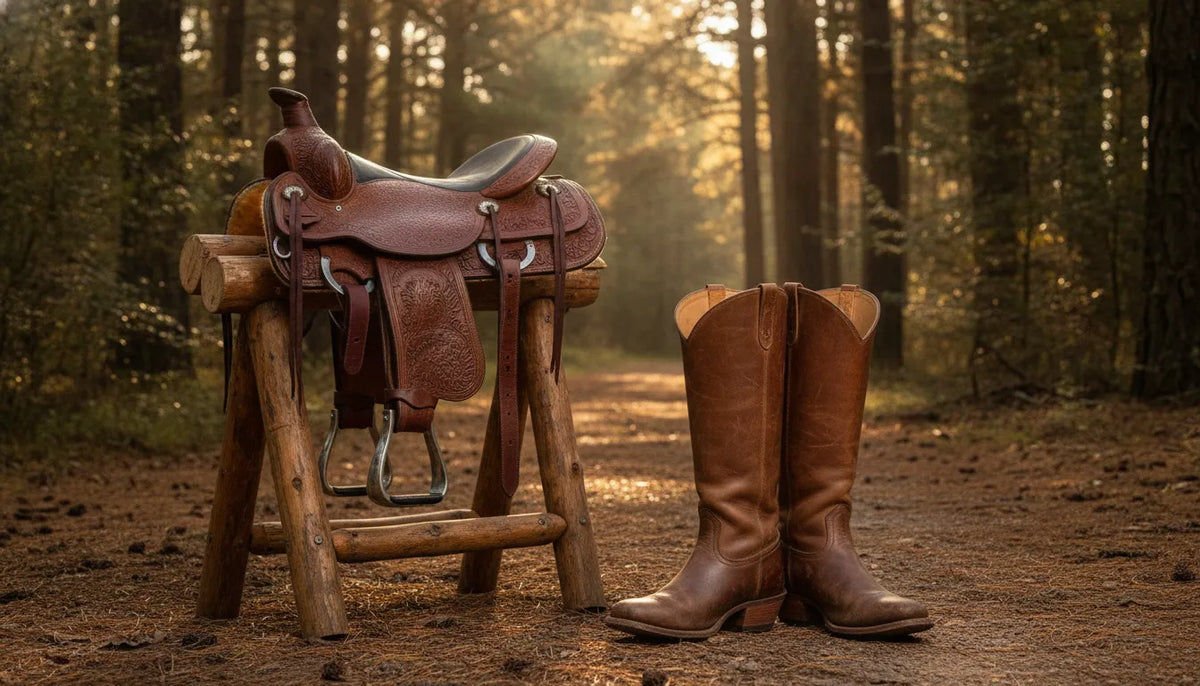
Trail riding boots for riders are the pair on your feet, not the boots on the horse. A trail day mixes mounting, miles in the stirrup, and time on the ground in dust or mud. The boot has to keep your foot from sliding through the iron, stay comfortable for hours, and still make sense when you step off to open a gate.
Hooves and Paws has outfitted horse, dog, and cat families since 1994. The trail riding boots collection is rider footwear: tall boots, field boots, paddock boots, and country boots. Horse leg protection is a different aisle. If you are choosing hoof boots, splint boots, or bell boots for the horse, use the trail fit guide for the horse and skip the rest of this page.
What Makes Trail Riding Boots for Riders Safe?
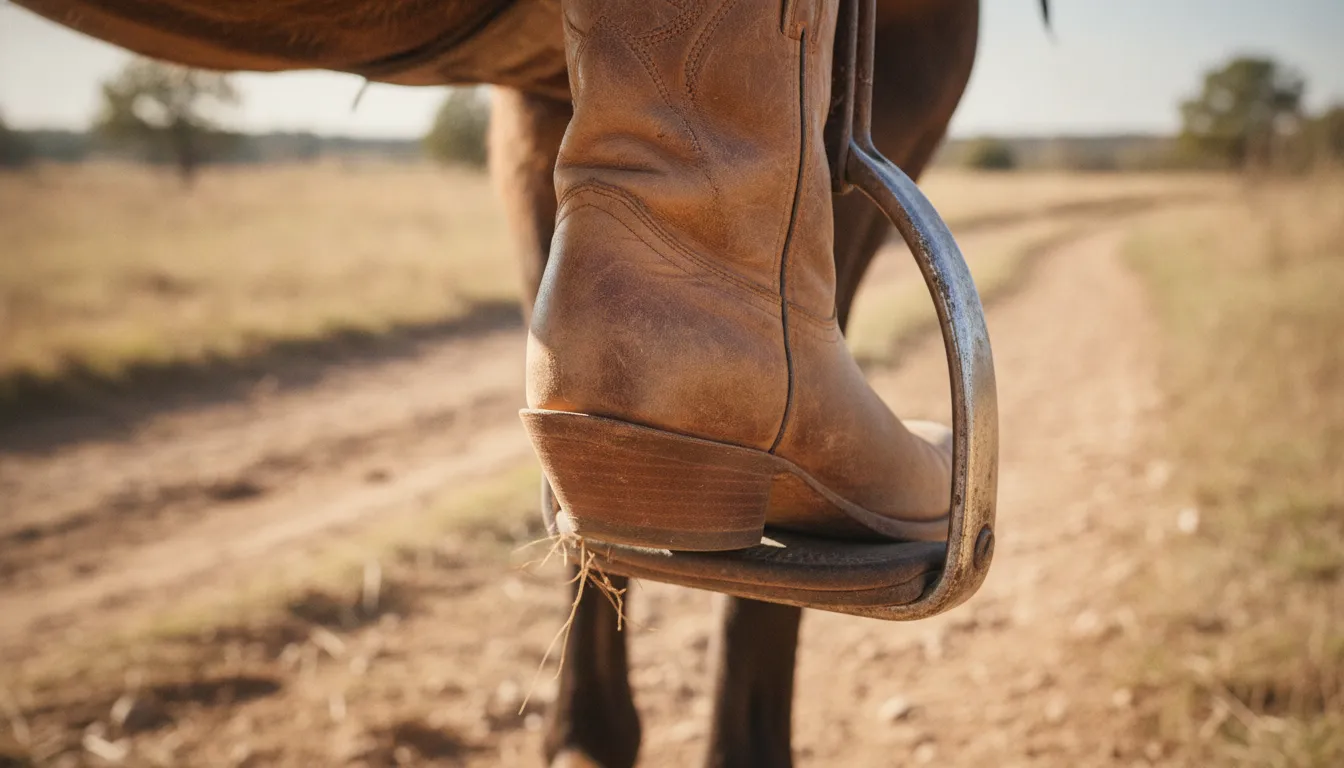
The first test is not style. It is whether your foot can leave the stirrup if you come off. A flat sneaker sole can shoot forward. A thick lug sole can hang up. A heel gives the iron a stop, and a fairly smooth sole lets the foot come out.
USEF safety equipment rule GR801 covers exhibitor footwear at licensed competitions. The Federation's published summary of that rule is direct: a shoe with a distinguishable heel must be worn when mounted. Dressage attire guidance cites the same idea under GR801.9: boots or shoes worn while riding anywhere on the competition grounds must have a distinguishable heel. Read the current text in the USEF conduct rules for licensed competitions before you rely on a show outfit. A weekend trail ride is not a rated class, but the same physics apply on a hillside.
On the Hooves and Paws riding boots page, the practical line is a heel of about one inch for any boot used for riding. Western boots built for the saddle clear that bar. English paddock boots and country boots should too. Fashion boots with a slick, unmarked heel, or a hiking shoe with an aggressive tread, do not.
Check the sole before the shaft
Stand the boot next to a stirrup, not just in a mirror. The tread should bite dirt when you are leading, then release from the iron when you lift your toe. Deep lugs that wrap the ball of the foot are a walking feature. They are a poor riding feature if they catch the pad.
Which Boot Fits a Wet or Rocky Trail Day?
Most trail riders do not need a show field boot. They need a boot that survives mud at the trailer and still feels honest after two hours. Short country boots are the usual answer: a riding heel, a supportive shank, and a membrane so puddles stay outside.
Three live options in the riding boots collection show the split clearly. Prices and stock below were read from the product pages on November 16, 2026. Recheck the page before you buy, because both move.
| Boot | Best job | Ride in it? | What to confirm |
|---|---|---|---|
| Moretta Vittoria XGRIP short country boot | Wet yard work and schooling or hacking | Yes. The XGRIP sole, steel shank, and heel protector are built for a stirrup. | Listed in stock. Confirm the size and the live price on the product page. |
| Moretta Teramo lace country boot | Long walks, mud, and a laced calf fit. | Only after you test that the sole releases from your stirrup. | Listed in stock in regular and wide. Confirm the live price before you order. |
| Moretta Mossa trail trainer | Chores, leading, and walking the trail on foot. | No. The product page says there is no riding heel. | Listed in stock for ground work only. Confirm the live price on the page. |
Vittoria when you will mount
The Moretta Vittoria XGRIP is a short country boot in FLEXDRY buffalo leather. A full waterproof membrane and a WickAway lining sit inside. The sole is a high-traction XGRIP with a steel shank, and the boot adds toe and heel protectors. Hooves and Paws lists it for yard work and for riding in heavy rain. The fit is cut to take a thick sock without sizing up. It was listed in stock. Shortlist this pair when the same boots have to get you from the muddy parking area into the saddle. Check the live price on that page before you order.
Teramo when the walk is the long part
The Moretta Teramo is a lace country boot in water-resistant FLEXDRY leather with a waterproof foot-sock membrane, a faux-fur lining, and an XTR-Terrain sole with steel shanks. Regular and wide fittings plus a YKK rear zip make the calf adjustable. The page sells it for mucking out and walking a course, and it was listed in stock. Treat it as a walking and yard boot first. If you plan to ride in it, test the tread in your own stirrup at home before a remote loop.
Leather that starts snug across the instep usually needs a few easy wears. Our leather break-in guide covers how to do that without a blister on mile one.
Shop This Post

Featured in this article
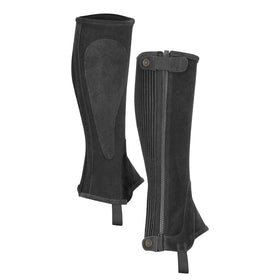
Shires Moretta Clio Plus Paddock Boots - Black, Zip-Front Equestrian, Gently Used
$29.99
Shop Now →
Can You Wear Hiking Boots for Horse Riding?
Sometimes people ask this because the trail looks like a hike. The answer depends on the shoe, not the scenery.
The Mossa trail trainer is the honest test case. It is water-repellent suede with a waterproof membrane, a deep-lugged sole, and a heel-lock lace. Hooves and Paws lists it in stock for off-the-horse work. The product FAQ says not to ride in it. It has no riding heel and no reinforced stirrup protection. It is for yard work, leading, and walking.
That is the right role for a lot of hiking shoes. Use them to unload, lead across a paved lot, or hike a section you will do on foot. Change into a heeled boot before you mount. If you only own one pair and you will be in the saddle, buy the country boot, not the trainer.
How Should Trail Riding Boots Fit for a Long Ride?
Fit is a foot measurement plus a calf measurement, then a sock you will actually wear. Tall boots fail when the calf is right and the instep is not, or the reverse. Short country boots fail when a thick sock you did not try on eats the toe room.
Measure after the sock is on
Wear the sock you want for a cool morning. For the Vittoria, the maker's note on our page is to order your usual size because the fit already allows a winter sock. For a laced boot like the Teramo, set the laces once, then use the rear zip day to day. If your calf sits between sizes, the lace-and-zip pattern is more forgiving than a pull-on tall boot.
A smooth sock matters as much as the boot. A bunch at the heel becomes a hot spot by the second hour. Pair the height to the shaft with our sock guide for riding boots, then come back and confirm the heel still catches the stirrup.
Break them in before the long loop
Buffalo leather and oiled country leather soften, but not on a four-hour ride. Wear new boots for chores and a short local hack first. Stop if a seam bites the ankle bone or the heel slips enough to blister. A boot that only feels right "once it stretches" can ruin the day you drove an hour to ride.
Plan the same way for the rest of your kit. A certified helmet stays on for the ride even when the trail is familiar. The riding helmets collection is the matching rider-safety stop, and the helmet safety guide covers fit and replacement. Do not borrow a friend's helmet to save a trip.
What Should You Do Before You Order?
Hooves and Paws ships free ground inside the continental U.S. with no minimum. Orders from the Apple Valley, California warehouse leave the same business day when they are placed before 1 PM Pacific. Partner-warehouse items take longer, and the product page states that timing before you add to cart. The published promise is a 365-day satisfaction guarantee: a full refund within 30 days, then store credit after that, up to 365 days.
Before checkout, confirm three things on the live page: the size you measured in your trail sock, whether that size is still in stock, and that the sole matches how you will use the boot. Call the shop at 760-247-5523 if a size chart and a calf measurement disagree. Guessing a wide calf from a street-shoe size is how tall boots get returned.
Leave horse boots out of this order unless you already know the horse's size. Protective boots for the horse are fitted after a trim, to a hoof or a cannon. They solve a different problem than a wet foot in the stirrup.
Pack a small foot kit
A long ride is easier when the boots are not the only plan. Tuck a spare thin sock in a saddlebag. Wet socks are what turn a decent heel into a rub. If you will dismount to lead down a steep or slick spot, know which pair is on your feet before you start. A country boot with a heel can do that walk. A smooth dress sole can be slippery on wet rock. That is another reason a country sole beats a show field boot in the woods.
Look at the horse's feet separately, after your own pair is settled. Hoof boots and leg boots are sized to the horse and to the ground. Mixing those sizes into a rider-boot order is how the wrong box shows up at the trailer. Keep the two carts separate.
Match the boot to the hours, not the photo
A two-hour loop on maintained dirt is kinder than an all-day ride with creek crossings. For the short loop, a heeled paddock boot you already trust is enough if the sole releases and the ankle is stable. For the long, wet day, move to a waterproof country boot. You should not be pouring water out of a paddock boot at the halfway point. Tall English field boots look sharp and protect the calf in brush. They are a poor choice for walking a rocky hill back to the trailer.
Western trail riders often already own a boot with a real heel and a smoother sole. If that pair is broken in, and the tread is not worn smooth as glass, it can be the right trail boot. Replace it when the heel is worn down to a wedge. A worn heel stops doing the job the rule is written around.
Parents outfitting a young rider should use the same tests, in the child's size. A cute barn shoe is fine for leading a pony around the yard. It is the wrong shoe once that child is sitting in a saddle. The collection includes child and adult sizes in several paddock styles. Measure the child. Do not round up to a boot they will grow into. Extra length at the toe is how a small foot slides through an iron.
Frequently Asked Questions
What are trail riding boots for riders?
They are the footwear you wear to ride, with a distinguishable heel and a sole that can slip free of a stirrup. In this shop that means country boots, paddock boots, and Western or English riding boots, not the horse's splint or hoof boots.
Can you wear hiking boots for horse riding?
Not if the shoe is flat or heavily lugged. The Moretta Mossa trail trainer is waterproof and useful around the barn, and its own description says it is not for riding because it has no riding heel.
Do trail boots need a heel?
Yes if you will be mounted. USEF GR801 requires a distinguishable heel when a rider is mounted at a licensed competition. The same heel is what keeps a foot from sliding through a trail stirrup.
Are waterproof country boots okay on the trail?
Yes when the sole is built for a stirrup. The Vittoria XGRIP is sold as a waterproof short country boot for yard work and riding, with a steel shank and heel protection. Test any deep tread, including the Teramo, in your own iron first.
How do I keep new leather from hurting on a long ride?
Wear the boots for chores and a short ride before the long one. Leather molds after a few wears. A new pair plus a thick sock you did not test is a blister setup.
Where should I shop if I need boots for the horse instead?
Use horse boots and leg protection, and start with the trail fit guide for the horse. This article only chooses the rider's pair.


