

Hackamores & Bitless Bridles
Filter and sort
8 products

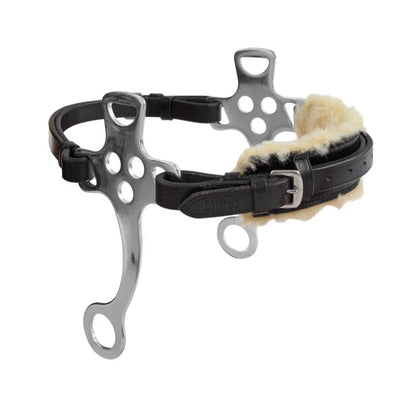

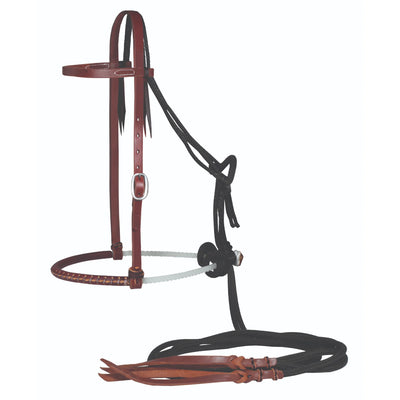

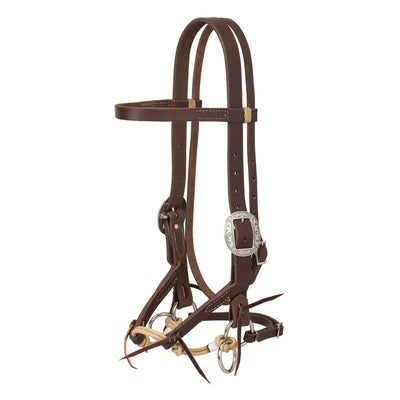

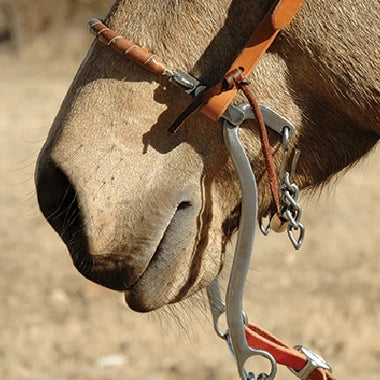

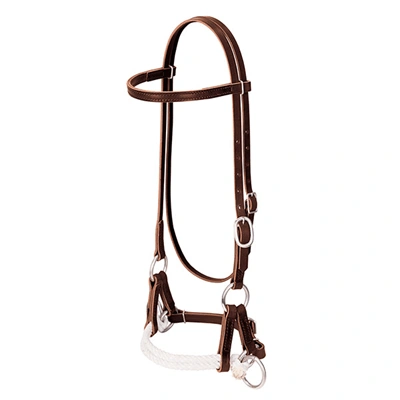
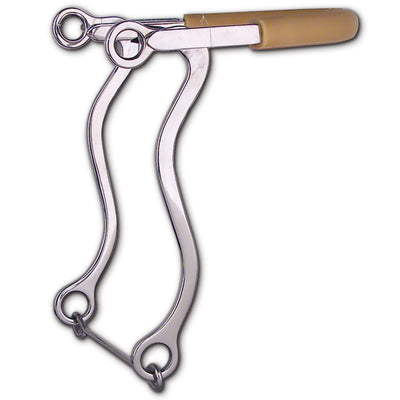
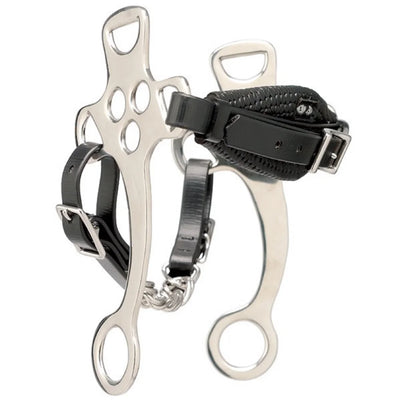

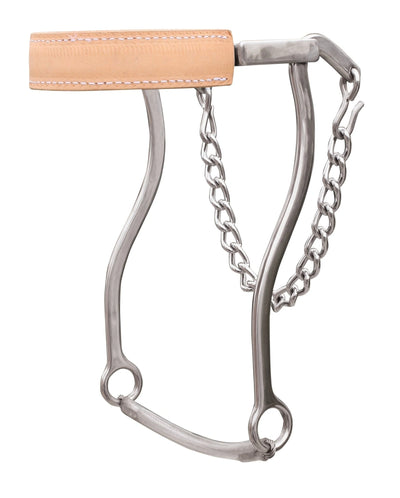
Bitless gets sold as the kind option. Some of it is, and a mechanical hackamore with eight-inch shanks is not: that is a leverage device aimed at the end of the nasal bone, where bone thins out and cartilage takes over. The question is never bit or no bit. It is which pressure point you are moving to, and how much force arrives there.
What Riders Are Actually Asking
Is going bitless automatically gentler?
No. A sidepull applies direct pressure with nothing multiplying it, and that genuinely is mild. A mechanical hackamore is the opposite case: its shanks work exactly like the shanks on a curb bit, so a modest rein pull reaches the nose several times larger than it left your hand. The nose is also less forgiving than riders assume, because the nasal bones taper and give way to cartilage around two thirds of the way down the face. A hackamore sitting too low presses on that cartilage and can interfere with breathing.
What is the actual difference between a hackamore, a bosal and a sidepull?
A sidepull is a noseband with rings at the sides. Pull the left rein and the nose comes left, with no leverage anywhere in the system. A bosal is a stiff braided rawhide nosepiece hung on a hanger and steered with a mecate, working through its own weight and the swing of the heel knot, and it rewards a rider who can pick up and release quickly. A mechanical hackamore is a noseband with shanks and a curb strap, and it stops far better than it steers. Riders who confuse the three usually end up with the mechanical one by accident.
Where should the noseband sit?
Three to four fingers below the cheekbone is the usual instruction, and the reason behind it is anatomical. You want the noseband on solid nasal bone rather than on the softer cartilage further down. Run a thumb down the front of the face until the firm ridge stops and the surface starts to give, then keep the noseband above that point. The curb strap on a mechanical hackamore is adjusted much like a curb bit, around two fingers, and western dressage rules ask for two fingers between a bosal and the jowl.
Can I show in one?
That depends entirely on the book. Western dressage permits a traditional bosal hackamore at any level and any age, built of braided rawhide or leather over a flexible non-metallic core, and it explicitly bans mechanical hackamores, rope bosals and sidepulls. Breed rules allow a bosal for junior horses, capped at three quarters of an inch in diameter at the cheek. USEF dressage still requires a bridle with a bit, outside specific para exemptions. Endurance, ranch work and ordinary trail riding put no restriction on any of it.
Will I still have brakes?
Sometimes the honest answer is no. A horse who leans on a bit generally leans on a noseband too, and a sidepull has nothing in reserve when he does. Riders who succeed bitless tend to be the ones who spent several weeks testing it in a fenced arena rather than swapping over on the morning of a trail ride. One recurring complaint about the cross-under designs is worth knowing before you buy: the strap has to run back through the rings to release, so the release is slower than a sidepull's.
How to Choose the Right Hackamore
- Start with the mildest thing that works: A sidepull first. Add shanks only when the horse genuinely ignores direct pressure, not because a hackamore looks the part.
- Count the shank: Shank length is your multiplier. A short loping hackamore around four inches asks a question; a nine-inch cheek makes a statement.
- Check what the nose is made of: Rope and bare rawhide noses concentrate pressure into a narrow line. A wide padded leather nose spreads it, and that is the one to learn on.
- Watch behind the jaw for rubs: Sweat stiffens a leather noseband and a stiff noseband rubs. Fleece or vet wrap over the nosepiece fixes it for a few dollars.
- Ride on a longer rein: With no bit there is no direct feel, so a horse ridden on a light drape reads the release far more clearly than one held short.
What This Page Is Not For
Hackamores, bosals, sidepulls and bitless bridles. Not bits, not combination bits that carry a mouthpiece and a noseband together, and not rope halters or lead ropes used for groundwork. Curb straps and bit hobbles live with the bits rather than here, and this page does not cover English cavessons or flash nosebands.
Brands Riders Trust
Shires makes the Velociti GARA, the padded English hackamore riders reach for over fences. Professional's Choice covers the western range from the Equisential to the short loping hackamore. Weaver Leather builds the rawhide bosal, the latigo sidepull and the Justin Dunn bitless bridle. Toklat brings the synthetic Zilco pieces that live outdoors well, and Classic Equine makes the stainless nine-inch cheek.
Two-day shipping from American warehouses and a 365-day guarantee, which matters here because bitless is the change most likely to need a second try. Happy Tails, Happy Trails.
