

Split, Romal & Roping Reins
Filter and sort
7 products

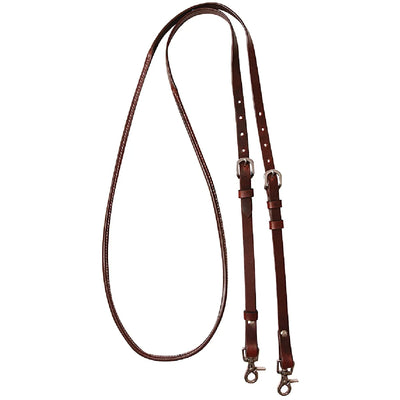



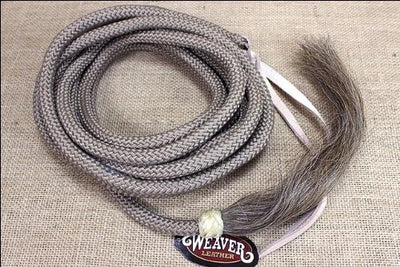

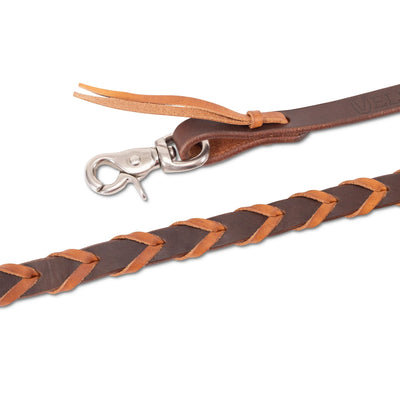


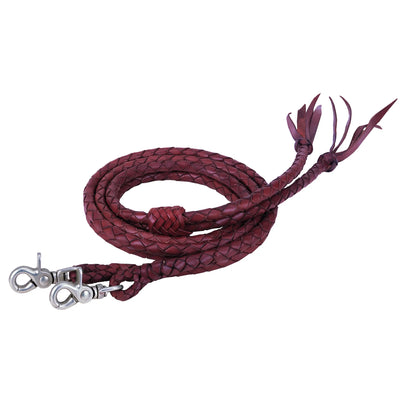

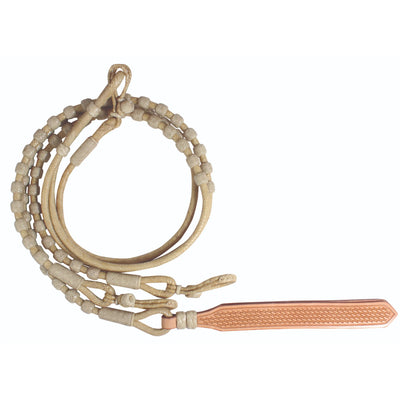
Rein choice in western tack is half tradition and half physics. A split rein you can drop; a closed rein you cannot. A romal belongs on a finished bridle horse; a roping rein belongs where you need both hands and no loose ends. Most of the confusion is about which is legal where, and how long the things should actually be.
What Riders Are Actually Asking
Split reins or closed reins — what is the real difference?
Split reins are two separate straps, so if you drop one it falls to the ground and the horse steps off it rather than dragging a loop. That is why they dominate ranch work, cutting and most stock horse classes. A closed rein, whether roping style or barrel style, is a single loop you cannot lose, which is exactly what you want in a speed event or when you are throwing a rope and need to grab back fast. The trade is the loop itself: it can catch a hand, a horn or a foot, so nobody rides a closed rein on a green colt in a small pen without thinking about it.
How long should my split reins be?
The common rule from rein makers is seven feet for horses under about 14.2 hands and seven feet nine inches for horses over that, measured from bit end to tail. Western pleasure riders often go to the longer pair on purpose for the drape it puts in the rein. Width matters as much as length: half inch feels quick and light in the hand and suits reining, five eighths is the all-purpose standard, and three quarters is a heavier, more traditional working rein. Try the width first, then adjust the length.
What are romal reins and how do you hold them?
A romal is a closed rein set: two braided reins joined at a connector, with a long quirt, the romal itself, hanging off the join. You carry the reins in one hand and the romal in the other, and the convention is to keep at least sixteen inches between your hands. They are ridden one-handed on a finished bridle horse in a curb, and they are required in bridle classes under National Reined Cow Horse Association rules. The buttons braided into the reins are not decoration; they add weight so the rein hangs and signals cleanly.
Doubled and stitched or harness leather?
Doubled and stitched reins are two layers of leather sewn together, which gives an even weight down the whole length and keeps the rein supple in cold weather, so they are popular where winters bite. Harness leather reins are cut in one thickness from the shoulder and butt of the hide, so the ends are naturally heavier than the middle, and makers grade them from light, marked X, up to extra heavy at XXXX. Riders who want feel and quick pickup tend toward lighter harness leather; riders who want the rein to hang still take the heavier grades.
Where does a mecate fit in?
A mecate is one long rein, traditionally around twenty to twenty-two feet, used with a bosal or with a snaffle and slobber straps. You tie it so part becomes a loop rein and the tail becomes a lead you can dismount with, which is the whole appeal on a colt or on the trail. Horsehair mecates are prickly by design, which some riders use as a light reminder against the neck and others find scratchy on the hands. Braided nylon is softer, cheaper and washes, which is why most people start there.
How to Choose the Right Rein
- Decide open or closed first: Splits drop clear if you lose one. Closed reins cannot be dropped but put a loop near the horn and your hands.
- Size the length to the horse: Roughly 7 feet under 14.2 hands, 7 feet 9 inches over. A longer rein drapes; a shorter one stops tangling on a small horse.
- Pick the width by feel: Half inch is fast and light, five eighths is the everyday standard, three quarters is a heavy traditional working rein.
- Weight is a signal, not a luxury: Heavier ends and braided buttons let the rein hang so the horse feels the pickup before he feels the bit.
- Check the bit end: Waterloops and buckles swap between bits in seconds. Snaps are faster still but add metal and noise near the mouth.
What This Page Is Not For
This page covers western reins. It does not cover English laced, rubber or web reins, and it does not cover training equipment such as draw reins, side reins, running martingales or German martingales. Reins are sold on their own here, without a bit or headstall unless a listing says set.
Brands Riders Trust
Professional's Choice runs the broadest range on this page, with Hermann Oak split reins, waterloop roping reins and braided romals. Weaver Leather covers latigo and harness leather splits, roper reins and the braided nylon mecates. Cashel does adjustable leather and rawhide reins that suit trail riders who share tack, and Shires makes the Velociti roper rein for people who want a western rein in English-grade leather.
All of these ship in two days from an American warehouse and carry our 365-day guarantee, so a rein that turns out too long or too heavy in your hands can come back. Happy Tails, Happy Trails.
