

Spur Straps: Fit & Leather
Filter and sort
6 products

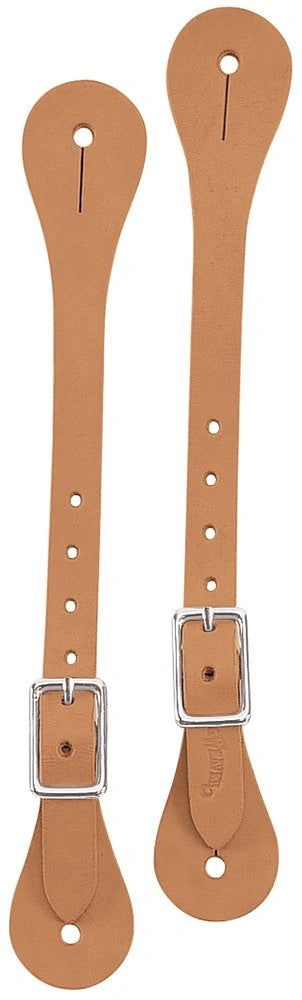

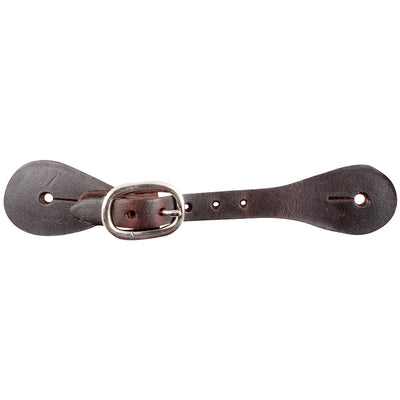
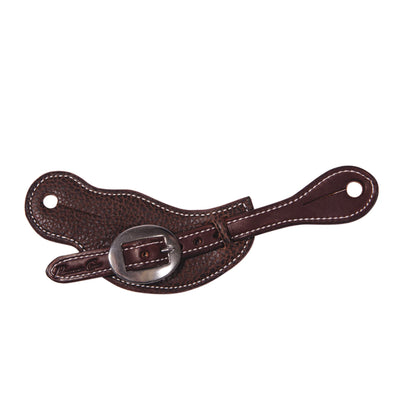

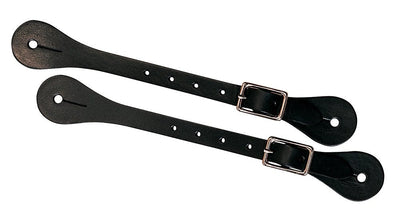

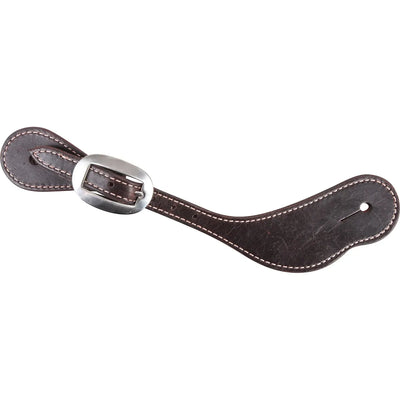

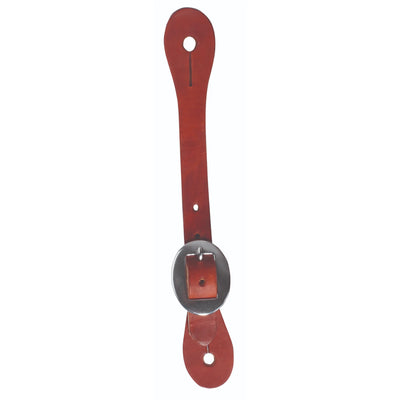
A spur strap has one job and two ways to fail at it. Too long and the tail slaps the horse at every stride. Too loose and the spur slides down onto your heel, where the shank points at nothing useful. Length and leather are really the whole conversation, and the leather part is not snobbery: harness, bridle and latigo behave differently in a wet barn and after two seasons of sweat.
What Riders Are Actually Asking
What length spur strap do I need?
Measure around the back of your boot at the heel with the spur band already in place, then add enough to reach the buckle without stretching. Makers usually sort straps into children or youth, ladies, and men, and Weaver also lists specific lengths, commonly 16 and 19 inches. If you fall between sizes, take the longer one and punch an extra hole rather than fighting a short strap. Anything more than roughly two inches of tail past the keeper will flap against the horse's side at the trot.
Should the buckle sit on the inside or the outside?
Riders genuinely disagree, and the split follows geography more than logic. Great Basin and northern Nevada buckaroos buckle to the inside so nothing catches on sagebrush and low brush, and because you can prop an ankle on the opposite knee to swap spurs quickly. Most of the rest of the country buckles to the outside, so a decorative buckle shows and no hardware rubs between boot and horse. Neither is wrong. Outside attracts fewer opinions at the trailer; inside earns its keep in brush country.
Harness, bridle or latigo, and does it matter?
It matters mostly in how the strap ages. Harness leather is vegetable tanned and hot-stuffed with tallows and waxes, so it is stiff, water resistant and holds shape under a buckle. English bridle leather is also vegetable tanned but finished with oils and waxes for low stretch and a firm, clean edge. Latigo is chrome tanned first and then vegetable tanned, which is why it feels soft straight out of the package yet still resists stretching. Bison is softer and pebbled, with more give from the start.
Single-ply or double-ply?
Single-ply is one thickness of leather, lighter and less bulky under a tall boot, which is why English riders and a lot of show hands prefer it. Double-ply is two layers stitched together, and it resists curling where a strap gets soaked and dried over and over. If your tack lives in an open barn and goes through mud season, take double-ply. If you want a clean line under a dress boot and your straps live indoors, single-ply is plenty and looks better.
How do I stop the spur sliding down my boot?
Nine times out of ten this is a fit problem rather than a strap problem. The spur band should sit on the spur rest, the small ledge above the heel counter, with both arms hugging the boot. If the band is wider than the boot, no strap will hold it and the spur will rotate downward. Tighten until one finger slides under with effort, run the tail through the keeper, and check that both spurs sit at the same height before you get on.
How to Choose the Right Spur Strap
- Measure over the spur, not the bare boot: The band adds width. A strap sized to the boot alone comes up short at the buckle.
- Pick the leather for your weather: Harness and bridle for wet barns and hard use; latigo when you want softness on day one.
- Mind the buckle metal: Nickel-plated is standard and cheap to replace. Stainless resists pitting where sweat and salt air get at it.
- Match the width to the heel: A 5/8 inch strap suits youth and slim boots. Three-quarter inch and wider reads as a men's western fit.
- Buy the pair together: Straps stretch at slightly different rates. Replacing one leaves you riding two different lengths.
What This Page Is Not For
This page covers straps that hold a riding spur on a boot. It does not cover bronc or bareback heel straps, rodeo spur tie-down straps, or the spurs themselves, which live on their own pages. If you need both, order them together, because most spurs are sold bare.
Brands Riders Trust
Weaver Leather has the widest spread here: single-ply bridle and harness patterns, honey bridle leather in children's sizes, and chrome-tanned buckaroo bib styles for people who like a wide strap. Professional's Choice runs harness leather Sagebrush straps in men's and ladies' widths and a softer bison option. Martin Saddlery sticks to latigo with nickel over brass hardware, which is the traditional cowboy answer and wears in rather than out.
Every strap here ships in two days from an American warehouse and is covered by our 365-day guarantee, so a size that turns out wrong is not money gone. Happy Tails, Happy Trails.
