

Bridles & Noseband Types
Filter and sort
7 products

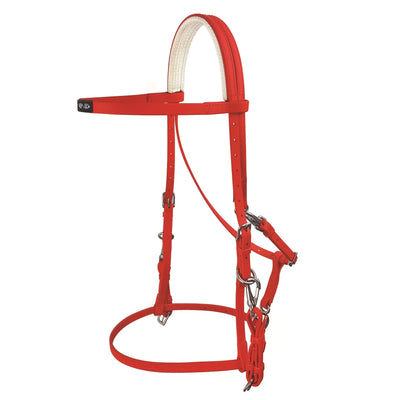

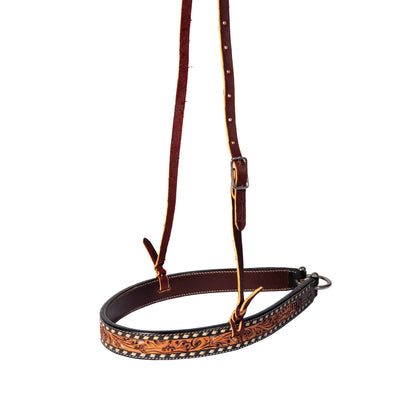
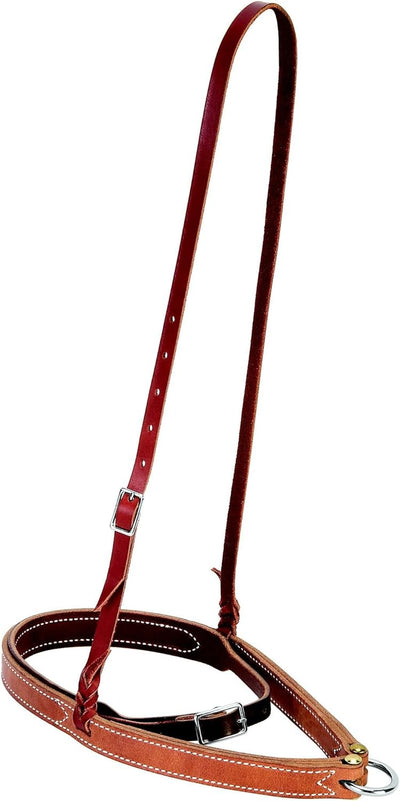

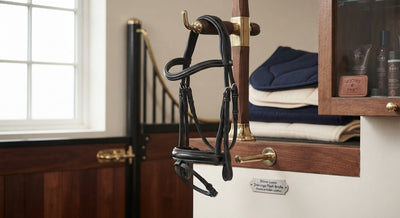

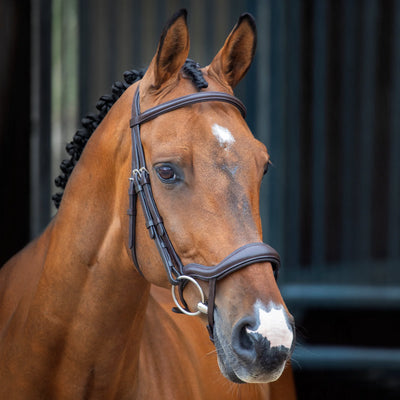

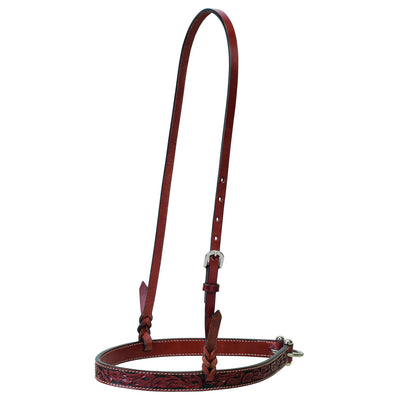

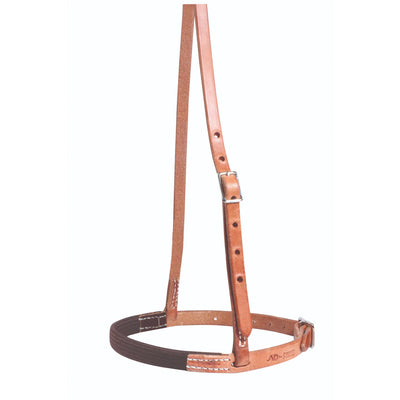
The noseband argument moved on recently and a lot of advice has not caught up. Since May 2025 the FEI has checked tightness with a 1.7 centimeter gauge rather than a steward's fingers, and a 2025 paper in the Equine Veterinary Journal put numbers on what each type presses against. What follows leans on those numbers.
What Riders Are Actually Asking
Which noseband type is genuinely the mildest?
A 2025 study measured pressure under four types at trot, and the ranking is not the one most riders expect. Median pressure over the nasal bones came out at 1.4 kPa for a drop, 2.8 for a plain cavesson, 4.3 for a Swedish crank and 4.9 for a flash. Under the jaw the figures ran roughly three times higher across the board, between 8.0 and 10.5 kPa. The drop noseband, widely assumed to be the severe one, produced the lowest nasal pressure of the four tested.
How tight is too tight?
Tightness mattered more than type in that study. Pressure climbed sharply once the noseband was fastened at one finger or less, compared with the 1.5 and 2 finger settings. The FEI stopped relying on fingers on May 1, 2025 and gave stewards a gauge 1.7 centimeters thick which has to pass between the fastened noseband and the nasal bone, checked from the horse's left side. Fail before the class and you loosen and go. Fail at the tack check afterwards and it is elimination plus a yellow card.
Why does my flash pull the cavesson down?
Because that is the geometry, not a fault in the bridle. The flash strap pulls forward and down off the cavesson, and unless the cavesson is snug on the nasal bone the whole assembly migrates toward the nostrils. A buckle-on flash loop that slides on the cavesson makes it worse than a sewn-in tab does. Fixes in order of cost: tighten the cavesson before touching the flash, take the flash off and see whether anything actually changes, or move to a figure-8, which does the same job from a fixed crossing point.
What does each noseband actually do?
A plain cavesson sits on the nasal bone and does little beyond carrying a standing martingale. A drop fastens below the bit into the chin groove and discourages the horse from opening the jaw, provided it sits well clear of the nostrils. A figure-8, or grackle, crosses over the front of the face, which keeps the straps off the airway and out of the way of a jumping horse. A crank is a cavesson with a pulley closure. It does not move the pressure point at all; it just makes fastening tightly easier.
How do I size a bridle?
Cob, full and warmblood mean different things at different makers, so measure the bridle you already own rather than trusting the label on the bag. Three numbers matter: browband, taken from the outside of one crownpiece to the other; noseband, at its fastened length; and cheekpiece length with the bit sitting at half a wrinkle. Browband is the piece most often wrong, and one that is short pinches the base of the ear, which usually gets read as head shyness rather than as a fit problem.
How to Choose the Right Bridle
- Set the cavesson before the flash: A loose cavesson under a tight flash is the most common bridle fault we see, and it drags the whole noseband toward the nostrils.
- Two fingers is now 1.7 centimeters: If you show under FEI rules, buy the gauge or borrow one at the barn. Fingers vary by more than the tolerance does.
- Anatomical means the crownpiece: The ergonomic bridles cut away behind the ear where the poll is most sensitive. That much is measurable. Claims past that point are not.
- Pick for the discipline, then the horse: Figure-8 for a jumper that wants airway room, plain cavesson for a hunter ring that expects one, drop for a young horse learning contact.
- Check the browband first: It is the cheapest part of a bridle to replace and the part most often too short for the head it is on.
What This Page Is Not For
English bridles and the nosebands that go on them. Western headstalls, tiedown nosebands, bosals, sidepulls and mechanical hackamores all have their own pages, and so do reins and bits. This page also will not tell you whether your show ring expects a flash. That is a discipline convention rather than a rule, and it varies by region.
Brands Riders Trust
Shires covers most of this range: Lusso for padded and anatomical dressage bridles, Velociti for the figure-8 and the shaped noseband, Avignon for plain hunter leather. Professional's Choice makes the Hermann Oak cavesons and training nosebands on the western side. The Toklat Ultra Endurance bridle is the synthetic one for riding in the wet, and Weaver Leather builds the carved and combination nosebands.
Two-day shipping from American warehouses, and a 365-day guarantee if the size turns out wrong. Happy Tails, Happy Trails.
