

Dressage Legal Bits
Filter and sort
9 products

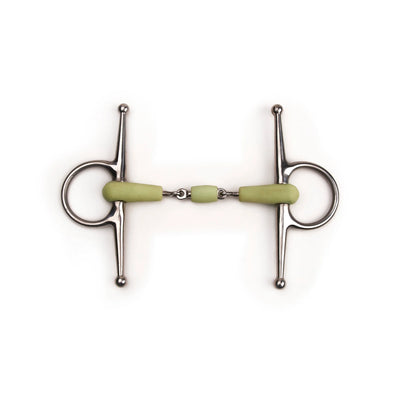

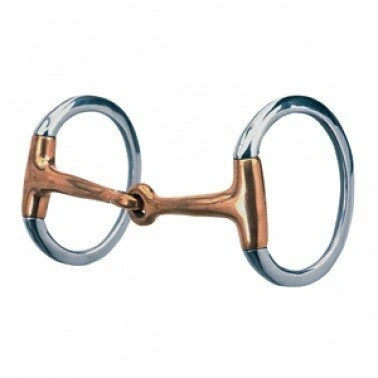

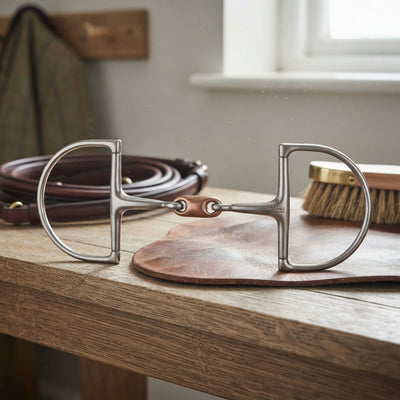

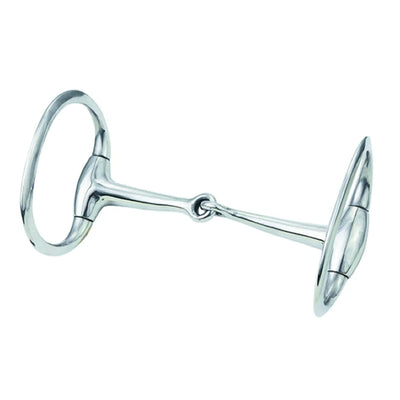
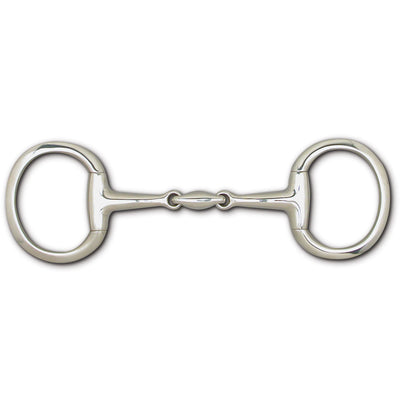
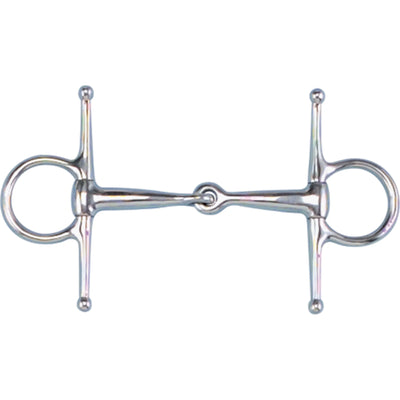


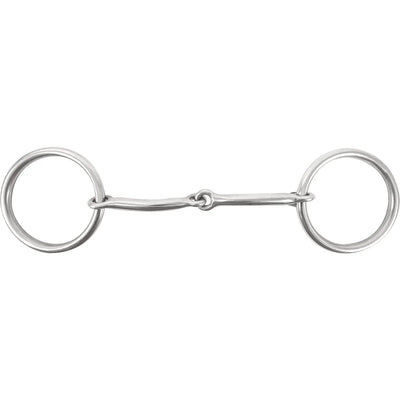

Bit rules change more often than most riders check them, and two recent changes caught out bits that had sat in tack rooms for years. The French link went from ordinary to not allowed in USEF dressage on December 1, 2022. Collected here are the snaffles we stock that fit the current rules, with the measurements a steward actually takes.
What Riders Are Actually Asking
Is a French link still legal for USEF dressage?
No. The rule reads that the center link in a double-jointed snaffle must be smooth and curved on all surfaces as in a lozenge-shaped link, and it names Dr. Bristol and French link bits as not allowed. That took effect on December 1, 2022. The FEI got there first, banning flat plate center links in 2019 and reissuing a clarification after stewards applied it inconsistently. The catch is labeling: plenty of bits sold as French links have a rounded link. Judge the shape of the center piece, not the wording on the box.
What does a Myler Level mean, and does it decide legality?
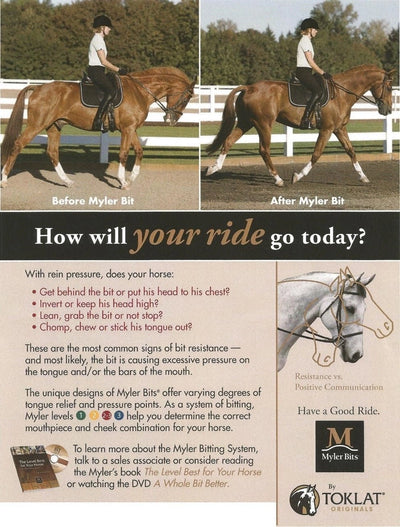
Ask three riders and you get three answers: the degree of the port, the training stage of the horse, or the shape of the mouthpiece. Myler markets the levels as a training progression, while riders on the Chronicle of the Horse forums insist they only describe mouthpiece design. Legality does not turn on the number either way. It turns on dimensions and hardware. A port is permitted when it is wider than 30 mm and no higher than 30 mm, and Myler cheekpieces with hooks are not accepted, which is why the same mouthpiece passes without hooks and fails with them.
How thin is a dressage bit allowed to be?
USEF sets a minimum of 10 mm for a snaffle and 12 mm for a curb, and the measurement is taken at the rings or the cheeks rather than in the middle. That distinction matters, because a lot of modern mouthpieces taper toward the center, so a bit measuring 12 mm where it enters the ring may be nearer 9 mm across the tongue and still pass inspection. There is no maximum in the rule. The upper limit is your horse's mouth, and a thick bit in a shallow one is a problem no rulebook catches.
Is a baucher a snaffle, and can I use a D-ring in a double bridle?
A hanging cheek, or baucher, counts as a snaffle, with one measurement attached: the upper cheek, taken from the top of the mouthpiece to the top of the upper cheek, may not exceed seven centimeters. Loose ring, eggbutt, D-ring and hanging cheek are all accepted as snaffle cheekpieces. The exception people miss sits in the double bridle, where a D-ring is not allowed as the bridoon. Ride a test in a snaffle bridle on Saturday and a double on Sunday and that is two different sets of hardware.
What about bit guards, rubber covers and colored mouthpieces?
Bit guards are out in recognized competition, which catches people who use them at home for a horse rubbing on a loose ring. Rubber or latex covering over a permitted mouthpiece is accepted, but a leather bit, or a leather-covered one, is not. Synthetic and colored mouthpieces, including the blue and black sweet iron finishes, are explicitly permitted under the current rules, which settled an argument that ran for several seasons. If you are unsure at a show, ask the technical delegate before the class rather than after it.
How to Choose the Right Bit
- Buy the cheekpiece your discipline expects: Loose ring, eggbutt, D-ring and hanging cheek are all legal. The ring style is a fit and feel decision, not a rules decision.
- Turn the center link over: Rounded on every surface is the test. If it has a flat face that can stand on edge against the tongue, leave it at home.
- Skip the hooks: Myler mouthpieces come with and without hooks. Only the versions without them are accepted, and the two look almost identical in a photograph.
- Measure at the ring, not the middle: That is where the rule takes its 10 mm, and it is the only measurement a steward will repeat.
- Re-read Annex A each December: The French link ban arrived that way. A bit that was fine last season is not automatically fine this one.
What This Page Is Not For
This page is USEF dressage snaffles. It is not a rulebook, it does not cover weymouths and bridoons for the double bridle, and it says nothing about hunter, jumper or eventing rules, which differ from each other and from this. Rules are revised annually. Before a championship, read the current Annex A rather than trusting any retailer, ourselves included.
Brands Riders Trust
Weaver Leather makes the plain stainless eggbutt most people start with. Shires covers the full cheek and Hunter Dee end, including the synthetic Equikind mouthpieces now explicitly permitted. Toklat builds the lozenge eggbutt and pony full cheek we sell most of. Myler is here for the comfort snaffle shapes, listed without hooks on purpose, and Classic Equine covers the plain smooth loose ring.
These ship in two days from American warehouses, and the 365-day guarantee means a bit that does not work out is not money gone. Happy Tails, Happy Trails.
