


Bell boots and overreach boots are, in most cases, the same piece of equipment: a boot that circles the front hoof to protect the heel bulbs and coronet band if a hind foot overreaches. "Over reach boot" is the usual British name, and US makers often use "overreach" for sturdier no-turn styles. Choose by build and fit, not name.
You wouldn't wear running shoes to hike or ballet flats to play basketball. The right gear provides specific protection for the activity, and the same logic applies to our horses. When it comes to the bell boots vs overreach boots question, the real choice is between styles of boot, and that choice is about more than looks—it’s about safety. Different builds are engineered for different levels of impact and types of work. A boot designed for quiet turnout won't offer the same shock absorption needed for jumping. This guide clears up the confusion so you can confidently make the best choice for your horse.
Key Takeaways
- Choose the Right Boot for the Job: Reserve more structured, protective bell boots for high-impact work like jumping or cross-country. For daily turnout or light riding, a simpler pull-on style often provides all the protection your horse needs against minor scrapes.
- Prioritize a Perfect Fit and Material: A boot fits correctly when it matches the maker's size chart, covers the heel bulbs, and sits snugly at the pastern without rubbing. Selecting the right material, like durable rubber or flexible neoprene, is just as important for preventing rubs and ensuring comfort.
- Make Daily Checks a Habit: Always apply boots to clean legs to prevent irritation from trapped dirt. Before each ride, inspect the closures and material for wear and tear, and remember to remove the boots after work to let your horse's skin breathe.
Bell Boots vs. Overreach Boots: What's the Real Difference?
If you’ve ever shopped for horse leg protection, you’ve likely come across bell boots and overreach boots. At first glance, they seem pretty similar, and that is because the names are used interchangeably. Both are designed to protect your horse’s front hooves and pasterns from injury caused by the hind hooves striking them—an action known as overreaching. This can happen during intense exercise, jumping, or even just a playful moment in the pasture. The differences that matter are in how a given boot is built: its material, its closure, and whether it has a no-turn shape. Let's break down what each name usually refers to and what the boots are designed to do.
What Are Bell Boots?
Think of bell boots as a general, all-purpose shield for your horse's front feet. As the name suggests, they are shaped like a bell and fit over the hoof, covering the entire area from the pastern, over the delicate coronary band, and down to the heel. This design provides comprehensive protection against general scrapes, nicks, and strikes that can happen during riding or turnout. They are one of the most common and essential pieces of horse tack because they guard the whole hoof capsule and heel bulbs, which are particularly vulnerable to being stepped on. They’re a fantastic everyday option for keeping those front hooves safe and sound.
What Are Overreach Boots?
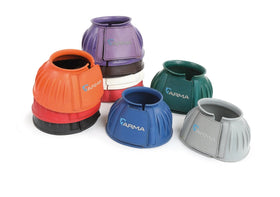
"Over reach boot" is the everyday name for a bell boot in Britain. Shires, for example, sells its whole ARMA range as over reach boots, from rubber touch-close styles to neoprene and hard-shell versions. In the US, makers tend to keep "bell boot" as the general term and use "overreach" in the names of sturdier, no-turn designs. Professional's Choice lists its Ballistic Overreach Boots in its bell boot range and describes them as a no-turn design that protects the back of the hoof with some side coverage. Toklat describes its iVent Overreach boot as a TPU shell "in a bell boot design." So when you see "overreach boot" on a label, read the product details: you are usually looking at a bell boot with extra structure, a heel-hugging shape or a no-turn knob.
Targeted Protection: Overreach vs. Quarter Boots
The real distinction comes down to construction. A simple rubber pull-on boot gives broad, all-around coverage. A no-turn boot is shaped to stay put over the heel: Classic Equine says its DyNo Turn boots are designed to fit into the natural indentation of the pastern, and Professional's Choice says the Spartan II is shaped to fit securely over the bulb of the heel. Those features matter most for jumping, cross-country, or any work where a hard strike is more likely. Quarter boots offer another layer of specialized protection, but for a different problem. They are designed to shield the sides of the hoof—the quarters—and the coronary band from being struck by the opposite hoof. Choosing between these options means you're not just buying horse tack; you're selecting the precise tool to keep your horse safe for the specific work you're doing.
Overreach, Over Reach or Over-Reach?
You'll see all three spellings, and they mean the same boot. "Over reach" (two words) is how Shires names its ARMA over reach boots, "overreach" is common in US product names such as the Professional's Choice Ballistic Overreach Boots, and the University of Minnesota's large-animal surgery notes write the gait problem as "over-reaching." If you're searching for over reach boots, you're looking for the same thing as overreach boots and bell boots: a boot that circles the front hoof and covers the heel bulbs.
What Are Overreach Boots Used For?
Overreach boots are used to protect the heel bulbs, coronet band and the back of the front shoe from the horse's own hind hooves. Riders put them on for jumping and fast work, lunging and schooling, turnout and trailering, and for any horse with a history of heel nicks or pulled front shoes. Classic Equine describes the purpose of its bell boots as protecting the heel, pastern and coronet band from overreach injuries, and notes that an overreach can also cost a shoe.
The large-animal surgery notes published by the University of Minnesota explain that some horses clip themselves because of their hind-limb stride length, which is called over-reaching or grabbing. Signs that a horse may need overreach boots include:
- Scrapes, small cuts or scuffed hair on the front heel bulbs.
- Marks just above the coronet band at the back of the foot.
- Front shoes that come loose or get pulled off between farrier visits.
- A clicking sound at the trot, often called forging.
Overreach boots don't protect the cannon bone or tendons, and they don't stop every heel injury: the University of Minnesota notes that heel bulbs can also be cut when a horse steps on its own foot, is stepped on by another horse or catches the heel on a structure. If there's a deep cut, bleeding, swelling or lameness, call your vet.
Can You Use Them Interchangeably?
So, can you just grab one or the other? In most cases, yes, because they are the same kind of boot. What you can't swap freely is the style. A thin, stretchy pull-on boot and a ballistic nylon no-turn boot both protect against overreaching, but they behave differently in deep footing, at speed, and in a muddy field. Choose the style for your horse and the kind of activity you’re doing, then check the fit.
Why Leg Protection Matters: "No Legs, No Horse"
There's an old saying in the horse world: "No legs, no horse." It’s a simple phrase that holds a fundamental truth about equine care. A horse's lower legs are marvels of anatomy, but they are also incredibly vulnerable, with vital tendons and ligaments lying just beneath the skin without much natural padding. An accidental clip from a hind hoof can do more than just cause a scrape; it can pull a shoe, damage the sensitive coronary band, or lead to serious injuries that may sideline your horse from work or play. This is precisely why leg protection is so important. Using the right bell boots is a simple and effective way to provide a crucial buffer against these impacts, making them an essential piece of equipment for keeping your horse safe, sound, and ready for your next ride.
A Side-by-Side Comparison of Horse Boots
Because riders and makers use the two names interchangeably, the useful comparison is between styles of boot. They all protect your horse’s front hooves from the hind ones, but they differ in design, coverage, and materials. Understanding these distinctions helps you pick the perfect boot for your horse’s needs, whether they’re in the pasture or the arena.
Comparing Their Shape and Design
The main design difference comes down to the job. Classic rubber pull-on bell boots are simple, durable all-rounders; Professional's Choice says its Professional's Choice Ribbed Rubber Pull-On Bell Boots stretch for easy application and stay on during exercise and turnout. Structured no-turn boots are built for harder work. The Professional's Choice Ballistic Bell Boots use a ballistic nylon cover, an UltraShock lining to absorb energy from overreaching, and a soft no-turn knob that keeps the boot from spinning. Hard-shell boots such as the Professional's Choice Spartan II Bell Boots add a flexible TPU shell for impact protection.
Which Parts of the Hoof Do They Protect?
The amount of coverage each style provides is another key distinction. Wrap-around styles circle the whole hoof: Professional's Choice says its Professional's Choice Quick-Wrap Bell Boots protect the entire hoof and coronet band. No-turn overreach styles concentrate on the back of the foot. Professional's Choice describes its Ballistic Overreach Boots as protecting the back of the hoof with some side coverage, which is exactly where a hind toe tends to land. Both kinds guard the heel bulbs; the difference is how much of the front and sides of the hoof is covered and how well the boot stays in place.
Materials and Fasteners: What to Look For
You'll find both boot types made from durable materials like rubber and flexible neoprene, so the choice often depends on your horse's sensitivity and the boot's intended use. When it comes to closures, you have a few options. Pull-on boots are incredibly secure since there are no straps to fail, but they can be tricky to get on. Hook-and-loop and double-lock straps are easier to manage and allow for an adjustable fit, making them a popular choice in our bell boots that stay put collection. Just remember to keep hook-and-loop fasteners clean so they maintain their grip.
Advanced Features for Performance Work
When your horse is working hard, their equipment needs to work just as hard. For high-impact disciplines like jumping, eventing, or even fast-paced trail riding, a thin rubber bell boot might not offer enough protection. This is where the more structured overreach-style designs earn their place. They are built with advanced features specifically to handle the intense forces generated during strenuous exercise, providing an extra layer of security when your horse needs it most. These boots go beyond basic coverage to deliver targeted, high-performance protection against serious injury.
Reinforced Strike Plates
If you look closely at a pair of performance-oriented overreach boots, you might notice a tougher, more rigid area at the back. This is a reinforced strike plate, and it’s a game-changer for absorbing impact. During activities like jumping or galloping, a horse’s hind hoof can strike the front heel hard. Classic Equine, for example, says the honeycomb layer in its Flexion No Turn boots adds strike concussion protection. It’s a critical feature that distinguishes a simple turnout boot from a piece of high-performance horse tack designed for the demands of an athlete.
Tough Modern Materials
The materials used in performance bell boots are also a step above basic rubber. Weaver Leather builds its Weaver Leather No-Turn Bell Boots from 2520D ballistic material with a shock-absorbing neoprene lining. Classic Equine makes its Classic Equine Dyno No-Turn Bell Boots from 2520 denier DynoHyde with reinforced double hook-and-loop closures. Toklat's Toklat iVent Overreach Bell Boots pair a perforated, breathable TPU shell with lightweight impact-absorbing foam. These materials resist tearing and abrasion without adding much bulk, so the boot protects the heel without getting in the way of your horse's movement.
Browse our full range of bell boots and overreach boots to compare styles, materials and closures side by side.
Overreach Boots We Carry
Here are the overreach boots we carry, at least one per style, described in their makers' own terms. Check each maker's size chart before you choose.
- Professional's Choice Ballistic Overreach Boots: ballistic nylon outer, UltraShock lining and a soft no-turn knob, in XSmall to XXX-Large.
- Professional's Choice Spartan II Bell Boots: flexible TPU shell, no-turn knob and double hook-and-loop closures.
- Professional's Choice Pull-On Rubber Bell Boots: ribbed rubber with a rolled collar and no closure to come undone.
- Shires ARMA Touch Close Over Reach Boots: rubber with rubber-covered touch-close fastenings, in Pony to Extra Extra Full.
- Shires ARMA NX-MAX Neoprene Over Reach Boots: dense, flexible neoprene with a fabric-covered outer and a double touch-close fastening.
- Weaver No-Turn Bell Boots: 2520D ballistic outer, shock-absorbing neoprene lining and an anatomical positioning bulb, in Small to XX-Large.
- Classic Equine DyNo Turn Bell Boots: 2520 denier DynoHyde with a wedge designed to fit the natural indentation of the pastern.
- Woof Wear iVent Overreach Boots: sold in the US by Toklat; a vented TPU shell over lightweight impact-absorbing foam, in Small to X-Large.
Shop This Post

When to Use Bell and Overreach Boots
Knowing the difference between bell and overreach boots is the first step, but the real key is knowing when to use them. These boots are inexpensive safety equipment that can help prevent painful heel injuries and lost shoes. Certain activities and even a horse's natural way of moving can significantly increase the risk of an overreach injury. Let's look at the most common situations where a good pair of boots is non-negotiable for your horse's well-being.
Preventing Injury from Forging
If you've ever heard a distinct "click-clack" sound when your horse trots, you're likely hearing forging. This happens when their hind feet clip their front feet as they move. While it might seem minor, forging can easily lead to a pulled shoe or a nasty cut on the heel bulb. Bell boots are the perfect solution. They create a protective barrier that absorbs the impact, preventing the hind hoof from making direct contact with the front shoe or heel. Using them for a horse that forges is a simple, proactive step to keep them sound.
Extra Protection During Travel
Trailering can be stressful for a horse, and they often shift their weight to stay balanced. This scrambling can lead to them stepping on their own front feet, potentially ripping off a shoe right before an event. Using bell boots during travel provides an extra layer of security; Professional's Choice notes its pull-on rubber bell boots can be used in a trailer or stall as well as for riding and turnout. They act as a shield, making it much harder for a horse to pull a shoe. It’s a small piece of our essential horse tack that offers huge peace of mind when you're on the road.
Using Boots on the Hind Feet
While bell boots are almost always used on the front feet, there are cases where they can be useful on the hinds. Some horses interfere behind, meaning they nick their hind legs with the opposite hoof, or they might be particularly playful in the pasture. In these situations, a pair of bell boots on the hind hooves can help prevent minor cuts and protect the coronary band. It’s not common, but it’s a great example of how you can adapt equipment to fit your horse’s unique needs.
Using Overreach Boots With Other Leg Protection
Overreach boots protect the heels and the back of the front shoe, not the rest of the leg, so many riders use them alongside other boots. Brushing or splint boots guard the inside of the lower leg, and tendon boots cover the back of the cannon. For trailering, shipping boots or wraps cover more of the leg, and some owners add bell boots if the heels are left bare. Put the other boots on first and the overreach boots last, then check that the top of the overreach boot doesn't press against the lower edge of the other boot. If you use polo wraps for schooling, take them off right after work, as the University of Bristol veterinary school's bandaging guide advises for exercise bandages.
Pros and Cons of Each Boot Type
Now that we've covered the design differences, let's get into the practical side of things. Since the names overlap, the sections below compare simple, all-purpose bell boots with the more structured styles usually sold as overreach boots. One isn't universally better than the other; they just excel in different situations. Understanding the pros and cons will help you decide whether you need an everyday workhorse for turnout or a specialized piece of gear for the show ring.
Simple All-Purpose Bell Boots
Pros
The biggest advantage of bell boots is their versatility. They’re a fantastic everyday option for keeping those front hooves safe and sound, whether your horse is in the pasture or out for a light hack. Because they offer broad coverage, they're great at preventing a horse from stepping on and pulling a front shoe—a frustrating and costly problem. They are generally affordable and made from durable, easy-to-clean materials like rubber. Shires, for example, makes its Shires Arma Overreach Bell Boots in rubber with rubber-covered touch-close fastenings, which makes them one of the most practical pieces of horse tack you can own. For general, all-around protection, you really can't go wrong with a classic pair.
Cons
While they're great for general use, standard bell boots have their limits. Depending on the material and fit, some can rub the horse's pastern, causing irritation, especially if worn for long periods or if dirt gets trapped underneath. It's crucial to ensure a proper fit and keep them clean. Additionally, for horses that overreach significantly or are involved in high-impact sports, a basic rubber bell boot might not provide enough shock absorption to prevent a serious injury. They protect against scrapes and nicks, but they aren't always engineered to handle the force of a powerful, high-speed impact.
Structured Overreach-Style Boots
Pros
The main benefit of overreach boots is their specialized, high-impact protection. Their primary job is to prevent a very specific injury: a significant overreach during strenuous work. They are often designed with reinforced strike pads and extra padding right at the heel bulbs, providing maximum shock absorption where it’s needed most. This makes them a common choice for jumping, cross-country and other fast work, where the risk of a forceful hind hoof striking the front is higher. When performance and targeted injury prevention are the top priorities, overreach boots are the superior option.
Cons
That specialized design comes with a few trade-offs. Structured boots are usually more expensive than basic rubber bell boots because of their technical materials and construction. Some are bulkier, and any boot left on for long periods can trap moisture and dirt against the skin. Turnout suitability varies by model, so check what the maker says: Toklat, for example, lists turnout among the uses for its iVent Overreach boot, while others are pitched mainly at riding. Think of them as specialized athletic gear, and choose a model whose maker describes the use you have in mind.
How to Choose the Right Boots for Your Horse
Choosing the right boot comes down to one main thing: what your horse is doing. A horse that spends its days in the pasture has very different needs from one training for a show jumping competition. Think about your horse’s daily routine, training schedule, and even their unique way of moving. This will help you pinpoint the exact level of protection they need to stay safe, sound, and comfortable. Let’s break down the best choices for a few common scenarios.
Picking the Right Boot for Jumping
If your horse is involved in high-energy activities like jumping, cross-country, or even fast-paced arena work, their risk of overreaching increases. During these moments, a hind hoof can easily clip the soft, sensitive heel bulb of a front foot, causing an injury. For this kind of work, you’ll want a boot that stays in place and takes a hard knock: a no-turn style in ballistic nylon or DynoHyde, or a hard-shell TPU boot. Classic Equine says its DyNo Turn shape keeps the boot in place to protect the hoof, heels and coronet band through strenuous maneuvers. Investing in a quality pair is a simple step to protect your horse during demanding work.
Selecting Boots for Turnout and Daily Rides
For less intense activities like daily turnout, light hacking, or a relaxed trail ride, your horse might still need some basic protection. Some horses are naturally prone to overreaching, even at a walk. In these cases, a simple pull-on boot can be a great, no-fuss solution. They are quick and easy to put on, providing a solid layer of defense against occasional nicks and scrapes without the bulk of a heavy-duty boot. They offer peace of mind that your horse has a buffer of protection while they’re enjoying their downtime in the pasture or a leisurely ride, without you having to fuss with complicated straps and closures every day.
Tailoring the Choice to Your Horse
You know your horse better than anyone. Pay attention to how they move and how they wear their gear. Is your horse notorious for losing or tearing their pull-on boots in the field? That’s a clear sign you might need to try a different style, like a bell boot with a secure hook-and-loop closure or one with a "no-turn" design that stays in place more reliably. Knowing the differences between boot styles is key to keeping your horse safe and helping them perform their best. Don’t be afraid to experiment with different styles of horse boots to find the perfect match for your horse’s conformation and way of going.
Why Your Horse's Boot Material Matters
When you’re shopping for bell boots, it’s easy to get caught up in the colors and styles. But the material is what truly determines how the boot will perform for your horse. The right material affects everything from durability and comfort to how easy the boots are to clean after a muddy turnout. Think about your horse’s daily routine and sensitivity level. A horse that lives outside and plays hard will need a different boot than one who only wears them for light ring work.
Choosing the right material ensures your horse gets the protection they need without rubbing or discomfort. Some materials offer more shock absorption, which is great for high-impact disciplines, while others are built to withstand the rigors of daily wear and tear. By understanding the pros and cons of each option, you can make a smart investment in your horse’s comfort and safety. It’s a key part of selecting the right horse tack and ensures both you and your horse are happy.
Rubber: The Classic, Durable Option
Rubber is the workhorse of bell boot materials, and for good reason. It’s incredibly durable, tough, and can handle just about anything your horse throws at it. This makes it a fantastic choice for turnout or for horses that are particularly tough on their gear. Rubber boots are built to last and protect against overreaching, where the back hoof clips the front heel. Professional's Choice adds that its ribbed rubber design does not attract burs, stickers or grass. While they can be a bit stiffer than other options, their sheer resilience makes them a go-to for everyday protection in the pasture or during a ride.
Neoprene: For a Soft and Flexible Fit
If your horse has sensitive skin or you’re looking for a boot with a bit more give, neoprene is an excellent choice. This material is soft, flexible, and lightweight, moving with your horse to prevent rubbing and chafing. Neoprene also provides great cushioning and helps absorb impact, which is beneficial for horses during exercise. Because it’s comfortable, it’s a popular option for everything from schooling to jumping, and it often appears as a lining inside tougher outer shells. Properly fitting neoprene bell boots offer a snug, secure fit without restricting movement.
Leather and Synthetic Leather: A Traditional Look
For many riders, nothing beats the classic look of leather, and leather or leather-look bell boots pair well with traditional tack. Real leather needs more maintenance, with regular cleaning and conditioning to stay supple, and it should be kept out of standing water. Synthetic leather gives a similar appearance with easier care. Whichever you choose, check that the inside edge is smooth and the binding is soft, because a stiff edge is the most common cause of rubbing at the pastern.
PVC and Synthetics: Other Reliable Materials
Materials like PVC (Polyvinyl Chloride) and other synthetics offer a great middle ground between rubber and neoprene. PVC is known for being very strong, waterproof, and easy to wipe clean, making it a practical choice for riding in all weather conditions. Many synthetic boots are designed to mimic the look of leather but with far less maintenance. These materials often provide a fantastic balance of durability, flexibility, and affordability. Shires' ARMA range, for example, includes gloss PVC over reach boots alongside its rubber and neoprene styles, giving you another option to keep your horse’s hooves and pasterns safe.
How to Fit and Care for Your Horse's Boots
Getting the right boots is only half the battle—making sure they fit correctly and are well-maintained is just as important for your horse's comfort and safety. A poorly fitting or dirty boot can cause more harm than good, leading to rubs, sores, or even tripping. Think of it like your own favorite pair of riding boots; you wouldn't want them to be too tight or full of grit. Taking a few extra minutes for proper fitting and care ensures your horse gets all the protection with none of the discomfort. It’s a simple step that makes a huge difference in their well-being, whether they’re out in the pasture or working in the arena.
How to Ensure a Perfect Fit
A proper fit is non-negotiable for safety and effectiveness. Start with the maker's size chart for that exact boot, because sizes are not standard between brands. With the boot on and your horse standing square, check that it covers the heel bulbs and coronet band without dragging on the ground, and that the top sits snugly in the hollow of the pastern without pinching. No-turn styles should sit with the knob or contoured section at the back of the heel. Slide a finger between the top of the boot and the pastern: it should fit without force. Then walk and trot your horse and check that the boot stays centered over the heels without spinning or sliding up. To get a pull-on boot on, one way is to turn it inside out, slide the narrow opening over the toe, then roll it up and over the heel into position. Boots that are too large can get caught or make your horse stumble, while boots that are too small won’t offer enough coverage and can rub the skin raw. Taking the time to check these key areas will ensure your horse is both comfortable and secure in their horse tack.
The Hook-and-Loop Placement Rule
Hook-and-loop closures are a popular choice for their convenience and adjustability, but getting the placement right is key to keeping them secure. When you fasten the straps, they should overlap neatly and lie flat against the boot. If you have a long tail of strap hanging off the end, the boot is likely too big. On the other hand, if the straps barely meet, the boot is too small and could pop open under pressure. It’s also crucial to keep the hook-and-loop fasteners clean. Dirt, mud, and horse hair can clog the material and weaken its grip, increasing the risk of the boot coming off mid-ride. A quick brush-off before you tack up can make all the difference in keeping your horse’s protection securely in place.
Using a Sizing Chart
Just like with human shoes, a "large" in one brand might be a "medium" in another. That's why you should always consult the specific sizing chart for the boots you're considering. Makers such as Professional's Choice and Weaver Leather publish a chart for each bell boot line, and most charts are based on your horse's size and hoof. Shires sizes its ARMA over reach boots Pony, Cob, Full and Extra Full, with Extra Extra Full on some styles, while Professional's Choice runs its Ballistic Overreach Boots from XSmall to XXX-Large. Measure again after a change in shoeing, since shoes can change how a boot sits. Take the measurements the chart asks for and compare them before you buy. This simple step takes the guesswork out of sizing. A boot that fits correctly based on these measurements is far more likely to stay on, provide effective protection, and prevent uncomfortable rubbing, ensuring your horse stays safe and sound.
Your Daily Cleaning and Inspection Checklist
A little daily maintenance goes a long way in preventing skin problems. Before you even put the boots on, always brush away any dirt or mud from your horse’s hoof walls and pasterns. This simple step prevents grit from getting trapped underneath, which can cause irritation. Once your horse is done with their ride, turnout, or transport, take the boots off. This allows their skin and hair to dry out completely, reducing the risk of fungus or other skin issues. It’s also a good habit to regularly clean the inside of the boots, especially along the top edge where they make the most contact. A quick rinse or wipe-down is all it takes to keep them in great shape.
Tips for Thorough Cleaning
Every so often, your horse's boots will need more than just a quick rinse. Professional's Choice, for example, says to hand wash or hose off its boots, use a mild soap such as a horse shampoo for stubborn dirt or sweat, rinse with cold water and let them air-dry. It also says not to soak boots or put them in a washing machine. Brushing caked mud off rubber or PVC boots before you hose them makes the job quicker, and soft linings do best with a gentle hand wash. The most crucial step is to let them air dry completely before using them again. Hanging them in a well-ventilated spot prevents mildew and ensures you’re not trapping moisture against your horse’s skin. This simple cleaning routine is a great habit for all your horse tack, helping it last longer and keeping your horse comfortable.
Store boots clean and fully dry in a cool, dry spot, out of direct sun, and don't pack damp boots into a closed bag. Hang them or lay them flat so they hold their shape. If your horse wears boots every day, a second pair to rotate lets each pair dry fully between uses.
When Should You Replace Your Horse's Boots?
Even the most durable boots wear out eventually. Make it a habit to inspect them for signs of wear and tear. Look for any rips or cracks in the material that could rub against your horse’s skin and cause sores. Pay close attention to the closures, too—worn-out hook-and-loop or broken buckles mean the boot won't stay securely in place. If you find that your horse is constantly losing or tearing their pull-on boots, it might not be a quality issue but a style one. This is a good sign that you should try a different type, like a boot with a "no-turn" feature or a sturdier hook-and-loop closure.
Common Mistakes to Avoid with Horse Boots
Choosing the right boots is a great first step, but using them correctly is just as important for your horse’s safety and comfort. Even the best boots can cause problems if they aren’t used properly. A few simple checks before and after each ride can prevent everything from minor rubs to a boot coming loose at the worst possible moment. Let's walk through some common missteps and how to avoid them, ensuring your horse gets all the protection with none of the drawbacks.
Using the Wrong Boot for the Activity
It’s easy to assume one boot can do it all, but different activities place different demands on your horse's legs. Using a thin rubber turnout boot for a high-intensity jumping session, for example, may not offer the impact protection your horse needs. A structured no-turn or hard-shell bell boot is a better match for jumping, cross-country, or fast-paced flatwork. Always match the boot to the task at hand to provide the right level of protection.
Forgetting to Double-Check the Fasteners
The closure is what keeps the boot securely in place, so it deserves a quick check before every ride. For boots with hook-and-loop straps, make sure the straps are clean and free of mud, hair, and arena footing. Debris can prevent the hook-and-loop from gripping properly, increasing the risk of the boot coming undone. You’ll also want to ensure the ends meet fully for a secure fit. Since hook-and-loop can wear out over time, if you notice the grip isn't as strong as it used to be, it’s time to consider a new pair.
Ignoring Signs of Rubbing or Discomfort
Your horse’s comfort should always be a top priority. Before putting boots on, take a second to brush away any dirt from their pasterns and hoof walls, as trapped grit is a common cause of rubbing. After your ride, always remove the boots to let the skin underneath breathe and dry out. This is the perfect time to check for any signs of chafing, redness, or hair loss. Don't forget to inspect the inside of the boot for any tears or rough patches that could be causing the problem. A clean boot on a clean leg is the best way to keep your horse comfortable.
Overlooking the Root Cause of Overreaching
Boots are an essential safety tool, but it's a mistake to see them as a permanent fix without asking *why* your horse is overreaching in the first place. Think of them as a helmet—it protects your head in a fall, but it doesn't teach you how to stay balanced. An overreach injury occurs when a horse’s hind foot strikes the front heel, and while boots provide protection against this, they don't address the cause. The issue could stem from your horse's conformation, an imbalanced trim from the farrier, a lack of fitness, or even a training issue that causes them to travel heavily on their forehand. Using boots is smart management, but working with your trainer and farrier to address the root problem is smart horsemanship that leads to a sounder, better-moving partner.
Related Articles
- Leg Protection Boots: A Complete Rider's Guide
- The Ultimate Guide to Tendon Boots for Your Horse
- Horse Leg Wraps 101: Everything You Need to Know
- Bell Boots for Horses: A Complete Buyer's Guide
- The 5 Best Extra Large Bell Boots for Horses
- 5 Best No-Turn Bell Boots for Jumping
Frequently Asked Questions
Are bell boots and overreach boots the same thing?
Usually, yes. "Over reach boot" is the common British name for a bell boot, and US makers often use "overreach" in the names of sturdier, no-turn bell boot designs. What matters is the build: simple rubber pull-on and wrap-around boots suit everyday riding and turnout, while no-turn, ballistic nylon or hard-shell styles suit jumping and fast work.
My horse keeps tearing their boots in the pasture. Should I just buy a tougher pair?
A more durable material like heavy-duty rubber or ballistic nylon can certainly help, but the problem might be the style of the boot rather than its toughness. If your horse is using pull-on boots, they might be catching the edge and ripping them off. You could try a different style, like a bell boot with a secure double-lock hook-and-loop closure or a "no-turn" design that fits more snugly and is less likely to get snagged during play.
My horse lives outside. Can I leave bell boots on all the time?
It's best to take your horse's boots off every day. Leaving them on around the clock traps moisture, dirt, and bacteria against the skin, which can lead to skin irritation such as scratches. Taking them off for at least a few hours every day lets the pastern and hoof dry out completely and gives you a chance to check for any signs of rubbing.
Does my horse really need bell boots if they don't wear front shoes?
While a major benefit of bell boots is preventing a horse from stepping on and pulling off a front shoe, their main job is to protect the soft, sensitive tissues of the heel bulbs and coronary band. A barefoot horse can still cut or bruise their own front heels by overreaching, especially during exercise or playful moments in the field. The need really depends on your horse's individual way of moving.
What are overreach boots used for, and how do I know if my horse needs them?
They protect the heel bulbs, coronet band and back of the front shoe from the hind hooves during fast work, jumping, turnout and travel. Look for scuffed or cut heel bulbs, marks on the coronet band, pulled front shoes or a clicking sound at the trot. If a cut is deep or your horse is lame, call your vet.


